Buddhist Tours in India
Buddhist Tour Packages in India – Follow the Sacred Path of Buddha
Explore the places most closely connected with the life and teachings of the Buddha with our Buddhist tours in India. These private pilgrimage journeys take you through the historic Buddhist heartland of Bihar and Uttar Pradesh, including Bodh Gaya, Sarnath, Rajgir, Nalanda, Vaishali, Kushinagar and Shravasti.
A typical Buddhist Circuit tour in India follows the major events and landscapes associated with the Buddha's journey. Visit Bodh Gaya, where Siddhartha Gautama attained enlightenment beneath the Bodhi Tree; Sarnath, where he delivered his first teaching; Rajgir and Shravasti, where he spent important periods teaching; and Kushinagar, associated with his Mahaparinirvana. Ancient monasteries, stupas, archaeological remains and active Buddhist temples bring more than two thousand years of Buddhist history into one meaningful journey.
Tusk Travel offers private and customizable Buddhist pilgrimage tour packages in India for international travellers, Buddhist groups, monks, spiritual seekers and visitors interested in history and culture. Longer journeys can also cross into Nepal to visit Lumbini, the birthplace of the Buddha, creating a complete India and Nepal Buddhist pilgrimage tour.
Where Are the Main Buddhist Pilgrimage Sites in India?
Most classical Buddhist pilgrimage tours concentrate on Bihar and Uttar Pradesh, where many of the most important events associated with the Buddha's life took place. The following destinations form the foundation of a well-planned Buddhist circuit:
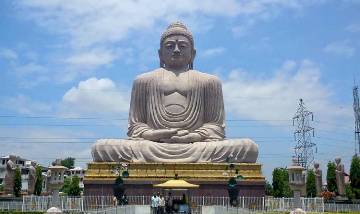
- Bodh Gaya, Bihar: The most important Buddhist pilgrimage centre in India and the place where Siddhartha Gautama attained enlightenment beneath the Bodhi Tree. The Mahabodhi Temple Complex, Vajrasana and surrounding monasteries are the principal places to visit.
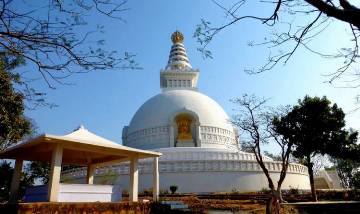
- Sarnath, Uttar Pradesh: Located near Varanasi, Sarnath is associated with the Buddha's first teaching after enlightenment. Important sites include Dhamek Stupa, the archaeological remains and Buddhist monasteries.
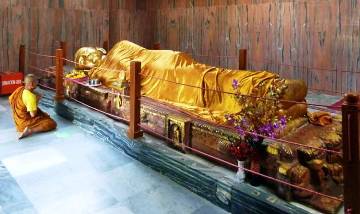
- Kushinagar, Uttar Pradesh: One of Buddhism's principal sacred destinations, associated with the Buddha's Mahaparinirvana. Pilgrims normally visit the Mahaparinirvana Temple, Ramabhar Stupa and nearby monasteries.
- Rajgir, Bihar: An important teaching landscape associated with the Buddha. Griddhakuta, also known as Vulture's Peak, is one of its best-known Buddhist pilgrimage sites.
- Nalanda, Bihar: Home to the archaeological remains of Nalanda Mahavihara, one of the great historical centres of Buddhist monastic learning and scholarship.
- Vaishali, Bihar: Closely associated with the Buddha's later life and early Buddhist history. The Ashokan Pillar, stupas and archaeological remains are important pilgrimage stops.
- Shravasti, Uttar Pradesh: A major centre of the Buddha's teaching activity. Jetavana Monastery and the Saheth-Maheth archaeological area are the principal Buddhist sites.
Buddhist Circuit India and Nepal
Many international pilgrims extend their India journey into Nepal to visit Lumbini, traditionally recognised as the birthplace of Siddhartha Gautama. A cross-border itinerary can connect Bodh Gaya, Rajgir, Nalanda, Vaishali, Kushinagar, Lumbini, Shravasti and Sarnath in one continuous pilgrimage.
Our 12 Days India & Nepal Buddhist Pilgrimage Tour is suitable for travellers who want to include Lumbini without making the journey excessively long. For a more comprehensive route, the 14 Days Complete Buddhist India & Nepal Pilgrimage also includes Sanchi and additional heritage sites.
Best Buddhist Tour Itineraries in India
The ideal itinerary depends on how much time you have and whether you want a religious pilgrimage, an archaeological journey or a broader Buddhist heritage tour.
- 3–5 Days: Ideal for Bodh Gaya, Rajgir and Nalanda or a short Varanasi, Sarnath and Bodh Gaya pilgrimage.
- 6–8 Days: Suitable for combining Bodh Gaya, Rajgir, Nalanda, Vaishali, Kushinagar, Sarnath and Varanasi.
- 9–10 Days: Recommended for a more complete Buddhist Circuit covering the major pilgrimage destinations of Bihar and Uttar Pradesh.
- 12–14 Days: Best for travellers who want to combine the Indian Buddhist Circuit with Lumbini in Nepal and additional destinations such as Shravasti or Sanchi.
Recommended Buddhist Pilgrimage Routes
- Complete India Buddhist Circuit: Varanasi → Sarnath → Bodh Gaya → Rajgir → Nalanda → Vaishali → Kushinagar → Shravasti
- Bihar Buddhist Circuit: Bodh Gaya → Rajgir → Nalanda → Vaishali
- Short Buddhist Pilgrimage: Varanasi → Sarnath → Bodh Gaya
- India & Nepal Buddhist Circuit: Bodh Gaya → Rajgir → Nalanda → Vaishali → Kushinagar → Lumbini → Shravasti → Sarnath
- Buddhist Heritage Route: Sanchi → Sarnath → Bodh Gaya → Rajgir → Nalanda
Buddhist Heritage Beyond the Classical Pilgrimage Circuit
Buddhism in India extends far beyond Bodh Gaya and the Gangetic plains. Travellers interested in Buddhist art, archaeology and living Himalayan monastic traditions can add several different regions to their journey.
- Sanchi: Explore ancient stupas, carved gateways, monastic remains and Ashokan heritage in Madhya Pradesh.
- Ajanta & Ellora: Discover Buddhist rock-cut monasteries, prayer halls, sculpture and paintings. Ellora should be understood as a wider multi-faith complex containing Buddhist, Hindu and Jain monuments.
- Ladakh: Visit Himalayan monasteries such as Thiksey, Hemis, Alchi, Lamayuru and Diskit.
- Tawang: Experience Buddhist monastery traditions in the eastern Himalayas of Arunachal Pradesh.
- Sikkim: Explore Rumtek, Pemayangtse and other monasteries associated with the Buddhist culture of the eastern Himalayas.
What Can You Experience on a Buddhist Pilgrimage Tour?
- Visit the Mahabodhi Temple and spend quiet time beneath the Bodhi Tree in Bodh Gaya.
- Walk through ancient stupas, monasteries and archaeological remains at Sarnath, Nalanda, Vaishali and Kushinagar.
- Visit active monasteries representing Buddhist traditions from India, Nepal and other Asian countries.
- Attend prayer or chanting sessions when they are open to visitors and participation is appropriate.
- Learn about Buddhist history, philosophy, sacred art and monastic traditions with knowledgeable local guides.
- Spend time in meditation or personal reflection at selected sacred sites where local rules permit.
Best Time for Buddhist Tours in India
October to March is generally the most comfortable period for Buddhist pilgrimage tours across Bihar and Uttar Pradesh. Daytime temperatures are usually more suitable for archaeological sites, temples and longer road journeys.
- October to March: Best overall season for the classical Buddhist Circuit.
- April to June: Possible for pilgrimage travel, but Bihar and Uttar Pradesh can become very hot. Buddha Purnima may be an important consideration for pilgrims travelling during this period.
- July to September: Monsoon travel is possible, although rain can affect road conditions and outdoor sightseeing.
- Himalayan Buddhist Tours: Ladakh, Tawang and Sikkim have different seasonal and weather considerations, so the best travel period should be planned separately.
How Many Days Are Needed for a Buddhist Circuit Tour?
For first-time international visitors, we generally recommend 8 to 12 days for the main Buddhist Circuit in India. This gives enough time for Bodh Gaya, Sarnath, Rajgir, Nalanda, Vaishali and Kushinagar without making every day a long road journey.
If you also want to include Lumbini in Nepal and Shravasti, a 12 to 14-day itinerary provides a more comfortable pace. Travellers with limited time can select a shorter 3 to 6-day circuit around Bodh Gaya, Rajgir, Nalanda, Sarnath or Kushinagar.
Planning an International Buddhist Pilgrimage
Buddhist pilgrimage routes involve a combination of highways, smaller regional roads, archaeological sites and active places of worship. A practical itinerary should consider travel time as carefully as the list of monuments.
- Use private transport for flexible stops and comfortable overland journeys.
- Keep additional time for longer sectors between Bihar and Uttar Pradesh.
- Check temple, monastery and museum opening times before each visit.
- Wear modest clothing at active Buddhist sacred sites.
- Ask permission before photographing monks, worshippers or religious ceremonies.
- For India–Nepal tours, passport, visa and border-entry requirements should be confirmed before departure.
Why Choose Tusk Travel for a Buddhist Tour in India?
Tusk Travel creates private Buddhist pilgrimage tours in India around your available time, international flights and preferred travel pace. Rather than forcing every traveller into the same fixed circuit, routes can be adapted for Buddhist groups, monks, senior travellers, cultural visitors and travellers combining India with Nepal.
We can arrange private air-conditioned transport, suitable hotels, local guides, airport and railway transfers, domestic travel sectors and cross-border arrangements where required. Our team also plans realistic driving times between Buddhist sites, so the journey remains comfortable and meaningful rather than simply trying to cover as many destinations as possible.
Browse the Buddhist tour packages below or request a customized itinerary for Bodh Gaya, Sarnath, Kushinagar, Lumbini, Sanchi, Ladakh, Tawang or Sikkim.
Popular Buddhist Tour Packages in India
10 Days Complete Buddhist Circuit India Tour
12 Days India & Nepal Buddhist Pilgrimage Tour
8 Days Buddhist Circuit Bihar & Uttar Pradesh
7 Days Bodhgaya, Rajgir, Nalanda & Varanasi
9 Days Buddhist India & Lumbini Nepal Tour
5 Days Varanasi, Sarnath & Bodhgaya
8 Days Sanchi, Sarnath & Bodhgaya Heritage Tour
3 Days Bodhgaya, Rajgir & Nalanda Buddhist Tour
6 Days Bodhgaya to Kushinagar Buddhist Pilgrimage
5 Days Bodhgaya, Rajgir, Nalanda & Vaishali
14 Days Complete Buddhist India & Nepal Pilgrimage
7 Days Ajanta, Ellora & Sanchi Buddhist Heritage
8 Days Ladakh Buddhist Monastery Tour
8 Days Tawang Buddhist Monastery Tour
7 Days Sikkim Buddhist Monastery Tour
FAQs About Buddhist Tours in India
For a first Buddhist pilgrimage in India, we normally recommend 8 to 12 days. This gives enough time to visit Bodh Gaya, Rajgir, Nalanda, Sarnath, Kushinagar, Vaishali and other important Buddhist sites without making every day a long road journey.
Travellers with limited time can choose a 3 to 6-day Buddhist tour around Bodh Gaya, Rajgir, Nalanda, Sarnath or Kushinagar. If you also want to include Lumbini in Nepal and Shravasti, a 12 to 14-day itinerary is more comfortable.
October to March is generally the most comfortable season for the classical Buddhist Circuit in Bihar and Uttar Pradesh. The weather is usually better suited to temple visits, archaeological sites and longer road journeys.
April to June can be hot, while July to September is the monsoon period and road travel may be slower. Himalayan Buddhist tours in Ladakh, Tawang and Sikkim have different seasonal conditions and should be planned separately.
Most Buddhist pilgrimage routes use a combination of private road transport, domestic flights and trains. Bodh Gaya, Rajgir, Nalanda, Vaishali, Kushinagar and Shravasti are often connected by private vehicle because this gives more flexibility for temple visits and rest stops.
For longer sectors, flights or trains can be included when they make the journey more practical. Tusk Travel plans the route around realistic driving times rather than trying to cover too many sites in a single day.
Yes. Lumbini is one of the most important additions to an India Buddhist pilgrimage because it is traditionally recognised as the birthplace of the Buddha.
It can be connected by road with Kushinagar and then combined with Shravasti, Sarnath or other Buddhist destinations. Travellers should carry the required passport and travel documents, and current India–Nepal entry requirements should be confirmed before departure.
Yes. Many Buddhist pilgrimage travellers are seniors, and the itinerary can be adjusted with shorter sightseeing days, fewer hotel changes and more rest time.
Private transport also makes the journey more comfortable. However, some archaeological sites and monasteries involve steps, uneven surfaces or longer walking distances, so mobility requirements should be discussed when planning the tour.
Wear comfortable, modest clothing that covers the shoulders and knees when visiting active temples and monasteries. Shoes may need to be removed before entering certain prayer areas.
Avoid disturbing monks, pilgrims or religious ceremonies. Always ask before photographing monks or worshippers, and follow local signs where photography is restricted. Prayer, meditation or chanting can be observed or joined only where visitors are permitted to participate.
Yes. Buddhist tours can be customized for private travellers, couples, families, senior travellers, Buddhist groups and monks.
The route can be adjusted according to your arrival city, international flights, number of days, hotel preference and pilgrimage priorities. You can also add Lumbini in Nepal, Varanasi, Sanchi, Ajanta and Ellora, Ladakh, Tawang or Sikkim depending on your interests and available time.