
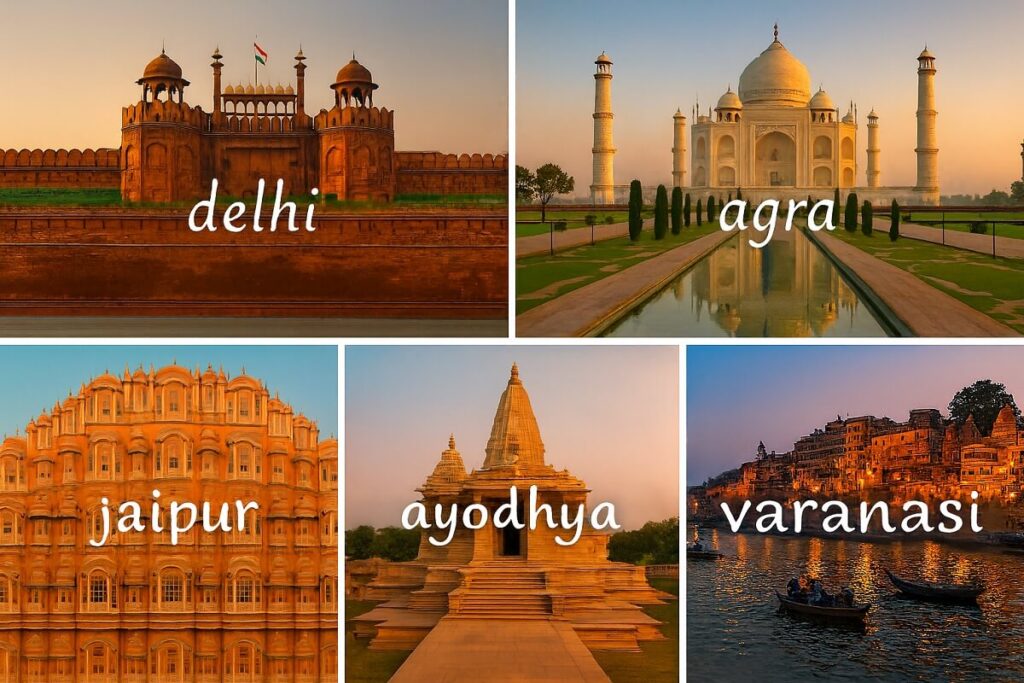
The Golden Triangle of India – comprising Delhi, Agra, and Jaipur – is one of the most popular travel circuits in the country, attracting millions of visitors each year. It offers a perfect combination of history, culture, architecture, and cuisine. Now imagine enhancing this classic route by adding Ayodhya and Varanasi to your itinerary – two of India’s most spiritually significant cities. This extended journey blends architectural marvels with deep religious and cultural experiences, creating a once-in-a-lifetime travel adventure.
In this comprehensive guide, we’ll walk you through how to plan a trip to the Golden Triangle with Ayodhya and Varanasi, including the best time to visit, suggested itineraries, transport options, must-visit attractions, accommodation tips, and cultural insights. Whether you’re a first-time visitor to India or a seasoned traveler seeking a deeper dive into its heritage, this guide will help you craft an unforgettable journey.
What is the Golden Triangle?
The Golden Triangle connects three major cities in North India:
- Delhi – the capital city, rich in Mughal, colonial, and modern architecture.
- Agra – home to the world-famous Taj Mahal and Mughal heritage.
- Jaipur – the Pink City of Rajasthan, known for its palaces, forts, and vibrant bazaars.
The “triangle” name comes from the shape formed on the map when you connect these cities, each about 200–250 km apart.
Extending to Ayodhya & Varanasi
- Ayodhya – revered as the birthplace of Lord Rama and a city of temples, with the newly constructed Ram Mandir becoming a major attraction.
- Varanasi (Kashi) – one of the world’s oldest living cities, situated on the banks of the Ganges, known for its ghats, Ganga Aarti, and spiritual aura.
By adding Ayodhya and Varanasi, your trip evolves from a cultural circuit to a heritage-spiritual expedition.
Best Time to Visit
The ideal months for this combined itinerary are October to March, when the weather is pleasant for sightseeing. Here’s a season-wise breakdown:
- October–November – Festive season with Diwali, Dussehra, and Kartik Purnima celebrations.
- December–February – Cool, comfortable weather for exploring forts, temples, and ghats.
- March – Spring colors and Holi celebrations, especially vibrant in Mathura and Varanasi.
- Avoid May–July due to extreme heat; monsoon months (July–September) can bring heavy rains in Varanasi and Ayodhya, though they have their own charm for photography and fewer crowds.
Suggested Duration
For a balanced itinerary, allow 10–14 days:
- 6–7 days for the Golden Triangle (Delhi, Agra, Jaipur).
- 4–6 days for Ayodhya and Varanasi combined.
How to Reach & Travel Between Cities
Starting Point – Delhi
Most international travelers begin in Delhi, which has excellent connectivity via Indira Gandhi International Airport and railway stations.
Transport Options
- Private Car with Driver – Offers flexibility and comfort, ideal for Golden Triangle sightseeing.
- Trains – India’s extensive railway network connects Delhi to Agra, Jaipur, Ayodhya, and Varanasi.
- Flights – Useful for long jumps, like Jaipur to Varanasi or Delhi to Varanasi.
- Tour Packages – Many agencies offer tailored Golden Triangle with Ayodhya & Varanasi tours.
What to See & Do (City by City) – 12 Days:
Day 1–2: Delhi
- Attractions: Red Fort, Jama Masjid, Chandni Chowk, Raj Ghat, Humayun’s Tomb, Qutub Minar, India Gate, Rashtrapati Bhavan, Lotus Temple, Akshardham.
- Cultural Tip: Try Old Delhi street food – parathas, chaat, kebabs.
- Stay: Connaught Place for central access or Aerocity for proximity to the airport.
Day 3: Delhi → Agra
- Distance: ~230 km (4 hours via Yamuna Expressway).
- Attractions: Taj Mahal (sunrise or sunset), Agra Fort, Itimad-ud-Daulah (Baby Taj), Mehtab Bagh for a Taj view across the Yamuna.
- Evening: Explore local handicrafts – marble inlay work, leather goods.
Day 4: Agra → Fatehpur Sikri → Jaipur
- Stop: Fatehpur Sikri – UNESCO-listed Mughal city, Buland Darwaza, Jama Masjid, Panch Mahal.
- Continue to Jaipur (~240 km).
- Evening: Stroll through Jaipur bazaars – Johari and Bapu Bazaar.
Day 5–6: Jaipur
- Day 5: Amber Fort, Jaigarh Fort, Nahargarh Fort.
- Day 6: City Palace, Jantar Mantar, Hawa Mahal, Albert Hall Museum.
- Food Tip: Don’t miss dal baati churma, ghewar, and lassi.
Day 7: Jaipur → Delhi → Ayodhya
- Option 1: Drive to Delhi and take an evening flight/train to Ayodhya.
- Option 2: Fly Jaipur to Lucknow, then drive to Ayodhya (~135 km).
Day 8: Ayodhya
- Main Attractions: Ram Mandir, Hanuman Garhi, Kanak Bhawan, Nageshwarnath Temple, Sarayu River Ghats.
- Experience: Evening aarti on the Sarayu river.
- Stay: Near the temple area for easy access.
Day 9: Ayodhya → Varanasi
- Distance: ~200 km (~4–5 hours by road or train).
- Evening: Attend Ganga Aarti at Dashashwamedh Ghat.
Day 10–11: Varanasi
- Spiritual Experiences:
- Sunrise boat ride on the Ganges.
- Explore Kashi Vishwanath Temple, Sankat Mochan Hanuman Temple, Bharat Mata Mandir.
- Walk through the old city lanes.
- Day Trips:
- Sarnath – Buddhist pilgrimage site where Lord Buddha gave his first sermon.
- Food Tip: Try kachori sabzi, tamatar chaat, and famous Banarasi paan.
Day 12: Varanasi → Delhi
- Fly back to Delhi for onward international departure.
Must-Visit Attractions by City
Delhi
- Heritage: Red Fort, Humayun’s Tomb, Qutub Minar.
- Modern: Akshardham Temple, Lotus Temple.
- Markets: Chandni Chowk, Dilli Haat, Connaught Place.
Agra
- Taj Mahal – sunrise or sunset visit for best light.
- Agra Fort – Mughal power seat.
- Mehtab Bagh – panoramic Taj view.
Jaipur
- Amber Fort – elephant ride or jeep.
- City Palace – royal museum.
- Hawa Mahal – iconic pink façade.
Ayodhya
- Ram Mandir – centerpiece of the city’s religious identity.
- Hanuman Garhi – 10th-century temple.
- Sarayu Ghats – evening aarti.
Varanasi
- Kashi Vishwanath Temple – Jyotirlinga shrine.
- Assi and Dashashwamedh Ghats – spiritual heart of the city.
- Sarnath – Buddhist history.
Travel Tips for a Smooth Journey
- Book in Advance – Popular attractions and accommodations in Ayodhya and Varanasi fill quickly.
- Dress Modestly – Especially in temples and ghats.
- Local Guides – Hire certified guides for deep historical and cultural insights.
- Stay Hydrated – Carry bottled water; avoid untreated tap water.
- Cultural Etiquette – Remove shoes in temples, respect photography restrictions.
- Transport Mix – Combine trains, flights, and private cars for efficiency.
Food & Culinary Experiences
- Delhi – Paranthe Wali Gali, Mughlai kebabs, butter chicken.
- Agra – Petha sweets, Mughlai curries.
- Jaipur – Rajasthani thali, ghewar.
- Ayodhya – Simple temple food, poori sabzi, laddoos.
- Varanasi – Street chaat, lassi, Banarasi paan.
Accommodation Recommendations
- Delhi – Luxury: The Imperial; Mid-range: Bloom Rooms; Budget: Zostel Delhi.
- Agra – Luxury: ITC Mughal; Mid-range: Crystal Sarovar Premiere; Budget: Joey’s Hostel.
- Jaipur – Luxury: Rambagh Palace; Mid-range: Alsisar Haveli; Budget: Moustache Jaipur.
- Ayodhya – Luxury: Few options, focus on boutique hotels near temple; Budget: dharamshalas.
- Varanasi – Luxury: Brijrama Palace; Mid-range: Guleria Kothi; Budget: guesthouses near Assi Ghat.
Cultural Insights
Adding Ayodhya and Varanasi brings depth to the Golden Triangle trip:
- Witness Hindu rituals on the banks of sacred rivers.
- Experience the Ramayana legacy in Ayodhya.
- See the blend of Mughal and Rajput heritage in the Golden Triangle cities.
Final Thoughts
A Golden Triangle with Ayodhya and Varanasi tour is more than just sightseeing – it’s a journey through India’s soul, history, and spirituality. You’ll stand before architectural wonders, immerse yourself in vibrant traditions, and witness rituals that have been alive for centuries. Whether you’re drawn to the grandeur of the Taj Mahal, the pink charm of Jaipur, the sacred banks of the Sarayu, or the timeless ghats of Varanasi, this itinerary promises an unforgettable and transformative travel experience.
You May Also Like:
