October is one of the most rewarding months to explore Bhutan. The summer monsoon has largely retreated, the valleys begin to take on autumn colours, and clearer skies often reveal the dramatic Himalayan scenery that makes the country so memorable. Bhutan’s official tourism guidance describes autumn, from late September or early October through late November, as a season of bright, sunny days, harvest celebrations and festivals, although conditions naturally vary with altitude.
For travellers, October offers an excellent balance. Days are generally comfortable for sightseeing and walking, evenings feel pleasantly cool in western and central Bhutan, and longer journeys become more enjoyable after the wetter summer months.
It is also a good time to experience Bhutan beyond its famous landmarks. You can hike to Tiger’s Nest, explore the dzongs of Punakha and Trongsa, walk through quiet valleys, visit traditional villages in the east, or even travel into the highlands for one of Bhutan’s distinctive autumn festivals.
If this is your first journey to the country, Tusk Travel’s Bhutan travel guide for first-time visitors provides useful advice on visas, transport, culture, packing and trip planning. You can also explore Bhutan tour packages when planning a private itinerary.
Here are 17 of the best places to visit in Bhutan in October 2026, from the classic western circuit to remote eastern valleys and Himalayan highlands.
Why Visit Bhutan in October?
October falls firmly within Bhutan’s autumn travel season. After the main monsoon period, conditions are generally drier, visibility improves, and outdoor activities become much more appealing. Bhutan’s tourism authority notes that autumn is characterized by brighter days and can also bring the first snow to higher elevations.
This makes October particularly attractive for:
- Himalayan views and photography
- Tiger’s Nest and other day hikes
- Dzongs, monasteries and cultural sightseeing
- Scenic drives between valleys
- Village walks
- Autumn festivals
- Longer trips through central and eastern Bhutan
- Trekking before colder winter conditions arrive
Keep in mind that Bhutan’s weather varies dramatically with elevation. Southern areas are much warmer, while mountain passes and high-altitude valleys can become cold, especially early in the morning and after sunset.
Best 17 Places to Explore in Bhutan in October 2026:
1. Thimphu
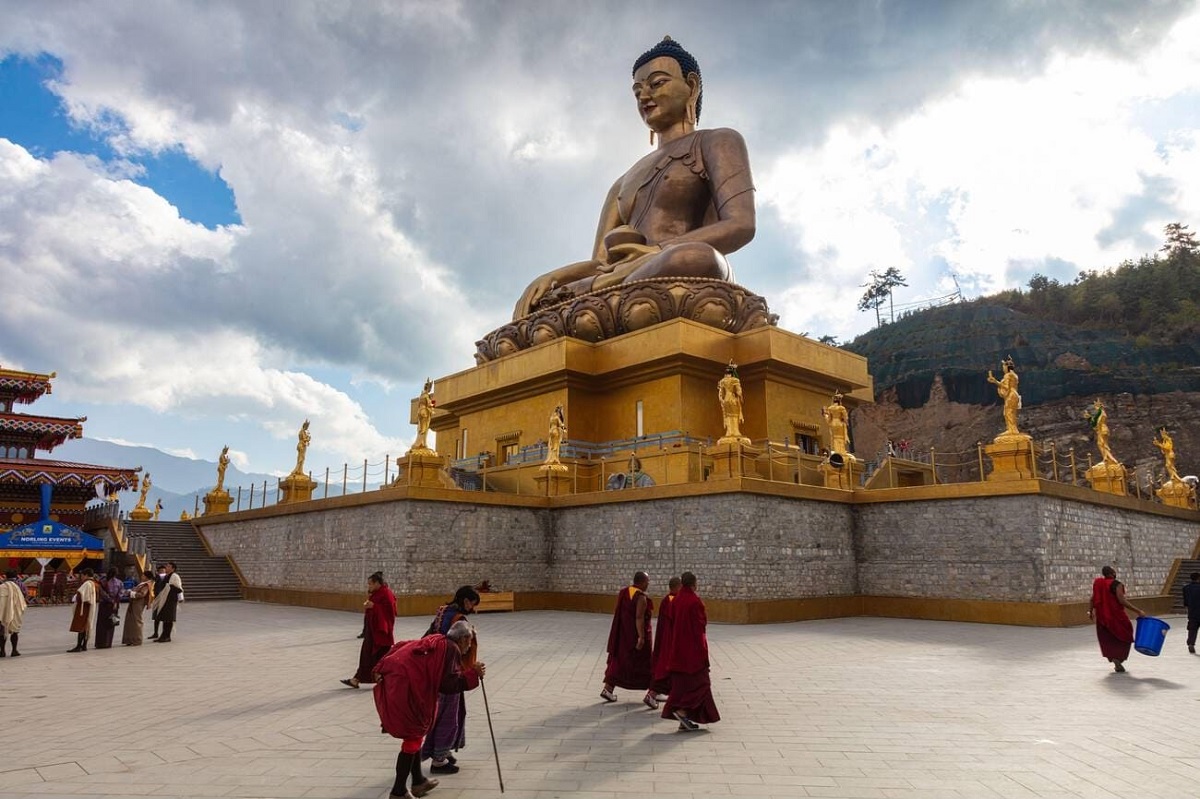
Bhutan’s capital is an excellent introduction to the country because it combines Buddhist traditions with contemporary Bhutanese life.
Unlike the busy capitals found elsewhere in Asia, Thimphu has a surprisingly relaxed atmosphere. October’s cooler, generally clearer weather makes walking around the city and visiting nearby viewpoints especially enjoyable.
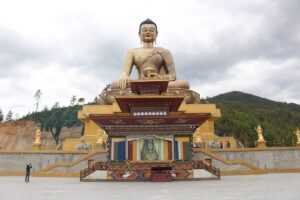
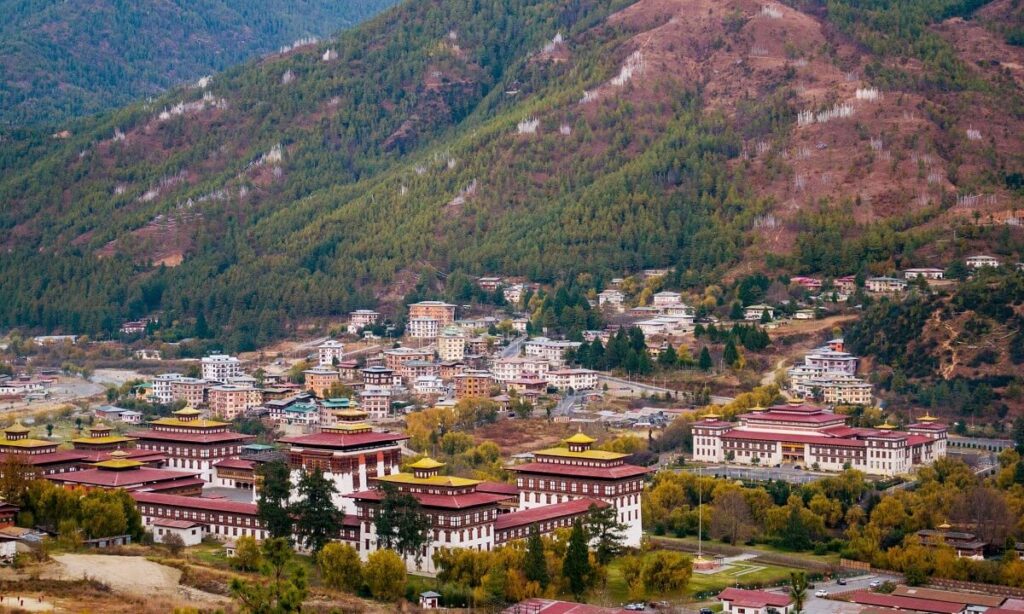
Begin with the enormous Buddha Dordenma overlooking the valley. Continue to the Memorial Chorten, Tashichho Dzong, the Folk Heritage Museum and the Motithang Takin Preserve. Craft centres and textile shops also offer an opportunity to learn about Bhutan’s traditional arts.
October is particularly pleasant for simply spending time in the city, visiting cafés, browsing local handicrafts and observing everyday life between sightseeing stops.
Best experiences in October: Buddha Dordenma, Tashichho Dzong, local markets, museums and short hikes.
For itinerary ideas centered around the capital, see Tusk Travel’s Thimphu tour packages.
2. Paro
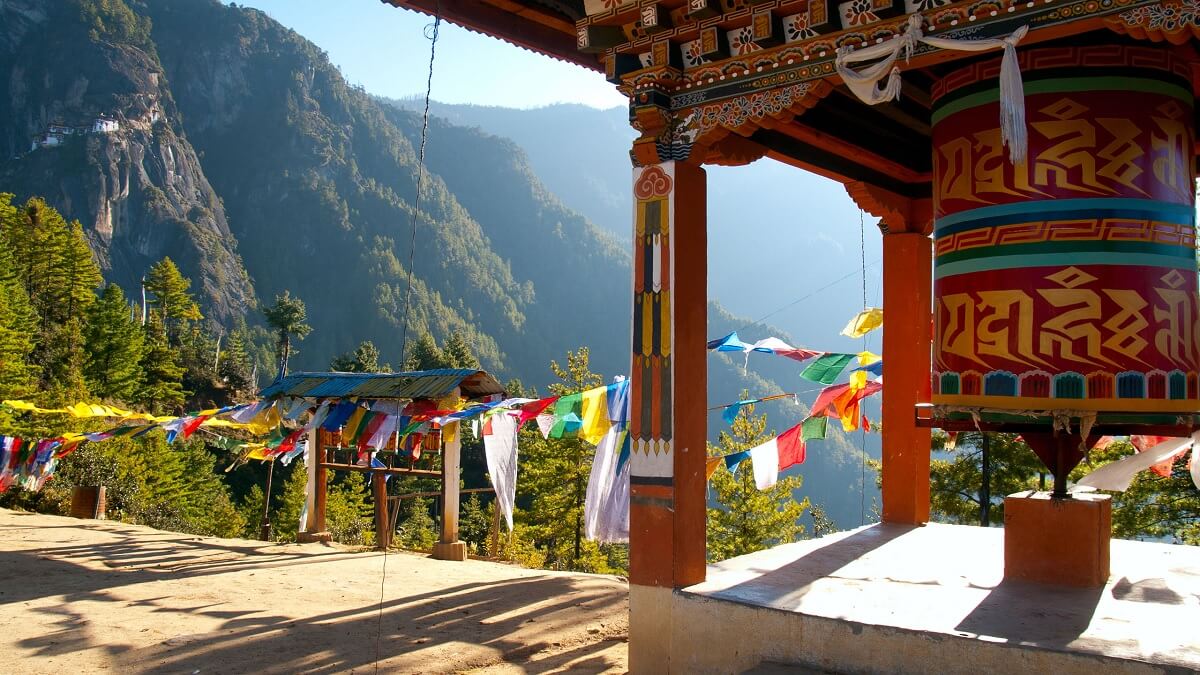
Paro is where most international travellers first encounter Bhutan, but it deserves much more than a quick airport stop.
The broad valley is surrounded by forested mountains, traditional homes and fertile farmland. During October, clearer autumn skies can make the scenery particularly striking.
Paro’s defining experience is the hike to Taktsang Monastery, better known as Tiger’s Nest. The monastery clings dramatically to a cliff above the valley and is one of Bhutan’s most sacred Buddhist sites.
Autumn is among the most suitable seasons for the hike because conditions are generally drier and visibility is often better. Tusk Travel’s guide to Bhutan’s temples also identifies September to November as a favourable period for visiting Tiger’s Nest.
Other attractions include Rinpung Dzong, Kyichu Lhakhang, the National Museum and traditional farmhouses.
Best experiences in October: Tiger’s Nest hike, Paro Dzong, National Museum and farmhouse experiences.
Read more about nearby attractions in Tusk Travel’s guide to places around Paro or browse Paro tour packages.
3. Punakha
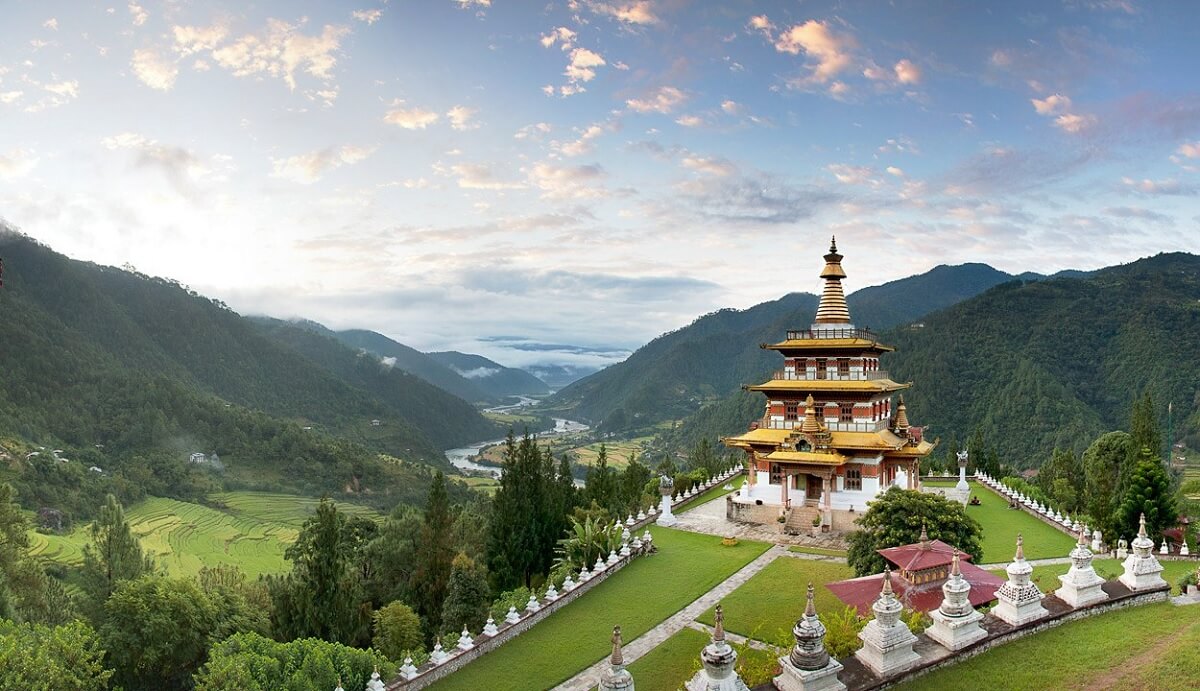
Once Bhutan’s capital, Punakha is noticeably warmer and lower than Thimphu and Paro. This makes October especially comfortable for exploring its valleys and villages.
The magnificent Punakha Dzong, standing at the confluence of the Pho Chhu and Mo Chhu rivers, is the main attraction. Its whitewashed walls, traditional woodwork and riverside setting make it one of Bhutan’s most photogenic monuments.
Nearby, travellers can cross the Punakha Suspension Bridge or hike through agricultural countryside to Khamsum Yulley Namgyal Chorten.
Chimi Lhakhang, associated with the Buddhist teacher Drukpa Kunley, is another popular cultural stop.
Best experiences in October: Punakha Dzong, suspension bridge, Chimi Lhakhang, countryside hikes and riverside scenery.
For more ideas, read Tusk Travel’s best things to do in Punakha.
4. Bumthang
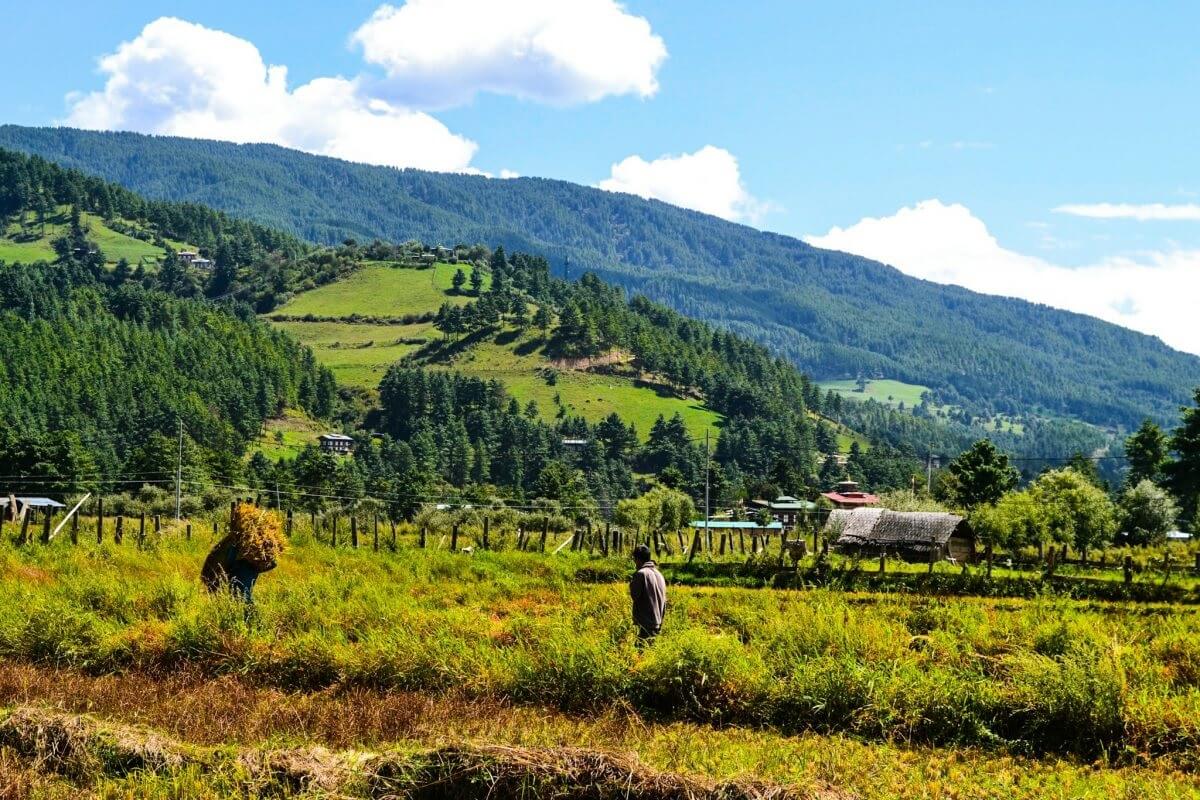
If Paro and Thimphu introduce you to Bhutan, Bumthang takes you deeper into its religious traditions.
The region consists of several beautiful valleys filled with temples, monasteries, farms and traditional villages. October works particularly well for exploring Bumthang because autumn conditions suit both sightseeing and outdoor walks.
Important spiritual sites include Jambay Lhakhang, Kurjey Lhakhang and Tamshing Monastery. Jakar Dzong rises above the valley, while Membartsho, commonly called the Burning Lake, carries deep religious significance.
Allow at least two nights here. Bumthang is not a destination to squeeze into an already hurried itinerary.
Best experiences in October: monasteries, village walks, Jakar Dzong, Burning Lake and local food.
Travellers interested in exploring the area more deeply can see Tusk Travel’s Bumthang tour packages.
5. Phobjikha Valley
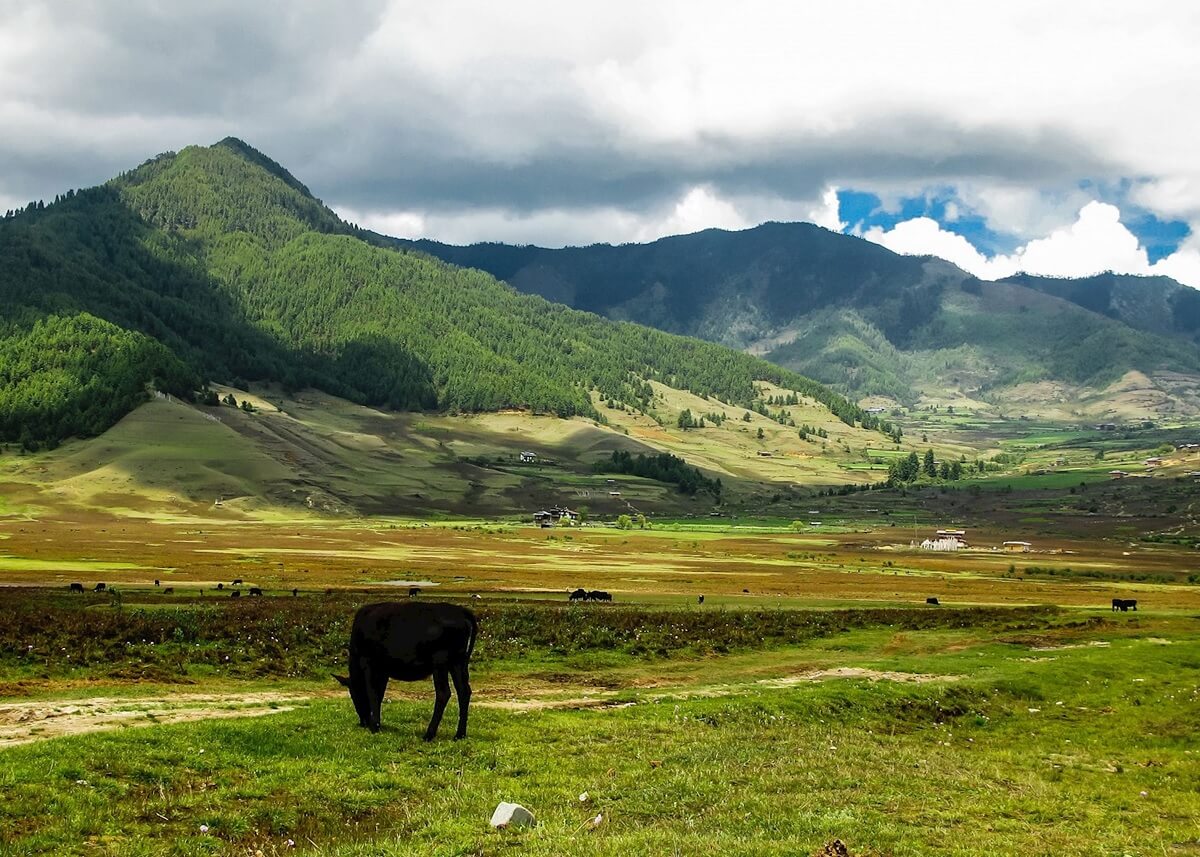
Phobjikha, often called Gangtey Valley, is one of Bhutan’s most peaceful landscapes.
The broad glacial valley is surrounded by forest-covered hills and traditional villages. It feels remarkably open compared with many of Bhutan’s narrower mountain valleys.
October is ideal for walking the Gangtey Nature Trail, visiting Gangtey Monastery and enjoying the surrounding countryside.
Phobjikha is famous as the winter habitat of black-necked cranes. However, travellers visiting in October should not assume they will see large numbers. The migration becomes more significant as the season progresses into late autumn and winter.
This is an important distinction when planning an October trip. Visit Phobjikha for the landscape and tranquility first, and consider any early crane sightings a bonus.
Best experiences in October: Gangtey Monastery, nature trails, village scenery and landscape photography.
Tusk Travel’s 8-day itineraries combine Paro, Punakha, Gangtey Valley and Thimphu, making Phobjikha easy to include on a longer first trip.
6. Haa Valley
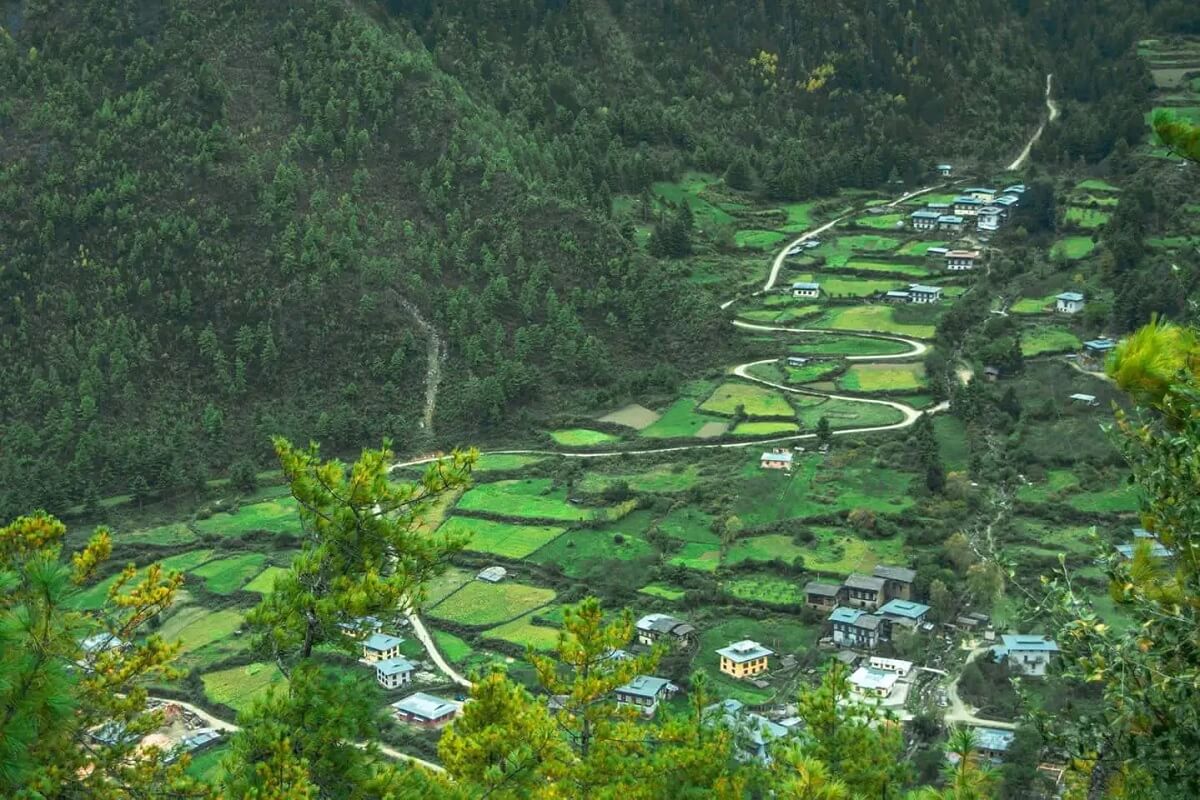
Travellers wanting somewhere less visited than Paro or Punakha should consider Haa Valley.
Traditional farmhouses, forests, small villages and mountain scenery give the region a slower rhythm. October’s generally dry autumn conditions make this an appealing time for scenic walks and village exploration.
Many travellers reach Haa from Paro by crossing Chele La Pass.
Rather than rushing through on a day trip, spend a night in the valley if your schedule allows. Staying locally gives you much more opportunity to experience rural Bhutan after daytime visitors leave.
Best experiences in October: traditional villages, countryside walking, farm stays and scenic drives.
7. Trongsa
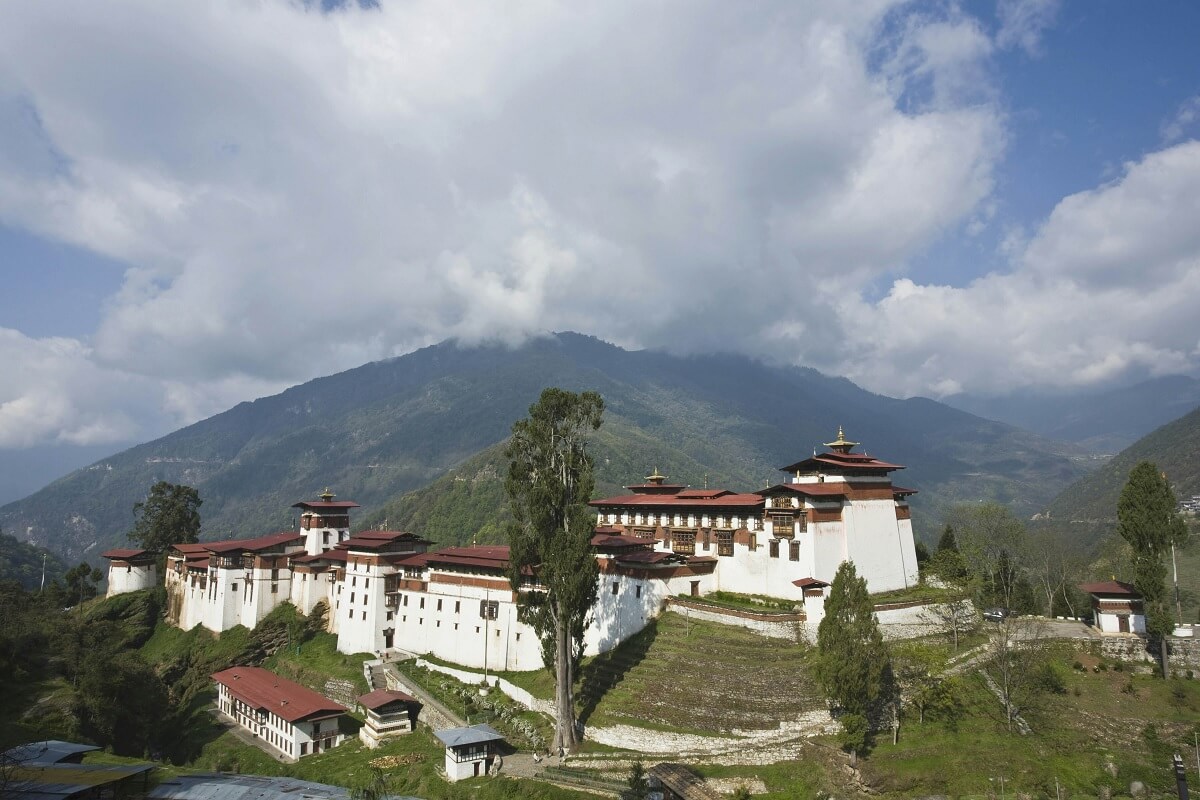
Trongsa sits strategically in central Bhutan and historically controlled important travel routes between the east and west.
Its greatest landmark is Trongsa Dzong, a huge fortress complex dramatically positioned above a gorge.
The views from the surrounding roads are equally memorable. Mountain slopes appear layered one behind another, especially on clear autumn days.
Trongsa works naturally as a stop when travelling between western Bhutan and Bumthang, but history lovers may want to stay overnight rather than simply pass through.
Best experiences in October: Trongsa Dzong, Ta Dzong museum, mountain views and central Bhutan road journeys.
8. Lhuntse
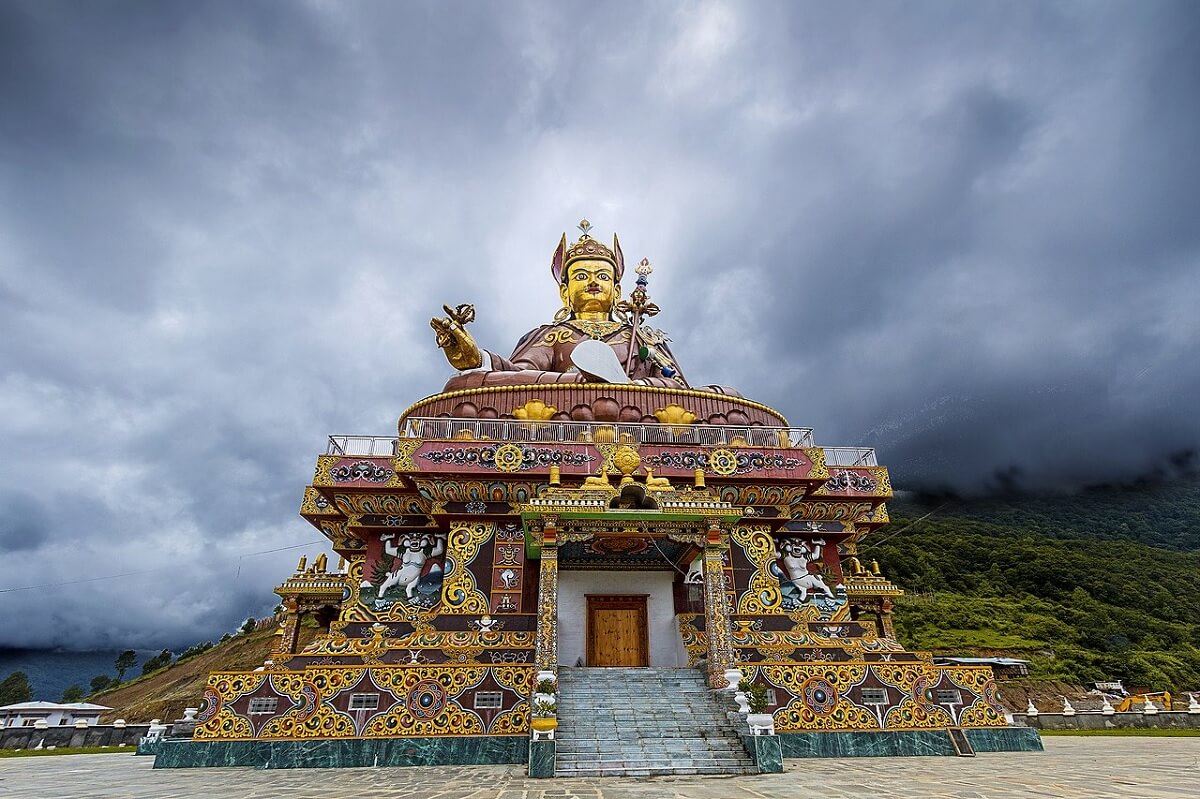
Lhuntse lies well beyond the usual first-time tourist circuit in northeastern Bhutan.
The region is associated with traditional weaving and Bhutanese textile culture. Its remote villages, forested mountains and limited visitor numbers make it rewarding for travellers who have already seen western Bhutan.
The journey requires extra time, which is exactly why it should not be treated as a quick extension to a one-week trip.
Visit Lhuntse if you are interested in craftsmanship, rural culture and experiencing a part of Bhutan where tourism remains much less visible.
Best experiences in October: traditional textiles, Lhuntse Dzong, village life and remote landscapes.
9. Mongar
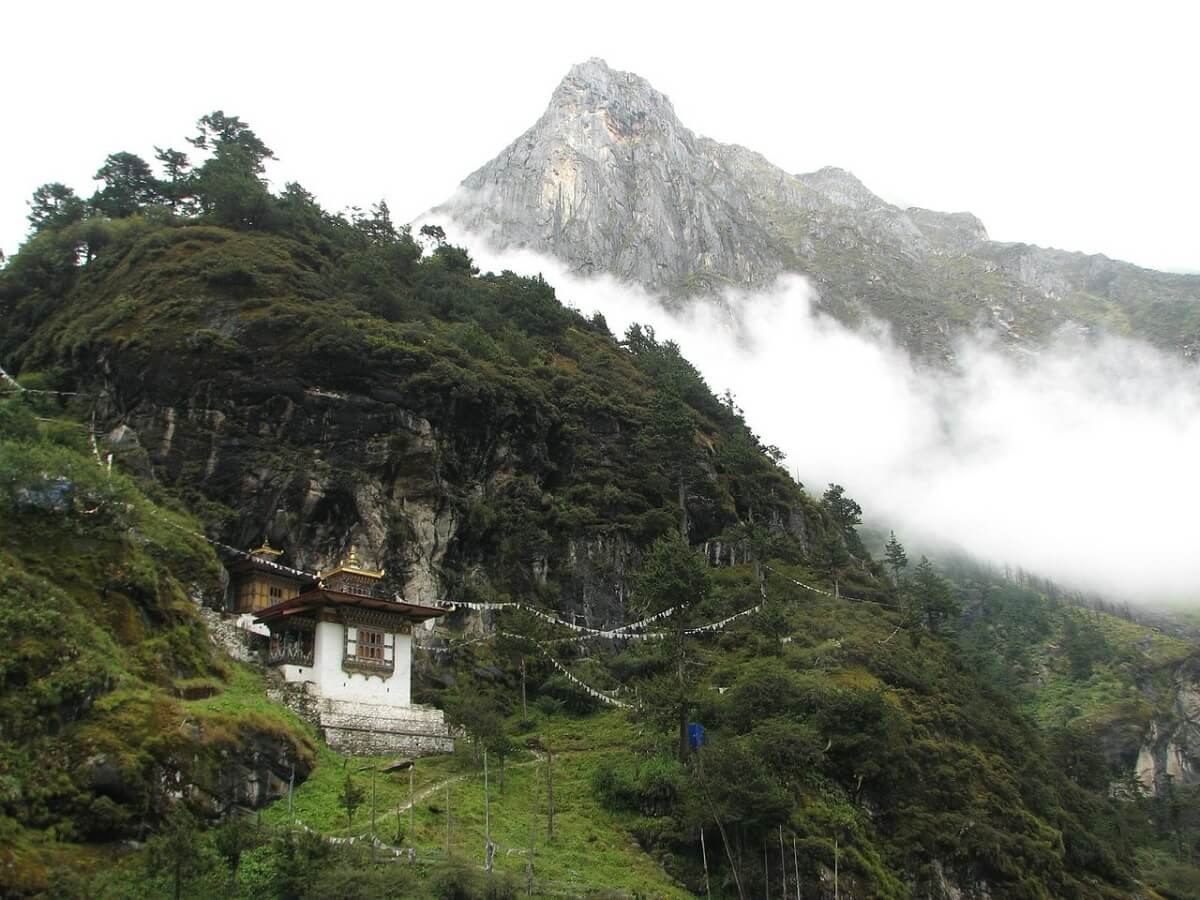
Mongar signals a noticeable transition into eastern Bhutan.
Road journeys in this part of the country wind through steep valleys, forests and dramatic mountain terrain. The architecture and cultural atmosphere also begin to feel subtly different from western Bhutan.
Mongar Dzong is a major landmark, while the surrounding region serves as a useful base for exploring farther east.
October is one of the better periods for undertaking these long road journeys because the main summer rains have usually eased.
Best experiences in October: Mongar Dzong, mountain drives, local villages and eastern Bhutan culture.
10. Samdrup Jongkhar
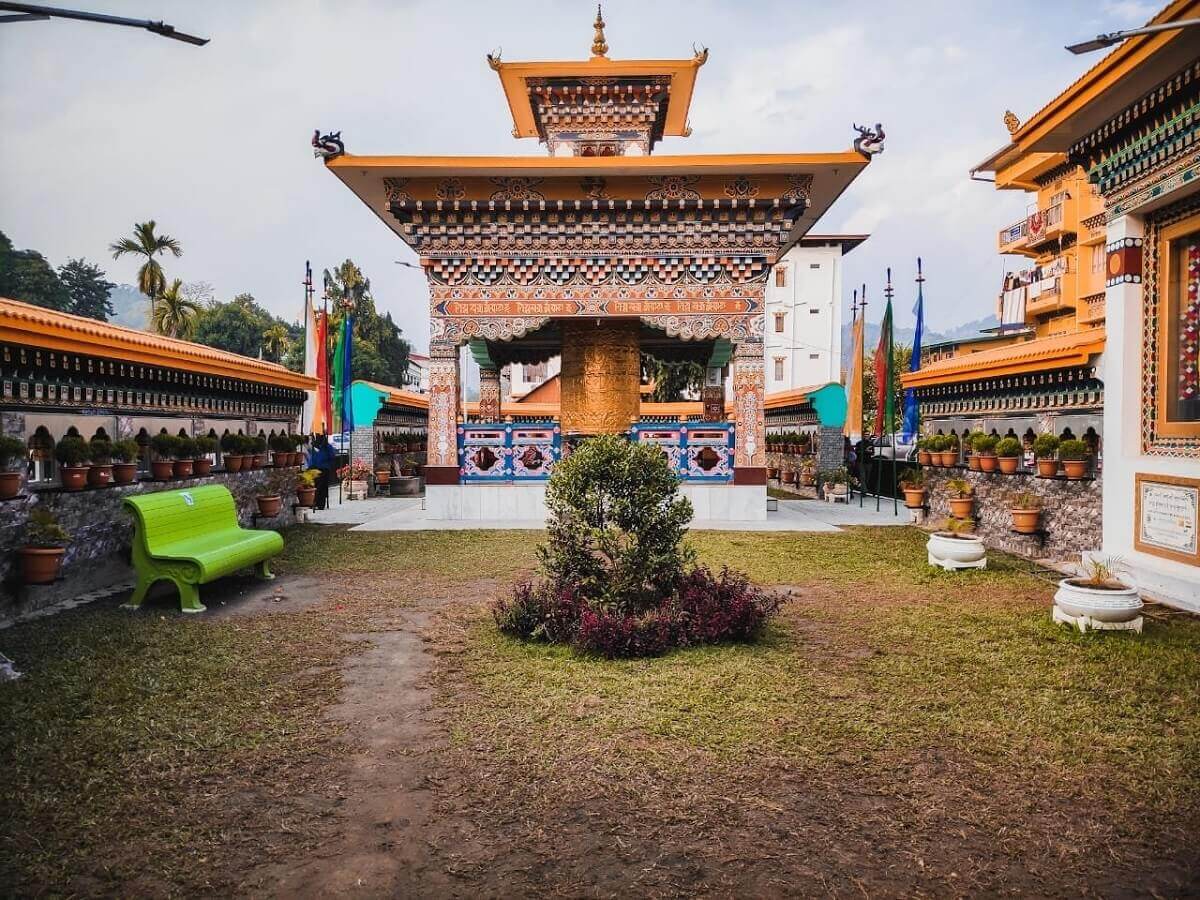
Located in Bhutan’s subtropical southeast, Samdrup Jongkhar feels completely different from high-altitude Paro or Bumthang.
The landscapes become greener and warmer as the mountains descend toward the plains of Assam.
More importantly for travellers planning an overland itinerary, Samdrup Jongkhar is one of Bhutan’s official road entry and exit points with India. Bhutan’s tourism authority currently lists Samdrup Jongkhar among the country’s four official land entry points.
It can therefore form the end of a fascinating west-to-east Bhutan journey.
Best experiences in October: eastern landscapes, local markets and cross-border itineraries connecting Bhutan with Northeast India.
11. Dochula Pass
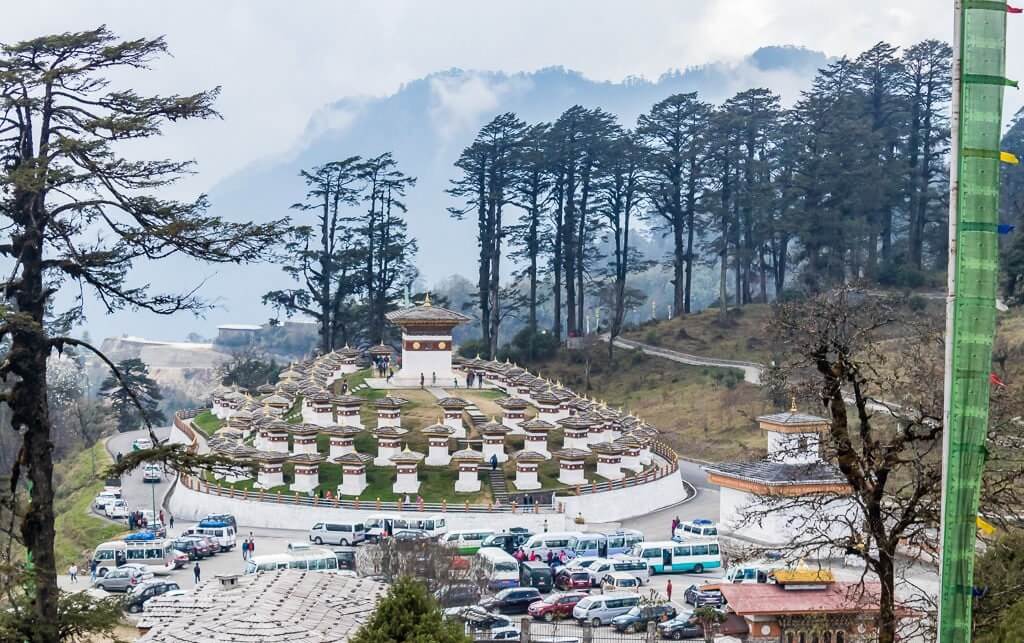
Dochula Pass lies on the road between Thimphu and Punakha and is one of the easiest mountain viewpoints to include in a classic Bhutan itinerary.
The pass is known for its 108 Druk Wangyal Chortens, prayer flags and Himalayan panorama.
Clear autumn days provide some of the year’s better opportunities for distant mountain views, although visibility can never be guaranteed.
Do not treat Dochula merely as a roadside photo stop. Walk around the chortens, visit the nearby temple and allow time to appreciate the setting.
Best for: photography, Himalayan views and a scenic stop between Thimphu and Punakha.
12. Chele La Pass
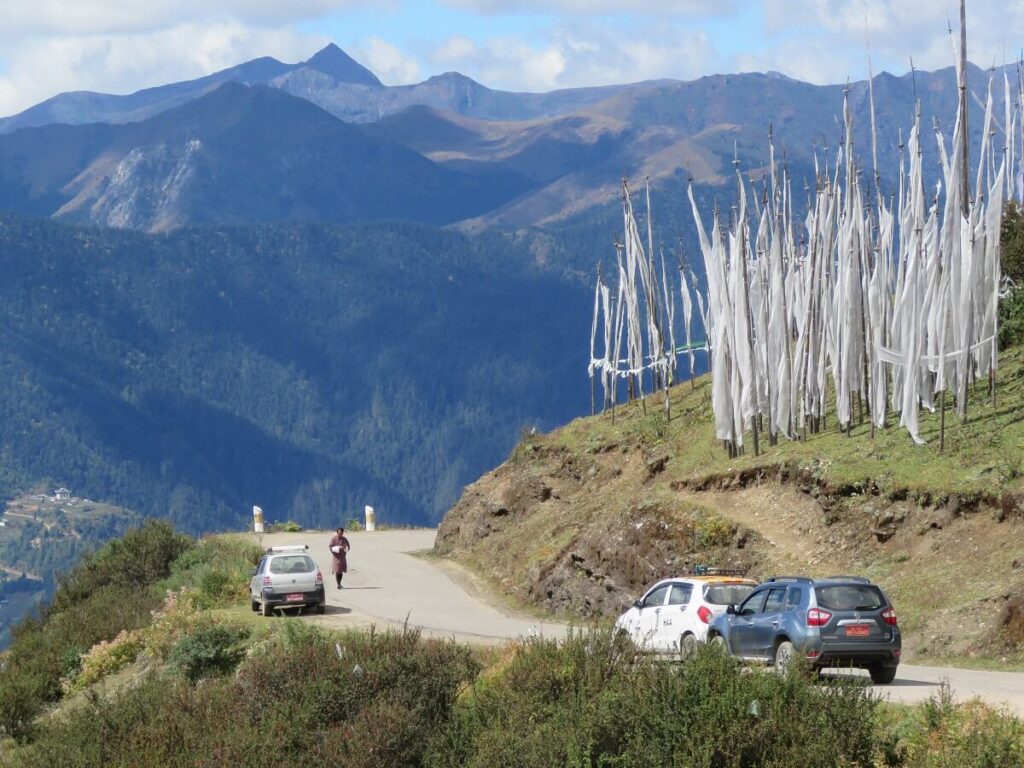
Chele La is one of the most scenic excursions from Paro.
Prayer flags cover the high mountain pass, while forest trails and distant peaks create a dramatic setting. October’s crisp autumn conditions make it an excellent choice when visibility is good.
Temperatures are considerably cooler here than in Paro town, particularly during the morning.
Dress in layers and avoid assuming that sunny weather in Paro means warm conditions at the pass.
Chele La can also be incorporated into a drive between Paro and Haa Valley.
Best for: mountain landscapes, prayer flags, hiking and photography.
13. Wangdue Phodrang
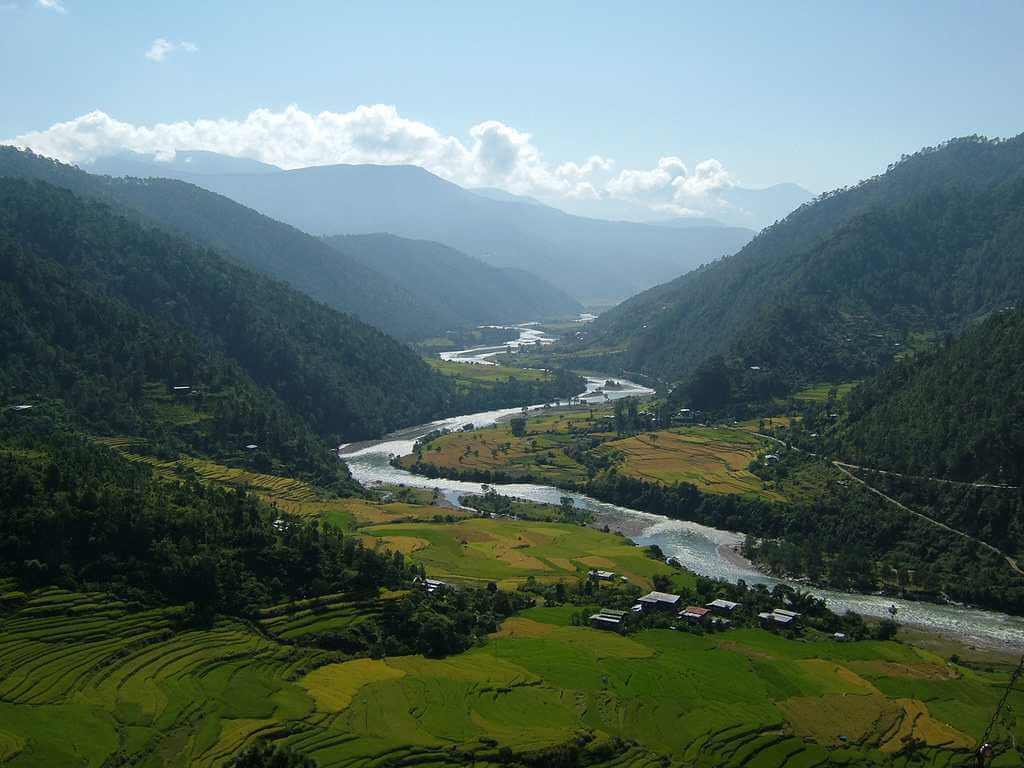
Wangdue Phodrang is frequently passed through on the journey between Punakha and Phobjikha, but travellers with enough time should look beyond the road.
The district contains traditional villages, forests, rivers and broad mountain landscapes.
It also makes sense geographically for travellers moving deeper into central Bhutan.
October suits scenic drives and village stops particularly well, while the surrounding countryside offers a quieter contrast to Bhutan’s better-known attractions.
Best for: scenic road trips, rural landscapes and slow travel.
14. Trashigang
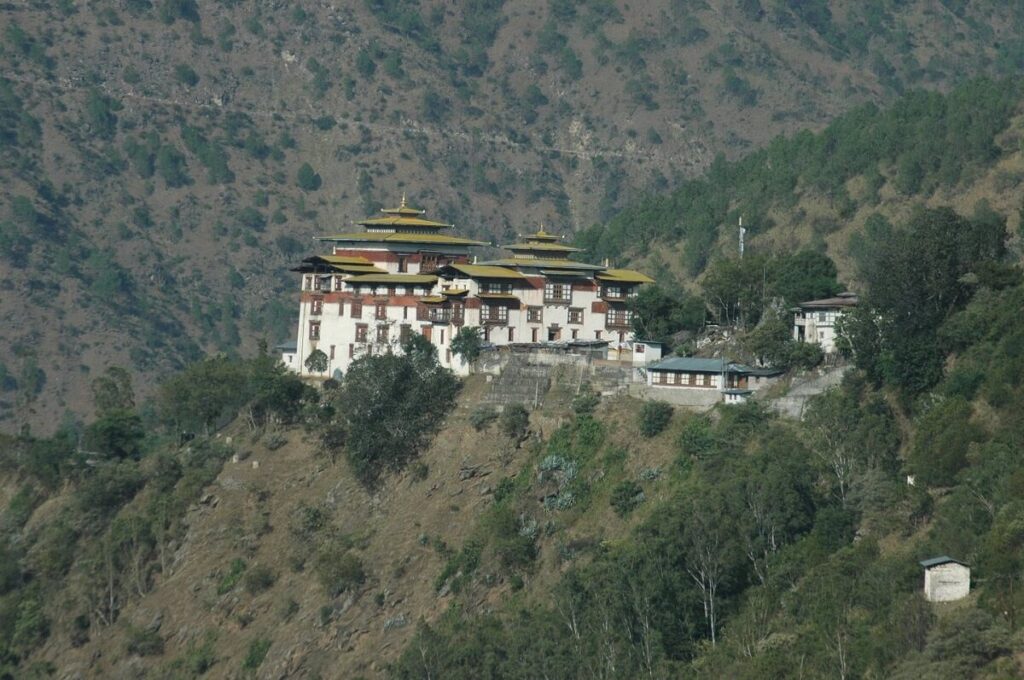
Trashigang is one of the most important towns in eastern Bhutan and deserves a place on longer journeys.
The town sits amid steep mountain landscapes, while Trashigang Dzong remains its most recognizable landmark.
Travel here requires patience. Bhutanese mountain roads mean that distances cannot be judged solely by kilometres.
That slower journey is also part of the appeal. Travellers see landscapes, villages and ways of life quite different from the western tourism corridor.
Best for: eastern Bhutan culture, mountain scenery and travellers seeking less-visited regions.
15. Trashiyangtse
Farther northeast, Trashiyangtse offers yet another perspective on Bhutan.
The region is associated with traditional arts and crafts and provides access to peaceful religious sites and rural communities.
One of the area’s notable landmarks is Chorten Kora, an important whitewashed stupa beside the Kulong Chhu River.
Because Trashiyangtse requires substantial travel time, it works best as part of a carefully planned eastern Bhutan journey incorporating Mongar and Trashigang.
Best for: handicrafts, Buddhist heritage, quiet landscapes and cultural immersion.
16. Gasa
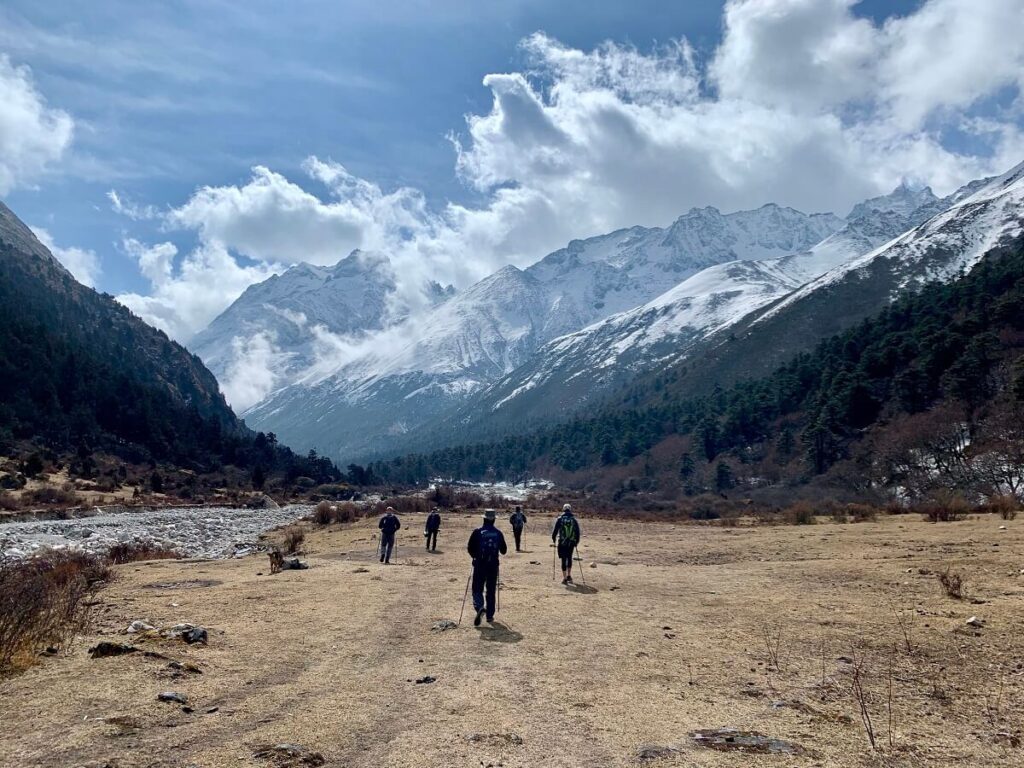
Gasa is an excellent October choice for travellers more interested in mountains than major monuments.
The region lies in northern Bhutan and is known for remote villages, trekking landscapes and hot springs.
Gasa Dzong occupies a spectacular mountain setting, while the surrounding region provides access to Bhutan’s high Himalayan country.
Autumn suits outdoor exploration, but conditions become significantly colder as altitude increases.
Those planning high-altitude excursions should pack proper warm clothing rather than relying on daytime temperatures in Thimphu or Punakha.
Best for: trekking, nature, hot springs and remote Himalayan scenery.
17. Laya
For adventurous travellers visiting in late October, Laya offers one of the most distinctive experiences in Bhutan.
The high-altitude settlement lies in Gasa district and is home to the Layap community, whose dress, traditions and pastoral lifestyle differ from communities in the lower valleys.
October also brings the Royal Highland Festival, held annually on October 23 and 24 at around 4,000 metres. The event celebrates Bhutan’s highland communities through traditional performances, games, local culture and displays involving animals such as yaks and horses.
This is not a casual day trip. Reaching Laya requires significantly more planning and physical preparation than visiting Paro or Punakha.
For travellers comfortable with trekking and altitude, however, it can become one of the most memorable parts of an October journey.
Best for: highland culture, trekking, mountain scenery and the Royal Highland Festival.
What Is the Weather Like in Bhutan in October?
October marks autumn across Bhutan, but temperatures depend strongly on altitude.
Paro and Thimphu usually experience pleasant daytime conditions but cooler mornings and evenings. Punakha tends to remain warmer because of its lower elevation, while Bumthang, Phobjikha and high mountain passes can become considerably colder.
Bhutan’s official tourism information notes that autumn follows the rainy season and is typically associated with bright, sunny days, while higher elevations can experience early snowfall.
Rather than relying on a single nationwide temperature forecast, check the weather for each destination shortly before travelling.
What to Pack for Bhutan in October
Layering is the easiest approach.
Bring comfortable shirts or T-shirts for warmer afternoons, along with full-length trousers for sightseeing and monastery visits. Add a fleece, sweater or lightweight insulated jacket for mornings and evenings.
You should also pack comfortable walking shoes, sunglasses, sun protection and a reusable water bottle.
For Chele La, Dochula, Bumthang, Phobjikha, Gasa or Laya, warmer clothing becomes much more important.
When entering temples and monasteries, dress respectfully. Shoulders and knees should generally remain covered, and visitors should follow any instructions provided by guides or temple staff.
Best Experiences in Bhutan in October:
October is not simply about seeing individual attractions. Some of the best memories come from experiences connecting several destinations.
Hike to Tiger’s Nest Monastery
For first-time visitors, the Tiger’s Nest hike is difficult to replace. Start early, walk at your own pace and allow enough time to enter the monastery rather than treating the excursion as a race.
Tusk Travel’s guide to the best things to do in Bhutan provides additional ideas for cultural and outdoor experiences.
Explore Bhutan’s Temples and Dzongs
Bhutan’s monasteries and fortress-monasteries are living institutions, not simply historical monuments.
Punakha Dzong, Trongsa Dzong, Tashichho Dzong, Gangtey Monastery, Kyichu Lhakhang and Bumthang’s temples can easily form the cultural backbone of a longer journey.
For travelers particularly interested in religious heritage, read Tusk Travel’s guide to famous temples in Bhutan.
Take a Village Walk
Do not spend the entire trip moving directly from one monument to another.
Places such as Punakha, Haa, Phobjikha and Bumthang are particularly rewarding when you leave time for countryside walks, villages and conversations with local residents.
Travel Beyond Western Bhutan
Paro, Thimphu and Punakha work perfectly for a first short trip.
If you have 10 days or longer, however, continuing toward Trongsa and Bumthang can dramatically deepen the experience.
Travellers with two weeks or more can consider an eastern route through Mongar, Trashigang and Trashiyangtse.
Suggested Bhutan Itineraries for October:
5 to 6 Days
Focus on:
Paro → Thimphu → Punakha → Paro
This is best for first-time travellers with limited time.
7 to 8 Days
Consider:
Paro → Thimphu → Punakha → Phobjikha → Paro
This provides a better mixture of culture and nature.
Tusk Travel currently offers itineraries covering these major western and central destinations through its Bhutan tour packages.
10 to 12 Days
A deeper journey could include:
Paro → Thimphu → Punakha → Phobjikha → Trongsa → Bumthang → Paro
This pace gives you more time to experience Bhutan rather than simply collect destinations.
14 Days or Longer
Experienced travellers can consider:
Western Bhutan → Bumthang → Mongar → Trashigang → Trashiyangtse → Samdrup Jongkhar
This creates a genuine cross-country journey ending close to India’s Assam region.
Practical Tips for Visiting Bhutan in October
October is part of Bhutan’s popular autumn travel period, so book important hotels, guides and flights ahead rather than relying on last-minute availability.
Do not plan too many destinations based solely on map distance. Bhutan’s mountainous roads mean that even relatively short distances can require several hours.
Paro is home to Bhutan’s main international airport, while domestic airports also operate at Bumthang, Gelephu and Yonphula. Bhutan’s official tourism information notes that mountain terrain and weather can occasionally affect flight schedules, so avoid overly tight international connections.
Allow flexibility in high-altitude areas as well. An October journey through Paro and Punakha is quite different from a trek to Laya or an excursion over a high mountain pass.
Frequently Asked Questions About Bhutan in October
Is October a good month to visit Bhutan?
Yes. October falls during Bhutan’s autumn season and is particularly suitable for cultural sightseeing, hiking, scenic drives and mountain photography. The main summer monsoon has largely ended, although weather varies between regions and elevations.
Is Bhutan crowded in October?
October is part of the popular autumn travel season, so major places such as Paro, Thimphu and Punakha can receive more visitors than during the summer monsoon or winter. Booking early is sensible, particularly around festivals.
Can I see the Himalayas in October?
October can provide excellent mountain visibility after the monsoon, particularly from high passes such as Dochula and Chele La. However, clear mountain views always depend on the weather on the particular day.
Can I see black-necked cranes in Phobjikha in October?
Possibly toward the later part of the month, but they should not be treated as guaranteed. Phobjikha is most strongly associated with the cranes during the colder months, so travellers visiting specifically for birdwatching should check current migration conditions before finalizing their dates.
Does it snow in Bhutan in October?
Snow is possible at high elevations as autumn progresses, while ordinary sightseeing areas such as Punakha generally remain snow-free. Bhutan’s official tourism authority notes that early snowfall can occur at higher elevations during autumn.
How many days are enough for Bhutan?
Seven days works well for a first trip covering Paro, Thimphu and Punakha, with Phobjikha possible on a carefully planned itinerary. Ten to twelve days is better if you want to add Trongsa and Bumthang.
What are the best places in Bhutan for first-time visitors?
For a first journey, focus on Paro, Thimphu, Punakha and Phobjikha Valley. Together they provide Bhutan’s strongest combination of monasteries, dzongs, Himalayan scenery, village landscapes and manageable travel times.
Final Thoughts
October brings together many of the experiences travellers hope to find in Bhutan: clearer mountain scenery, comfortable hiking conditions, centuries-old monasteries, colourful cultural traditions and road journeys through changing Himalayan landscapes.
First-time visitors can create a memorable trip around Paro, Thimphu, Punakha and Phobjikha, while travellers with more time can continue into Trongsa and Bumthang. For those interested in a much deeper journey, Mongar, Trashigang, Lhuntse, Gasa and Laya reveal sides of Bhutan that relatively few short-term visitors experience.
The key is not trying to visit all 17 places in one trip. Bhutan rewards slower travel. Choose destinations according to your available days, interests and comfort with long mountain journeys.
For additional planning information, use Tusk Travel’s updated complete Bhutan travel guide and compare Bhutan tour packages and itineraries before deciding how far east or north you want to travel.
Last updated: September 2026