
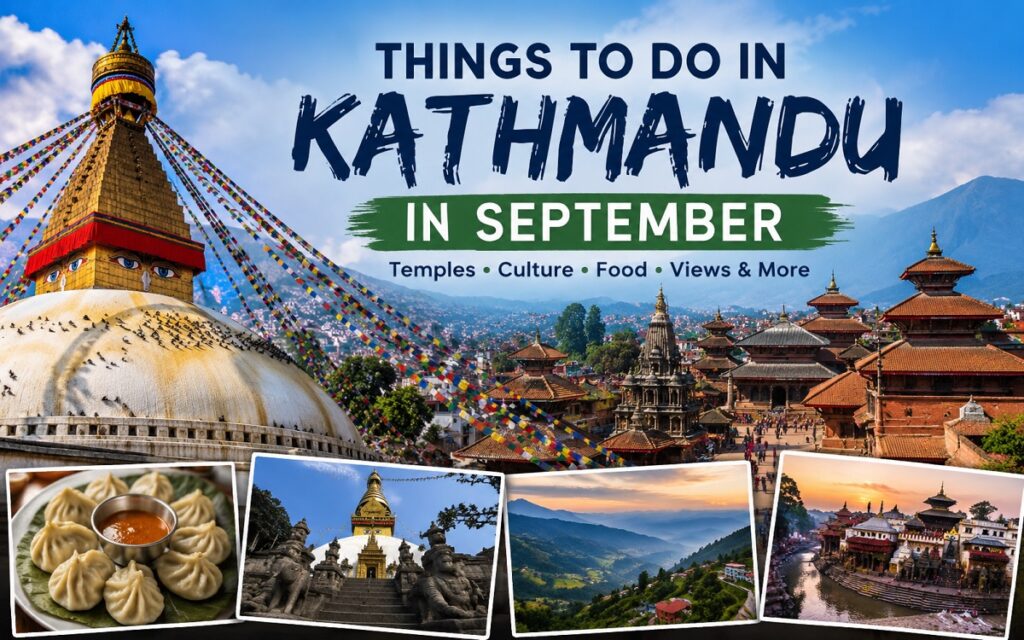
Kathmandu in September has a character of its own. The monsoon slowly begins to withdraw, the hills surrounding the Kathmandu Valley remain wonderfully green, temples look freshly washed after the rain, and the clearer days of Nepal’s famous autumn season start appearing toward the latter part of the month.
For travelers interested in culture, spirituality, architecture, local food, photography, short hikes, and Himalayan scenery, there are plenty of things to do in Kathmandu in September 2026. The city is much more than a stop before heading into the mountains. Kathmandu itself deserves several days, especially if you include nearby Patan, Bhaktapur, Nagarkot, and other parts of the valley.
September also has an advantage over the busier October and November period. You can often explore important heritage sites with fewer tourists while still enjoying the lush post-monsoon landscape.
If this is your first visit, explore the different Kathmandu tour packages available for cultural sightseeing, heritage tours, and customized Nepal holidays.
For a broader introduction before planning your journey, you can also read about the best things to do in Kathmandu and the best places to visit in Nepal.
This complete September 2026 Kathmandu travel guide covers the best attractions, cultural experiences, weather, day trips, food, packing advice, and a practical four-day itinerary.
Is September 2026 a Good Time to Visit Kathmandu?
Yes. September can be an excellent month to visit Kathmandu, particularly if you enjoy green scenery and do not mind occasional rain.
September marks the transition from Nepal’s summer monsoon toward autumn. Early September can still receive significant rainfall, while the chances of longer dry spells and clearer skies generally improve as the month progresses.
The countryside surrounding Kathmandu is especially beautiful at this time. Rice terraces turn intensely green, forests look refreshed, and the atmosphere often becomes remarkably clear after rainfall.
September also falls before Nepal’s busiest autumn tourist months, which means some heritage sites and neighborhoods can feel more relaxed.
Travelers planning a wider trip should also see the guide to the best places to visit in Nepal in September, which includes Kathmandu Valley as well as Pokhara, Lumbini, Chitwan, Bhaktapur, Mustang, Bandipur, and other destinations.
What to Expect in Kathmandu in September
Travelers can generally expect:
- Warm daytime temperatures
- Mild evenings
- Occasional monsoon showers
- High humidity during wetter periods
- Fresh and green landscapes
- Improving Himalayan visibility toward late September
- Fewer crowds than October and November
- Good conditions for cultural sightseeing between showers
- Muddy conditions on some hiking trails
The most important advice is to remain flexible. Avoid scheduling every hour of the day because September weather can change quickly.
Kathmandu in September 2026: 18 Best Things to Do:
1. Explore Kathmandu Durbar Square
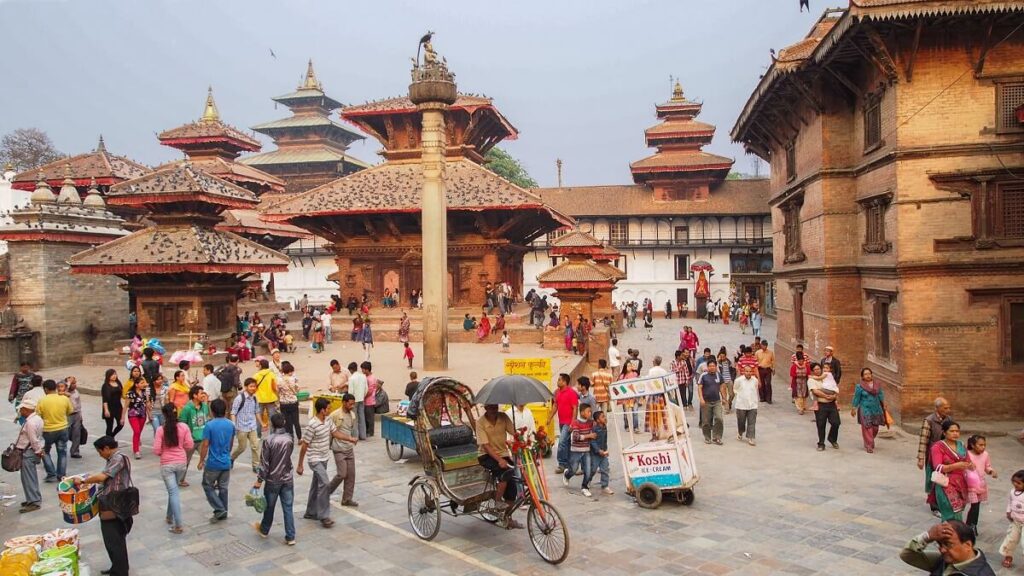
One of the best places to begin your Kathmandu sightseeing is Kathmandu Durbar Square.
This historic royal complex lies in the old heart of Kathmandu and contains temples, courtyards, shrines, traditional Newari buildings, and former royal structures.
You can explore Hanuman Dhoka, Kumari Ghar, old palace courtyards, beautifully carved wooden windows, and numerous temples.
Kumari Ghar is particularly fascinating. It is associated with Kathmandu’s tradition of the Kumari, Nepal’s Living Goddess.
September can be wonderful for photography here. Rain gives the brick buildings and stone courtyards deeper colors, while cloudy skies can create softer light than you would normally get during the brighter dry season.
Spend at least two hours exploring rather than simply walking through the square.
A knowledgeable local guide can also make a major difference because much of the history, symbolism, and religious importance is not immediately obvious from looking at the buildings alone.
You can combine Durbar Square with an old Kathmandu walking route through Asan and Indra Chowk.
2. Visit Swayambhunath Stupa Early in the Morning
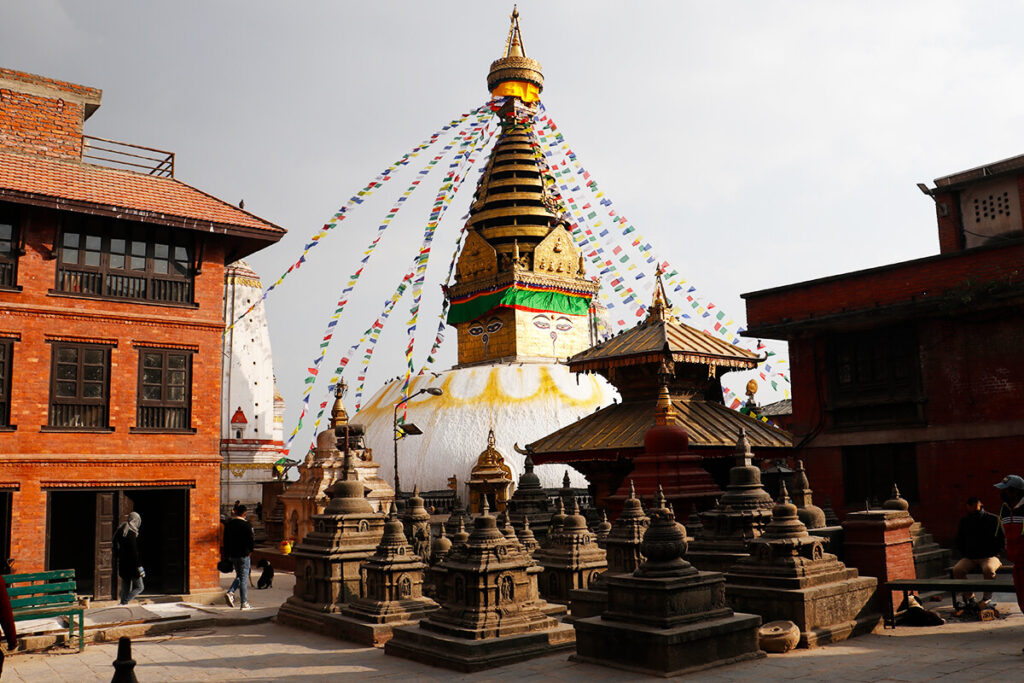
Swayambhunath is one of Kathmandu’s most recognizable landmarks.
Located on a hill overlooking the valley, it is often known as the Monkey Temple because of the large number of monkeys living around the complex.
The main white stupa, golden spire, Buddha eyes, prayer flags, prayer wheels, shrines, and surrounding religious buildings make Swayambhunath one of the most atmospheric places in Kathmandu.
If you approach from the traditional eastern staircase, be prepared for a considerable climb.
Try to arrive early in the morning.
At this time, you may see local residents walking clockwise around the stupa, spinning prayer wheels, lighting lamps, making offerings, and beginning their daily prayers.
September skies can sometimes be cloudy, but rainfall can also clear haze from the valley. On good mornings, you may get beautiful panoramic views of Kathmandu.
Do not feed the monkeys, and keep food, sunglasses, and other loose belongings secure.
For more details about its history and religious importance, read the complete guide to Swayambhunath Stupa, the Monkey Temple in Kathmandu.
3. Experience Boudhanath Stupa in the Evening
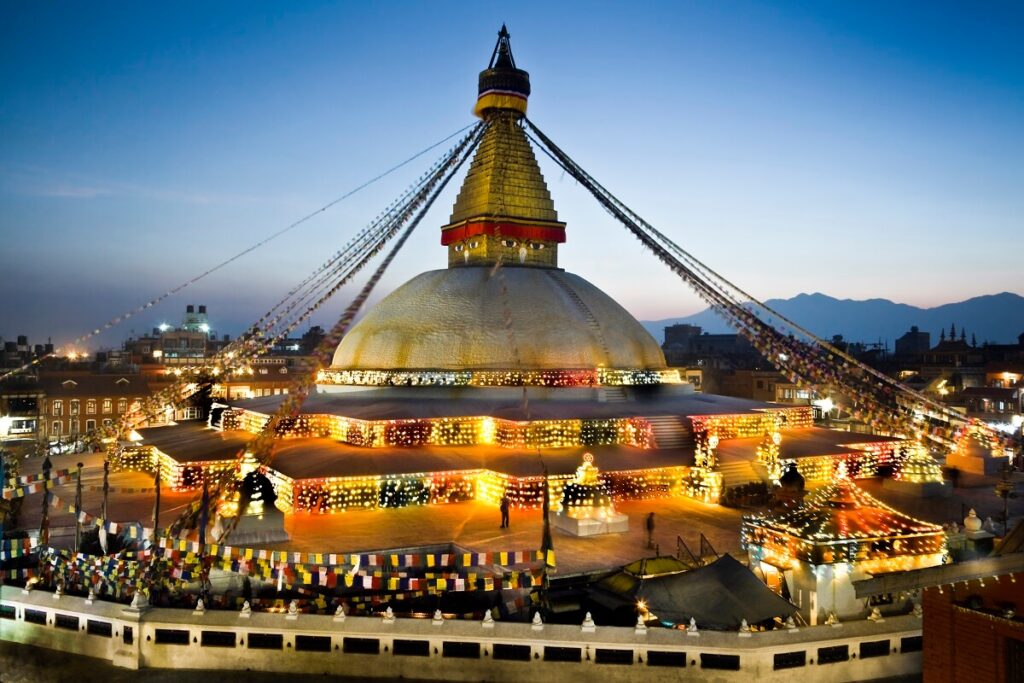
Boudhanath should be experienced slowly rather than treated as a quick photo stop.
The enormous white stupa is surrounded by monasteries, Tibetan shops, restaurants, cafés, and religious buildings.
It is one of the most important centers of Tibetan Buddhist culture in Kathmandu.
Late afternoon is an especially rewarding time to visit.
Walk clockwise around the stupa with monks, pilgrims, families, and local residents performing their daily kora. Prayer wheels line the route, while colorful prayer flags flutter above the complex.
As evening arrives, butter lamps begin to appear and the atmosphere becomes much more spiritual.
Several rooftop cafés around Boudhanath provide an excellent view of the stupa.
September clouds can create particularly dramatic sunsets, especially after rain.
Travelers interested in understanding the monument in greater depth can read these interesting facts about Boudhanath Stupa.
You can also explore the broader story of Buddhism in Nepal, which covers important monasteries and sacred Buddhist destinations.
4. Visit the Sacred Pashupatinath Temple
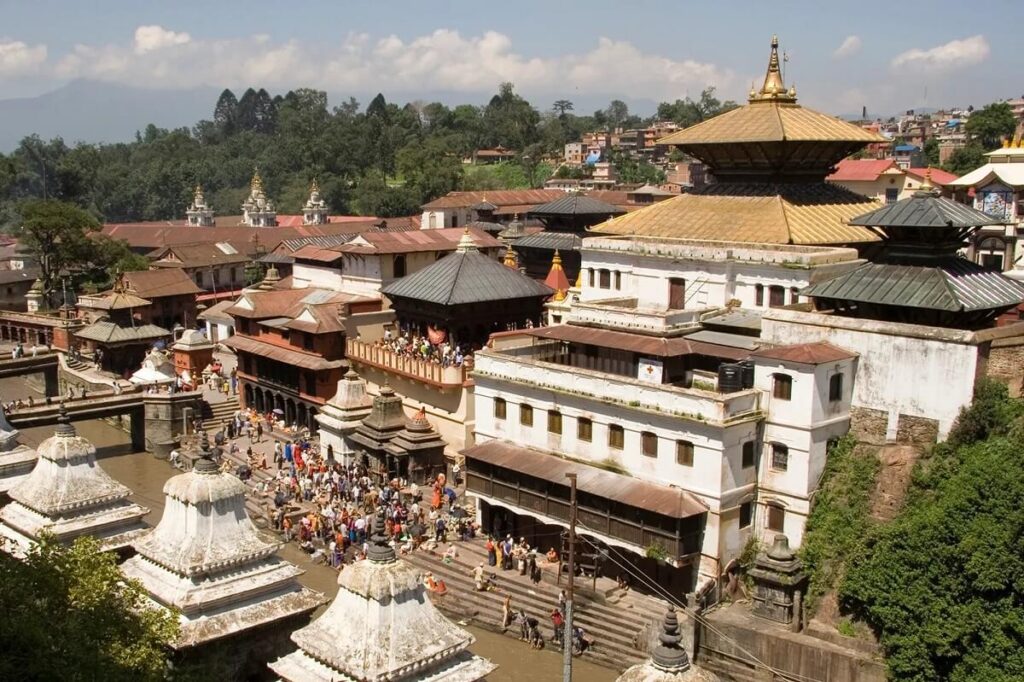
Pashupatinath is one of Nepal’s most sacred Hindu pilgrimage complexes and one of the most culturally important places in Kathmandu.
Located on the banks of the Bagmati River, the complex includes temples, shrines, ghats, religious buildings, statues, and areas used for Hindu cremation ceremonies.
The main temple is dedicated to Lord Shiva.
Non-Hindus are not permitted inside the inner sanctum of the principal temple, but visitors can explore the larger complex and observe the temple from designated areas.
Pashupatinath requires sensitivity.
The cremation ghats are places where families conduct final rites for loved ones. Avoid intrusive photography and always respect religious ceremonies.
Early morning is a good time to visit because the complex is active with worshippers and rituals.
Many travelers combine Pashupatinath with Boudhanath because the two sites are relatively close.
Before visiting, read the detailed Pashupatinath Temple travel guide for information about its history, religious importance, location, and visitor considerations.
5. Spend Half a Day Exploring Patan
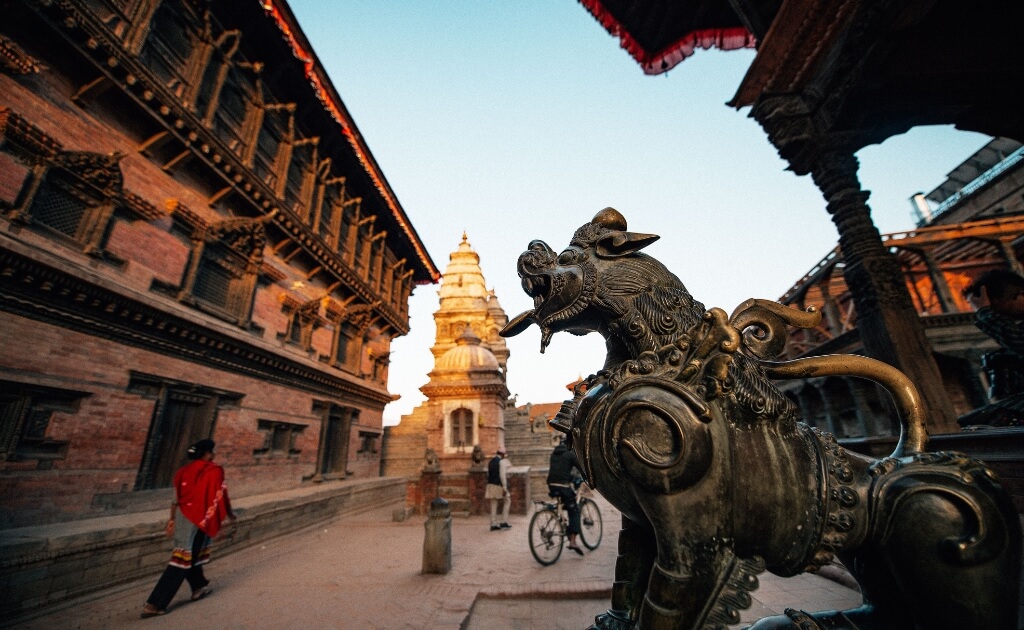
Patan, also officially known as Lalitpur, lies just south of central Kathmandu but has its own distinct history and atmosphere.
The highlight is Patan Durbar Square, which is famous for elaborate Newari architecture, temples, palace courtyards, stone sculpture, woodcarving, and metalwork.
Krishna Mandir is among its most recognizable landmarks.
The Patan Museum is particularly worthwhile for anyone interested in Hindu and Buddhist art, religious iconography, and Nepalese craftsmanship.
However, do not limit your visit to the main square.
The surrounding lanes contain hidden courtyards, small temples, artisan workshops, traditional homes, cafés, and metalworkers.
September’s overcast conditions can actually be helpful for photographing architecture because the softer light reduces harsh shadows.
Allow at least half a day for Patan.
6. Take a Day Trip to Bhaktapur
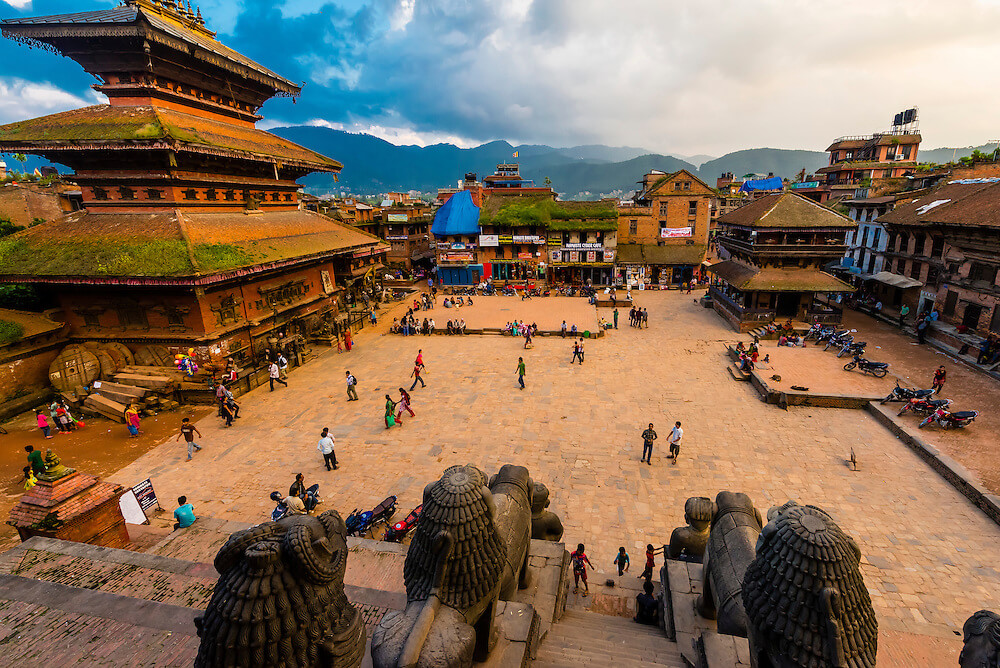
Bhaktapur is one of the most rewarding day trips from Kathmandu.
Once an important royal city, Bhaktapur retains a strong sense of traditional Newari culture.
Its red-brick buildings, courtyards, temples, pottery workshops, narrow lanes, and historic squares create a noticeably different atmosphere from central Kathmandu.
Important places to explore include:
- Bhaktapur Durbar Square
- Nyatapola Temple
- Taumadhi Square
- Pottery Square
- Dattatreya Square
- Traditional residential streets
Pottery Square can be particularly interesting when craftspeople are shaping and drying clay vessels.
Bhaktapur is also famous for juju dhau, a rich traditional yogurt that is commonly served in clay pots.
September rain can make the old brick surfaces slippery, so wear footwear with good grip.
For other excursion ideas, read the guide to the best places to visit in and around Kathmandu.
7. Stay Overnight in Nagarkot
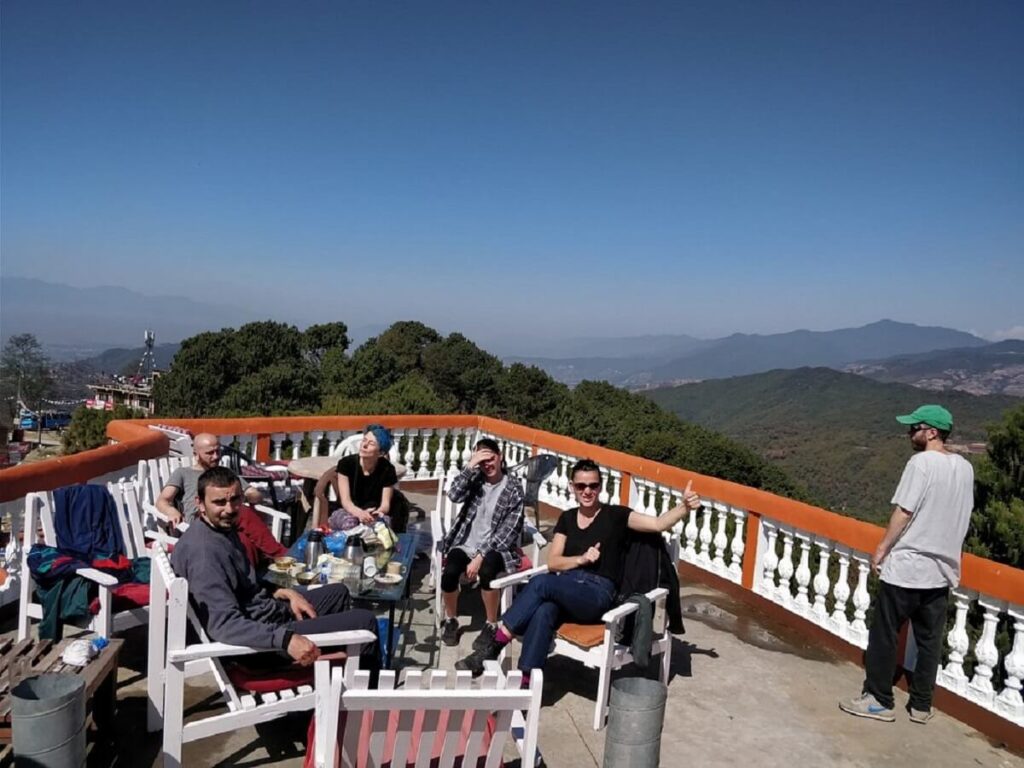
Nagarkot is one of the most popular hill destinations near Kathmandu and works especially well as an overnight extension.
The town is known for Himalayan views, sunrise scenery, terraced hillsides, forests, and cleaner air away from Kathmandu’s busy streets.
September mountain visibility can vary.
During early September, clouds may obscure the peaks. Toward the second half of the month, clearer mornings become more likely as monsoon activity begins to decline.
Therefore, treat Himalayan views as a possibility rather than a guarantee.
Even on cloudy days, Nagarkot remains attractive because September vegetation is exceptionally green.
Instead of driving from Kathmandu very early in the morning, consider staying overnight. You can arrive during the afternoon, enjoy the surrounding countryside, and wake early for sunrise.
One useful option is Tusk Travel’s 5-day Nepal tour covering Kathmandu, Nagarkot and Bhaktapur.
8. Discover Changunarayan Temple
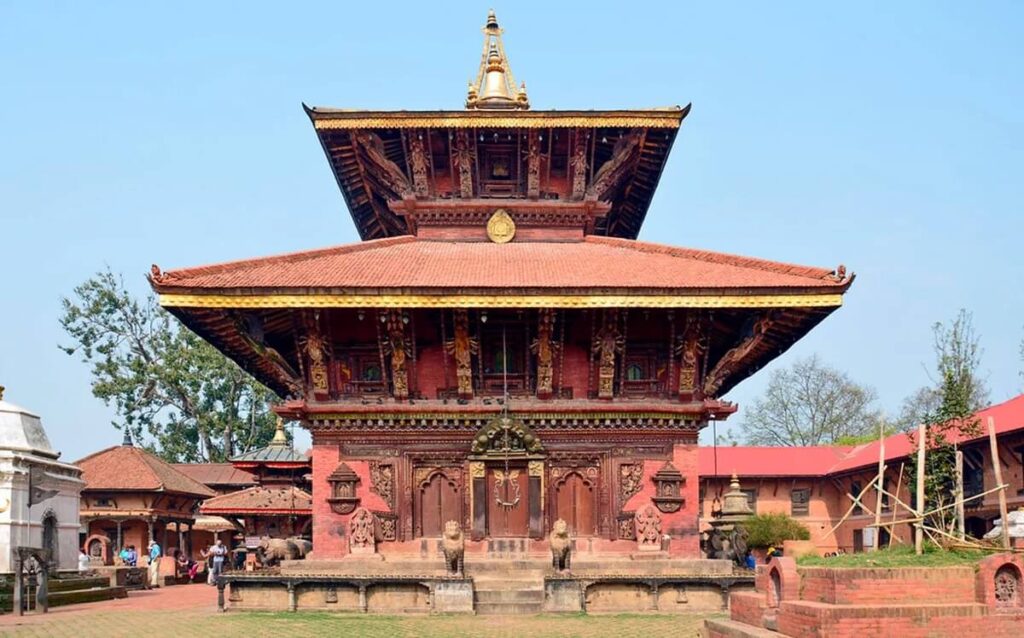
Changunarayan is an excellent choice for travelers interested in historic temples without the larger crowds found at some of Kathmandu’s major sites.
The temple is dedicated to Lord Vishnu and occupies a hilltop location overlooking parts of the Kathmandu Valley.
The complex contains traditional buildings, religious sculptures, stone carvings, and historical inscriptions.
The surrounding village is small and pleasant to explore on foot.
A practical day route is:
Kathmandu → Bhaktapur → Changunarayan → Nagarkot
You can stay overnight in Nagarkot rather than attempting to return immediately to Kathmandu.
9. Wander Through Thamel
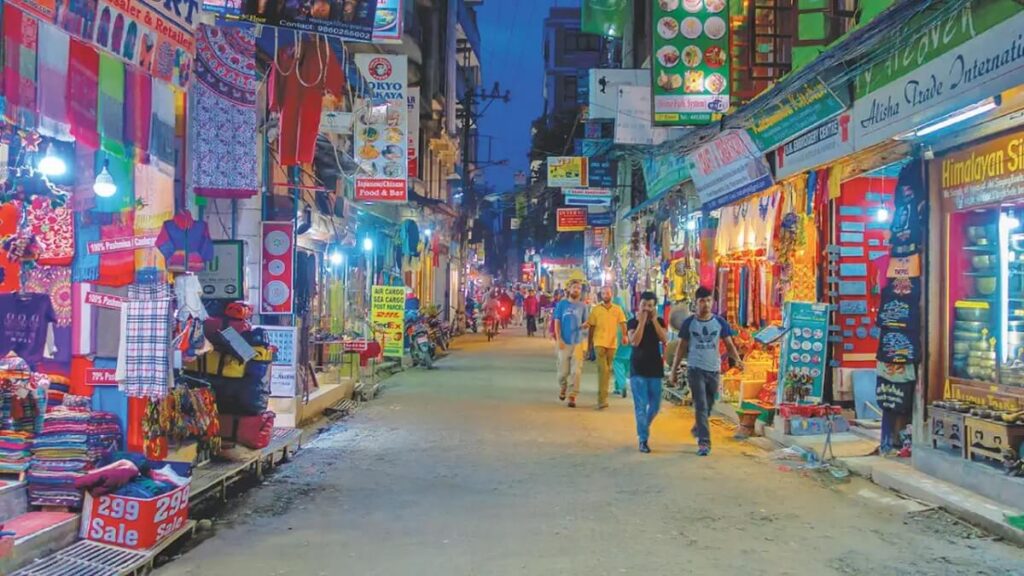
Thamel is Kathmandu’s best-known visitor district.
It contains hotels, cafés, restaurants, trekking shops, bookstores, bars, bakeries, souvenir shops, handicraft stores, and travel services.
But the best way to experience Thamel is to move away from the most crowded streets.
Explore smaller lanes where you can find courtyard shrines, prayer flags, handmade paper products, pashmina, singing bowls, spices, jewelry, and traditional crafts.
September rainfall also gives you an excellent excuse to spend an afternoon exploring Kathmandu’s café culture.
Rather than filling every part of your Kathmandu itinerary with major monuments, leave some time simply to walk around Thamel.
10. Taste Traditional Nepali Food
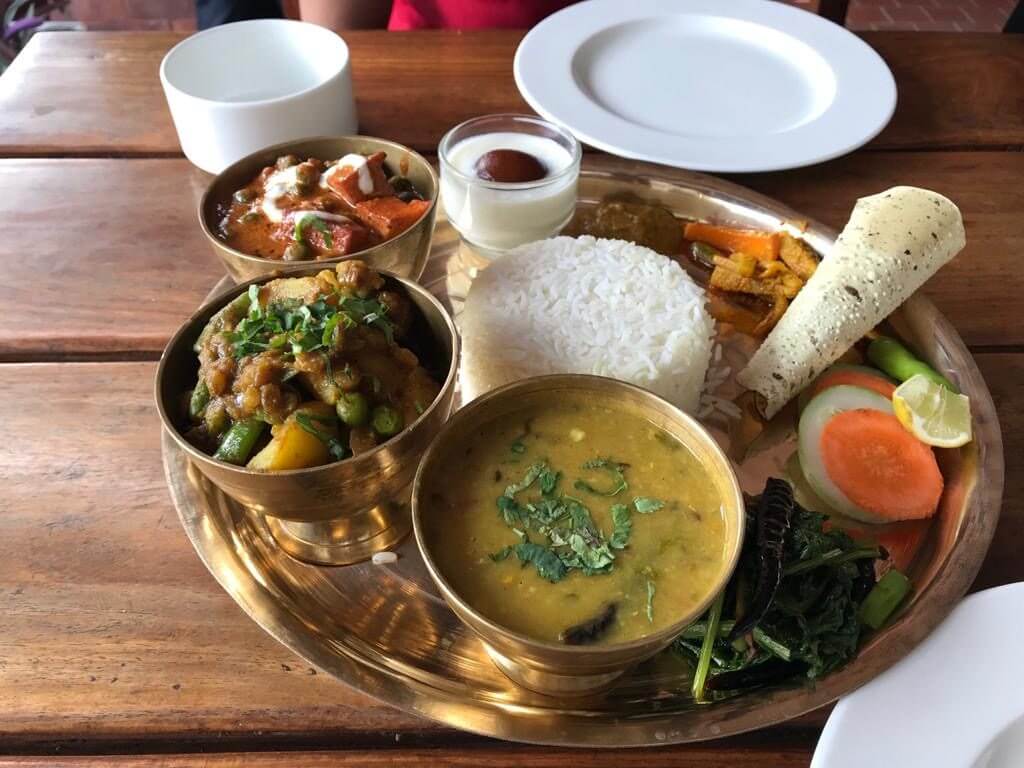
Food is an important part of visiting Kathmandu.
The best-known everyday meal is dal bhat, usually consisting of rice, lentil soup, vegetables, pickle, and curry.
Momos are another essential Kathmandu experience. These dumplings may be steamed or fried and filled with vegetables, chicken, buffalo meat, or other ingredients.
Travelers should also explore Newari cuisine, which has deep roots in the Kathmandu Valley.
Foods worth trying include:
- Dal bhat
- Momo
- Bara
- Chatamari
- Choila
- Yomari
- Sekuwa
- Thukpa
- Aloo tama
- Sel roti
For a more detailed introduction, read this guide to the traditional food of Nepal.
Kathmandu has everything from small family-run eateries to modern restaurants and heritage dining experiences.
Drink only filtered, purified, or safely bottled water.
11. Take a Nepali Cooking Class
A cooking class is one of the best activities to keep in your September itinerary because it works even when the weather becomes rainy.
Many Kathmandu cooking experiences begin with a local market visit.
You may learn about vegetables, herbs, rice, spices, and ingredients used in everyday Nepalese households before preparing dishes such as momo, dal bhat, curries, and chutneys.
The real benefit goes beyond learning a recipe.
Cooking classes offer opportunities to interact with local hosts and learn how Nepalese food connects with festivals, family traditions, religion, and regional identity.
Allow three to four hours for a worthwhile class.
12. Learn About Thangka Painting
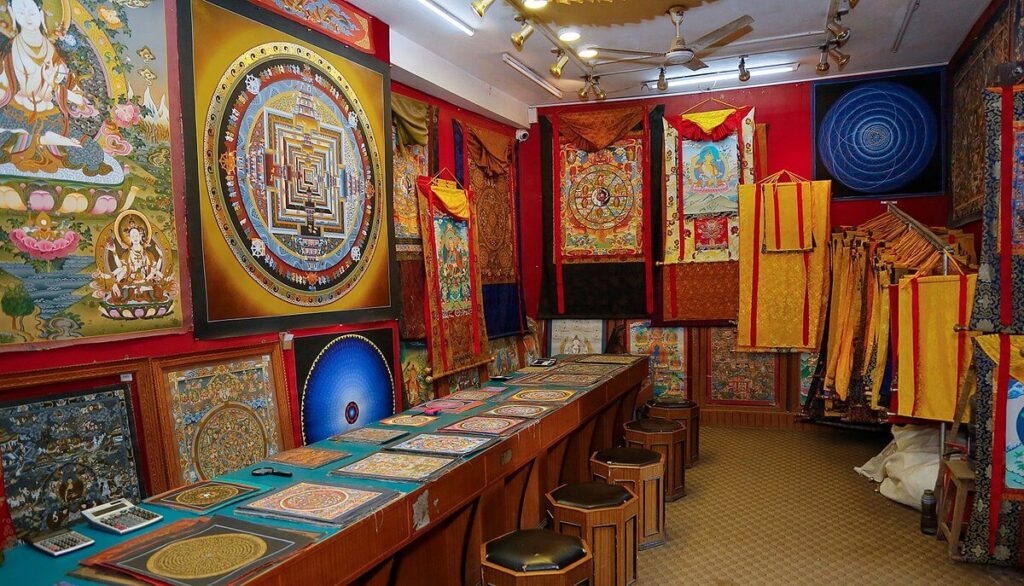
Kathmandu has a long tradition of Buddhist religious art.
One of the most distinctive forms is thangka painting, which involves detailed religious images used for teaching, meditation, and spiritual practice.
You can find thangka schools and workshops around Boudhanath, Patan, and other parts of Kathmandu.
Visitors can often watch artists work and learn about the symbols, proportions, deities, colors, and patterns used in traditional compositions.
Some studios also offer short workshops.
Travelers interested in monasteries and Buddhist culture may also want to read about the most popular Buddhist monasteries in Nepal.
13. Relax in the Garden of Dreams
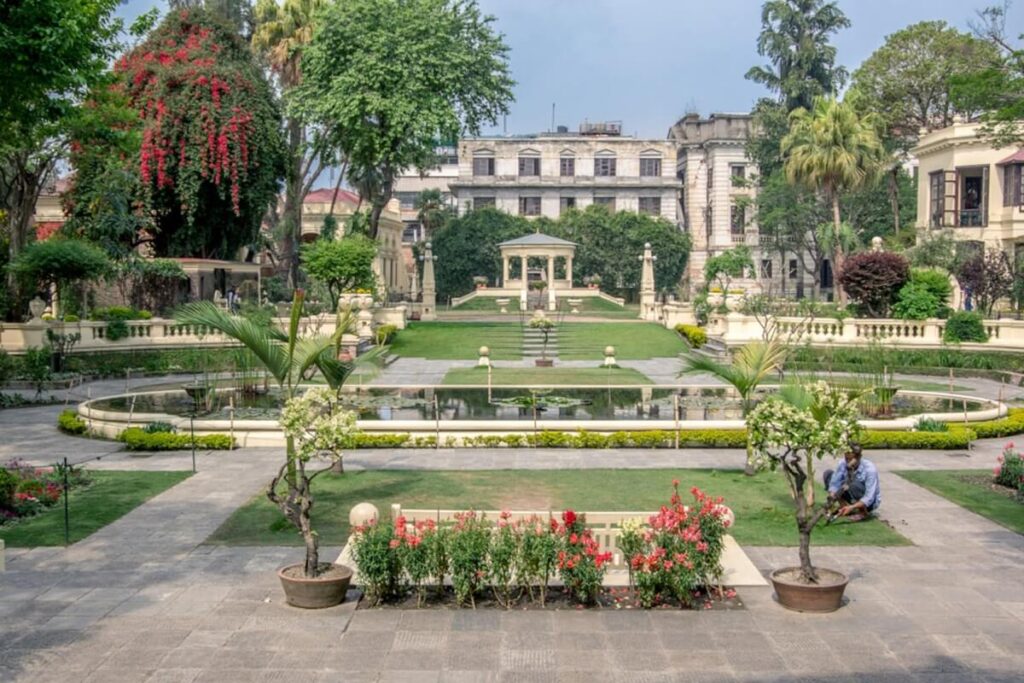
Sightseeing in Kathmandu can be intense.
Traffic, busy markets, crowded streets, and long days exploring temples can become tiring, especially for first-time visitors.
The Garden of Dreams offers a peaceful change of pace close to Thamel.
The landscaped historic garden includes lawns, ponds, pavilions, trees, and quiet areas where you can rest.
September greenery makes it particularly pleasant.
Spend an hour here with a book or coffee rather than trying to squeeze another major monument into your day.
14. Explore Asan Market
Asan is one of Kathmandu’s most atmospheric traditional market districts.
The narrow streets are packed with small shops and vendors selling products used by local residents rather than only tourists.
You may see:
- Spices
- Rice and grains
- Vegetables
- Seasonal fruits
- Religious offerings
- Brass utensils
- Incense
- Flowers
- Textiles
- Household goods
- Traditional sweets
Asan is especially lively in the morning.
It also fits naturally into a walking route between Thamel and Kathmandu Durbar Square.
Carry only what you need, keep valuables secure, and be patient with pedestrian traffic.
15. Walk Through Kathmandu’s Old City
One of the most memorable things to do in Kathmandu is simply walk through its historic neighborhoods.
A good route is:
Thamel → Asan → Indra Chowk → Kathmandu Durbar Square
Along the way, you can see tiny neighborhood shrines, courtyards, vegetable sellers, incense shops, traditional homes, local tea stalls, temples, and everyday street life.
Walking reveals details that are easy to miss when traveling entirely by vehicle.
Early morning is usually the most enjoyable time because temperatures are comfortable and traffic is lighter.
16. Consider an Everest Mountain Flight
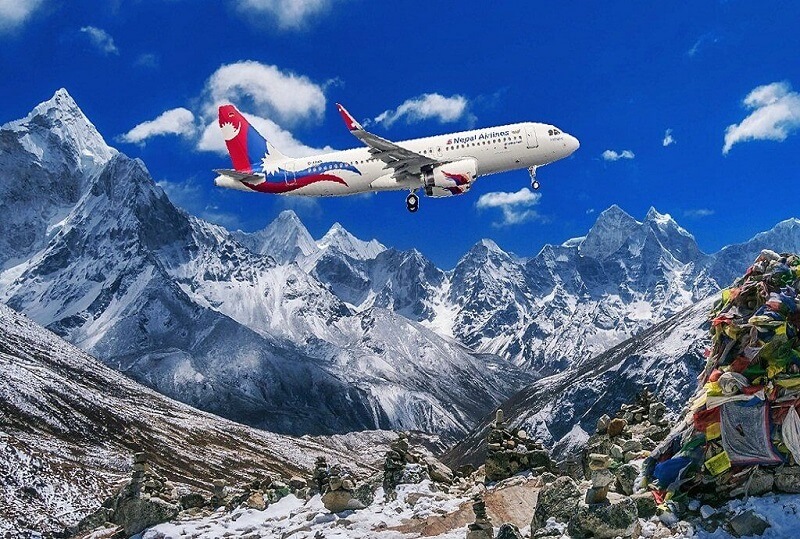
Travelers who want to experience Himalayan scenery without trekking can consider an Everest scenic flight from Kathmandu.
Flights generally operate early in the morning because visibility is usually better at that time.
September weather means cancellations or delays remain possible, particularly during unsettled monsoon conditions.
Therefore, do not schedule your mountain flight on your final morning in Nepal.
Try to plan it early in your Kathmandu stay so another day remains available if weather forces cancellation.
Tusk Travel includes an Everest mountain flight among the experiences available through its Kathmandu tours.
17. Take a Short Hike Around Kathmandu Valley
You do not need to undertake a multi-day Himalayan trek to enjoy Nepal’s landscape.
Several areas around Kathmandu Valley are suitable for shorter walks and day hikes.
Options include routes around:
- Nagarkot
- Shivapuri
- Phulchowki
- Godavari
- Dhulikhel
- Chisapani
September landscapes are extremely green, but trails may be muddy and slippery.
Wear proper hiking footwear and consider a local guide on unfamiliar routes.
Avoid exposed or isolated trails during heavy rainfall.
The weather generally becomes more favorable for hiking later in September as the monsoon gradually weakens.
18. Photograph Kathmandu After the Rain
September is an underrated month for photography in Kathmandu.
The valley often looks particularly dramatic immediately after rain.
Wet bricks turn a deeper red, temple roofs glisten, stone courtyards produce reflections, prayer flags become more vivid, and dark clouds provide an atmospheric background.
Some excellent photography locations include:
- Kathmandu Durbar Square
- Swayambhunath
- Boudhanath
- Pashupatinath
- Patan Durbar Square
- Bhaktapur
- Asan Market
- Nagarkot
Carry a lightweight rain cover for cameras and a microfiber cloth for lenses.
Early morning and late afternoon usually provide the best light.
Kathmandu Weather in September 2026
September is a transitional month in Kathmandu.
It still receives monsoon rain, particularly during the beginning and middle of the month, but rainfall normally decreases as autumn approaches.
Expect warm days, relatively humid conditions, and cooler evenings.
The weather can change quickly.
You may experience sunshine in the morning, clouds around midday, an afternoon shower, and another clear period before sunset.
This is why flexibility is so important.
For a broader seasonal comparison, see the guide to the best time to visit Kathmandu and the detailed best time to visit Nepal.
Travelers should avoid assuming that every September day will have crystal-clear Himalayan views. Late September generally has a better chance of clearer conditions, but mountain weather can never be guaranteed.
Festivals and Cultural Experiences in September
Kathmandu has one of the richest festival calendars in South Asia.
The exact dates of Nepalese festivals vary because many are determined according to traditional lunar calendars.
One of Kathmandu’s most important celebrations around this season is Indra Jatra, a major Newar festival associated with Kathmandu’s old city and Durbar Square.
Celebrations traditionally involve religious ceremonies, chariot processions, masked dances, crowds, and appearances associated with the Living Goddess Kumari.
If your September 2026 visit overlaps with a major festival, expect:
- Larger crowds
- Temporary road closures
- Processions
- Changes to sightseeing access
- Religious ceremonies
- Excellent cultural photography opportunities
Always confirm the official 2026 festival dates before planning your trip specifically around an event.
What to Pack for Kathmandu in September
Pack for warm weather, rain, and extensive walking.
Useful items include:
- Lightweight breathable clothing
- Comfortable walking shoes
- Quick-drying trousers
- Lightweight waterproof jacket
- Compact umbrella
- Small daypack
- Rain cover for bags
- Sunscreen
- Sunglasses
- Hat
- Insect repellent
- Refillable water bottle
- Power bank
- Waterproof pouch for electronics
- Light sweater
- Modest clothing for religious places
- Personal medication
A light layer is useful if you plan to stay in hill destinations such as Nagarkot.
Heavy winter clothing is not required for Kathmandu in September.
Suggested 4-Day Kathmandu Itinerary for September:
Day 1: Kathmandu Old City and Swayambhunath
Begin your morning at Swayambhunath.
Continue to Thamel and walk through Asan and Indra Chowk toward Kathmandu Durbar Square.
Spend your evening exploring Thamel or enjoying a traditional Nepalese dinner.
Day 2: Pashupatinath, Boudhanath and Patan
Visit Pashupatinath early in the morning.
Continue to Boudhanath Stupa.
After lunch, explore Patan Durbar Square and nearby artisan neighborhoods.
If you have time, return to Boudhanath around sunset.
Day 3: Bhaktapur and Nagarkot
Drive to Bhaktapur after breakfast.
Spend several hours exploring its historic squares, temples, pottery areas, and local streets.
Continue toward Changunarayan if time and weather permit.
Drive onward to Nagarkot and stay overnight.
Day 4: Nagarkot Sunrise and Kathmandu
Wake early for sunrise and possible Himalayan views.
Return toward Kathmandu after breakfast.
Spend the afternoon shopping, taking a cooking class, visiting the Garden of Dreams, or relaxing before departure.
Travelers who prefer a ready-made route can see this 4-day Kathmandu tour itinerary, which covers Kathmandu, Patan, Swayambhunath, Pashupatinath, and Boudhanath.
Where to Go After Kathmandu:
Kathmandu makes an excellent starting point for exploring the rest of Nepal.
Kathmandu to Pokhara
Pokhara is the most popular addition to a Kathmandu trip.
The lakeside city is famous for Phewa Lake, mountain scenery, Sarangkot sunrise, waterfalls, caves, and adventure activities.
Read the complete guide explaining how to reach Pokhara from Kathmandu.
A good combined option is the 6-day Kathmandu and Pokhara tour.
Kathmandu to Chitwan
Nature and wildlife lovers can continue south toward Chitwan National Park.
Chitwan provides a very different experience from Kathmandu, with jungle landscapes, wildlife excursions, canoe trips, and local Tharu culture.
Kathmandu, Pokhara, Lumbini and Chitwan
Travelers with around ten days can experience several sides of Nepal in one journey.
The 10-day Nepal tour covering Kathmandu, Pokhara, Lumbini, Chitwan and Nagarkot combines culture, spirituality, nature, wildlife, and mountain scenery.
You can also explore the complete collection of Nepal tour packages if you want to compare different durations and routes.
Practical Tips for Visiting Kathmandu in September:
Start Sightseeing Early
Mornings are often more comfortable for walking and may provide better weather conditions.
Keep Your Itinerary Flexible
If rain interrupts an outdoor visit, switch to a museum, café, cooking class, workshop, or shopping session.
Allow Extra Time for Road Journeys
Traffic can make relatively short journeys through Kathmandu take longer than expected.
Carry Some Cash
Cards are increasingly accepted, but small shops, local markets, and smaller restaurants may still prefer cash.
Dress Respectfully
Modest clothing is recommended at temples, monasteries, and religious sites.
Drink Safe Water
Use filtered, purified, or properly sealed bottled water.
Protect Electronics
Carry a waterproof pouch for your phone, passport, and camera equipment.
Avoid Overplanning
Two major sightseeing areas plus one evening activity are enough for most days.
Kathmandu is better experienced slowly.
FAQs About Visiting Kathmandu in September 2026
Is September a good month to visit Kathmandu?
Yes. September offers lush post-monsoon scenery, cultural sightseeing, relatively fewer visitors, and gradually improving autumn weather.
Does it rain every day in Kathmandu in September?
Rain remains possible, but it does not necessarily continue throughout the entire day. Weather conditions generally improve as the month progresses.
Can you see the Himalayas from Kathmandu in September?
Yes, on clear days. The chances often improve after rainfall and later in September, but mountain visibility cannot be guaranteed.
What are the best things to do in Kathmandu in September?
Top experiences include Kathmandu Durbar Square, Swayambhunath, Boudhanath, Pashupatinath, Patan, Bhaktapur, Nagarkot, Thamel, local food, markets, photography, and cultural walks.
How many days are enough for Kathmandu?
Three days is enough for the main attractions. Four or five days is better if you want to include Patan, Bhaktapur, Nagarkot, and slower cultural experiences.
Can I trek near Kathmandu in September?
Yes, but some trails may remain wet and muddy. Conditions generally become better toward the end of September.
What should I wear in Kathmandu in September?
Wear lightweight breathable clothes and comfortable shoes, and carry rain protection. Modest clothing is recommended for temples.
Final Thoughts
Kathmandu in September offers something travelers do not always experience during Nepal’s busier peak months.
The valley is exceptionally green, old temples and brick streets look refreshed after the monsoon, markets remain lively with everyday local life, and the approaching autumn gradually brings clearer skies and better visibility.
The best things to do in Kathmandu in September 2026 go far beyond simply checking monuments off a list.
Start a morning among the prayer wheels of Swayambhunath. Walk through the market lanes of Asan. Explore the temples and courtyards of Kathmandu Durbar Square. Observe Kathmandu’s spiritual traditions at Pashupatinath and Boudhanath. Spend a day among the red-brick streets of Bhaktapur and finish with a night overlooking the green Kathmandu Valley from Nagarkot.
Leave time for momo, Newari cuisine, crafts, cafés, markets, and conversations with local people.
Kathmandu is sometimes treated simply as the gateway to Everest or Annapurna. It deserves much more attention.
For first-time travelers, four or five days provides a comfortable introduction to Kathmandu Valley. Those with a week or longer can continue to Pokhara, Chitwan, Lumbini, or other parts of Nepal.
Before finalizing a longer journey, browse the Tusk Travel Nepal tour packages and the Tusk Travel Blog for additional destination guides and practical Nepal travel advice.
September may still bring a few showers, but travelers who accept the changing weather are rewarded with one of Kathmandu’s greenest, freshest, and most atmospheric periods of the year.
