
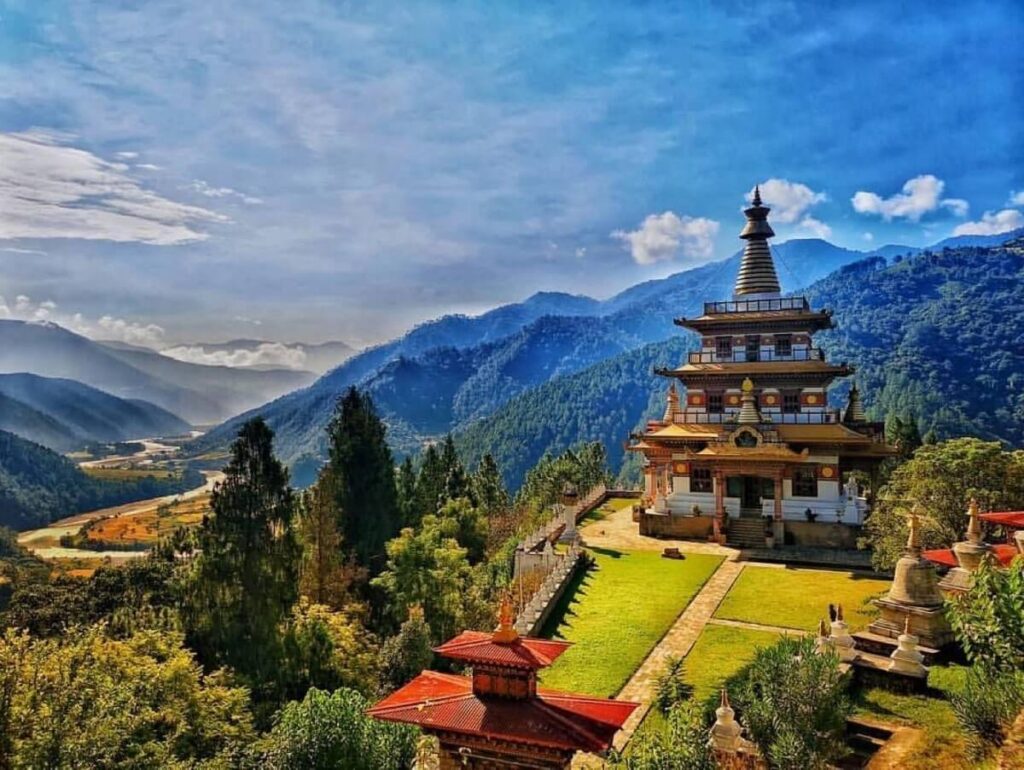
Bhutan doesn’t have hill stations quite like Shimla or Darjeeling. What it offers instead is something rather special: quiet Himalayan valleys, traditional mountain towns, forested hills and villages where life moves at a gentler pace.
If you’re looking for the best hill stations in Bhutan, start with Paro, Thimphu, Phobjikha Valley, Haa Valley and Bumthang. Paro is known for Tiger’s Nest Monastery, while Phobjikha offers wide-open landscapes and winter birdwatching. Haa is quieter and more rural, and Bumthang is particularly rewarding for visitors interested in Bhutanese culture.
For a first trip, Paro, Thimphu and Punakha are the easiest places to combine. However, if you have eight to twelve days, adding Phobjikha, Haa or central Bhutan makes the journey more varied.
Here are eight of Bhutan’s most beautiful mountain destinations, what makes each worth visiting, and how to plan a practical itinerary.
Are There Hill Stations in Bhutan?
Bhutan is a mountainous country in the eastern Himalayas, but its destinations are usually called valleys, towns or highland regions rather than hill stations.
Paro and Thimphu sit at elevations of more than 2,000 metres, while Phobjikha is a higher, cooler valley. Punakha is much lower and warmer, even though mountains surround it.
So, if you’re looking for cool weather, beautiful landscapes and a quiet mountain holiday, Bhutan has plenty of options. The important thing is choosing places that suit your interests and travel time.
Best Hill Stations in Bhutan at a Glance
| Destination | Approximate elevation | Best for | Suggested stay |
| Paro | 2,200 m | Mountain scenery and Tiger’s Nest | 2–3 nights |
| Thimphu | 2,300 m | Culture and accessible hill walks | 2 nights |
| Phobjikha Valley | 3,000 m | Nature, birds and quiet stays | 1–2 nights |
| Haa Valley | 2,700 m | Rural scenery and village life | 1–2 nights |
| Bumthang | 2,600–2,800 m around Jakar | Monasteries and countryside | 2–3 nights |
| Trongsa | 2,200 m | Historic dzong and valley views | 1 night |
| Punakha | 1,200 m | Riverside scenery and mild weather | 1–2 nights |
| Gasa | 2,800 m | Remote mountain landscapes | 1–2 nights |
Elevations are approximate and vary by the specific location.
Best 8 Hill Stations to Visit in Bhutan:
1. Paro
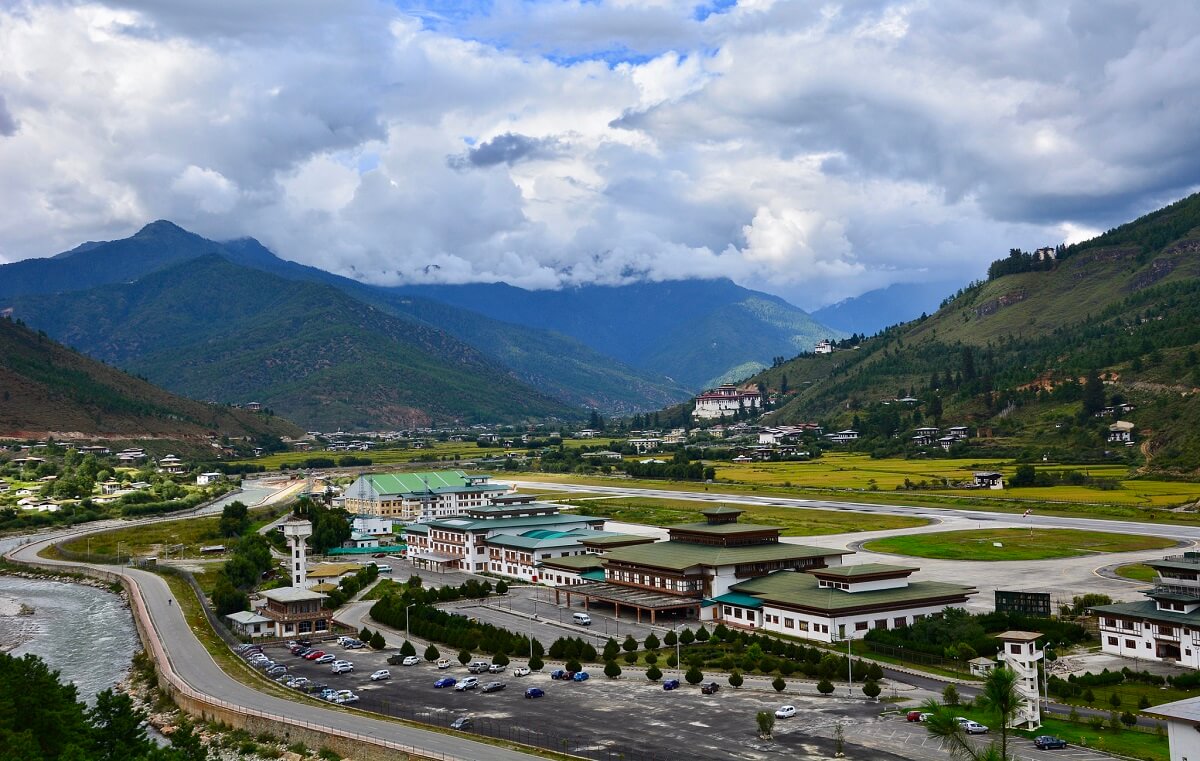
Paro is where many journeys through Bhutan begin, and it immediately gives visitors a sense of the country’s mountain scenery.
The valley is surrounded by wooded slopes, traditional houses and cultivated fields. Although it has Bhutan’s main international airport, Paro still feels much quieter than most major tourist towns.
Its famous landmark is Paro Taktsang, or Tiger’s Nest Monastery, which clings to a cliff high above the valley.
What Makes Paro Worth Visiting?
The hike to Tiger’s Nest is the main experience. It involves a sustained uphill walk, so allow most of the day rather than treating it as a quick sightseeing stop.
You can also visit Rinpung Dzong, the National Museum and Kyichu Lhakhang.
For mountain views, a drive towards Chele La Pass can be rewarding when the road and weather permit.
Best time: March to May and September to November.
Suggested stay: Two or three nights.
Practical tip: Schedule the Tiger’s Nest hike after your first day in Bhutan. This gives you time to adjust to the altitude and the journey.
For more attractions, explore our Bhutan travel guide.
2. Thimphu

Thimphu is Bhutan’s capital, but it doesn’t feel like a conventional big city.
The town occupies a valley surrounded by green hills. Monasteries, traditional architecture and markets sit alongside cafés, museums and modern government buildings.
That mix makes Thimphu particularly interesting for first-time visitors who want to understand contemporary Bhutanese life.
What Should You See in Thimphu?
Begin with Buddha Dordenma, the enormous Buddha statue overlooking the valley. The location provides some of the city’s best panoramic views.
Afterwards, visit the Memorial Chorten, the Royal Textile Academy and Tashichho Dzong, subject to visitor opening hours.
If you enjoy walking, ask your guide about suitable forest trails and monastery hikes outside the main city area.
Best time: March to May and September to November.
Suggested stay: Two nights.
Practical tip: Don’t try to visit every museum and monastery in one day. Combine a few significant attractions with time to explore the city at a relaxed pace.
3. Phobjikha Valley
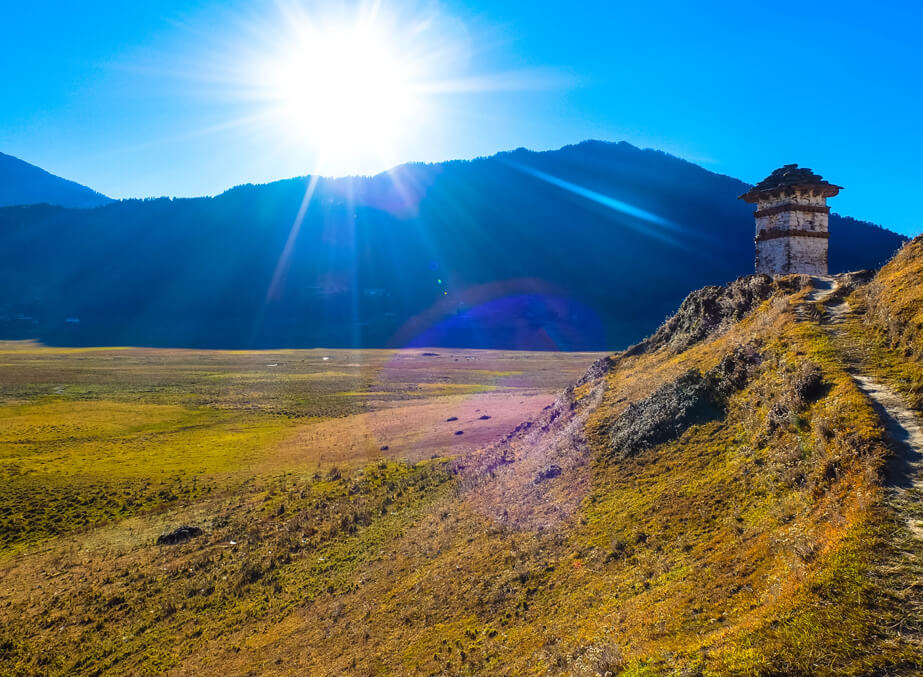
If you want to escape busy sightseeing routes, Phobjikha is one of Bhutan’s most rewarding destinations.
Also called Gangtey Valley, it is a broad glacial valley surrounded by forested hills. Small villages and open fields give the area a peaceful, rural character.
Unlike Paro and Thimphu, the attraction here is not a long list of monuments. It is the landscape itself.
What Can You Do in Phobjikha?
Visit Gangtey Monastery, enjoy a guided nature walk and spend time looking across the open valley.
Phobjikha is also known for black-necked cranes, which generally arrive during the winter migration period.
However, sightings depend on the season and the birds’ natural movements.
The area is especially enjoyable with a comfortable countryside lodge where you can spend a quiet evening.
Best time: March to May for spring landscapes, or approximately November to February for crane watching.
Suggested stay: One or two nights.
Practical tip: Nights become very cold in winter. Check that your accommodation has suitable heating and warm bedding.
For travellers interested in this region, the 8 Days Bhutan Tour Package includes Gangtey Valley along with Paro, Punakha and Thimphu.
4. Haa Valley
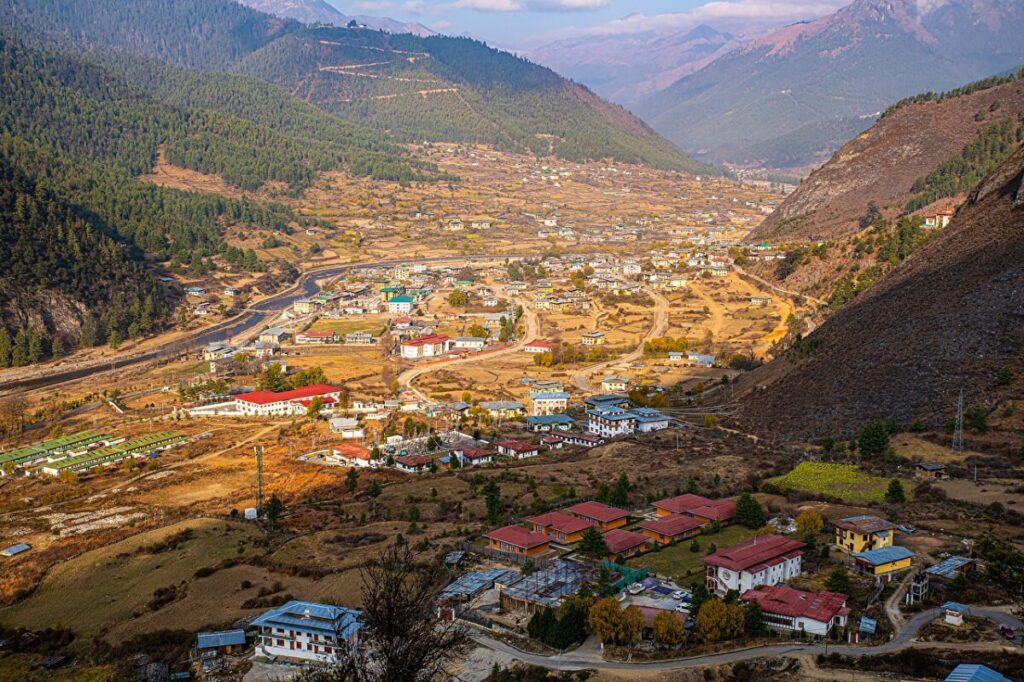
Haa Valley receives fewer visitors than Paro or Thimphu, which is part of its appeal.
The landscape is characterised by forested slopes, traditional farmhouses and small settlements surrounded by mountains.
A journey from Paro through Chele La Pass offers some striking scenery when visibility is good.
However, the pass is high and exposed, so snow or icy conditions can affect access in winter.
What Is There to See in Haa?
Visit Lhakhang Karpo and Lhakhang Nagpo, two important religious sites associated with the valley.
You can also enjoy guided village walks and learn about the area’s rural traditions.
Rather than rushing through on a day trip, spend a night if your itinerary allows. The quiet mornings and countryside setting are a major part of the experience.
Best time: April to May and September to November.
Suggested stay: One or two nights.
Practical tip: Haa has fewer accommodation options than Bhutan’s main tourist centres. Confirm your overnight stay before adding it to the itinerary.
For detailed suggestions, read our 15 Things to Do in Haa Valley.
5. Bumthang
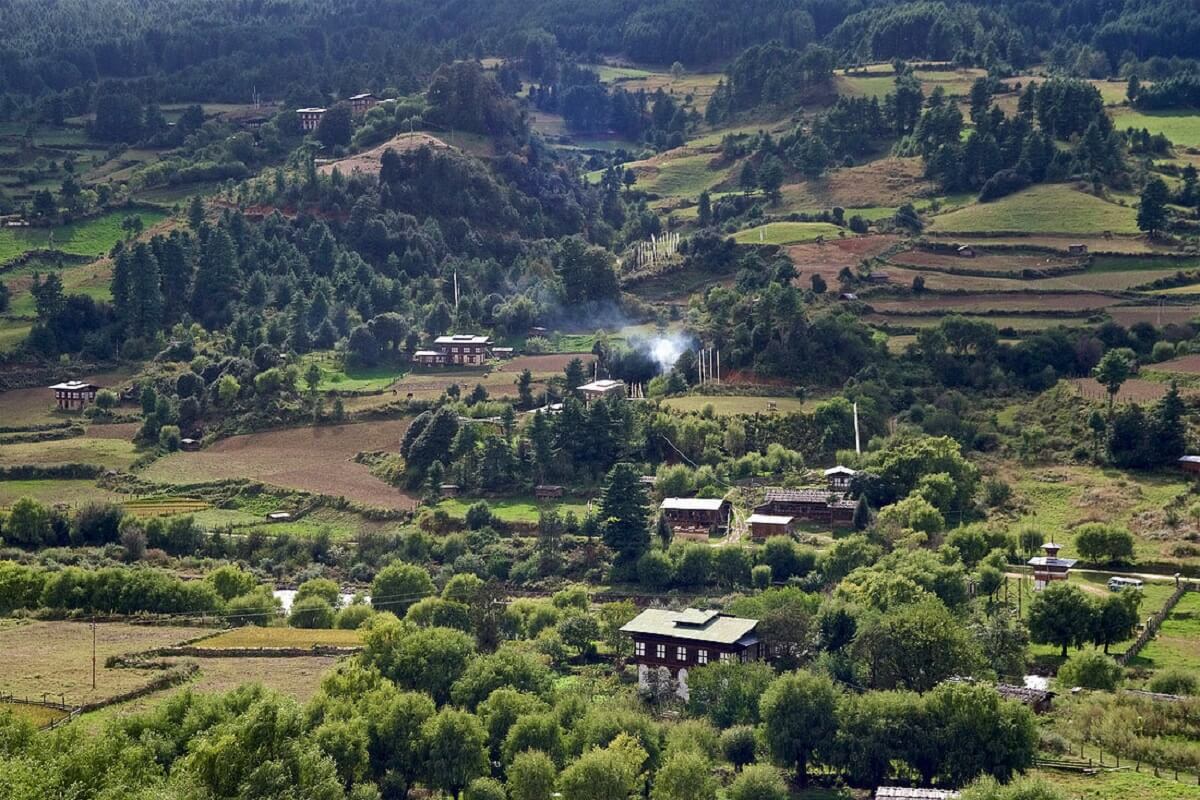
Bumthang is one of Bhutan’s most interesting regions for travellers who want to venture beyond the usual western circuit.
It is not a single town or hill station. Instead, the district includes several valleys, with Jakar serving as a useful base.
The landscape combines villages, forests, agricultural fields and historic religious sites.
Bumthang is often described as Bhutan’s spiritual heartland because of its longstanding religious traditions.
What Should You Explore in Bumthang?
Visit Kurjey Lhakhang, Jambay Lhakhang and Jakar Dzong.
If you have more time, explore the Tang Valley, where traditional settlements and countryside scenery provide a different experience from Paro.
However, reaching Bumthang by road takes considerable time. For that reason, it is better suited to longer itineraries.
Best time: March to May and September to November.
Suggested stay: Two or three nights.
Practical tip: Allow at least ten to twelve days if you want to combine Bumthang with western Bhutan without feeling rushed.
6. Trongsa
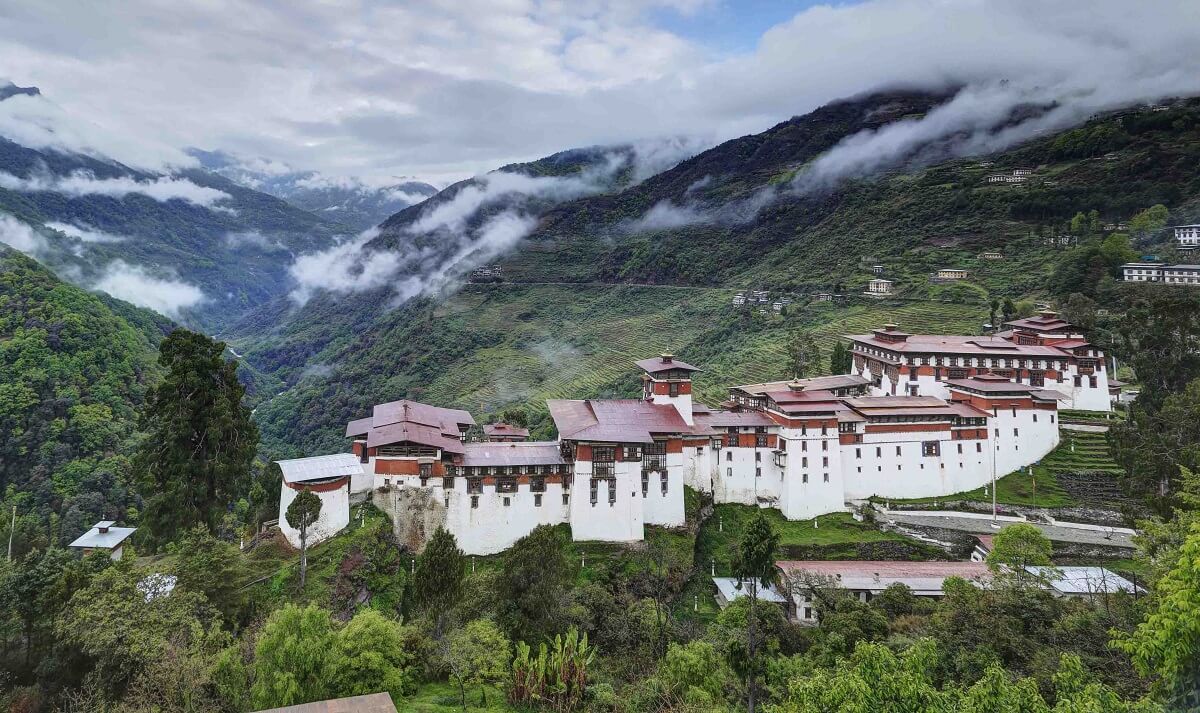
Trongsa occupies a dramatic hillside setting in central Bhutan.
Its main landmark is Trongsa Dzong, a historic fortress and monastery complex overlooking the Mangde Chhu valley.
The surrounding mountain landscape makes the town especially interesting for photographers and travellers who enjoy Bhutanese architecture.
What Makes Trongsa Special?
The scale and setting of Trongsa Dzong are remarkable. From different viewpoints, the buildings appear to extend along the mountainside.
You can also explore Ta Dzong Museum, which provides historical context for the region.
Trongsa works particularly well as an overnight stop on the journey towards Bumthang.
Best time: March to May and September to November.
Suggested stay: One night.
Practical tip: Allow time for winding mountain roads. Avoid planning a long transfer immediately after an intensive sightseeing day.
7. Punakha

Punakha is different from Bhutan’s higher mountain destinations.
At roughly 1,200 metres, the valley has a considerably milder climate than Phobjikha, especially in winter.
Although it is not technically a hill station, Punakha deserves a place on a scenic Bhutan itinerary because of its rivers, forested hills and beautiful architecture.
What Should You See in Punakha?
Punakha Dzong is the standout attraction. The impressive fortress stands near the meeting point of the Pho Chhu and Mo Chhu rivers.
You can also visit the suspension bridge and take a guided walk to Khamsum Yulley Namgyal Chorten.
The drive from Thimphu normally passes Dochula Pass, where clear weather can reveal distant Himalayan peaks.
Best time: October to April for milder sightseeing weather.
Suggested stay: One or two nights.
Practical tip: Punakha is particularly appealing during winter if you want a warmer destination to balance a stay in the highlands.
It can be included in a 6 Days Bhutan Tour alongside Paro and Thimphu.
8. Gasa
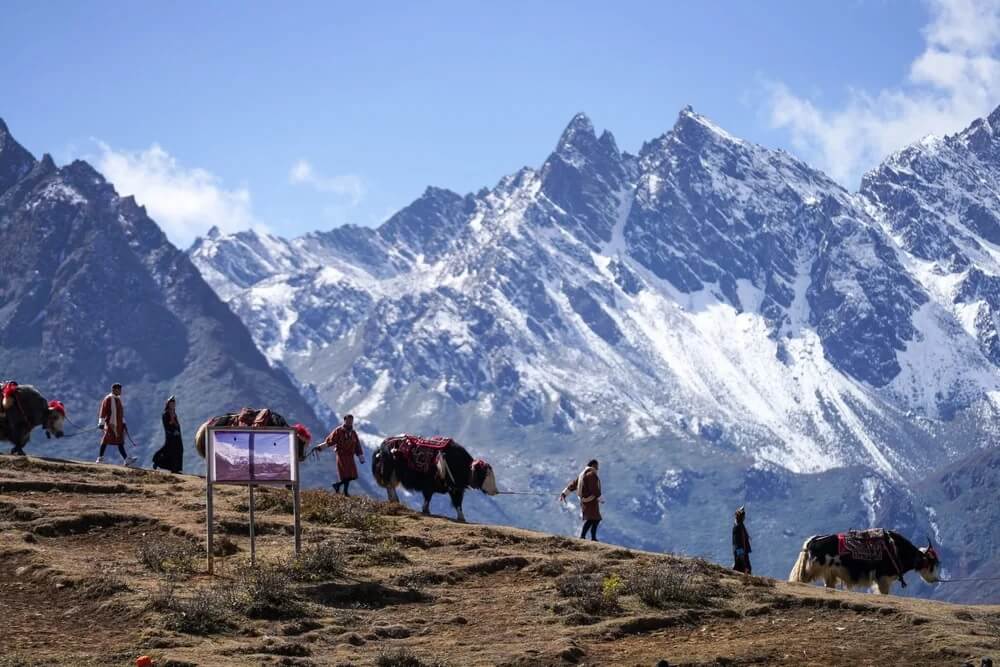
Gasa is a less-visited mountain region north of Punakha.
Its rugged scenery and quieter villages make it appealing to travellers who want to see a more remote side of Bhutan.
However, it does not offer the same level of tourist infrastructure as Paro or Thimphu.
What Can You Do in Gasa?
The region is associated with Gasa Dzong, mountain scenery and natural hot springs.
However, the availability and condition of hot-spring facilities should be checked before travelling.
The wider Gasa region is also connected with demanding Himalayan trekking routes.
These require proper preparation, appropriate permits and experienced local guides.
Best time: Spring and autumn, subject to road and local weather conditions.
Suggested stay: One or two nights.
Practical tip: Gasa works best as an addition to a longer private journey, not as a rushed detour from Paro.
Which Bhutan Hill Destination Should You Choose?
The best destination depends on how much time you have and the kind of holiday you prefer.
First-Time Visitors
Paro, Thimphu and Punakha make the most practical introduction.
Together, they offer iconic monasteries, cultural attractions and attractive valley scenery.
You can explore all three without the longer drives required for central Bhutan.
Couples and Romantic Getaways
Phobjikha and Haa Valley are particularly appealing if you enjoy quiet accommodation, mountain views and countryside walks.
Punakha is another lovely option, especially during the cooler months.
Family Holidays
Paro, Thimphu and Punakha generally offer a broader choice of hotels and relatively manageable sightseeing arrangements.
However, families should allow sufficient time for road journeys and avoid excessive changes of accommodation.
Photography and Nature Lovers
Phobjikha is excellent for wide valley landscapes and seasonal birdwatching.
Meanwhile, Trongsa offers dramatic architectural views, and Haa provides traditional village scenery.
Best Time to Visit Bhutan’s Hill Stations
Spring and autumn are generally the most suitable seasons for exploring Bhutan’s mountain valleys.
However, weather changes considerably with altitude.
| Season | Conditions | Travel advice |
| March–May | Pleasant spring weather in many valleys | Good for sightseeing and walking |
| June–August | Rain, green landscapes, reduced visibility | Allow flexibility for road travel |
| September–November | Often clearer skies and cool weather | Excellent for mountain views |
| December–February | Cold highlands, occasional snow | Choose routes carefully |
Spring: March to May
Spring is rewarding for countryside views, flowering vegetation and walking.
Paro, Haa and Bumthang are particularly attractive, while conditions remain dependent on elevation.
Autumn: September to November
Autumn is often the best season for clear mountain scenery.
However, popular hotels can become busy during festivals and holiday periods.
Winter: December to February
Winter is suitable for some cultural journeys, particularly through Paro, Thimphu and Punakha.
Higher valleys such as Phobjikha can become very cold, while mountain passes may experience snow or ice.
Summer: June to August
Rain brings lush green landscapes, but cloud cover and road disruptions can affect travel.
Therefore, allow extra time and avoid tightly scheduled mountain journeys.
Suggested Bhutan Itineraries for Mountain Lovers:
6 Days: Classic Bhutan Highlights
Paro → Thimphu → Punakha → Paro
This is a good route for first-time visitors with limited time.
Explore Paro’s monasteries, see Thimphu’s cultural landmarks and visit Punakha’s riverside dzong.
For a detailed journey, browse the 6 Days Bhutan Tour Package.
8 Days: Mountain Valleys and Culture
Paro → Thimphu → Punakha → Phobjikha → Paro
This route adds the quieter landscapes of Gangtey Valley.
It is particularly suitable for couples, photographers and travellers who want a balance between major landmarks and countryside stays.
11–12 Days: Western and Central Bhutan
Paro → Thimphu → Punakha → Phobjikha → Trongsa → Bumthang → Paro
This longer itinerary brings together famous western destinations and the traditional culture of central Bhutan.
However, road journeys take time, so allow suitable overnight stops and avoid trying to include every attraction.
For route options, explore Tusk Travel’s Bhutan tour packages.
Practical Travel Tips for Bhutan’s Mountain Valleys:
Plan for Slow Mountain Roads
Distances in Bhutan can be misleading.
Even journeys of modest length may take several hours because of winding roads, passes and local conditions.
For that reason, avoid scheduling too many long drives on consecutive days.
Pack for Different Elevations
Punakha can be relatively warm while Phobjikha is cold on the same day.
Carry layers, comfortable walking shoes and rain protection.
If travelling in winter, pack proper warm clothing for highland stays.
Check Visa, Permit and SDF Rules
Entry rules depend on nationality.
Most international visitors require a visa, while Indian travellers follow a permit process. Sustainable Development Fee arrangements also differ by nationality.
Check the official Bhutan visa and permit website before travelling.
Respect Local Culture
Many of Bhutan’s most beautiful sites are active monasteries and places of worship.
Follow dress requirements, photography rules and your guide’s instructions.
In rural areas, ask permission before photographing residents or entering private land.
Be Realistic About Altitude
Although many popular valleys are at moderate mountain elevations, passes and hiking routes may be considerably higher.
If you have altitude-related concerns, discuss your route with a healthcare professional before travelling.
Frequently Asked Questions About Hill Stations in Bhutan
1. What are the best hill stations in Bhutan?
Paro, Thimphu, Phobjikha, Haa Valley and Bumthang are among the most beautiful mountain destinations in Bhutan. However, they are more accurately described as Himalayan valleys and mountain towns than traditional hill stations.
2. Is Bhutan a hill station or a country?
Bhutan is an independent country in the eastern Himalayas. It has many mountainous regions, forests and scenic valleys, but the country itself is not a hill station.
3. Is Bhutan a hilly area?
Yes. Much of Bhutan is mountainous, with landscapes ranging from lower southern foothills to high Himalayan peaks. Its valleys and towns sit at different elevations, which explains the significant variations in temperature and scenery.
4. Which hill station in Bhutan is best for families?
Paro, Thimphu and Punakha are practical choices for many families because they offer established hotels and cultural attractions. Nevertheless, itineraries should allow enough time for mountain driving and sightseeing breaks.
5. Which is the most beautiful valley in Bhutan?
Phobjikha is particularly admired for its wide, open landscape and peaceful countryside. Paro is another favourite because of its dramatic monastery setting and traditional villages. Haa offers quieter scenery and a less-visited rural atmosphere.
6. Is Paro a hill station?
Paro is a high-elevation valley town, situated at approximately 2,200 metres above sea level. Although it is not usually described locally as a hill station, its mountain surroundings and cool seasonal weather offer many of the same attractions.
7. Is Thimphu a hill station?
Thimphu is Bhutan’s capital city, located in a Himalayan valley at approximately 2,300 metres. The city has wooded hills, viewpoints and nearby walking routes, making it suitable for visitors seeking both culture and mountain scenery.
8. Does it snow in Bhutan’s hill stations?
Snow can fall in Bhutan’s higher regions and mountain passes during winter. However, snowfall is not guaranteed in towns such as Paro or Thimphu. Visitors travelling between December and February should check road and weather conditions.
9. Which Bhutan destination is best for couples?
Phobjikha and Haa Valley suit couples seeking quiet landscapes and relaxed accommodation. Punakha is also attractive because of its riverside scenery and comparatively mild winter climate.
10. What is the best month to visit Bhutan’s mountain valleys?
April, May, October and November are often excellent choices, depending on your interests. Spring brings flowers and green landscapes, while autumn often provides clearer Himalayan views. However, specific conditions vary by altitude.
11. How many days are enough to visit Bhutan’s hill stations?
Six or seven days allow time for Paro, Thimphu and Punakha. To include Phobjikha, allow around eight days. If you want to explore Trongsa and Bumthang, a journey of ten to twelve days is more comfortable.
12. Can I combine Bhutan’s mountain valleys with Nepal?
Yes. Bhutan and Nepal make a rewarding combination for travellers interested in Himalayan scenery, culture and temples. However, international flight schedules and each country’s entry requirements must be considered when planning the route.
Final Thoughts
Bhutan offers a mountain holiday that feels quite different from a conventional hill-station escape.
Paro and Thimphu are the best starting points for a first journey, while Punakha provides beautiful riverside scenery and a milder climate. For quieter surroundings, Phobjikha and Haa Valley are particularly rewarding.
If you have more time, Bumthang and Trongsa reveal another side of the country, where traditional villages and historic monasteries sit among wide mountain landscapes.
The key is to avoid rushing. Choose a route that gives you enough time to enjoy each valley.
Explore our private Bhutan tours to plan a journey with suitable hotels, scenic drives and cultural experiences around your preferred travel dates.
