

Gujarat is famous for the white landscapes of the Rann of Kutch, the lions of Gir National Park, the temples of Dwarka and Somnath, and its colourful handicraft traditions. Yet beneath its cities, forts and historic towns lies another fascinating part of the state’s heritage: its remarkable stepwells.
Known locally as vavs, the stepwells of Gujarat were far more than simple sources of water. They were ingenious water-management structures, cool resting places for travellers, community gathering spaces and, in many cases, extraordinary works of architecture.
Walk down into one today and the experience feels completely different from visiting a palace or temple. Instead of climbing towards a monument, you descend into it. Sunlight becomes softer, temperatures drop, pillars multiply and carvings gradually appear from the shadows.
From the UNESCO-listed Rani ki Vav in Patan to the unusual spiral wells hidden inside Junagadh’s Uparkot Fort, Gujarat offers some of the finest examples of stepwell architecture in India.
If heritage architecture is one of the reasons you are travelling through western India, you can also explore Tusk Travel’s guide to the most famous stepwells in India or browse the available Gujarat tour packages when planning a longer journey.
Here are 8 stunning stepwells of Gujarat to visit in 2026:
1. Rani ki Vav, Patan
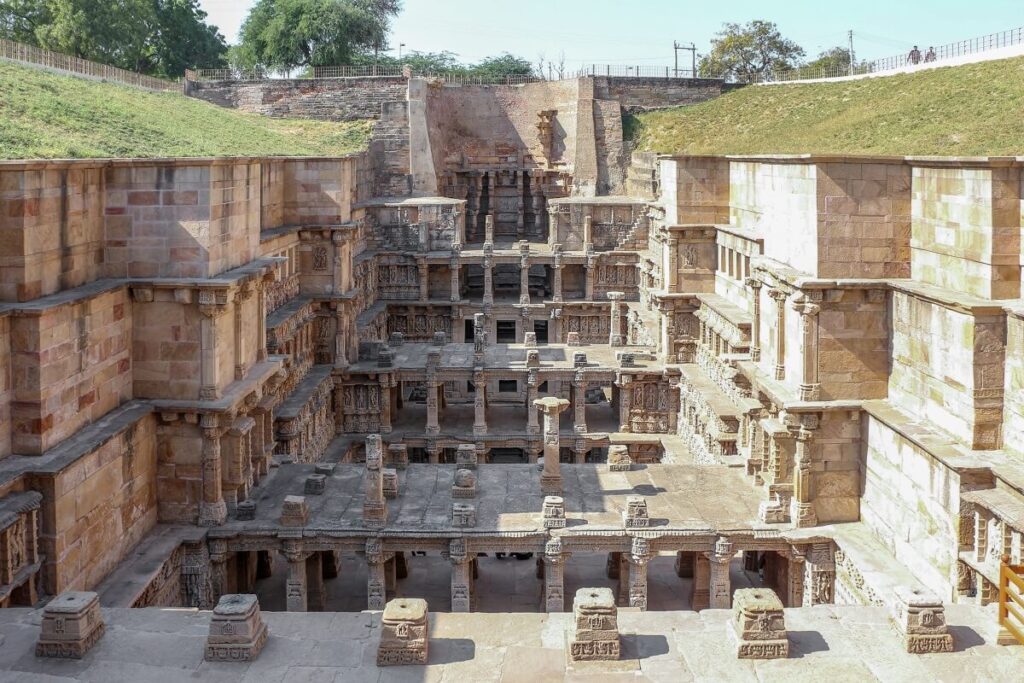
If you have time for only one stepwell in Gujarat, make it Rani ki Vav.
Located in Patan on the banks of the Saraswati River, Rani ki Vav is one of India’s greatest examples of subterranean architecture. The monument dates to the 11th century and was built as a memorial to a king. It was designed almost like an inverted temple, with visitors descending towards the water rather than climbing towards a shrine.
The scale becomes apparent only after you enter. Seven levels of stairs descend through pillared pavilions filled with remarkably detailed sculptures. UNESCO notes that the monument contains more than 500 principal sculptures along with over a thousand smaller figures depicting religious, mythological and secular themes.
Rani ki Vav was added to the UNESCO World Heritage List in 2014 and remains the most celebrated stepwell in Gujarat.
Look closely at the sculptural panels rather than simply walking to the bottom. Images associated with Vishnu, celestial figures and elaborate decorative motifs reveal just how sophisticated stepwell architecture had become during this period.
Patan itself deserves additional time. Travellers interested in local heritage can read about the best places to visit in Patan, including its traditional Patola weaving heritage.
Best for: Architecture, UNESCO heritage, sculpture and photography
Suggested time: 1–2 hours
Combine with: Patan and Modhera
2. Adalaj Stepwell, Near Ahmedabad
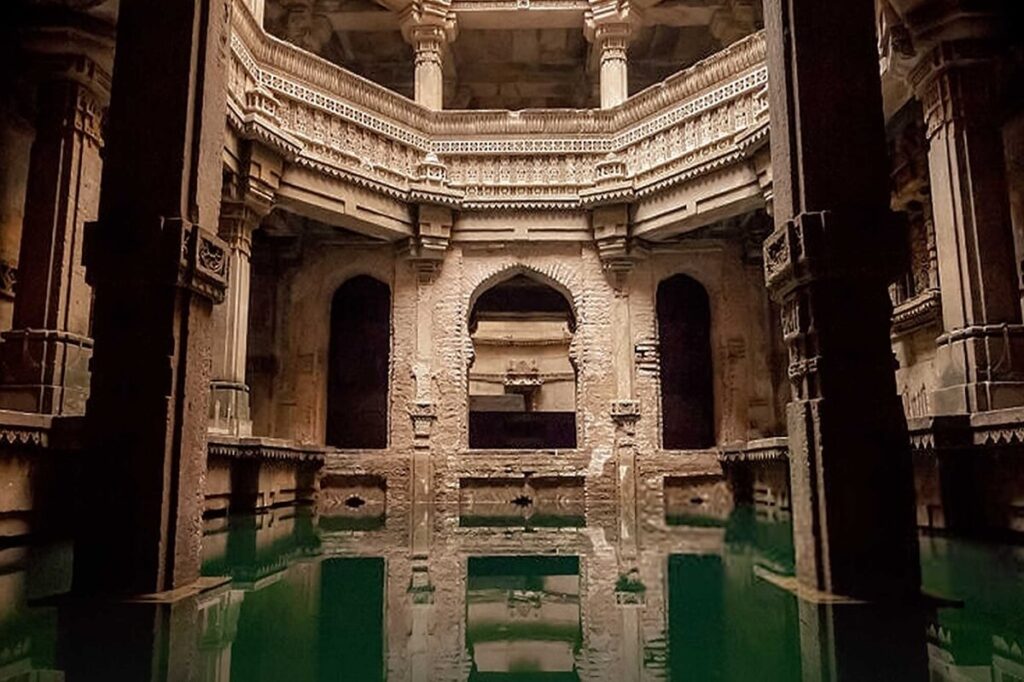
Few stepwells are as atmospheric as Adalaj ni Vav.
Located at Adalaj, north of Ahmedabad, this late-15th-century stepwell is known for its elaborately carved pillars, balconies, geometric designs and mixture of architectural influences.
Unlike many straightforward stepwells, Adalaj has entrances descending from three directions before meeting at a lower level. As you continue downward, shafts of daylight enter through openings above, illuminating sections of the carvings while other areas remain in shadow.
The change in atmosphere is part of the attraction. Stepwells were designed not only to reach water but also to create cooler spaces beneath the surface. That makes Adalaj particularly memorable when visited after experiencing the heat and traffic of Ahmedabad.
Spend time studying the stonework around the pillars and galleries. Floral patterns, symbolic motifs and highly detailed decorative elements show how engineering and artistry were combined in the same structure.
Because of its proximity to Ahmedabad, Adalaj is one of the easiest stepwells to add to a Gujarat itinerary. It works particularly well alongside Ahmedabad’s old city, Sabarmati Ashram and other heritage attractions.
For more ideas around the city, see Tusk Travel’s guide to things to do in Ahmedabad.
Best for: First-time visitors, architecture and photography
Suggested time: 45–60 minutes
Combine with: Ahmedabad and Gandhinagar
3. Dada Harir Vav, Ahmedabad
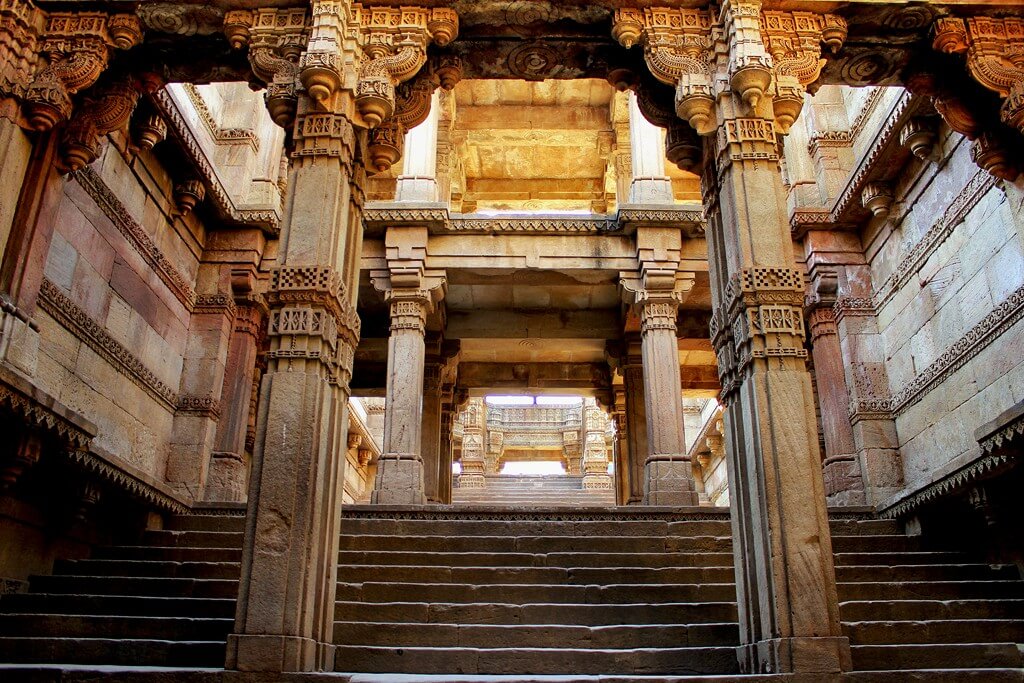
Travellers who enjoy quieter heritage sites should not miss Dada Harir Vav, also known as Bai Harir ni Vav.
Located in Ahmedabad’s Asarwa area, the stepwell was built around 1499–1500 by Bai Harir Sultani, an important woman associated with the court of Sultan Mahmud Begada. Inscriptions in Sanskrit and Persian record its history.
The stepwell descends through multiple levels supported by beautifully carved stone columns. Spiral staircases positioned along the side walls provide access to succeeding platforms, while the changing light gives each level a different character.
Compared with Adalaj, Dada Harir usually feels more intimate. Its carvings may be less monumental than Rani ki Vav, but the combination of sandstone, shadow, pillars and quiet spaces creates an atmosphere that rewards slow exploration.
Look for the floral and geometric decoration and notice how the structural columns help support the earth surrounding the underground chambers.
Dada Harir also makes an excellent stop for travellers who want to discover Ahmedabad beyond its best-known monuments.
Best for: Lesser-known heritage, architecture and quiet photography
Suggested time: 30–45 minutes
Combine with: Mata Bhavani Vav and Ahmedabad Old City
4. Mata Bhavani Vav, Ahmedabad
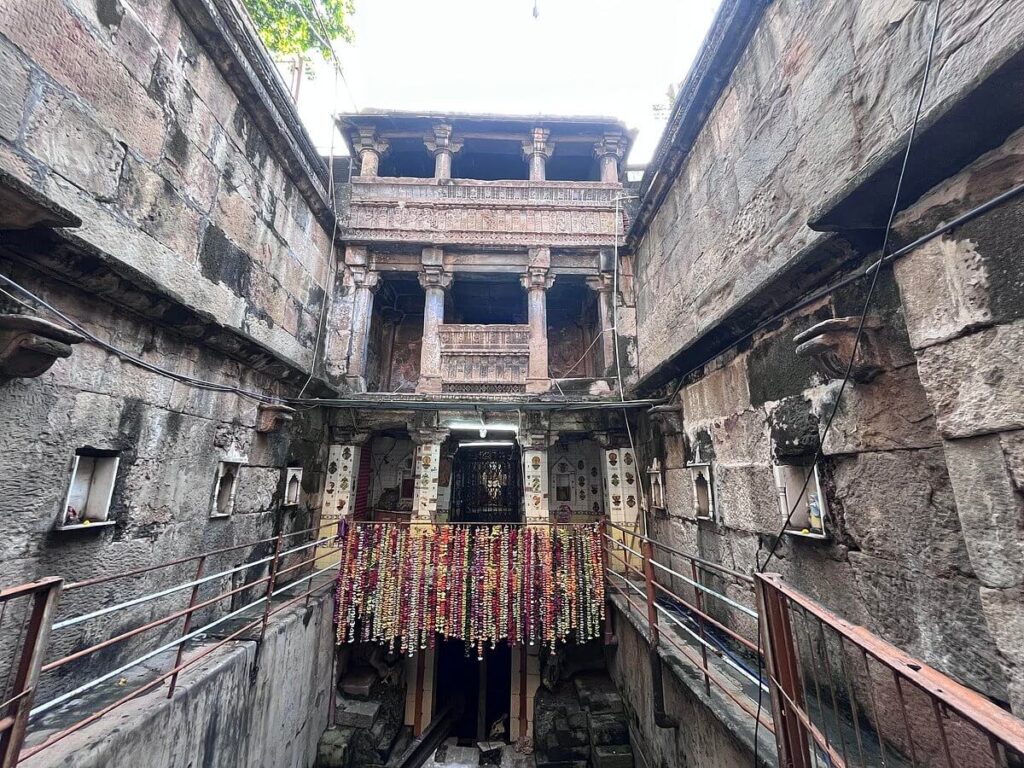
Not far from Dada Harir stands a much older water monument: Mata Bhavani Vav.
According to Ahmedabad’s official heritage information, it is considered the oldest stepwell in the city and dates to the 11th-century Solanki period.
Its appearance differs noticeably from later Sultanate-era stepwells.
A long staircase descends through three storeys, with open pavilions arranged along the east-west axis. Carved columns, brackets and beams demonstrate that even early stepwells were designed as architectural spaces rather than purely functional water reservoirs.
The stepwell takes its present name from a later shrine dedicated to Mata Bhavani, which continues to attract worshippers.
Visiting Mata Bhavani Vav after Dada Harir is especially interesting because the two sites allow you to compare architectural traditions separated by several centuries.
They are not simply two old wells. Together, they help illustrate how Gujarat’s water architecture developed over time.
Best for: Architectural history and repeat visitors to Ahmedabad
Suggested time: 30 minutes
Combine with: Dada Harir Vav
5. Amritvarshini Vav, Ahmedabad
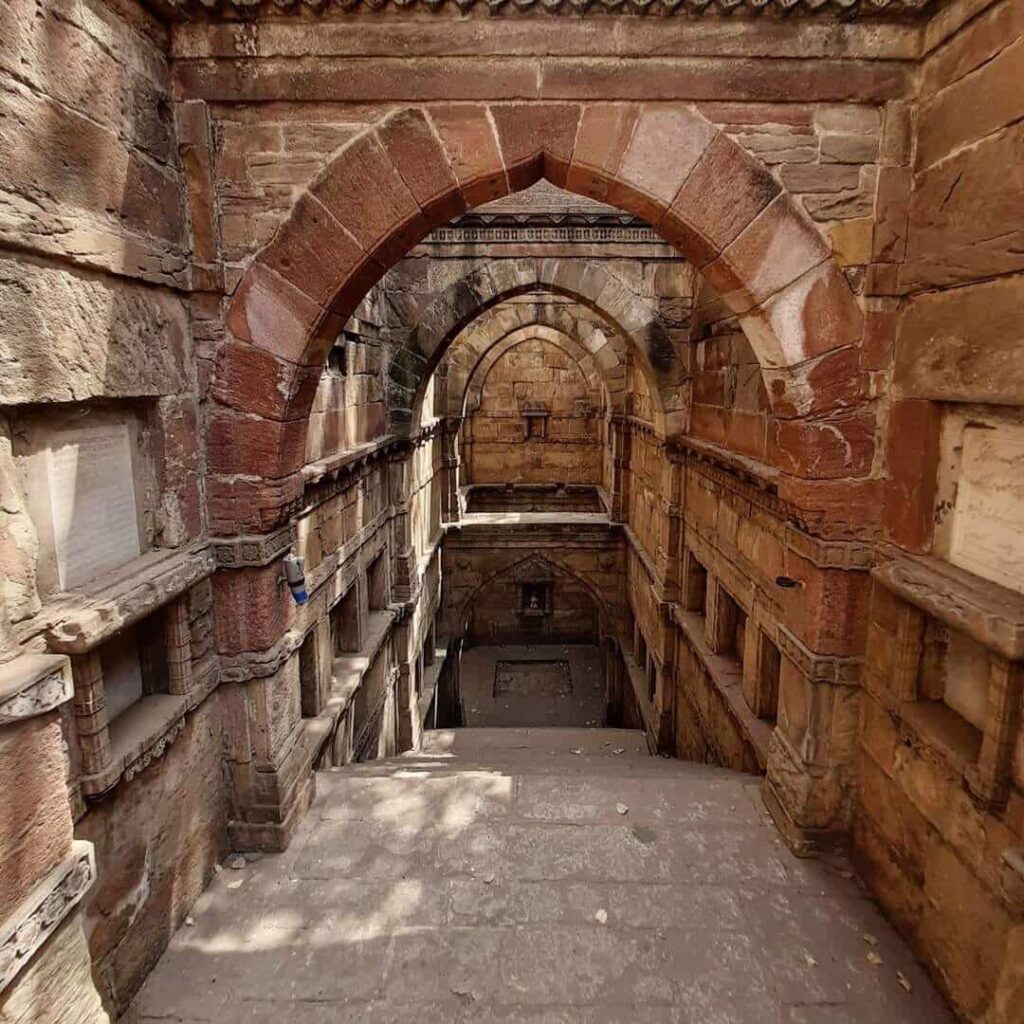
One of Gujarat’s most unusual stepwells can be found in a surprisingly busy urban setting.
Amritvarshini Vav, sometimes called Panchkuva Stepwell or Katkhuni Vav, lies within Ahmedabad’s historic walled city.
It dates from around 1723 and is notable for its unusual L-shaped plan. Mughal-style arches support parts of the structure, while three flights of stairs descend towards the water level more than 50 feet below.
Its location makes it especially fascinating. Unlike isolated archaeological monuments surrounded by gardens, Amritvarshini Vav feels integrated into the everyday fabric of Ahmedabad.
This is a good place for travellers interested in understanding how stepwells continued to evolve long after the great Solanki monuments had been constructed.
It is also much less famous internationally than Rani ki Vav or Adalaj, making it an interesting addition for anyone creating a deeper Ahmedabad heritage itinerary.
Best for: Hidden heritage and unusual architecture
Suggested time: 20–30 minutes
Combine with: Ahmedabad heritage walk and old city markets
6. Adi-Kadi Vav, Junagadh
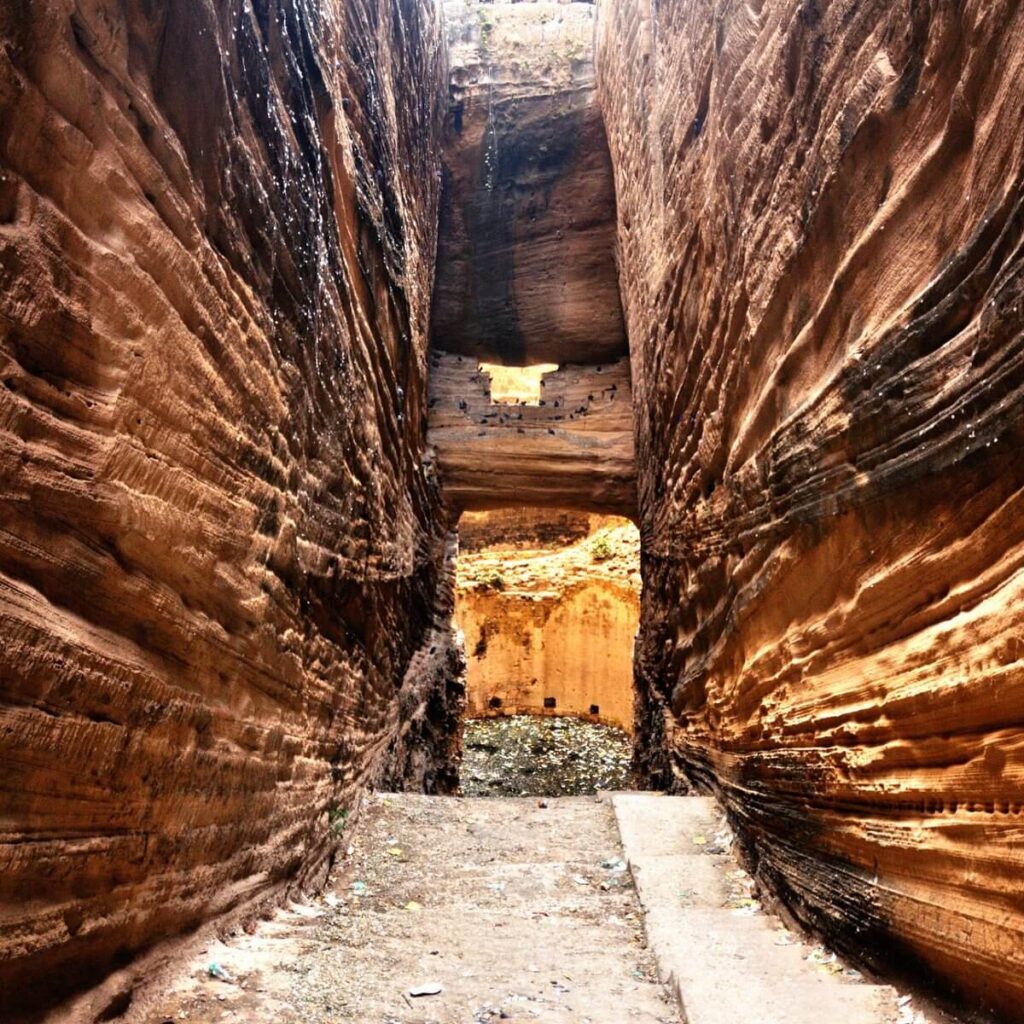
Head southwest towards Junagadh and the character of Gujarat’s stepwells changes dramatically.
Inside the historic Uparkot Fort, Adi-Kadi Vav appears more like a passage carved into a rock formation than the elaborately constructed pavilions seen at Patan or Ahmedabad.
Gujarat Tourism describes the 15th-century stepwell as being carved entirely from hard rock. A narrow flight of around 120 steps cuts deep through the stone towards the well shaft.
That construction method makes the site fascinating.
Instead of building columns, walls and galleries from separate pieces of stone, workers carved the space directly from the existing rock.
Local legends surrounding the well add another layer of mystery, although visitors should treat such stories as folklore rather than established historical fact.
Walking down the narrow staircase gives Adi-Kadi Vav a rugged, almost archaeological character completely different from Gujarat’s highly ornamented stepwells.
Best for: Rock-cut architecture and offbeat history
Suggested time: 30 minutes
Combine with: Uparkot Fort and Navghan Kuvo
7. Navghan Kuvo, Junagadh
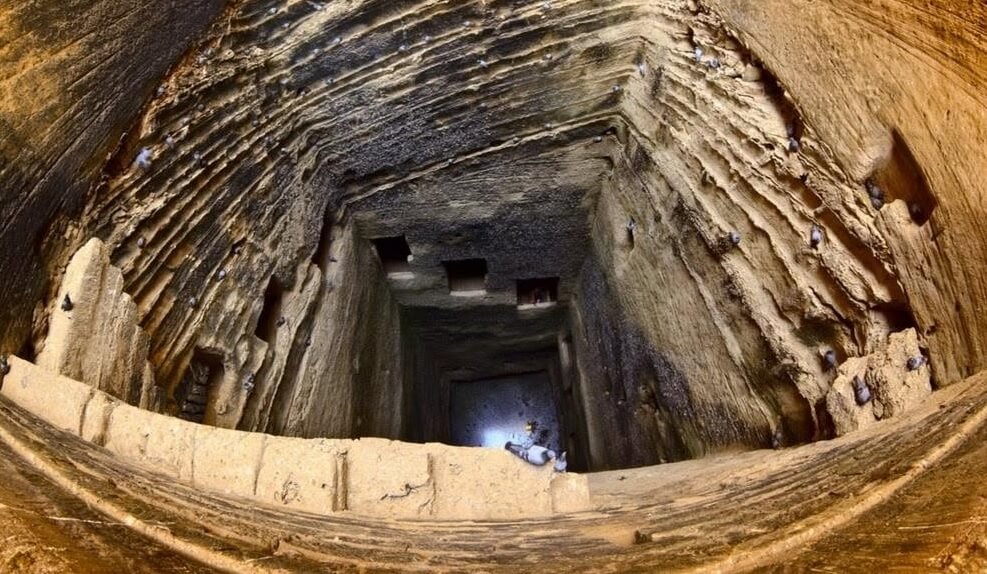
Also inside Uparkot Fort, Navghan Kuvo is another remarkable example of rock-cut water engineering.
The structure is traditionally dated to around 1026 CE, although Gujarat Tourism notes that some accounts consider it even older. Its most remarkable feature is the staircase spiralling around the well shaft as it descends approximately 52 metres towards the water level.
The well had practical strategic importance too. Its water supply helped Uparkot withstand long periods of siege.
Visually, Navghan Kuvo feels completely different from the symmetrical corridors of Rani ki Vav. Here, the drama comes from depth, rock surfaces and the spiralling path downward.
Visiting Navghan Kuvo and Adi-Kadi Vav together is strongly recommended. Although they stand close to one another, their different forms demonstrate how builders adapted water systems to geology, defensive needs and available construction techniques.
Best for: Engineering, fort architecture and history
Suggested time: 30–45 minutes
Combine with: Adi-Kadi Vav, Uparkot Fort and Junagadh
8. Helical Stepwell, Champaner
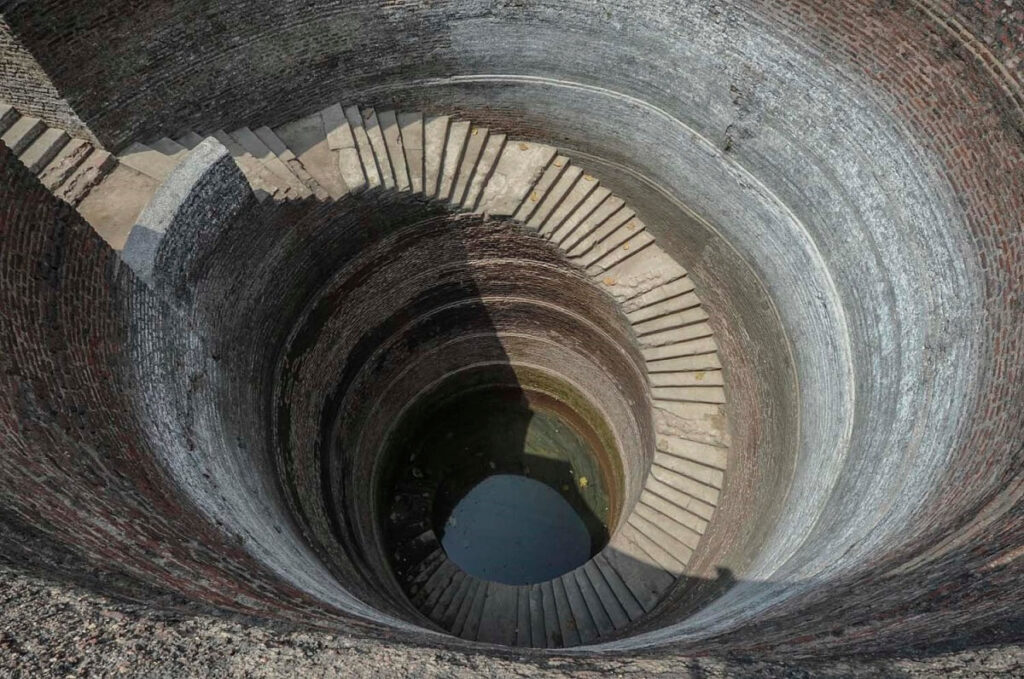
Perhaps the most visually unusual structure on this list is the Helical Stepwell at Champaner.
Instead of using the long, linear staircase typical of many Gujarati vavs, this well features steps following a circular route around the shaft.
It stands within the wider cultural landscape of the Champaner-Pavagadh Archaeological Park, a UNESCO World Heritage Site containing fortifications, temples, mosques, settlements and sophisticated historic water-management structures.
The spiral geometry makes the Helical Stepwell particularly interesting for architecture enthusiasts and photographers.
However, do not travel to Champaner only for the well. The archaeological park deserves several hours, with highlights including Jami Masjid, historic gateways, fortifications and views towards Pavagadh Hill.
Travellers interested in Gujarat’s UNESCO heritage can also read Tusk Travel’s guide to the UNESCO World Heritage Sites in Gujarat.
Best for: Unusual design, photography and archaeology
Suggested time: 30 minutes for the stepwell, several hours for Champaner
Combine with: Champaner-Pavagadh and Vadodara
Why Are There So Many Stepwells in Gujarat?
Gujarat’s climate made reliable water storage essential. Rainfall could be seasonal and communities needed ways of accessing groundwater during drier periods.
The solution was ingenious.
Instead of drawing water only from a vertical well shaft, builders created stairways that allowed people to descend as the water level changed. Over centuries, these functional structures became increasingly elaborate.
Some developed pillared halls, rest areas, religious imagery and richly decorated façades. They also offered cooler underground environments where residents and travellers could rest during hot days.
This combination of water engineering, architecture, religion and social life is what makes Gujarat’s stepwells so significant today.
Best Time to Visit Gujarat’s Stepwells
For most travellers, October to March is the most comfortable period for a stepwell-focused Gujarat trip. Gujarat’s own tourism itineraries generally treat these months as the prime travel season because daytime temperatures are more pleasant for sightseeing.
Early morning is particularly good for photography because angled sunlight can create striking patterns across stairs, columns and carvings.
Remember that conditions, opening times and access restrictions can change. Check locally before visiting lesser-known monuments, especially during monsoon periods or when conservation work is underway.
Wear shoes with good grip, take care on worn stone stairs and avoid entering restricted areas simply to get a photograph.
How to Plan a Gujarat Stepwell Route
If architecture is your main interest, you can build a very rewarding heritage route around these monuments.
Start in Ahmedabad, visiting Dada Harir, Mata Bhavani, Amritvarshini and nearby Adalaj. Continue north towards Patan for Rani ki Vav, ideally combining it with Modhera.
A longer Gujarat journey can then continue towards Junagadh for Adi-Kadi Vav and Navghan Kuvo before linking with Gir, Somnath and other attractions of Saurashtra.
Champaner fits naturally into an itinerary around Vadodara.
Travellers wanting to combine architecture with wildlife, temples and local culture can browse the 9-day Gujarat tour itinerary or explore Tusk Travel’s guide to the best places to visit in Gujarat.
Final Thoughts
The stepwells of Gujarat tell a story that is easy to miss when travelling only between the state’s famous temples, wildlife parks and desert landscapes.
Rani ki Vav demonstrates the artistic peak of the tradition. Adalaj and Dada Harir combine intricate architecture with atmospheric underground spaces. Mata Bhavani reveals an earlier chapter, while Amritvarshini shows how stepwell construction continued into the Mughal era.
Further south, Adi-Kadi Vav and Navghan Kuvo demonstrate how water systems could be carved directly into rock, and Champaner’s Helical Stepwell proves that even the basic problem of reaching water inspired dramatically different architectural solutions.
Together, these stunning stepwells of Gujarat are reminders that some of India’s most impressive architecture was created not only for rulers or gods, but around one of life’s most basic necessities: water.
If you are planning a Gujarat trip in 2026, make room for at least one vav. Better still, connect several of them into your route and experience one of the most distinctive architectural traditions in western India.
Frequently Asked Questions About Gujarat Stepwells
Which is the most famous stepwell in Gujarat?
Rani ki Vav in Patan is Gujarat’s most famous stepwell. It is a UNESCO World Heritage Site celebrated for its seven levels, pillared architecture and hundreds of sculptures.
Which stepwell is closest to Ahmedabad?
Several stepwells can be visited around Ahmedabad. Adalaj Stepwell is one of the most popular, while Dada Harir Vav, Mata Bhavani Vav and Amritvarshini Vav are also located in or around the city.
What is a stepwell called in Gujarat?
A stepwell is commonly called a vav in Gujarati. Elsewhere in northern India, similar structures may be called baoli, baori or bawdi.
Can Rani ki Vav and Modhera be visited on the same trip?
Yes. Patan and Modhera are commonly combined on a heritage excursion from Ahmedabad, making it possible to see Rani ki Vav along with Modhera’s famous Sun Temple complex.
What is special about the Helical Stepwell in Champaner?
Its staircase follows a circular or helical path around the well rather than the long straight descent seen in many traditional stepwells. It can be explored as part of a visit to the Champaner-Pavagadh Archaeological Park.
Which Gujarat stepwells are best for photographers?
Rani ki Vav, Adalaj Stepwell and Dada Harir Vav are particularly photogenic because of their carvings, pillars, symmetry and changing patterns of natural light.
How many days are needed for a stepwell tour of Gujarat?
Two or three days are enough to explore Ahmedabad, Adalaj, Patan and Modhera. To include Junagadh and Champaner while also seeing Gujarat’s major attractions, consider a trip of around 7–10 days.
