

November is one of the most rewarding months to explore Bhutan. Autumn is giving way to early winter, the summer monsoon is well behind, and clearer skies often reveal the Himalayan landscapes that make this small kingdom so memorable.
For travellers, Bhutan in November offers an appealing combination of comfortable daytime sightseeing, crisp mornings, beautiful mountain views, cultural experiences and quieter surroundings toward the latter part of the month.
It is also an excellent time to experience several sides of the country in one journey. You can hike to Tiger’s Nest in Paro, explore monasteries and museums in Thimphu, walk beside rivers in Punakha, watch black-necked cranes in Phobjikha Valley or continue farther into central Bhutan to Trongsa and Bumthang.
Bhutan’s official tourism guidance describes September to November as a period when the climate is generally mild and skies are clearer. November is also associated with the arrival of black-necked cranes in Bhutan’s valleys.
If you are visiting for the first time, our Bhutan travel guide is also useful for understanding visas, transportation, culture, accommodation and trip planning.
Is November a Good Time to Visit Bhutan?
Yes. November is an excellent month for travellers interested in scenery, cultural sightseeing, photography, moderate hiking and wildlife.
The biggest advantage is visibility. After the wetter summer months, clearer conditions can provide excellent views across the Himalayan foothills and high mountain passes.
November is particularly suitable for:
- Tiger’s Nest Monastery hikes
- Exploring Paro, Thimphu and Punakha
- Visiting Phobjikha Valley
- Watching black-necked cranes
- Photography at Dochula and Chele La
- Cultural sightseeing at dzongs and monasteries
- Scenic drives through western and central Bhutan
- Short walks and nature trails
- Combining Bhutan with Nepal or India
Temperatures vary considerably according to altitude. Lower valleys such as Punakha generally feel milder, while Paro, Thimphu, Bumthang and high passes can become cold in the early morning and after sunset.
Layered clothing is therefore far more practical than packing for only one type of weather.
Bhutan Weather in November
November marks the transition between autumn and winter in Bhutan.
Days in the main sightseeing regions are often bright and pleasant, while mornings and nights become progressively colder as the month continues. Mountain passes and high-altitude valleys can feel considerably colder than towns at lower elevations.
Travellers should also remember that Bhutan’s mountainous geography creates local variations in weather.
What to Expect
Paro: Crisp mornings, comfortable daytime sightseeing and increasingly cold evenings.
Thimphu: Cool and generally pleasant during the day, with noticeably colder temperatures after sunset.
Punakha: Usually warmer than Paro and Thimphu because of its lower elevation.
Phobjikha: Cold mornings and nights, especially later in November.
Bumthang: Cooler conditions with a distinct early-winter atmosphere.
Instead of relying only on historical averages, check the local forecast shortly before travelling, particularly if your itinerary crosses mountain passes.
Best 12 Places to Visit in Bhutan in November:
1. Paro

Paro is an ideal place to begin a November journey through Bhutan. The broad valley combines traditional farmhouses, monasteries, rice fields, historic architecture and dramatic mountain scenery.
Most international visitors also enter Bhutan through Paro International Airport, making it a natural starting and finishing point.
The most famous attraction is Paro Taktsang, better known as Tiger’s Nest Monastery. Built dramatically against a cliff above the valley, it is one of Bhutan’s most recognisable landmarks.
November’s generally drier conditions make this a particularly appealing period for the hike.
Other places worth visiting include:
- Rinpung Dzong
- National Museum of Bhutan
- Kyichu Lhakhang
- Drukgyel Dzong
- Traditional farmhouses
- Local handicraft shops
Best November Experience
Keep a full day for Tiger’s Nest rather than squeezing the hike between other sightseeing. Starting early allows you to walk at a comfortable pace and enjoy the valley before returning to Paro.
Travellers spending most of their holiday in western Bhutan can also explore dedicated Paro tour options as part of a private itinerary.
2. Thimphu
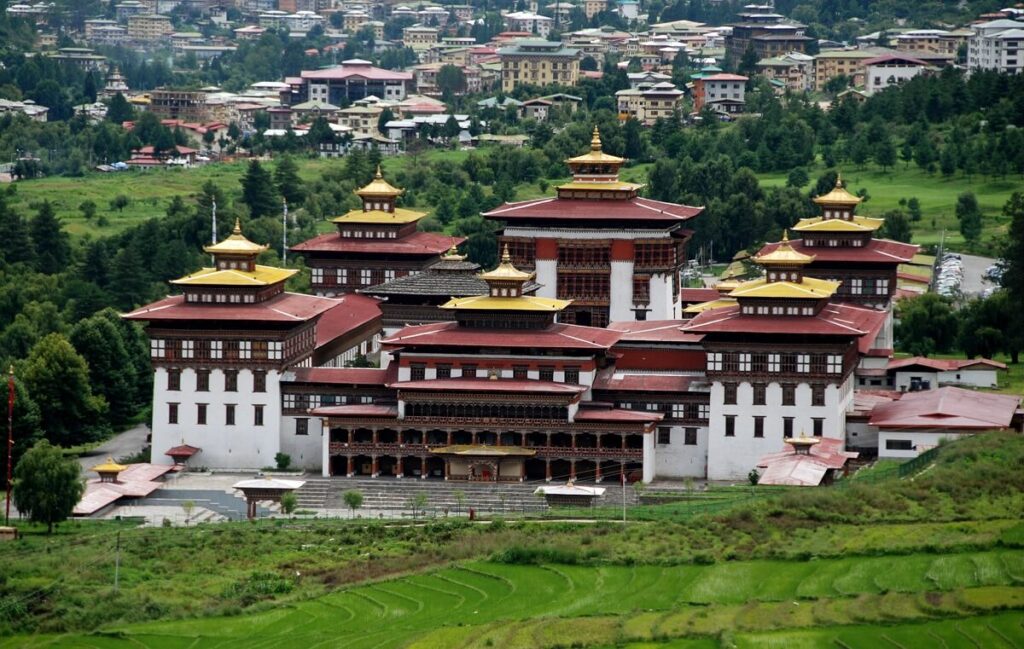
Bhutan’s capital is unlike most Asian capitals. There are government buildings and modern cafés, but monasteries, traditional architecture, crafts and Buddhist culture remain deeply woven into everyday life.
November’s cooler weather makes walking between attractions particularly enjoyable.
Important places include:
- Buddha Dordenma
- Tashichho Dzong
- Memorial Chorten
- Folk Heritage Museum
- National Textile Museum
- Motithang Takin Preserve
- Local craft markets
From the Buddha Dordenma viewpoint, you can look across the Thimphu Valley, while Tashichho Dzong provides an impressive introduction to Bhutanese architecture.
Best November Experience
Spend some time away from the major monuments. Visit a traditional craft centre, browse local shops or sit in a café to experience the slower rhythm of the capital.
3. Punakha
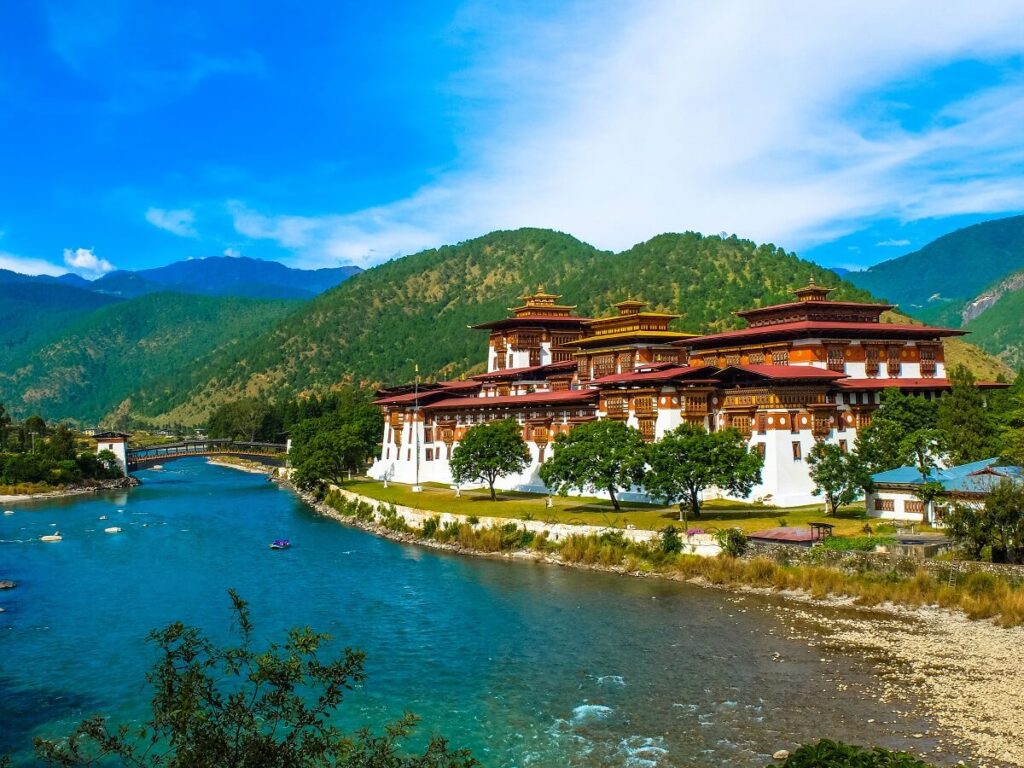
If the colder mornings of Paro or Thimphu are not your favourite part of November, Punakha provides a welcome change.
The valley lies at a lower elevation and generally has a milder climate.
Its centrepiece is Punakha Dzong, dramatically positioned where the Pho Chhu and Mo Chhu rivers meet. The combination of traditional architecture, surrounding mountains and river scenery makes it one of Bhutan’s most photogenic landmarks.
You can also visit:
- Punakha Suspension Bridge
- Chimi Lhakhang
- Khamsum Yulley Namgyal Chorten
- Riverside villages
- Rural rice-growing areas
The walk to Chimi Lhakhang passes through fields and villages, giving visitors an opportunity to experience Bhutan outside its larger towns.
Best November Experience
Combine the dzong with a village walk or the hike to Khamsum Yulley Namgyal Chorten rather than treating Punakha simply as an overnight stop.
4. Phobjikha Valley

Phobjikha is one of the places that becomes especially interesting in November.
This wide glacial valley in central Bhutan is an important winter habitat for black-necked cranes, which migrate here from the Tibetan Plateau.
Bhutan’s annual Black-Necked Crane Festival is held on November 11 at Gangtey Monastery. The event celebrates the return of the cranes and helps promote their conservation.
Even outside the festival date, Phobjikha is worth visiting for its peaceful landscape.
Highlights include:
- Gangtey Monastery
- Gangtey Nature Trail
- Black-necked crane viewing
- Traditional villages
- Valley viewpoints
Best November Experience
Walk the Gangtey Nature Trail through pine forest and open countryside and allow enough time simply to enjoy the landscape.
If Phobjikha is important to you, an 8-day Bhutan itinerary covering Paro, Punakha, Gangtey and Thimphu is more suitable than trying to fit the valley into a very short trip.
5. Dochula Pass
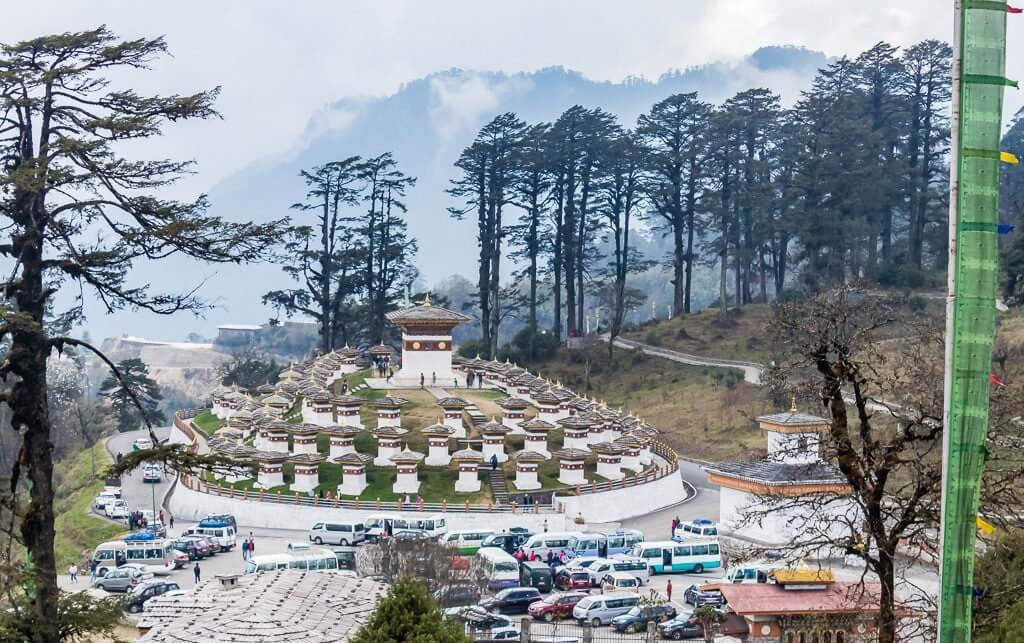
Dochula lies on the road between Thimphu and Punakha and is one of Bhutan’s most memorable mountain stops.
The pass is known for its 108 memorial chortens, prayer flags and panoramic Himalayan views.
November can be particularly rewarding because clearer autumn conditions improve the chances of seeing distant snow-covered peaks.
Clouds can still appear at any time, so a clear view can never be guaranteed.
Best November Experience
If your schedule allows, cross Dochula earlier in the day, when mountain visibility may be better.
Do not treat it simply as a photo stop. Walk among the chortens and spend some time enjoying the surrounding forest and mountain atmosphere.
6. Haa Valley

Travellers who prefer quiet landscapes should consider adding Haa Valley.
Situated west of Paro, Haa receives fewer visitors than Bhutan’s better-known western destinations. Traditional houses, cultivated fields, pine-covered slopes and small temples create a distinctly rural atmosphere.
Places to see include:
- Lhakhang Karpo
- Lhakhang Nagpo
- Haa town
- Traditional villages
- Local farmhouses
The road from Paro often passes across Chele La, a high mountain pass known for prayer flags and expansive views.
Weather conditions around high passes can change quickly in November, so travel plans should remain flexible.
Best November Experience
Stay overnight if possible rather than making Haa only a rushed day trip from Paro.
7. Chele La Pass
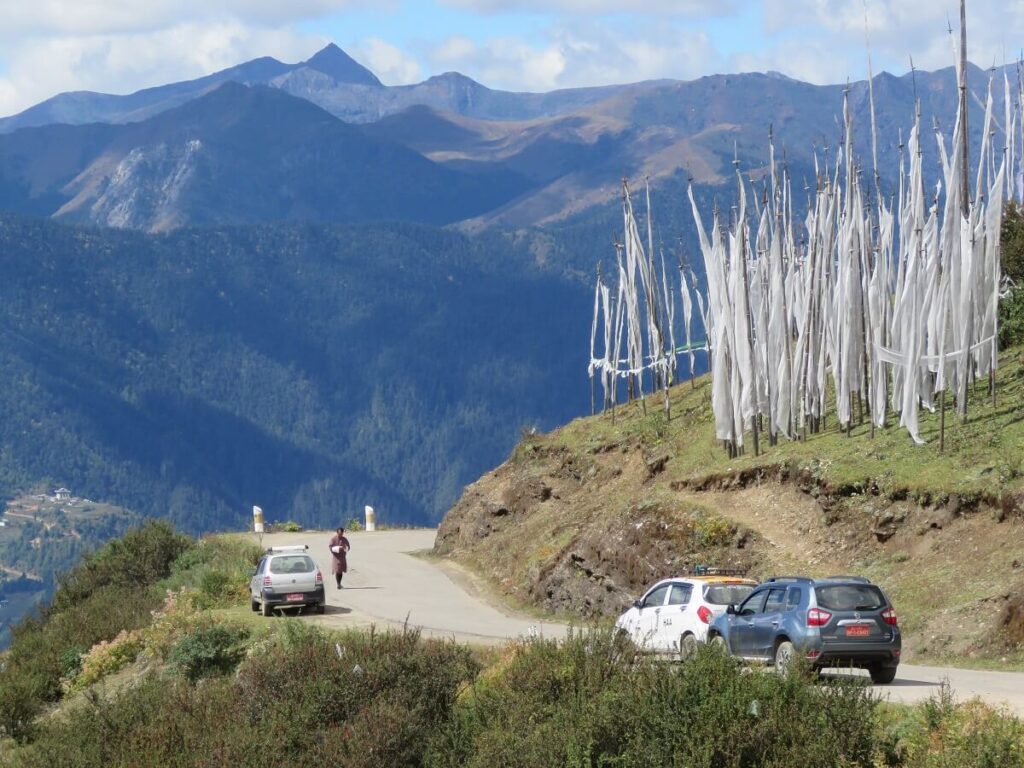
Chele La is one of Bhutan’s most scenic road-accessible mountain passes and can be visited while travelling between Paro and Haa.
The landscape changes noticeably as the road climbs through forest toward the pass.
On a clear November day, visitors may be rewarded with sweeping mountain views, colourful prayer flags and a completely different perspective of western Bhutan.
Because of its elevation, it can be much colder here than in Paro.
What to Carry
Bring:
- A warm jacket
- Gloves
- A woollen cap
- Sunglasses
- Water
- Comfortable shoes
Conditions should always be checked locally before travelling to high-altitude areas.
8. Bumthang

Travellers with more time should continue into central Bhutan to Bumthang.
Often described as Bhutan’s spiritual heartland, the region contains some of the country’s most important temples and monasteries.
Rather than one compact valley, Bumthang consists of several valleys connected by rural landscapes, villages and historic religious sites.
Highlights include:
- Jambay Lhakhang
- Kurjey Lhakhang
- Tamshing Lhakhang
- Jakar Dzong
- Traditional villages
- Local cheese and honey products
November gives the region a quieter, more reflective atmosphere as winter approaches.
Best November Experience
Spend at least two nights here. The long journey required to reach Bumthang makes a one-night visit unnecessarily rushed.
9. Trongsa

Trongsa occupies an important place in Bhutanese history.
Its enormous Trongsa Dzong appears to cling to the mountainside above a deep valley and historically controlled one of Bhutan’s most important east-west routes.
Nearby Ta Dzong now houses a museum connected with Bhutan’s royal history.
Trongsa works particularly well as a stop for travellers continuing between Phobjikha and Bumthang.
Best November Experience
Take time to view the dzong from the opposite side of the valley before entering. Its scale is easier to appreciate from a distance.
10. Wangdue Phodrang
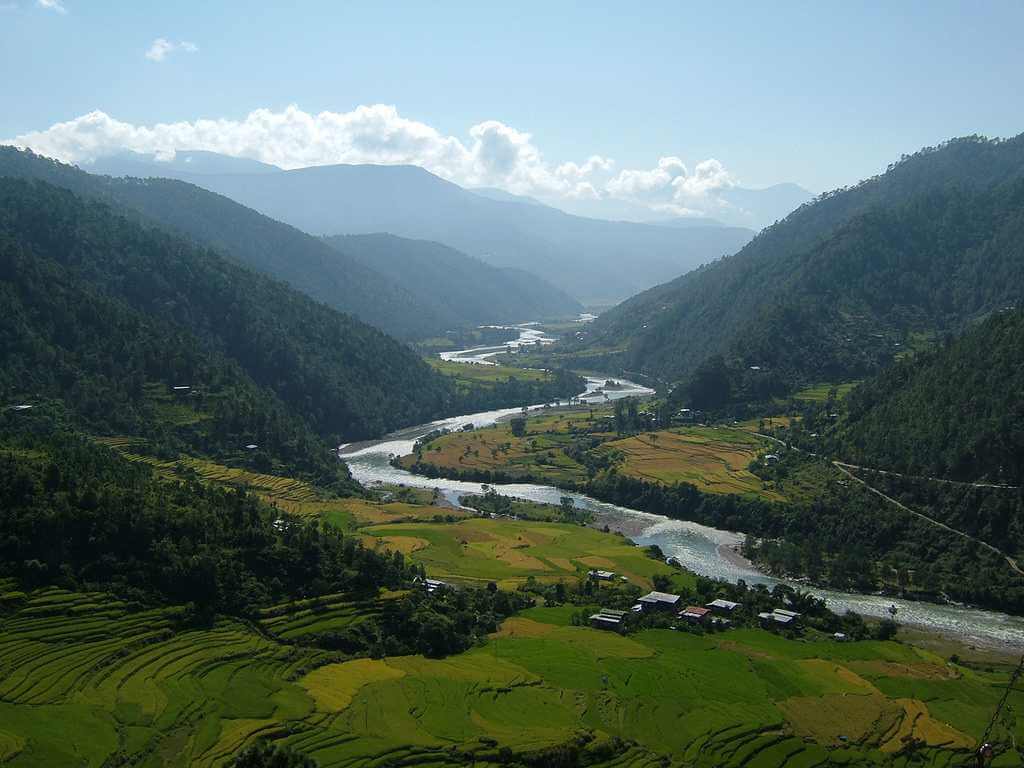
Wangdue Phodrang sits along the route toward Punakha and Phobjikha and is often passed through too quickly.
Its main landmark, Wangdue Phodrang Dzong, was extensively reconstructed after the devastating 2012 fire.
The wider district stretches from subtropical areas into high mountain landscapes, providing considerable geographical diversity.
Best November Experience
Combine Wangdue with Punakha rather than planning it as a separate long stay.
It also makes a natural stopping point when travelling toward Phobjikha Valley.
11. Trashigang
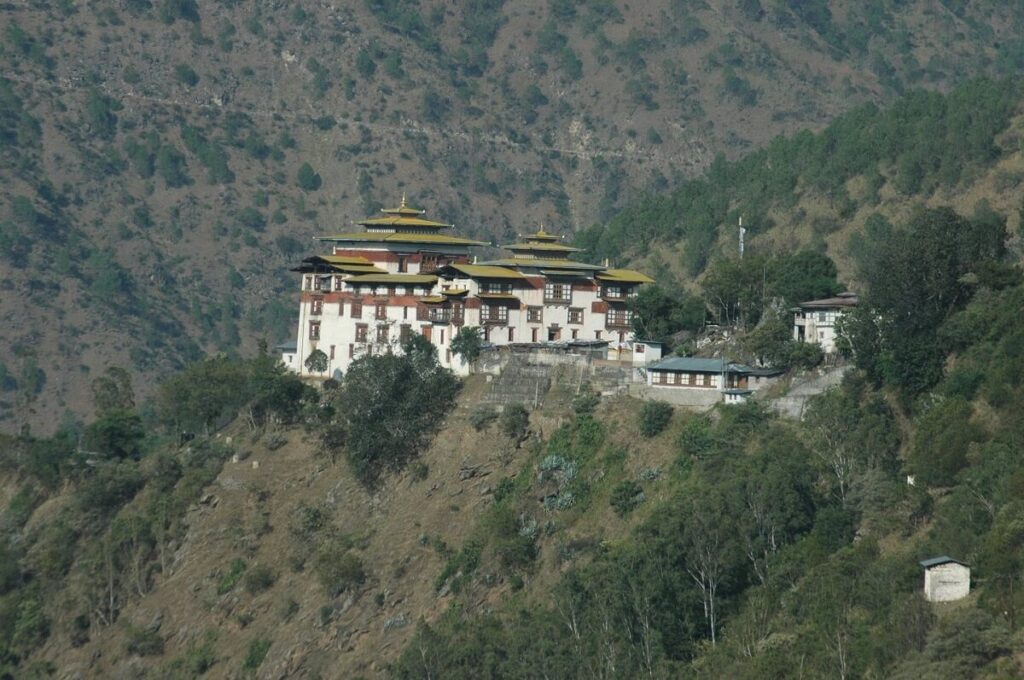
Travellers planning a longer cross-country journey can continue to Trashigang in eastern Bhutan.
The journey requires considerably more time than Bhutan’s classic western circuit, but eastern Bhutan provides a very different perspective.
Trashigang Dzong dominates the landscape above the Drangme Chhu River, while surrounding villages are known for farming and traditional crafts.
Nearby attractions can include:
- Trashigang Dzong
- Radhi Village
- Rangjung
- Traditional weaving communities
- Scenic rural drives
Best November Experience
Choose Trashigang only when you have enough days to travel slowly. Trying to combine eastern Bhutan with Paro, Thimphu and Punakha in a short holiday creates too much driving.
12. Lhuntse
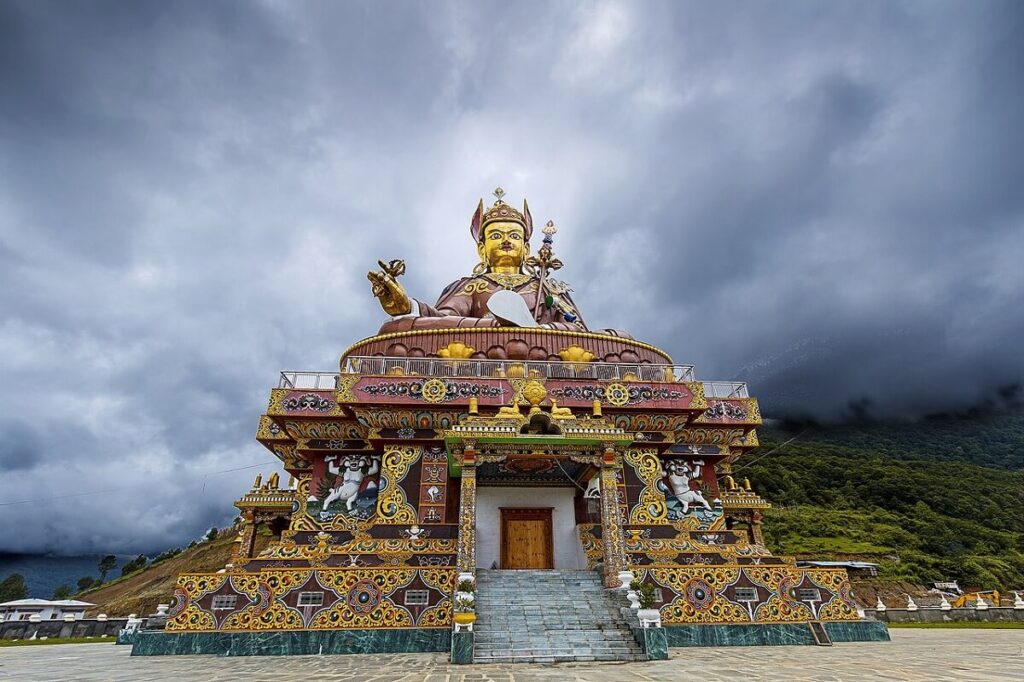
For travellers who genuinely want to go beyond Bhutan’s standard sightseeing circuit, Lhuntse offers one of the country’s more remote cultural experiences.
The region is particularly known for traditional weaving.
Khoma village is associated with Kishuthara, an elaborate Bhutanese textile renowned for its intricate patterns.
Lhuntse Dzong stands dramatically above the Kurichu River and is surrounded by rugged eastern Bhutan landscapes.
Best November Experience
Visit local weaving communities rather than simply photographing the landscape. Craft traditions are one of the strongest reasons to travel this far east.
For more ideas away from the classic tourist route, see our guide to offbeat destinations in Bhutan.
Things to Do in Bhutan in November:
Visiting individual destinations is only part of the experience. November is also suitable for several activities that bring Bhutan’s landscapes and culture to life.
Hike to Tiger’s Nest Monastery
This is the classic Bhutan experience.
The trail climbs gradually above Paro Valley before reaching viewpoints overlooking the monastery.
Allow plenty of time, carry water and wear supportive footwear.
See Black-Necked Cranes
Phobjikha Valley is the most convenient place for many travellers to experience Bhutan’s wintering black-necked cranes.
The birds usually begin arriving during the colder part of the year, making November particularly significant for wildlife enthusiasts. Bhutan’s tourism authority notes that the cranes typically arrive around mid-November and remain through the winter.
Attend the Black-Necked Crane Festival
If your dates coincide with November 11, consider planning Phobjikha around the annual Crane Festival at Gangtey Monastery.
Local performances, crane-themed dances and conservation activities give visitors an opportunity to understand why these birds have such cultural importance in the valley.
Enjoy Himalayan Views
Dochula, Chele La and several viewpoints around Paro and Thimphu can provide beautiful mountain scenery when conditions are clear.
Early mornings are often worth considering for photography.
Experience Bhutanese Food
Cold evenings are a good excuse to try warming Bhutanese dishes.
Look for:
- Ema datshi
- Kewa datshi
- Shamu datshi
- Red rice
- Momos
- Buckwheat dishes
- Butter tea
Food can be spicy, so tell your guide or restaurant staff if you prefer milder dishes.
Try a Traditional Hot-Stone Bath
After hiking or a long mountain drive, a traditional Bhutanese hot-stone bath can be particularly enjoyable in November.
Several farmhouses and hotels around Paro and other valleys can arrange the experience.
Suggested Bhutan Itinerary for November:
The number of destinations you should include depends far more on available days than on how many places appear attractive on a map.
Mountain roads mean distances can take longer than expected.
5 to 6 Days
A good first-time route is:
Paro → Thimphu → Punakha → Paro
This gives you Bhutan’s essential western highlights without too much driving.
7 to 8 Days
Consider:
Paro → Thimphu → Punakha → Phobjikha → Paro
For November, this is one of the most balanced routes because it combines cultural sightseeing with the crane habitat of Phobjikha.
You can compare suitable Bhutan tour packages covering these destinations before planning your route.
10 to 12 Days
A deeper trip could follow:
Paro → Thimphu → Punakha → Phobjikha → Trongsa → Bumthang → Paro
This gives central Bhutan enough time to feel worthwhile.
14 Days or More
Travellers interested in lesser-visited regions can continue east:
Western Bhutan → Bumthang → Mongar → Trashigang → Lhuntse/Trashiyangtse
Longer itineraries allow you to experience villages, monasteries and landscapes that shorter western Bhutan tours cannot include.
What to Pack for Bhutan in November
Packing for November is mainly about layers.
Bring:
- Warm lightweight jacket
- Fleece or sweater
- Comfortable walking trousers
- Thermal layer for colder regions
- Walking or hiking shoes
- Woollen cap
- Light gloves
- Sunglasses
- Sunscreen
- Lip balm
- Reusable water bottle
- Day backpack
A heavier jacket becomes more useful if you are visiting Phobjikha, Bumthang or high passes late in the month.
Modest clothing is recommended when entering monasteries, temples and dzongs.
Bhutan Visa and Sustainable Development Fee
Most international visitors require a visa before travelling to Bhutan. Indian visitors follow a separate permit process.
Bhutan’s official tourism website currently states that the Sustainable Development Fee for most international visitors is US$100 per adult per night, while the visa application fee is US$40. Indian nationals have a separate SDF and permit arrangement.
Because immigration and tourism rules can change, always verify the latest requirements before booking.
Travellers using a tour operator can also have their visa or permit application handled on their behalf.
Practical Tips for Visiting Bhutan in November:
November is an excellent travel month, but a little preparation makes the journey considerably easier.
Book important arrangements early.
Autumn is a popular period for Bhutan, particularly during festival dates.
Do not plan too many overnight stops.
Mountain journeys look short on maps but can take several hours.
Allow time to acclimatise.
Take your first day slowly, particularly before attempting longer hikes.
Start important sightseeing early.
Earlier starts work well for Tiger’s Nest, mountain viewpoints and longer road journeys.
Carry layers in your day bag.
Temperatures can change noticeably between valleys and high passes.
Build flexibility into high-altitude plans.
Weather can affect passes even when lower valleys remain clear.
Travel slowly.
Bhutan is more rewarding when your itinerary includes time for village walks, conversations, monasteries and landscapes rather than simply moving between attractions.
Is Bhutan Crowded in November?
November remains part of Bhutan’s popular autumn travel season, but the experience varies according to where and when you travel.
Famous places such as Tiger’s Nest, Punakha Dzong and Dochula naturally attract more visitors.
However, travelling to Phobjikha, Haa, Bumthang or eastern Bhutan can create a considerably quieter experience.
The later part of November may also feel calmer as colder winter conditions begin to approach.
October, November, or December: When to Visit Bhutan?
Visiting Bhutan in October
October is ideal for travellers looking for pleasant autumn weather, trekking, festivals, and clear Himalayan views. It is also one of Bhutan’s busier travel months.
Visiting Bhutan in November
November brings cooler temperatures, clearer skies, excellent sightseeing conditions, and the arrival of black-necked cranes in Phobjikha Valley. It is especially suitable for cultural tours, photography, and short hikes.
Visiting Bhutan in December
December is colder and quieter. It suits travellers who prefer fewer crowds, crisp winter landscapes, peaceful monasteries, and a slower travel experience.
Which Month Is Best for You?
Choose October for trekking and autumn festivals, November for a balance of clear weather, sightseeing, and wildlife, or December for quieter winter travel.
Frequently Asked Questions About Bhutan in November:
Is November a good month to visit Bhutan?
Yes. November is one of Bhutan’s attractive autumn travel months, particularly for sightseeing, hiking, mountain scenery and cultural experiences.
Is Bhutan very cold in November?
Conditions depend on altitude. Punakha remains comparatively mild, while Paro, Thimphu, Phobjikha, Bumthang and mountain passes become colder, especially early in the morning and after sunset.
Does it snow in Bhutan in November?
Snow is possible at higher elevations, particularly toward late November, but visitors should not expect widespread snow in the main lower sightseeing valleys.
Can I visit Tiger’s Nest in November?
Yes. November is generally a good month for the Tiger’s Nest hike, provided local weather and trail conditions are suitable.
Can I see black-necked cranes in November?
Yes. November marks the beginning of the important crane season in valleys such as Phobjikha, and the annual Black-Necked Crane Festival is held on November 11.
How many days are enough for Bhutan in November?
For a first trip, around 7 to 8 days provides a comfortable introduction covering Paro, Thimphu, Punakha and potentially Phobjikha.
A 10 to 12-day journey works better if you want to continue toward Trongsa and Bumthang.
What should I wear in Bhutan in November?
Wear layers. Daytime conditions can feel comfortable in sunny valleys, while mornings, evenings and mountain passes may be cold. Carry a jacket, sweater, comfortable walking shoes and modest clothing for religious sites.
Is November suitable for trekking in Bhutan?
November can be an excellent period for several trekking routes because the monsoon has ended and visibility may be good. High-altitude conditions become colder later in the month, however, so route selection and local advice are important.
Final Thoughts
Bhutan in November combines many of the experiences travellers come to the Himalayas hoping to find: clearer mountain views, cool walking weather, ancient monasteries, peaceful valleys and a strong connection with local culture.
For a first visit, concentrate on Paro, Thimphu, Punakha and Phobjikha rather than trying to cover the entire country.
Travellers with more time can continue east through Trongsa and Bumthang, while Haa Valley offers an attractive alternative for those who prefer a quieter journey closer to Paro.
November also has something that distinguishes it from many other travel months: the arrival of Bhutan’s black-necked cranes and the annual celebration dedicated to them in Phobjikha Valley.
Whether you have six days or two weeks, keep the itinerary realistic, leave room for slow travel and allow the landscapes to become part of the journey rather than simply the background.
For customised planning, explore Tusk Travel’s Bhutan tour packages, including private itineraries covering Paro, Thimphu, Punakha, Gangtey and other regions of the country.
