
October is a rewarding month for exploring Ahmedabad and the heritage sites around it. The intense summer heat has eased, the monsoon is beginning to retreat, and sightseeing becomes more comfortable, especially during the morning and late afternoon.
For history lovers, Ahmedabad is much more than a gateway to Gujarat.
The city itself contains centuries-old mosques, stepwells, gateways, Jain temples and landmarks connected with India’s independence movement. Drive a little farther and you can reach some of Gujarat’s greatest archaeological and architectural treasures, including the Sun Temple at Modhera, Rani ki Vav in Patan and the UNESCO-listed monuments of Champaner-Pavagadh.
If you are planning to travel to Ahmedabad in October, these historical sites can be combined into anything from a one-day heritage walk to a four or five-day cultural journey.
Historical Places to Visit Around Ahmedabad in October:
| Place | Approx. Location | Best For | Suggested Time |
| Sabarmati Ashram | Ahmedabad | Gandhi history | 1–2 hours |
| Jama Masjid | Old Ahmedabad | Indo-Islamic architecture | 45–60 min |
| Bhadra Fort & Teen Darwaza | Old Ahmedabad | Sultanate history | 1 hour |
| Sidi Saiyyed Mosque | Ahmedabad | Stone latticework | 30–45 min |
| Sarkhej Roza | Ahmedabad | Architecture & Sufi heritage | 1–2 hours |
| Dada Harir Vav | Ahmedabad | Stepwell architecture | 45 min |
| Adalaj Stepwell | Near Ahmedabad | Architecture & photography | 1 hour |
| Hutheesing Jain Temple | Ahmedabad | Jain architecture | 45–60 min |
| Modhera Sun Temple | Around 100 km | Temple architecture | Half day |
| Rani ki Vav, Patan | Around 125 km | UNESCO heritage | Half day |
| Lothal | Around 80 km | Indus Valley history | Half day |
| Champaner-Pavagadh | Around 150 km | UNESCO ruins & archaeology | Full day |
1. Sabarmati Ashram
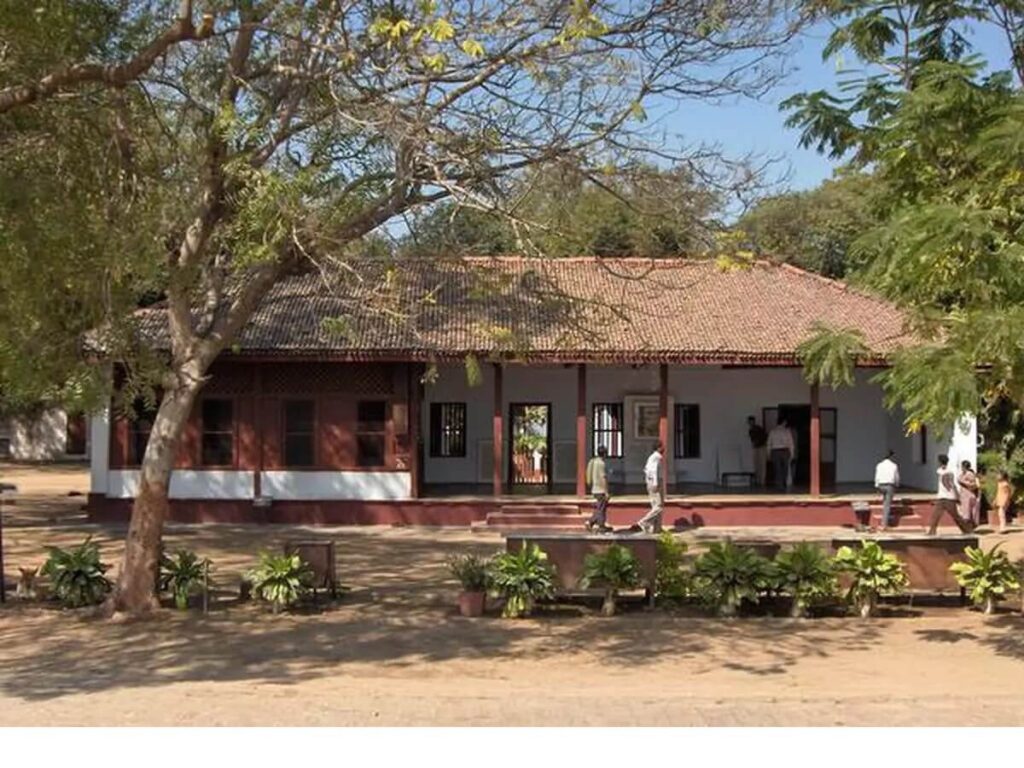
Sabarmati Ashram is one of the most meaningful places to begin an Ahmedabad heritage journey.
Located beside the Sabarmati River, the ashram was closely associated with Mahatma Gandhi and India’s independence movement. Gandhi lived here for many years, and the site later became closely connected with the historic Salt March.
Today, the peaceful complex contains photographs, letters, manuscripts and personal objects that help visitors understand Gandhi’s life and philosophy.
October is a comfortable time to explore the grounds because you can spend more time walking between the simple buildings and museum spaces without the extreme heat of late spring and summer.
Best for: Indian history, families and first-time visitors
Suggested time: 1–2 hours
Combine with: Riverfront and old Ahmedabad
Travellers wanting a broader city overview can also read the guide to historical places in Ahmedabad.
2. Jama Masjid, Ahmedabad
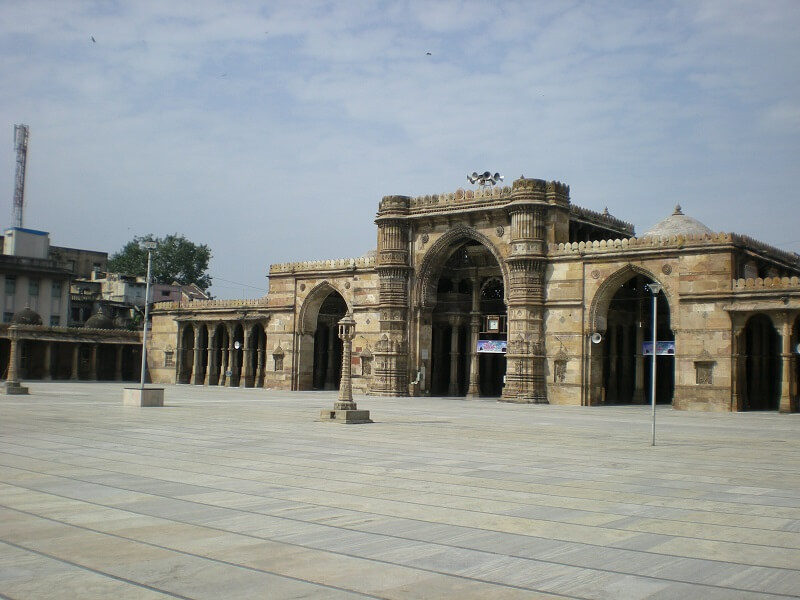
Jama Masjid is one of the defining monuments of Ahmedabad’s old city.
Built during the reign of Sultan Ahmad Shah I in the 15th century, the mosque brings together architectural ideas associated with Islamic and regional Indian craftsmanship.
Its wide courtyard, stone columns and carved details create a very different atmosphere from the crowded streets surrounding it.
Visit in the morning when possible. The quieter atmosphere makes it easier to notice the details rather than simply moving through the building quickly.
As this remains an active place of worship, dress respectfully and avoid disrupting prayer.
Best for: Architecture, history and photography
Suggested time: 45–60 minutes
Combine with: Manek Chowk, Bhadra Fort and Teen Darwaza
3. Bhadra Fort and Teen Darwaza
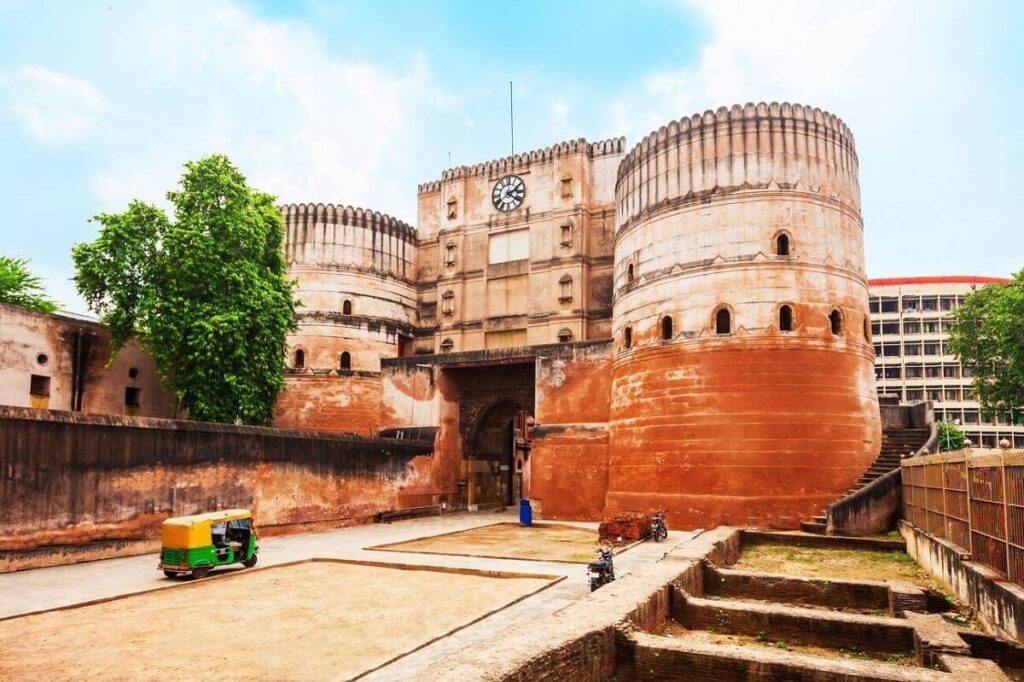
Rather than treating these as completely separate stops, explore Bhadra Fort and Teen Darwaza together as part of an old-city walk.
Bhadra Fort dates to the early years of Ahmedabad under Sultan Ahmad Shah. The surrounding district once formed an important part of the city’s political and ceremonial centre.
Nearby Teen Darwaza, or the “Three Gates”, became one of Ahmedabad’s most recognizable historic gateways.
Today the area is busy and very much part of the living city. That is part of its appeal. Instead of finding an isolated archaeological monument, you see old Ahmedabad layered into markets, temples, traffic and everyday life.
Best for: Heritage walks and street photography
Suggested time: Around 1 hour
Combine with: Jama Masjid and Manek Chowk
4. Sidi Saiyyed Mosque
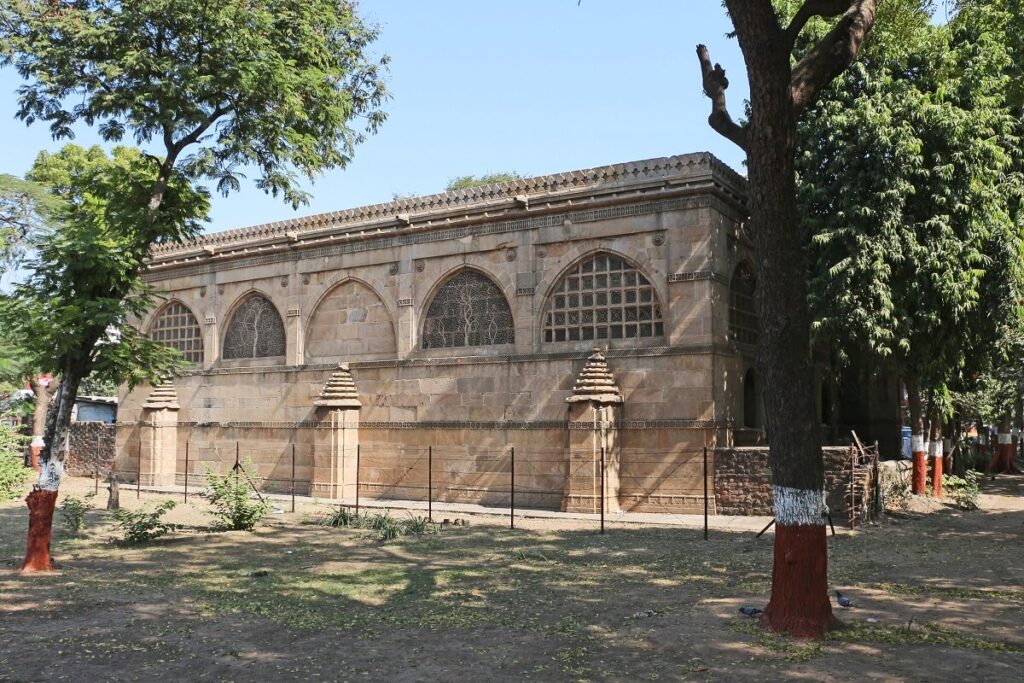
Few architectural details are as closely associated with Ahmedabad as the stone jalis of Sidi Saiyyed Mosque.
Built during the 16th century, the mosque is celebrated for its extraordinarily delicate stone latticework. The famous tree-inspired design demonstrates how stone could be carved to resemble intricate organic patterns.
The monument itself does not require a long visit, making it easy to include in a wider Ahmedabad sightseeing day.
Late afternoon can be particularly attractive for seeing light pass through the carved screens.
Best for: Architecture, craftsmanship and short heritage stops
Suggested time: 30–45 minutes
Combine with: Old Ahmedabad and Bhadra Fort
5. Sarkhej Roza
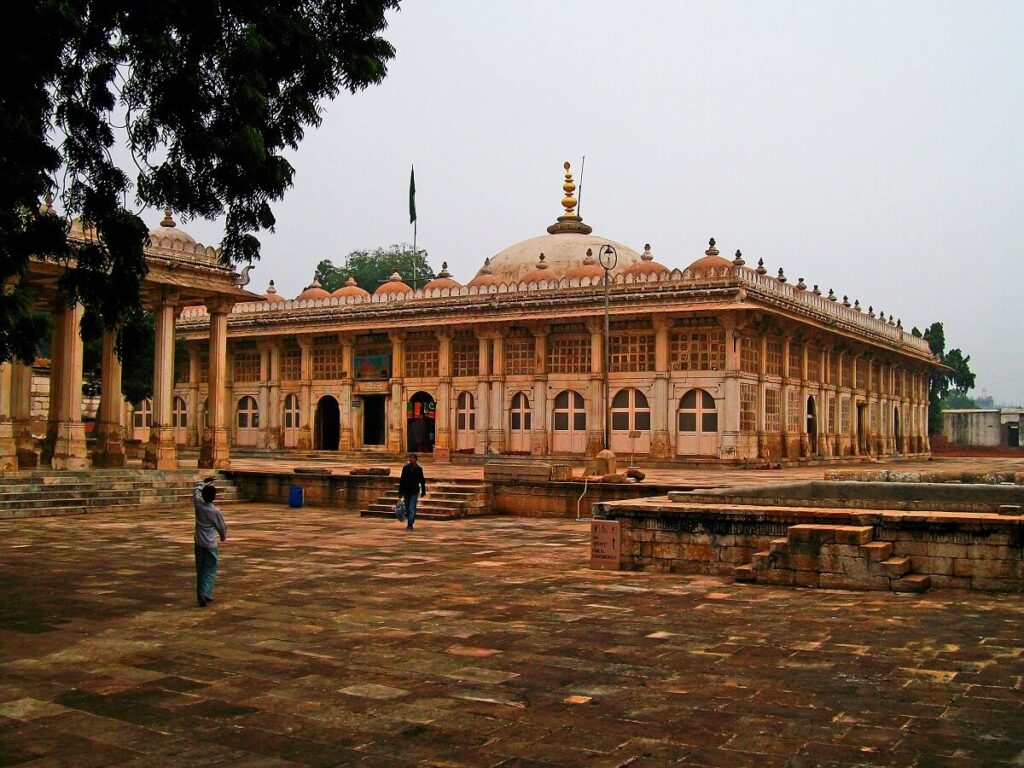
Sarkhej Roza gives visitors a chance to experience a quieter side of Ahmedabad’s architectural heritage.
The complex includes tombs, mosque structures, pavilions and a large historic water tank. Its architecture reflects the distinctive styles that developed in Gujarat during the Sultanate period.
Compared with the tightly packed streets of old Ahmedabad, Sarkhej feels spacious and contemplative.
Allow enough time to walk through the complex slowly. The proportions, open courtyards and interaction between architecture and water are easier to appreciate when the visit is not rushed.
Best for: Architecture, photography and quieter sightseeing
Suggested time: 1–2 hours
Combine with: Western Ahmedabad sightseeing
6. Dada Harir Vav
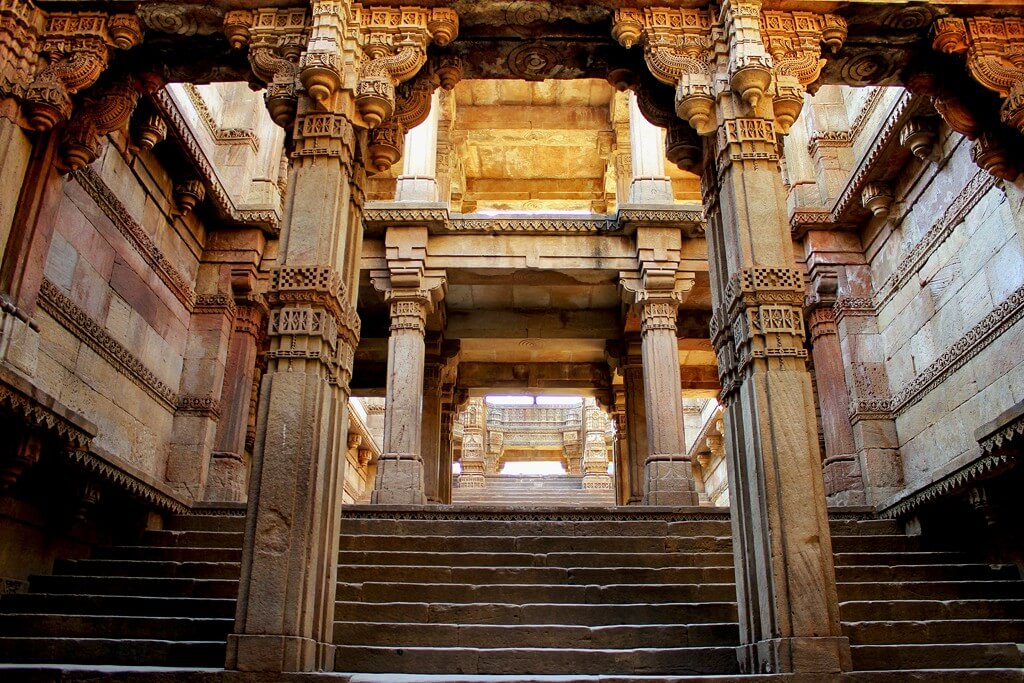
Dada Harir Vav is one of Ahmedabad’s most interesting lesser-visited monuments.
The stepwell descends through several levels of carved stone columns and platforms. As you move lower, the temperature, light and perspective change noticeably.
That is what makes Gujarat’s stepwells so unusual. They were not simply water-storage structures. They also functioned as resting spaces and remarkable pieces of engineering and architecture.
Dada Harir is especially worthwhile if you are interested in seeing a historic stepwell without travelling outside the city.
For a deeper introduction to this architectural tradition, read the guide to beautiful stepwells in Gujarat.
Best for: Stepwells, architecture and photography
Suggested time: 30–45 minutes
Combine with: Old Ahmedabad heritage sites
7. Adalaj Stepwell
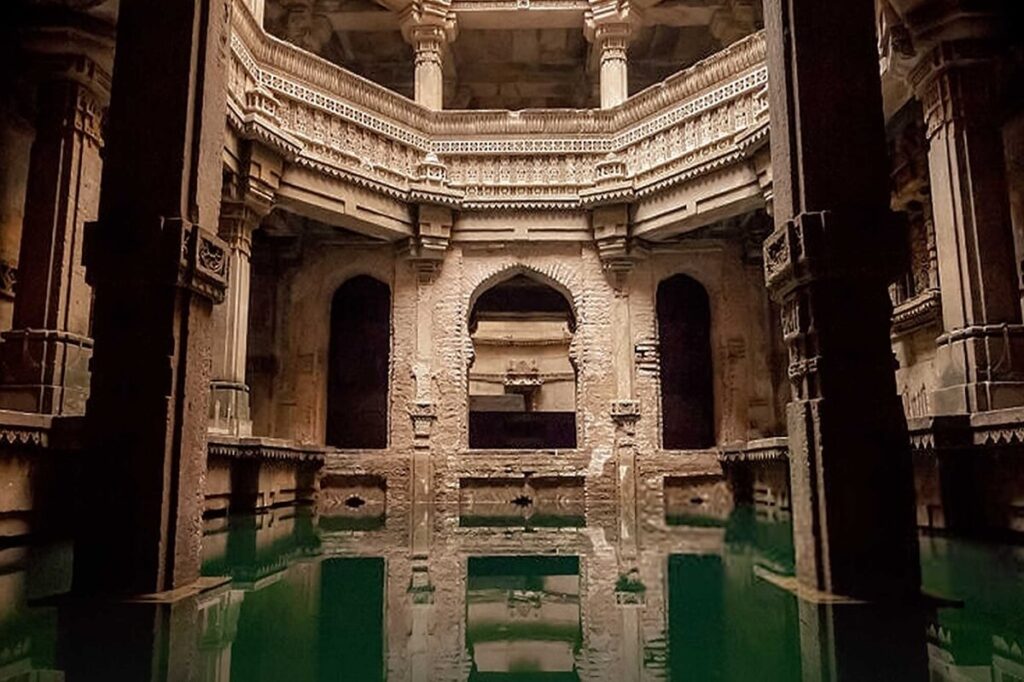
About a short drive north of Ahmedabad, Adalaj Stepwell is one of the easiest heritage excursions from the city.
Built at the end of the 15th century, the multi-level stepwell is known for richly carved pillars, balconies and walls.
What makes the experience memorable is the descent.
From the bright entrance you gradually move into a cooler underground space where the stonework becomes more atmospheric with every level.
Adalaj works particularly well for first-time visitors because it requires little travel time but immediately shows why Gujarat’s stepwells are so distinctive.
Best for: Architecture, families and photography
Suggested time: Around 1 hour
Combine with: Gandhinagar or Ahmedabad
If stepwell architecture interests you, the dedicated Gujarat stepwells guide also covers Rani ki Vav, Dada Harir and several lesser-known examples.
8. Hutheesing Jain Temple
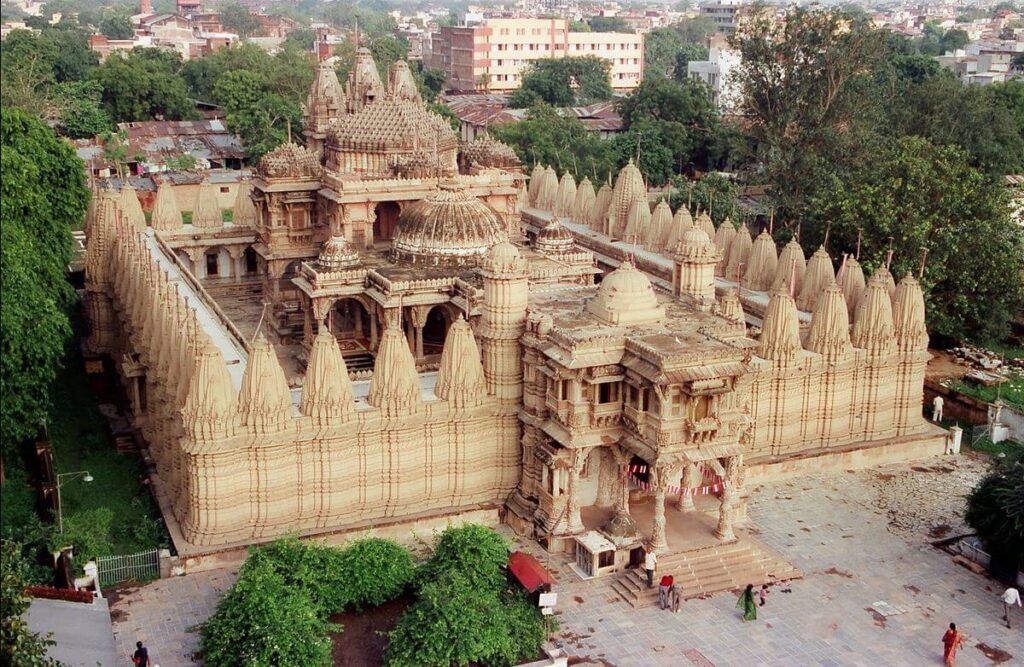
Hutheesing Jain Temple offers a contrast to Ahmedabad’s Sultanate-era mosques and stepwells.
The 19th-century temple is known for detailed stone carving and elegant Jain architecture.
Its visual appeal comes from the precision of the craftsmanship rather than monumental scale. Pillars, domes and decorative surfaces reward careful observation.
The temple remains an active religious site, so visitors should respect local customs, dress appropriately and maintain a quiet atmosphere.
It fits easily into an Ahmedabad heritage day without requiring significant travel.
Best for: Religious architecture and craftsmanship
Suggested time: 45–60 minutes
Combine with: Central Ahmedabad sightseeing
9. Modhera Sun Temple
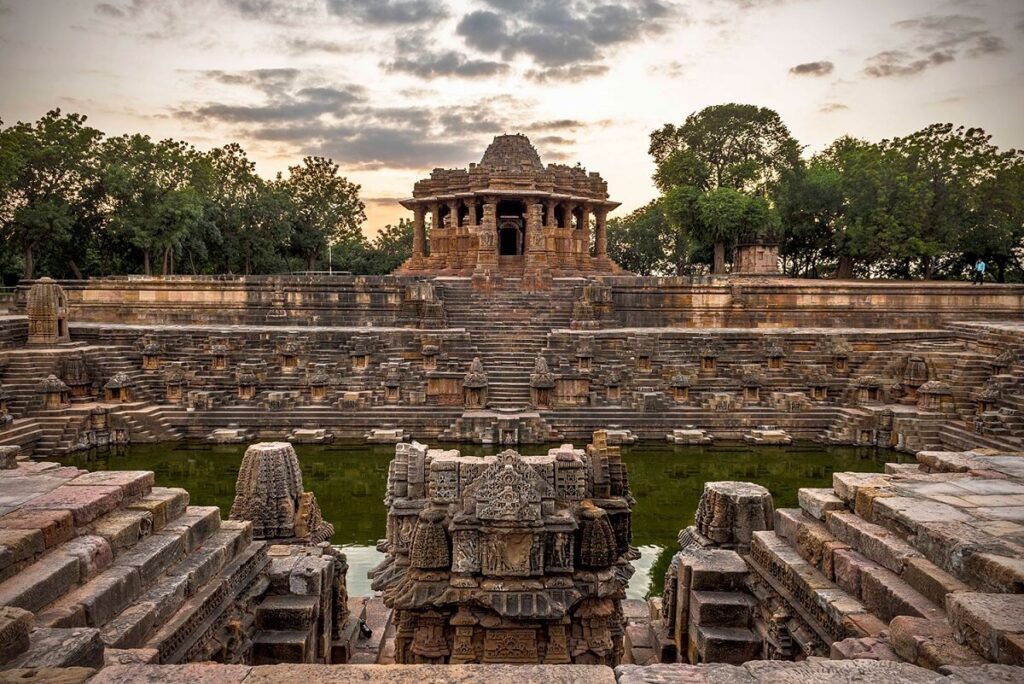
If you have an extra day in Ahmedabad, Modhera should be one of your first heritage excursions.
Located roughly 100 km from the city, the Sun Temple is one of Gujarat’s best-known examples of historic temple architecture.
The complex is associated with the Solanki period and includes the main temple structures, a pillared assembly hall and the remarkable Surya Kund stepped tank.
Instead of visiting only the central shrine area, walk around the complex and study how the architecture, carvings and water structure relate to one another.
October is a good period for this excursion because outdoor archaeological sightseeing becomes more manageable as temperatures gradually ease.
Best for: Temple architecture, sculpture and photography
Suggested time: 1.5–2 hours
Combine with: Patan
A Modhera-Patan combination is one of the strongest historical day trips from Ahmedabad.
10. Rani ki Vav, Patan
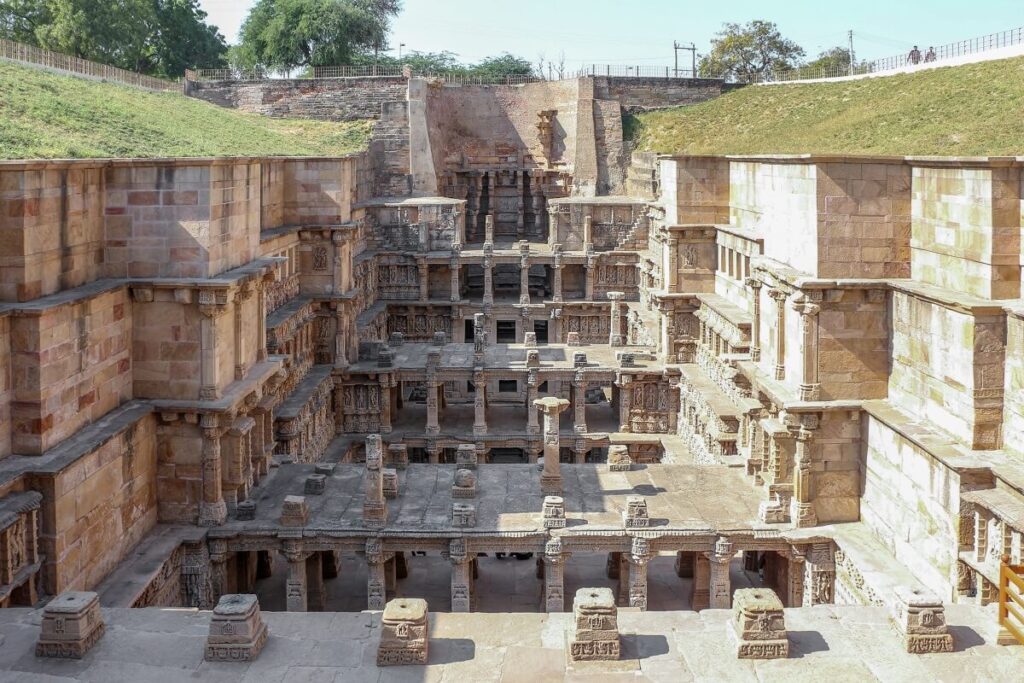
Rani ki Vav is worth the drive from Ahmedabad even if you visit no other monument outside the city.
Located in Patan, the enormous stepwell is recognized as a UNESCO World Heritage Site and represents one of the finest achievements of stepwell architecture in India.
The structure was conceived almost like an inverted temple. Visitors descend through pillared levels decorated with hundreds of sculptures.
Do not rush directly to the lowest accessible point.
Much of the experience comes from examining the carved panels and watching how the architecture changes as you move deeper into the structure.
Patan also has a celebrated Patola textile tradition, so families interested in crafts can add a weaving experience.
Read the detailed Rani ki Vav travel guide or the guide to the best places to visit in Patan when planning the day.
Best for: UNESCO heritage, architecture and sculpture
Suggested time: 1–2 hours
Combine with: Modhera Sun Temple and Patan
11. Lothal
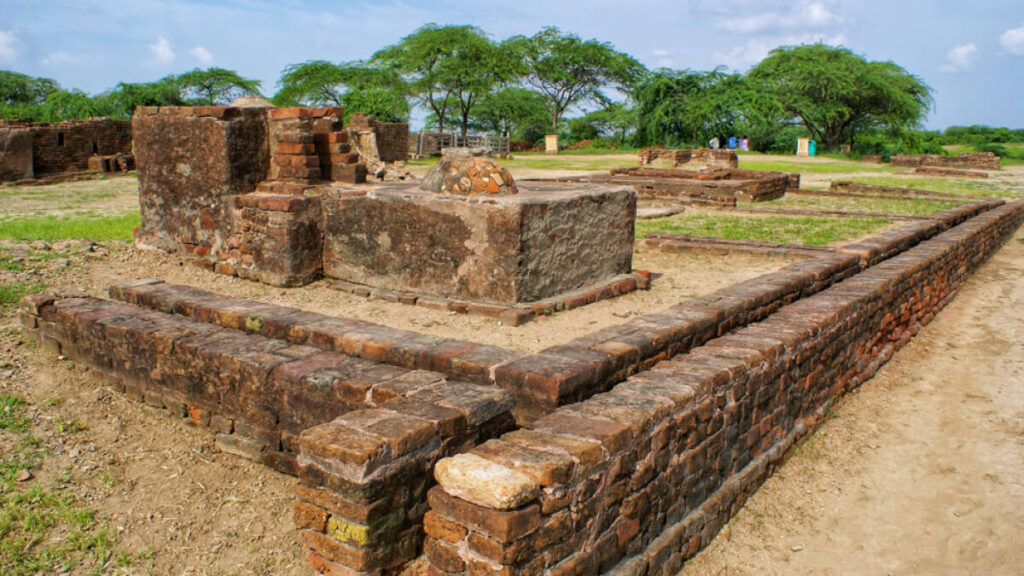
Lothal offers a completely different chapter of Gujarat’s history.
Unlike Ahmedabad’s medieval mosques and stepwells, this archaeological site is associated with the ancient Indus Valley or Harappan civilisation.
The remains provide insight into settlement planning, trade and the sophisticated urban culture that developed thousands of years ago.
Lothal is best suited to travellers who genuinely enjoy archaeology because the site requires more imagination than an ornate palace or temple.
A knowledgeable guide or some background reading can make the visit considerably more rewarding.
Best for: Archaeology, ancient history and educational trips
Suggested time: 1.5–2 hours
Combine with: A dedicated half-day excursion from Ahmedabad
12. Champaner-Pavagadh Archaeological Park
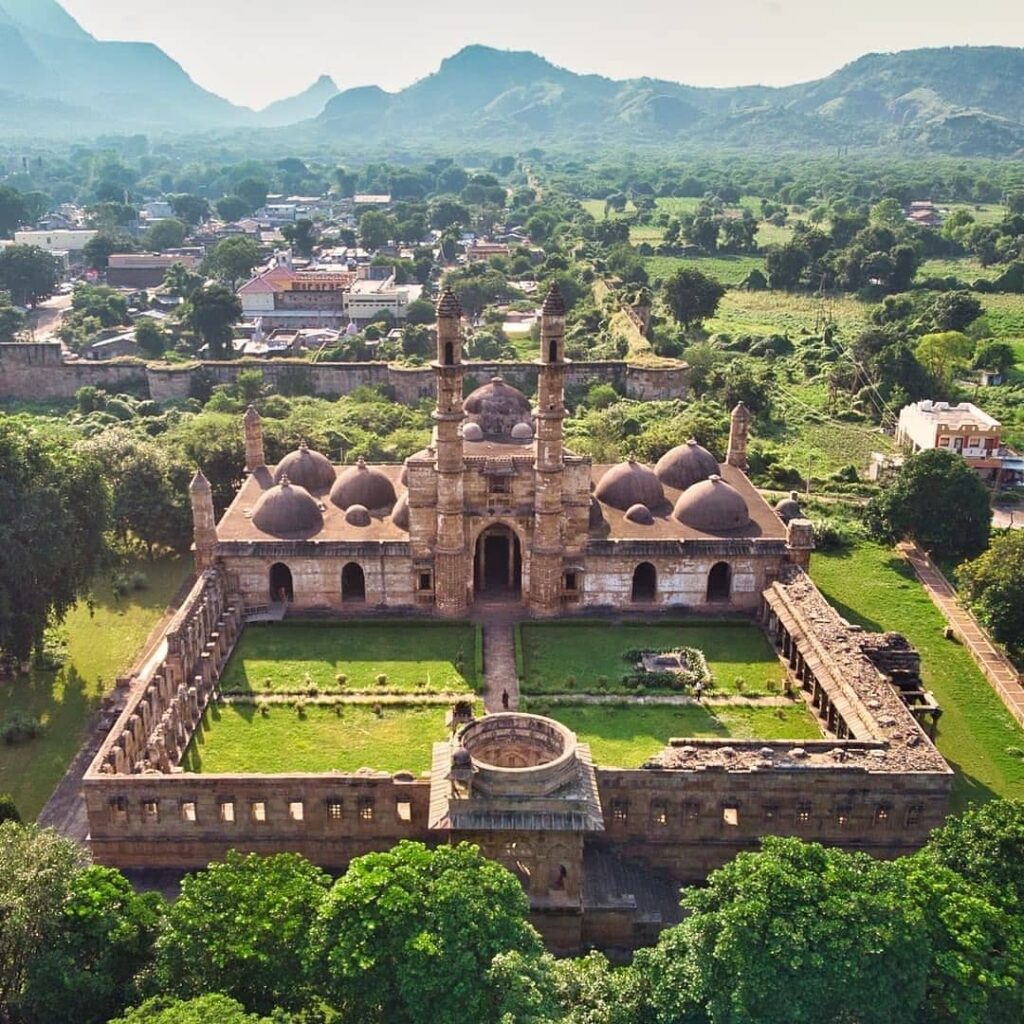
For travellers who have an entire day available, Champaner-Pavagadh is one of the most rewarding historical excursions from Ahmedabad.
The UNESCO-listed archaeological landscape contains mosques, temples, fortifications and other remains spread across a wide area around the historic settlement and Pavagadh Hill.
This is not a monument where you simply arrive, take photographs and leave after 30 minutes.
Allow several hours.
Jami Masjid is among the best-known structures, while other monuments and ruins reveal layers of religious and political history.
October can be attractive because the landscape often retains some post-monsoon greenery while conditions begin becoming more comfortable for walking.
Best for: UNESCO heritage, archaeology and architecture
Suggested time: Full day
Combine with: Vadodara on a longer Gujarat itinerary
Which Historical Places Should You Visit If You Have Only One Day?
If this is your first visit to Ahmedabad, concentrate on the city rather than spending half the day driving.
Start at Sabarmati Ashram, then continue toward Sidi Saiyyed Mosque, Bhadra Fort, Teen Darwaza and Jama Masjid.
Later, visit either Sarkhej Roza or Adalaj Stepwell.
This gives you a much more balanced understanding of Ahmedabad than trying to see every monument in a single day.
Best 2-Day Ahmedabad Heritage Itinerary
On the first day, focus on Ahmedabad itself: Sabarmati Ashram, the old city, Jama Masjid, Teen Darwaza, Sidi Saiyyed Mosque and Sarkhej Roza.
Use the second day for Adalaj Stepwell, then choose between a longer Modhera and Patan excursion or additional Ahmedabad heritage sites.
Best 3-Day Heritage Trip from Ahmedabad
With three days, you can explore much more comfortably.
Day 1: Ahmedabad heritage sightseeing
Day 2: Modhera Sun Temple and Rani ki Vav in Patan
Day 3: Champaner-Pavagadh or Lothal
This arrangement gives you three very different chapters of Gujarat’s history: Ahmedabad’s Sultanate and modern heritage, the temple and stepwell architecture of northern Gujarat, and an archaeological excursion.
Is October a Good Time to Visit Ahmedabad?
October marks the transition from the monsoon toward Gujarat’s more comfortable travel season.
Days can still feel warm, especially during the first half of the month, so outdoor heritage sightseeing is best planned for mornings and late afternoons.
Conditions generally become more comfortable as the month progresses.
The advantage of travelling in October is that you can explore Ahmedabad while also combining the city with outdoor archaeological sites such as Modhera, Patan and Champaner.
For a broader state itinerary, read best places to visit in Gujarat in October.
What to Wear for Heritage Sightseeing
Light, breathable clothing works well for daytime sightseeing.
Carry comfortable walking shoes because Ahmedabad’s old-city lanes and archaeological complexes involve considerably more walking than they may appear to on a map.
When visiting mosques, temples and other active religious sites, choose modest clothing that covers shoulders and knees.
A hat, water bottle and sun protection are also useful, particularly for open-air sites such as Modhera, Patan and Champaner.
Extend Your Ahmedabad Heritage Trip
Ahmedabad makes a practical starting point for a longer Gujarat journey.
Travellers interested primarily in history can continue north toward Modhera and Patan or southeast toward Vadodara and Champaner.
Those with additional time can expand the trip into Gujarat’s wider heritage, craft, wildlife and pilgrimage circuit.
Tusk Travel’s Ahmedabad tours include city sightseeing and can be customised with nearby heritage destinations, while longer Gujarat tour packages connect Ahmedabad with places such as Modhera, Patan, Vadodara, Kutch, Gir, Dwarka and Somnath.
Final Thoughts
Ahmedabad rewards travellers who look beyond a simple city sightseeing checklist.
Within the city, Sabarmati Ashram connects you with India’s modern history, while Jama Masjid, Bhadra Fort, Sidi Saiyyed Mosque and Sarkhej Roza reveal the architectural legacy of earlier centuries.
Stepwells such as Dada Harir and Adalaj introduce another side of Gujarat’s heritage altogether.
Then, within a few hours of Ahmedabad, the story becomes even deeper. Modhera reveals the sophistication of historic temple architecture, Rani ki Vav takes you underground into one of India’s greatest stepwells, Lothal reaches back to the Indus Valley civilisation, and Champaner-Pavagadh brings an entire archaeological landscape into the journey.
If you are visiting Ahmedabad in October, allow at least two or three days rather than treating the city as a quick overnight stop. With cooler conditions beginning to arrive and some of Gujarat’s finest historical sites within driving distance, it is an excellent base for exploring the state’s architectural and cultural heritage.
