
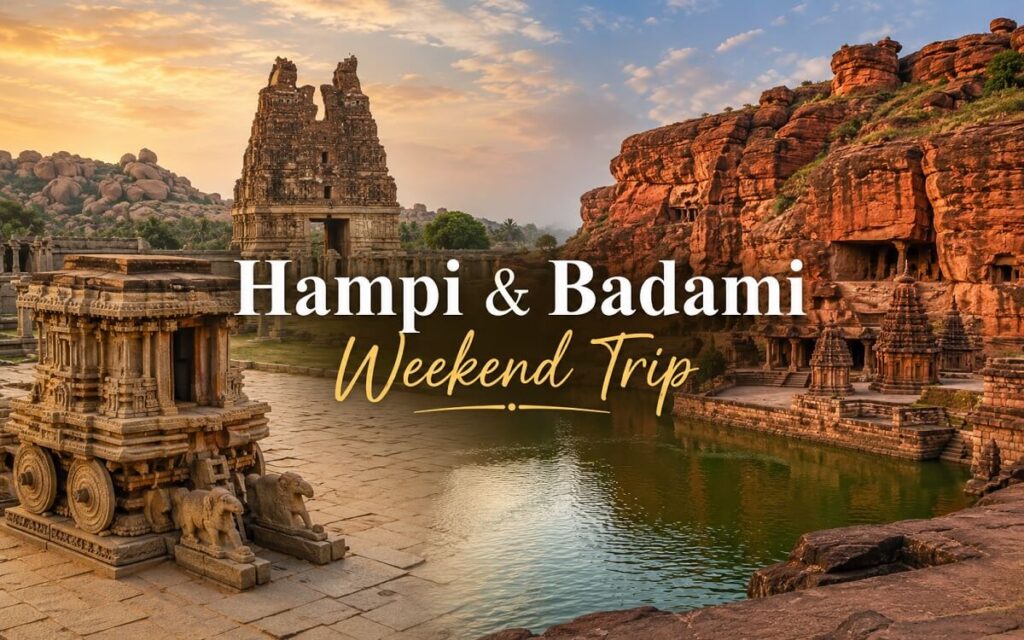
Few weekend trips in South India pack as much history, architecture, dramatic scenery, and adventure into a short journey as Hampi and Badami. One moment you are walking through the remains of an imperial capital surrounded by giant granite boulders; the next, you are climbing into ancient rock-cut caves carved into glowing red sandstone cliffs.
Located in Karnataka, Hampi and Badami belong to different chapters of South Indian history, yet they complement each other beautifully. Hampi introduces you to the grandeur of the Vijayanagara Empire, while Badami takes you several centuries further back to the age of the Early Chalukyas.
Add the temple complexes of Aihole and Pattadakal, sunrise viewpoints, forgotten market streets, lakeside shrines, enormous sculptures, and landscapes that appear almost otherworldly, and you have the ingredients for one of the finest cultural road trips in Karnataka.
A Hampi and Badami weekend trip is best planned as a long weekend of three to four days. You can technically cover the highlights faster, but rushing through these archaeological landscapes defeats much of their charm.
This guide explains how to plan the journey, what to see, how much time to spend at each destination, the best routes, where bouldering fits into the experience, and how to combine Hampi, Badami, Pattadakal, and Aihole without turning your holiday into a race.
Why Combine Hampi and Badami in One Trip?
Hampi and Badami are separated by roughly a few hours of road travel, making them natural partners for travellers interested in archaeology and architecture.
But geography is only part of the reason to combine them.
The greater appeal is historical progression.
In Badami, Aihole, and Pattadakal, you can see how temple builders of the Chalukyan era experimented with cave architecture, free-standing shrines, tower styles, sculptural programmes, and different architectural traditions.
Then, when you arrive in Hampi, you encounter an entirely different scale.
Here are monumental gateways, enormous bazaars, royal compounds, water systems, temple complexes, ceremonial platforms, elephant stables, carved pillars, and gigantic monolithic sculptures associated with one of medieval India’s most powerful empires.
Together, the destinations make Karnataka’s architectural history much easier to appreciate.
Travellers planning a longer journey through the state can also explore Tusk Travel’s Karnataka tours, which connect Hampi and Badami with destinations such as Mysore, Hassan, Coorg, Kabini, and other parts of South India.
Hampi: An Ancient Capital Among Giant Boulders
Hampi is one of those places that does not resemble the mental image most visitors have of an archaeological site.
Ruins do not sit inside a neat fenced compound.
They are scattered across an enormous landscape of rocky hills, banana plantations, riverbanks, villages, agricultural fields, and bizarre formations of rounded granite boulders.
Temples appear unexpectedly between rocks. Stone gateways frame empty roads. Ancient bazaars stretch into the distance. Carved monuments rise beneath hills that look as though giants have piled stones on top of one another.
Once the capital of the Vijayanagara Empire, Hampi became one of South India’s great political, economic, and cultural centres.
Today, its archaeological remains form one of India’s most extraordinary heritage landscapes. Travellers wanting to explore the destination in greater depth can also refer to Tusk Travel’s dedicated Hampi tours and travel itineraries.
Best Places to Visit in Hampi on a Weekend Trip:
A full exploration of Hampi could easily take several days. For a combined Hampi and Badami itinerary, however, focus on the major sites while leaving enough time simply to absorb the landscape.
1. Virupaksha Temple
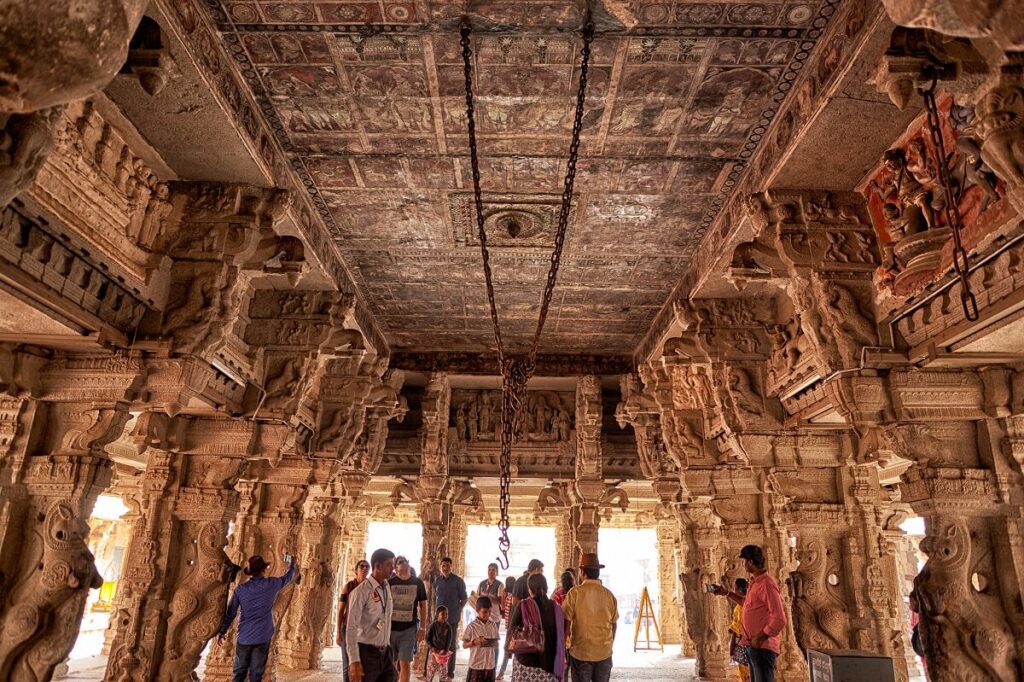
Virupaksha Temple is an excellent introduction to Hampi.
Unlike many surrounding monuments that survive primarily as archaeological remains, Virupaksha continues to function as an important place of worship.
Its towering entrance gateway dominates the end of the old Hampi Bazaar and immediately gives visitors a sense of the scale that once defined the city.
Inside are pillared halls, courtyards, shrines, paintings, carvings, and spaces used for religious rituals.
Arrive early if possible. The atmosphere before the main daytime crowds arrive is quite different from the busier hours later in the morning.
2. Hampi Bazaar
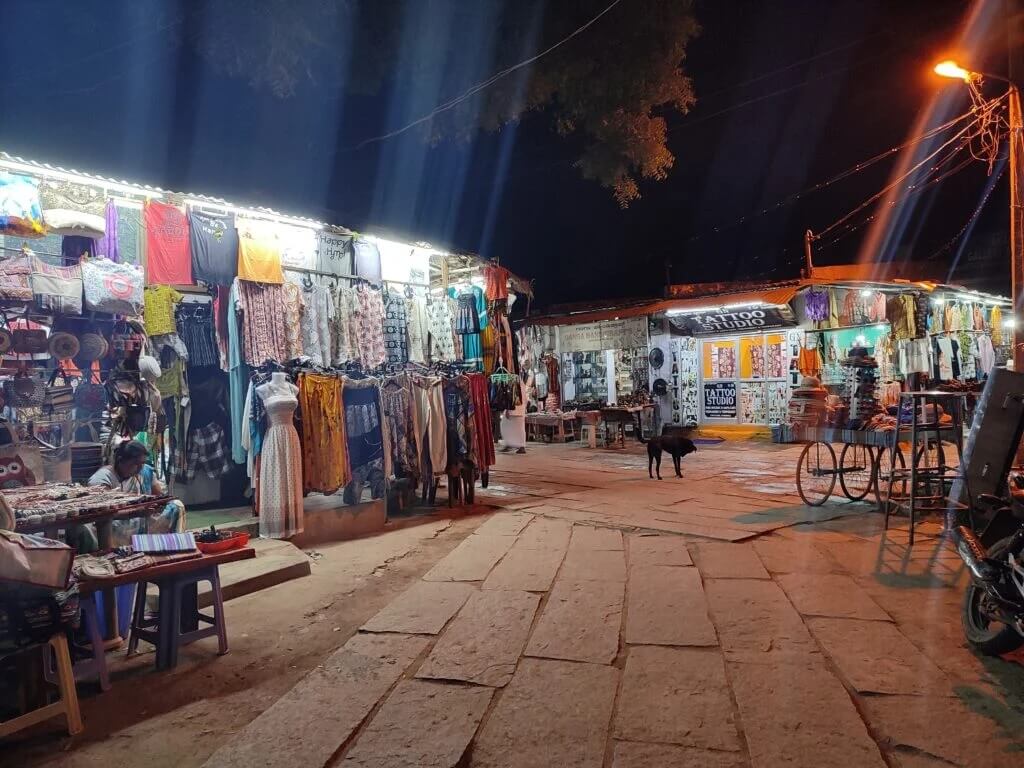
Directly outside Virupaksha Temple lies the historic Hampi Bazaar.
Although the commercial life of the imperial city has disappeared, the long line of stone structures helps you imagine what the area must once have looked like when merchants and travellers moved through the capital.
Walking through this part of Hampi rather than simply driving between monuments provides valuable context.
3. Hemakuta Hill
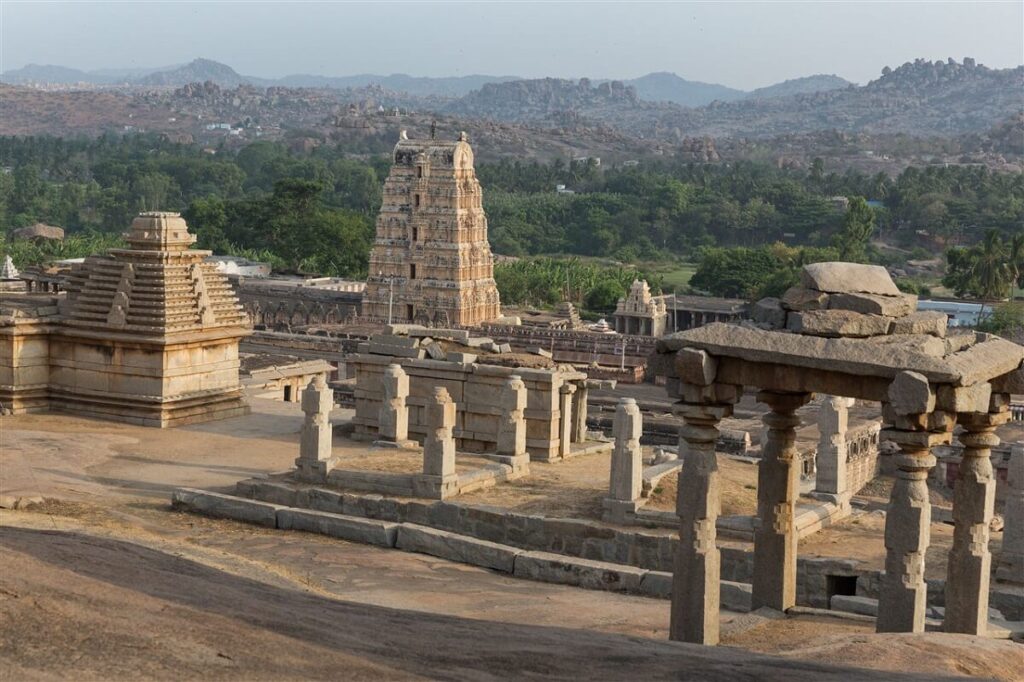
Hemakuta Hill should be high on your Hampi itinerary, particularly around sunrise or sunset.
The hill is scattered with shrines and stone structures, but its greatest attraction is the view.
From here, the characteristic Hampi landscape unfolds in layers of temple towers, coconut palms, agricultural land, rocky hills, and massive boulders.
The relatively accessible viewpoint makes Hemakuta particularly suitable for travellers who want panoramic views without committing to a long trek.
4. Sasivekalu and Kadalekalu Ganesha
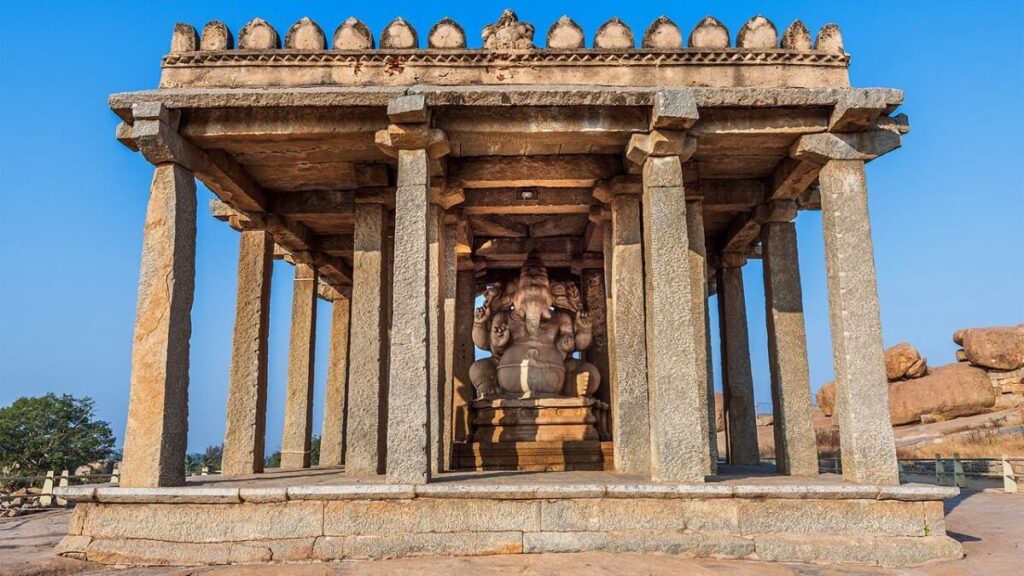
Hampi contains several impressive monolithic sculptures, including two enormous representations of Lord Ganesha.
The Sasivekalu Ganesha and Kadalekalu Ganesha statues demonstrate the remarkable ability of Vijayanagara-period sculptors to transform individual blocks of granite into monumental religious images.
Because both are located near other major monuments, they are easy to include while exploring on foot.
5. Krishna Temple and Bazaar
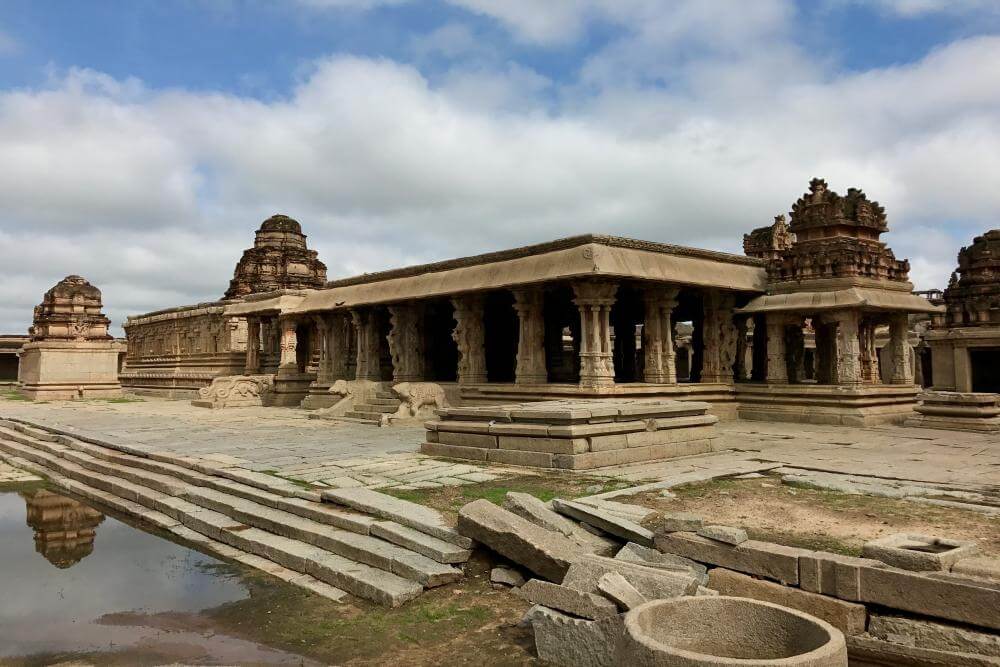
The Krishna Temple complex is often quieter than Virupaksha, making it a good place to appreciate Hampi’s architectural details without large crowds.
The remains of the adjoining market street also reinforce an important point about Hampi: temples were not isolated religious structures. They formed part of larger urban environments involving commerce, festivals, processions, water systems, and neighbourhood life.
6. Lakshmi Narasimha
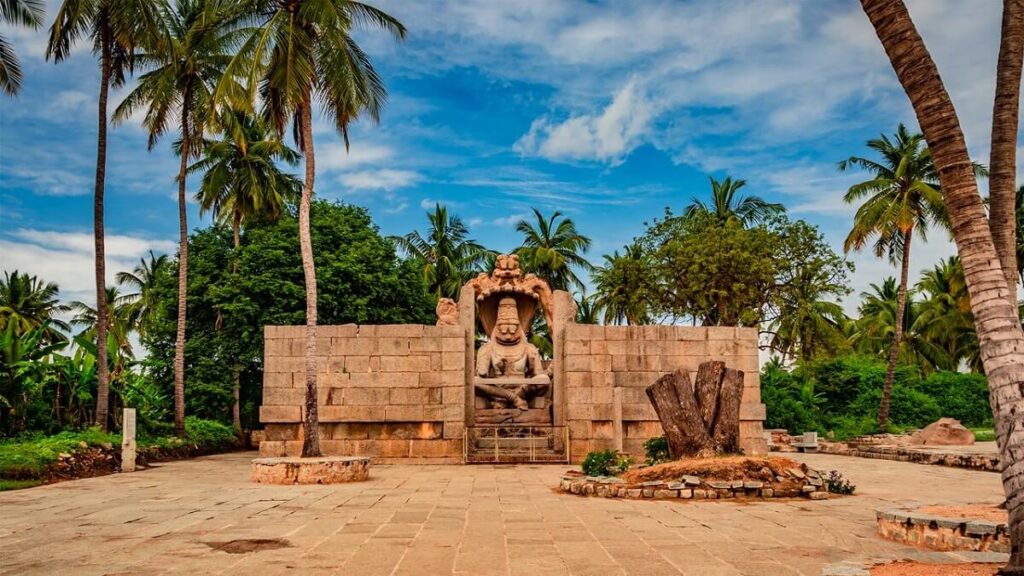
One of Hampi’s most recognisable sculptures is the enormous Lakshmi Narasimha.
Narasimha, the lion-headed incarnation of Vishnu, is represented in a powerful seated pose.
Although parts of the original sculpture have been damaged, its enormous scale remains impressive.
Nearby stands the Badavilinga, another striking monolithic religious monument.
7. Royal Enclosure
After exploring Hampi’s sacred monuments, move into the royal section of the ancient city.
Much of what once stood here has disappeared, but surviving foundations and monuments reveal something about imperial administration and ceremonial life.
Important stops include the Mahanavami Dibba, stepped tanks, underground chambers, aqueducts, and platforms associated with the Vijayanagara court.
The sophisticated water-management structures are particularly interesting because they show that Hampi was far more than a collection of temples.
It was a highly organised urban centre.
8. Queen’s Bath
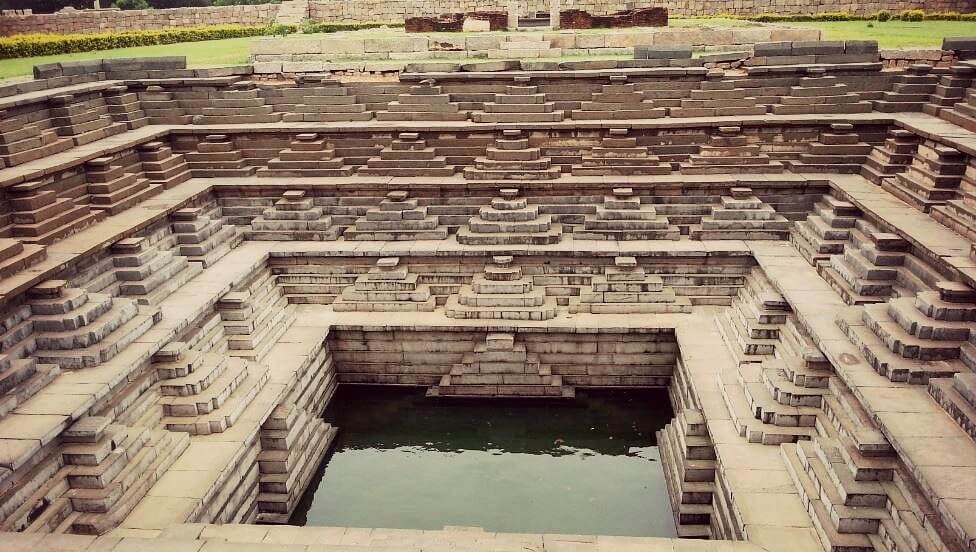
Despite its popular name, historians continue to debate the exact function of some structures within Hampi’s royal area.
The Queen’s Bath is nevertheless worth visiting for its architectural design, balconies, arches, and water channels.
It provides a contrast with the heavily sculpted temple architecture elsewhere in Hampi.
9. Lotus Mahal
The Lotus Mahal is among the most elegant structures in Hampi.
Its graceful arches and symmetrical appearance reflect architectural influences different from the predominantly temple-oriented monuments nearby.
It stands inside the Zenana Enclosure, a relatively compact area that can be explored together with several other structures.
10. Elephant Stables
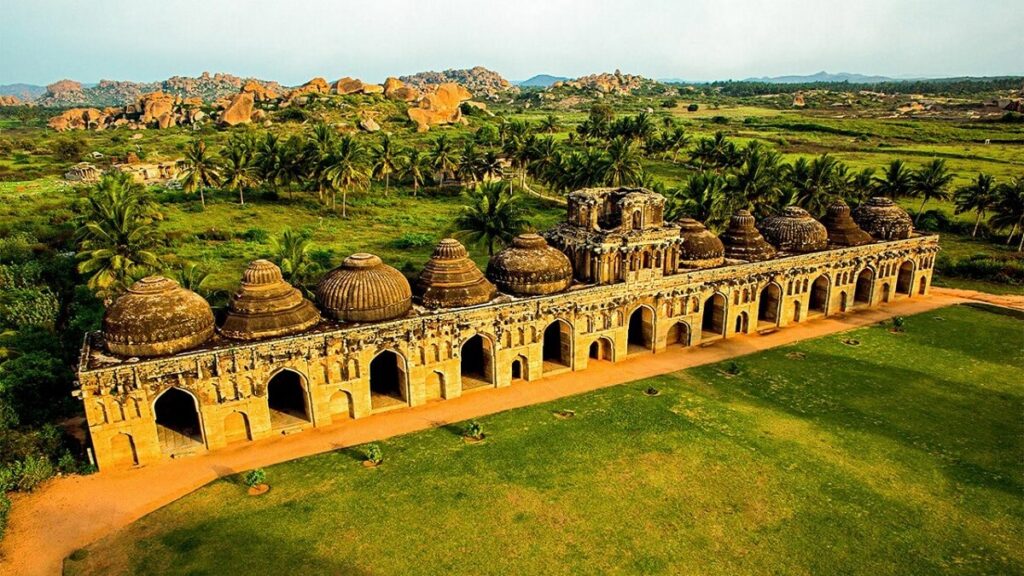
Next to the Zenana area, the Elephant Stables form one of Hampi’s most memorable secular monuments.
A row of large domed chambers once associated with royal elephants creates an architectural scene entirely unlike the ruined temples.
This is also one of the most photographed monuments in the Hampi complex.
11. Hazara Rama Temple
For travellers interested in sculpture, Hazara Rama Temple deserves more time than it often receives.
Its walls contain detailed narrative carvings, including processions, warriors, horses, elephants, dancers, and episodes connected with the Ramayana.
Walking slowly around the exterior is almost like reading a stone record of royal and religious life.
12. Vittala Temple and Stone Chariot
If you can visit only one major monumental complex beyond Virupaksha, make it the Vittala Temple.
The complex represents Vijayanagara architecture at an extraordinary level of refinement.
Its celebrated Stone Chariot has become one of the visual symbols of Hampi, while the temple’s carved pillars, mandapas, gateways, and courtyards reward close examination.
Allow enough time here.
Trying to see Vittala Temple in 20 minutes because your driver is waiting is exactly the sort of mistake a well-planned Hampi weekend should avoid.
Hampi’s Boulders: More Than a Background
The boulder-covered landscape is inseparable from Hampi’s identity.
Huge granite formations surround the monuments, river, villages, and fields, creating some of India’s most unusual scenery.
Geological processes operating over immense periods gradually shaped the landscape into the rounded and fractured rock formations seen today.
For photographers, these boulders provide endless possibilities. Temples framed against rock formations can appear completely different depending on the time of day.
For outdoor travellers, the same landscape has made Hampi internationally known among rock climbers and bouldering enthusiasts.
Bouldering in Hampi
Hampi’s granite terrain has long attracted climbers because of the vast number of naturally occurring boulders.
The experience ranges from relatively straightforward problems to technically demanding climbs requiring considerable skill.
However, travellers should distinguish between casually scrambling onto rocks for a photograph and actual bouldering.
Proper bouldering involves route knowledge, technique, crash pads, suitable footwear, spotters, and an understanding of the landing zone.
If climbing is part of your Hampi itinerary, use an experienced local climbing guide rather than attempting unfamiliar routes independently.
Heritage restrictions also matter. Archaeological monuments and protected structures are not climbing walls, and visitors should never climb on temples, carved surfaces, ruins, or protected cultural structures.
The best approach is to enjoy bouldering responsibly in permitted natural areas with people who understand local conditions.
Sunrise and Sunset in Hampi
Hampi’s landscape changes dramatically with the light.
Early morning brings softer temperatures, fewer visitors, and misty views across agricultural fields and the Tungabhadra River.
Sunset transforms the granite into shades of gold, orange, and deep brown.
Popular viewpoints include Hemakuta Hill and other elevated locations around the heritage zone.
Some travellers also plan an early climb to higher viewpoints such as Matanga Hill. If you choose a longer sunrise hike, carry a torch, wear secure footwear, and check local access conditions beforehand.
Do not try to squeeze both a demanding sunrise trek and an exhausting full day of monument sightseeing into the same schedule unless you are comfortable with considerable walking.
From Hampi to Badami
Leaving Hampi for Badami creates one of the most interesting transitions in the trip.
Hampi’s grey granite formations gradually give way to the warm red sandstone landscape associated with Badami.
Although Badami is smaller and less sprawling than Hampi, it deserves more than a quick roadside stop.
The town’s cliffs, lake, caves, temples, fortifications, and narrow streets create an intimate archaeological landscape.
For travellers planning additional time here, Tusk Travel’s Badami tours provide ideas for combining the town with the wider Chalukyan heritage circuit.
Badami: Red Cliffs and Rock-Cut Cave Temples
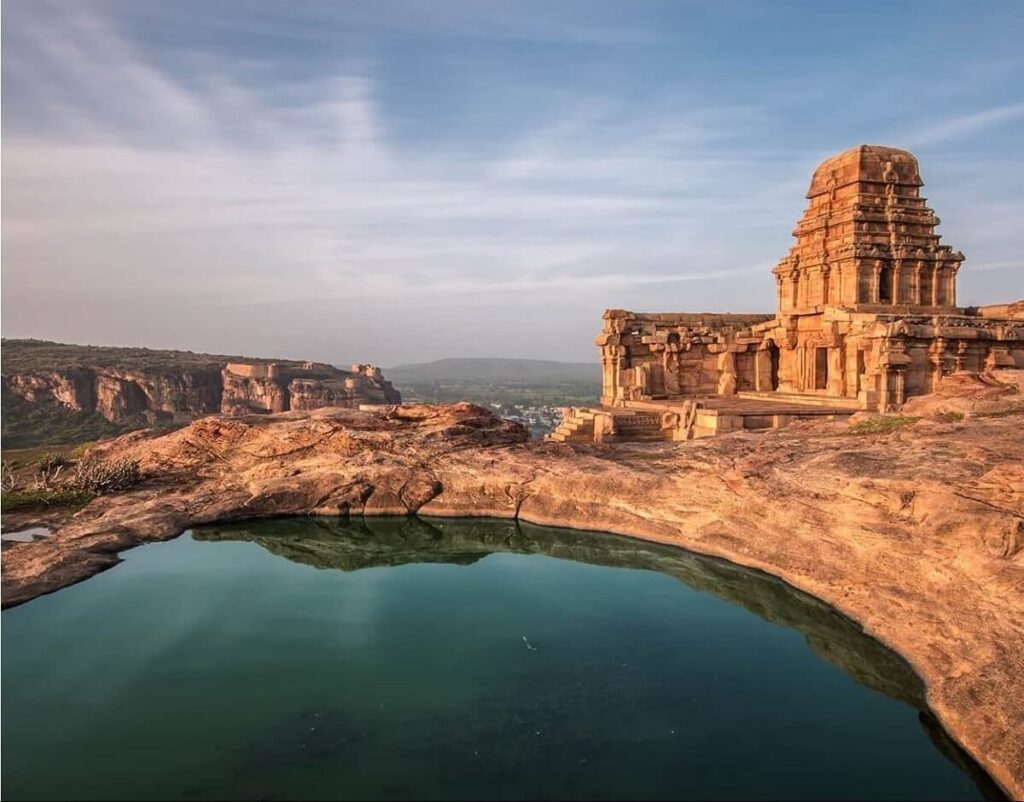
Badami, historically known as Vatapi, became an important capital of the Early Chalukyas.
The dynasty played a major role in the development of South Indian temple architecture, and the region around Badami contains remarkable evidence of experimentation with both rock-cut and structural architecture.
The first sight of Badami is memorable.
Red sandstone cliffs rise dramatically behind Agastya Lake, while ancient caves and shrines appear carved into or built against the rocky landscape.
It feels completely different from Hampi.
Exploring the Badami Cave Temples:
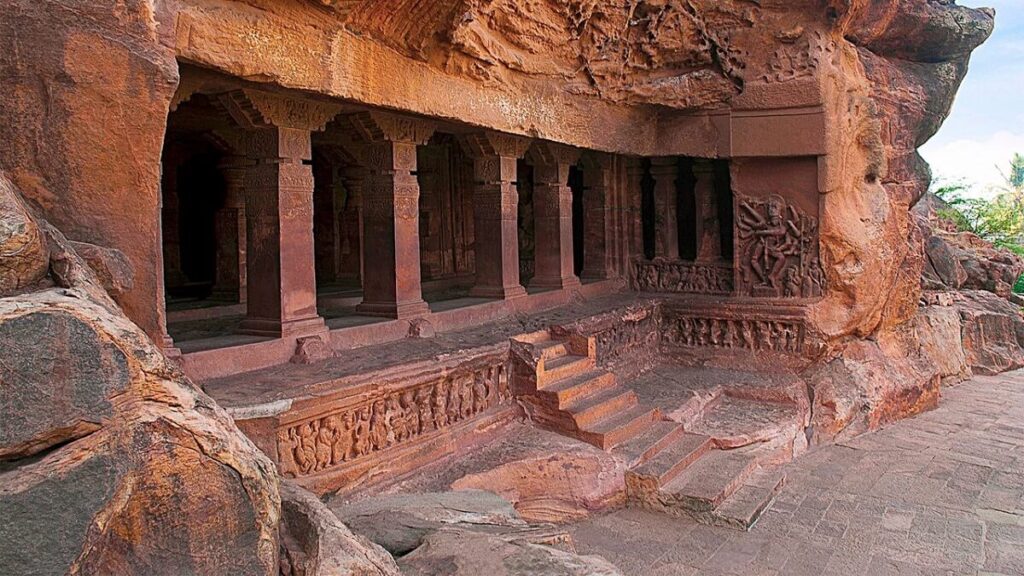
The Badami Cave Temples are the town’s essential attraction.
Four major caves are carved into the sandstone cliff, connected by steps.
Cave 1
The first cave is largely associated with Shaiva imagery.
Among its best-known sculptures is a representation of Shiva as Nataraja, shown in a dynamic dancing form with multiple arms.
Elsewhere, carvings display other sophisticated religious compositions.
The sculptures are impressive not only because of their subject matter but because they were created directly from the sandstone cliff rather than assembled from separate blocks.
Cave 2
The second cave contains important Vaishnava imagery.
Large sculptural panels depict forms of Vishnu, while ceilings and pillars contain decorative motifs that encourage visitors to look beyond the most obvious wall sculptures.
Cave 3
Cave 3 is the largest and most elaborate of the Badami caves.
Its proportions, carvings, pillars, and sculptural panels give the space a more monumental quality.
Even travellers with only a casual interest in architecture tend to linger here.
Cave 4
The fourth major cave is associated with Jain traditions.
Its presence alongside Hindu cave temples makes the Badami complex particularly valuable for understanding the diverse religious landscape of the period.
Allow approximately two hours for the caves if you enjoy history or photography.
Rushing upward, taking a few photographs, and immediately leaving misses much of the detail.
Agastya Lake
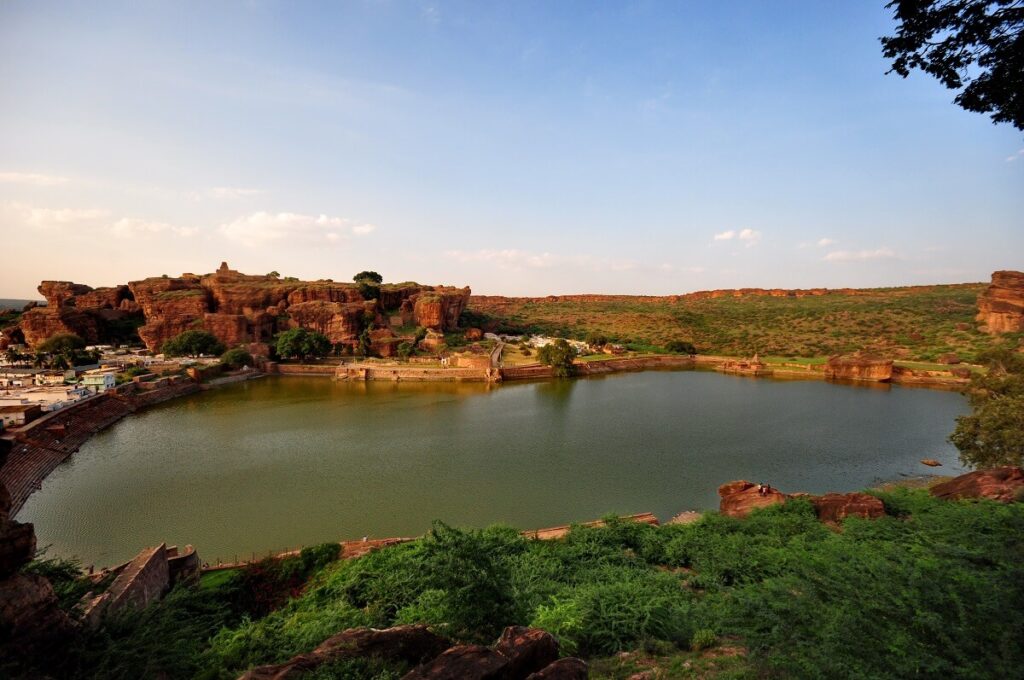
After visiting the caves, walk toward Agastya Lake.
The water sits at the base of Badami’s cliffs, with historic temples and stone steps around its edges.
The lake creates one of the most attractive compositions in northern Karnataka, especially when the sandstone cliffs begin reflecting warm evening light.
The area is worth exploring slowly rather than treating it merely as the route between attractions.
Bhutanatha Temples
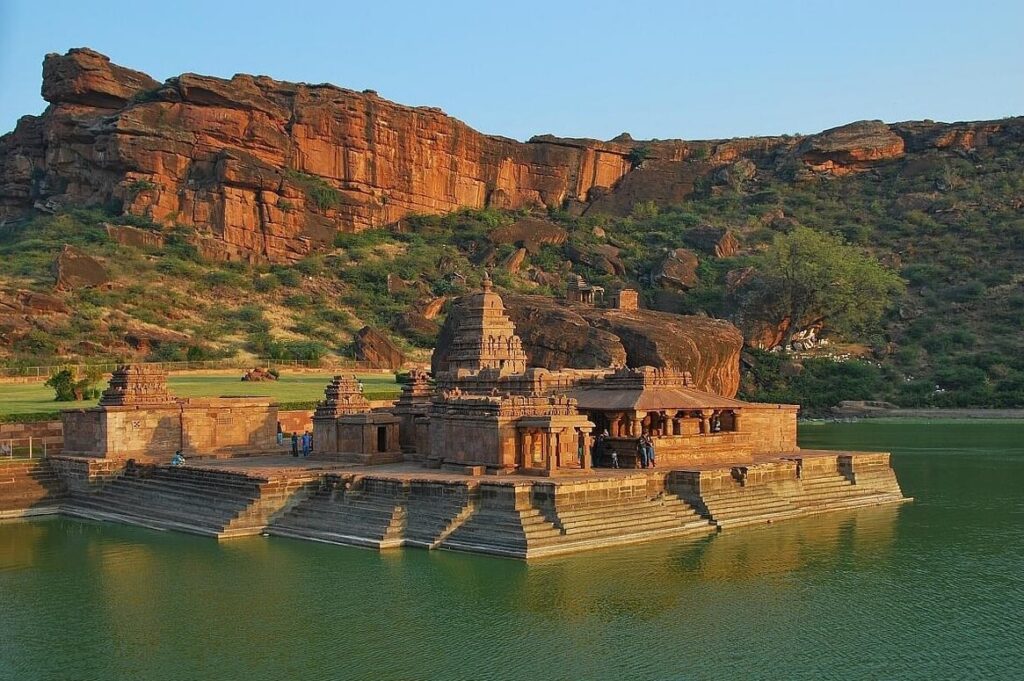
The Bhutanatha group of temples occupies a beautiful location beside Agastya Lake.
The visual combination of water, temple architecture, and red cliffs makes this one of the most photogenic corners of Badami.
Late afternoon is particularly atmospheric.
Stay until the light softens if your itinerary allows.
Badami Fort and Shivalaya Temples
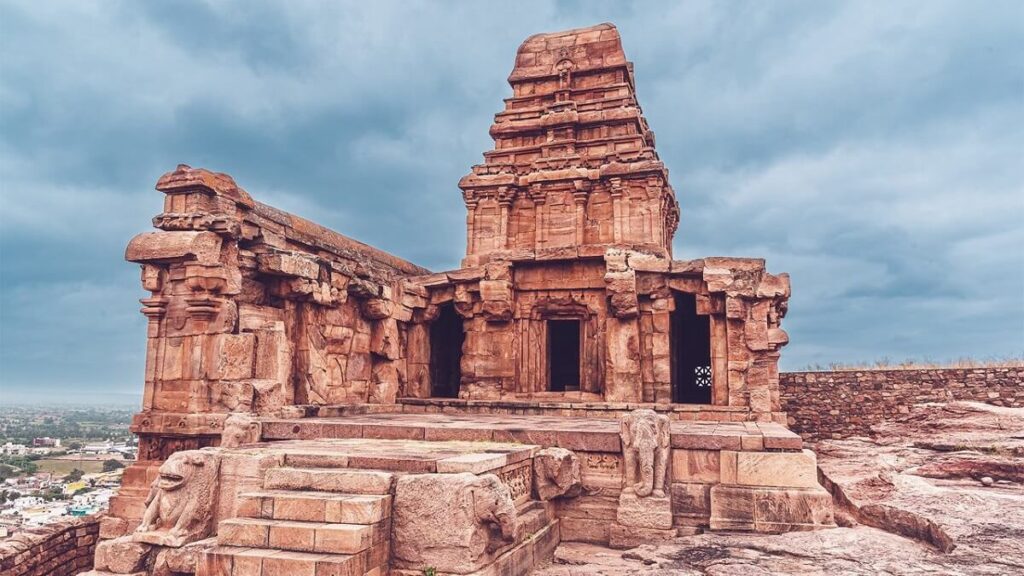
Travellers willing to climb can explore the elevated fort area and surviving Shivalaya temples.
The path leads into Badami’s rugged sandstone landscape and offers panoramic views over the town, Agastya Lake, and surrounding cliffs.
Wear shoes with good grip and carry water.
Unlike visiting a conventional city monument, sightseeing in Badami often involves steps, rocky paths, and exposed terrain.
Add Pattadakal to Your Hampi-Badami Trip
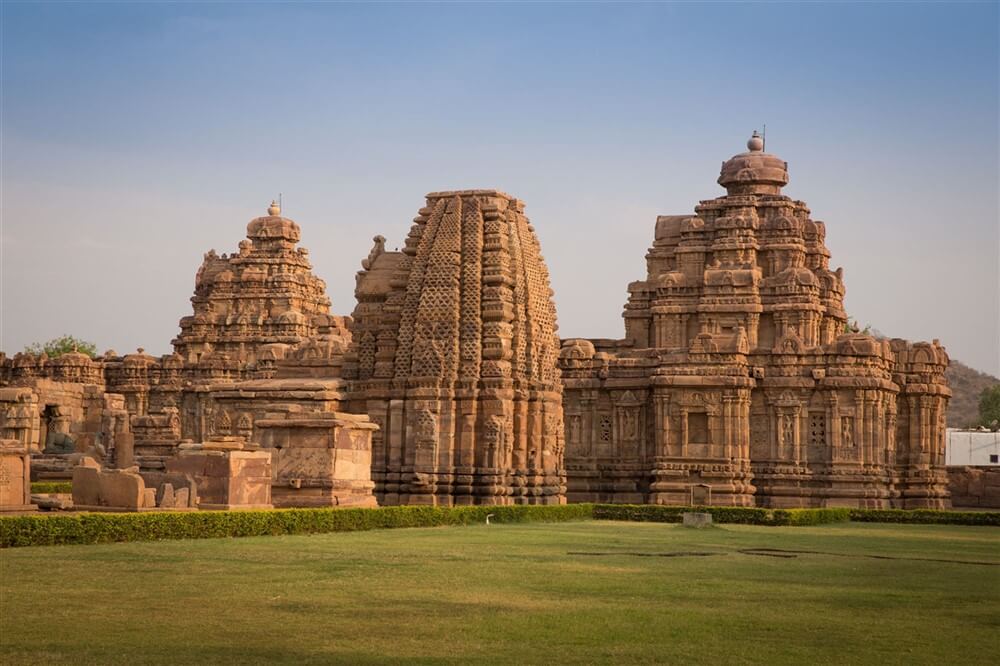
A weekend heritage journey becomes much richer if you include Pattadakal.
Located within easy road-tripping distance of Badami, Pattadakal represents one of the great achievements of Chalukyan temple architecture.
The temple complex demonstrates the interaction of different architectural traditions and contains an exceptional concentration of early medieval monuments.
Rather than seeing each structure merely as another temple, compare their towers, floor plans, doorways, sculptural panels, and proportions.
You begin to see architectural experimentation happening from building to building.
The Virupaksha Temple at Pattadakal is particularly important and deserves careful exploration.
For travellers interested in Indian history, Pattadakal should not be sacrificed simply to save an hour.
Aihole: The Experimental Side of Chalukyan Architecture
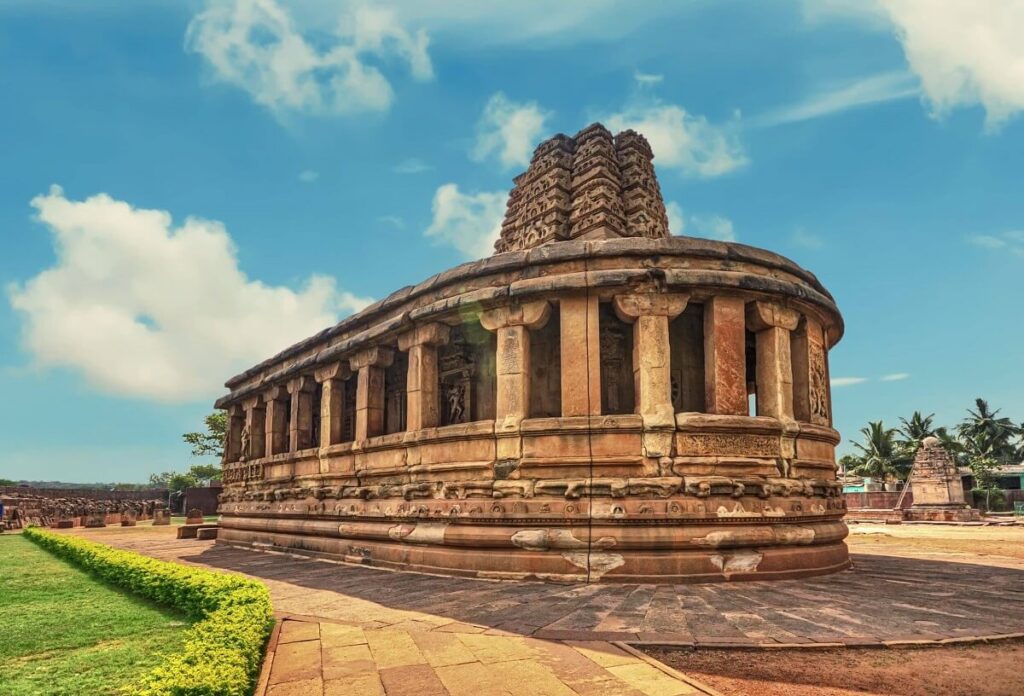
Aihole is another rewarding addition to the route.
Where Pattadakal can feel relatively concentrated, Aihole spreads monuments across a broader settlement and contains temples representing multiple stages of architectural development.
It is often described as an important centre of experimentation in early Indian temple architecture.
The Durga Temple is the structure many visitors remember first because of its unusual apsidal form and surrounding colonnade.
The Lad Khan Temple offers a very different architectural impression.
Other monuments scattered throughout Aihole make the destination particularly satisfying for travellers who enjoy comparing structures rather than simply collecting famous sights.
If your schedule allows, hire a knowledgeable guide for the Badami-Aihole-Pattadakal section.
Architectural features that look like minor decorative differences often have much greater historical significance when properly explained.
Ideal 3-Day Hampi and Badami Weekend Itinerary:
A three-day trip is possible if your transport connections are efficient.
Day 1: Explore Hampi’s Sacred Centre
Start early at Virupaksha Temple.
Walk through Hampi Bazaar and explore Hemakuta Hill before continuing to the large Ganesha sculptures, Krishna Temple, Lakshmi Narasimha, and nearby monuments.
After lunch, explore the riverside or additional temple ruins.
Reserve the late afternoon for Vittala Temple and the Stone Chariot if timings and logistics allow.
Finish with sunset among Hampi’s boulder-covered hills.
Overnight: Hampi or Hosapete.
Day 2: Hampi Royal Ruins and Drive to Badami
Begin with Hampi’s royal zone.
Visit the Royal Enclosure, Mahanavami Dibba, Hazara Rama Temple, Queen’s Bath, Lotus Mahal, and Elephant Stables.
If you are particularly interested in bouldering, replace part of the morning sightseeing with a supervised climbing session in an appropriate area.
After lunch, drive toward Badami.
Reach Badami by evening and take a relaxed walk around Agastya Lake or view the Bhutanatha temples around sunset.
Overnight: Badami.
Day 3: Badami Caves, Pattadakal and Aihole
Visit the Badami Cave Temples in the morning before the rocks become too hot.
Continue around Agastya Lake and, depending on your energy level, visit the fort and Shivalaya area.
Then drive to Pattadakal.
Spend sufficient time exploring the major temple complexes before continuing to Aihole.
After Aihole, begin your onward journey according to your departure point.
This is an intensive day, so private transportation is particularly useful.
Better Option: 4-Day Hampi and Badami Itinerary
If you can extend your weekend by one day, the trip becomes significantly more comfortable.
Day 1: Arrive in Hampi and explore Virupaksha Temple, Hampi Bazaar, Hemakuta Hill, Krishna Temple, and nearby monuments.
Day 2: Visit Vittala Temple, the royal enclosure, Hazara Rama Temple, Lotus Mahal, Elephant Stables, and additional ruins. Add sunrise, sunset, cycling, or a supervised bouldering session.
Day 3: Drive to Badami and explore the Cave Temples, Agastya Lake, Bhutanatha Temples, fort area, and local surroundings.
Day 4: Visit Pattadakal and Aihole before returning to your departure city.
How to Reach Hampi
By Train
Hosapete Junction is the main rail gateway for Hampi.
From Hosapete, you can continue to the heritage area by taxi or local transport.
Overnight rail services can make a weekend itinerary particularly practical because you avoid losing most of the first day to road travel.
By Air
Depending on current flight schedules, travellers can use airports serving the broader Hampi region and continue by road.
Those combining Hampi with a larger Karnataka itinerary may also begin in Bengaluru or another major transport hub.
By Road
Driving offers maximum flexibility, particularly when Hampi is being combined with Badami, Aihole, and Pattadakal.
A private car with a driver can be especially useful because the monuments are distributed across multiple archaeological zones.
Best Time for a Hampi and Badami Weekend Trip
The most comfortable months for extensive sightseeing are generally October through February.
Days are usually more suitable for walking, climbing viewpoints, and exploring exposed archaeological sites.
March onward can become increasingly hot.
Because both Hampi and Badami involve considerable outdoor sightseeing with limited shade in some areas, midday exploration during hotter months can be tiring.
The monsoon changes the landscape dramatically. Vegetation becomes greener, clouds add mood to photographs, and the countryside looks refreshed.
However, rain can also make rocky surfaces and climbing trails slippery.
Whatever the season, organise outdoor sightseeing around the cooler morning and late-afternoon periods whenever possible.
What to Pack
A Hampi-Badami heritage trip requires surprisingly practical packing.
Bring comfortable walking shoes with reliable grip, lightweight clothing, sun protection, a reusable water bottle, sunglasses, and a hat.
During the cooler months, a light layer can be useful for early mornings.
Photographers should carry spare batteries because long heritage days can involve hundreds of photographs.
A wide-angle lens works particularly well for temple interiors, landscapes, and monumental architecture, while a moderate telephoto lens is useful for carvings and details high on temple walls.
If bouldering is part of your trip, organise specialised equipment through an experienced climbing operator rather than carrying casual footwear and attempting climbs independently.
Responsible Travel in Hampi and Badami
- These monuments have survived for centuries, but they remain vulnerable.
- Do not climb archaeological structures, sit on delicate sculptures, carve names into rocks, or remove fragments from heritage sites.
- Avoid touching old paintings and carved surfaces unnecessarily.
- Follow photography restrictions inside active temples and archaeological monuments.
- Dress respectfully when entering functioning places of worship.
- Avoid leaving plastic bottles or food packaging around viewpoints and ruins.
- Responsible behaviour becomes especially important in landscapes such as Hampi, where natural boulders, archaeological remains, village life, and religious activity exist side by side.
Hampi or Badami: Which Is Better?
- They should not really be compared because the experiences are so different.
- Choose Hampi if you are fascinated by enormous ruined cities, monumental Vijayanagara architecture, dramatic landscapes, photography, sunrise walks, and boulders.
- Choose Badami if you prefer compact heritage towns, cave temples, sculpture, early Chalukyan architecture, sandstone cliffs, and quieter archaeological experiences.
- If you have three or four days, choose both.
- The contrast is precisely what makes the journey memorable.
Can Hampi, Badami, Aihole and Pattadakal Be Covered in Three Days?
Yes, but only with careful planning.
Three days works best for travellers who arrive near Hampi early on the first morning, use private transportation, stay overnight in both Hampi and Badami, and are comfortable with full sightseeing days.
Four days is significantly better.
Five days is ideal for photographers, architecture enthusiasts, senior travellers, families, and anyone who prefers not to rush.
Is This Trip Suitable for Families?
Yes, although parents should consider the amount of walking and climbing involved.
Hampi’s monuments are spread across a large area, while Badami involves numerous steps to reach the cave temples.
Younger children may enjoy the boulder landscapes, elephant stables, giant sculptures, and open spaces more than detailed architectural explanations.
Families can make the trip easier by using a private vehicle and alternating longer archaeological visits with relaxed breaks.
Is Hampi and Badami Worth Visiting for Foreign Travellers?
Absolutely, International travellers often know the Taj Mahal, Jaipur, or Kerala before visiting India but may be far less familiar with Karnataka’s archaeological heritage.
That makes Hampi and Badami particularly rewarding.
The trip offers several layers of Indian history without requiring constant travel through large cities.
Travellers interested in archaeology can connect Chalukyan and Vijayanagara architecture. Photographers have extraordinary landscapes. Active travellers can add walking and bouldering. Those interested in religion encounter Hindu and Jain traditions expressed through centuries of sculpture and temple design.
For visitors planning a broader journey through South India, Hampi and Badami can also be incorporated into a longer route using Tusk Travel’s Karnataka tour packages.
Frequently Asked Questions About a Hampi and Badami Trip
How many days are enough for Hampi and Badami?
Allow at least three days, although four days provides a much better balance. With four days, you can spend two days in Hampi, one in Badami, and one exploring Pattadakal and Aihole.
Can Badami be visited as a day trip from Hampi?
It is possible, but it creates a long and rushed sightseeing day. Staying overnight in Badami is preferable if you want to see the caves, lake, temples, Pattadakal, and Aihole properly.
What is the best month to visit Hampi and Badami?
November through February generally provides some of the most comfortable conditions for extensive outdoor sightseeing. October can also be pleasant, depending on the monsoon.
Are Pattadakal and Aihole worth visiting?
Yes. They are essential for travellers interested in the development of Indian temple architecture and make the Badami portion of the journey far more meaningful.
Is Hampi good for bouldering?
Hampi’s granite landscape is internationally associated with bouldering. Climbers should use permitted natural areas, suitable safety equipment, and experienced local guidance, while avoiding all protected archaeological monuments.
Which is better for photography, Hampi or Badami?
Hampi offers a wider variety of landscapes, monumental ruins, boulder formations, sunrise views, and agricultural scenery. Badami is excellent for red sandstone cliffs, cave sculptures, Agastya Lake, and lakeside temples. Photographing both creates a far more varied collection.
Can senior travellers visit Hampi and Badami?
Yes, but the itinerary should be adjusted. Many attractions require walking on uneven terrain, and the Badami caves involve climbing steps. A private car, slower sightseeing schedule, comfortable accommodation, and four rather than three days can make the journey much easier.
Final Thoughts
A Hampi and Badami weekend trip is not simply about checking historic monuments off a list.
It is a journey between two completely different worlds.
Hampi overwhelms you with scale. Ancient roads disappear between enormous granite boulders. Temple towers emerge beyond palm trees. Giant sculptures sit beneath rocky hills, while the remains of palaces and markets hint at the size of a vanished imperial capital.
Badami feels more intimate.
Here, steps lead upward through red sandstone cliffs into cave temples carved more than a thousand years ago. Below, Agastya Lake reflects shrines and rocky walls while the nearby temples of Pattadakal and Aihole reveal generations of architectural experimentation.
Spend three days and you will see the highlights.
Spend four days and you will begin to understand them.
Add a heritage guide, an early-morning walk, time for photography, and perhaps a responsible bouldering session, and the journey becomes much more than a standard Karnataka sightseeing circuit.
For travellers searching for history, temples, ruins, caves, landscapes, and something genuinely different from a conventional city weekend, Hampi and Badami belong on the same itinerary.
For more destination ideas, heritage routes, and travel inspiration across India, visit the Tusk Travel Blog.
