
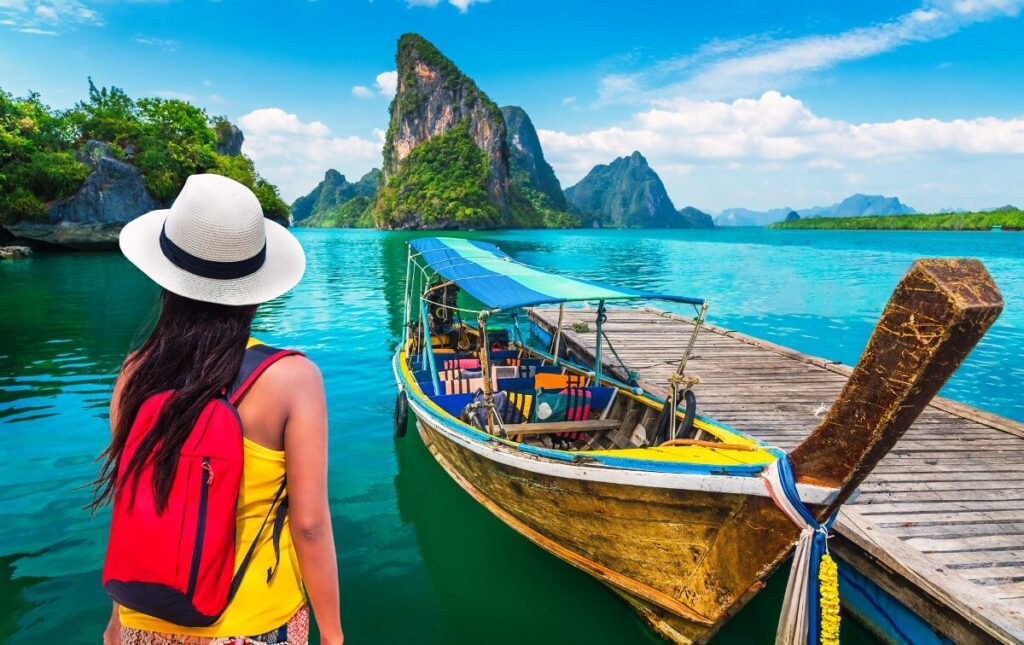
Looking for an amazing getaway this August? Thailand, with its exotic landscapes, historical sites, and vibrant culture, has it all. In this detailed guide, we will explore the 8 best places to visit in Thailand in August, perfect for your next summer holiday. So, grab your beach towel and sunscreen, we’re off to the Land of Smiles!
Thailand Weather in August
August in Thailand is characterized by a blend of warmth and tropical rain showers, offering a unique charm to this popular Southeast Asian destination. The country is in the midst of its rainy season, but this doesn’t translate to continuous downpours. Instead, the weather typically fluctuates between sunny, warm periods and brief, intense rain showers, often occurring in the late afternoon or evening.
The average temperatures in Thailand during August range from 25°C (77°F) to 33°C (91°F), providing a pleasantly warm climate perfect for exploring both the cityscapes and the stunning natural landscapes. In the north, cities like Chiang Mai can be slightly cooler, particularly in the evenings, while southern coastal regions like Phuket and Krabi maintain a more consistently warm temperature.
Despite being the rainy season, the sun is never far away in August. Visitors can expect to enjoy several hours of sunshine each day, punctuated by sporadic showers that serve to freshen the atmosphere and enhance the vibrant greenery that Thailand is known for.
The rain also lends itself to a range of unique experiences. For instance, the waterfalls in national parks are at their most spectacular during this time, and the rural landscapes are beautifully lush and verdant. Meanwhile, on the coasts, while the seas can be slightly rougher, they are also wonderfully clear, providing excellent conditions for marine wildlife spotting.
Best 20 Places to Visit in Thailand in August: Detailed Guide
1. Chiang Mai
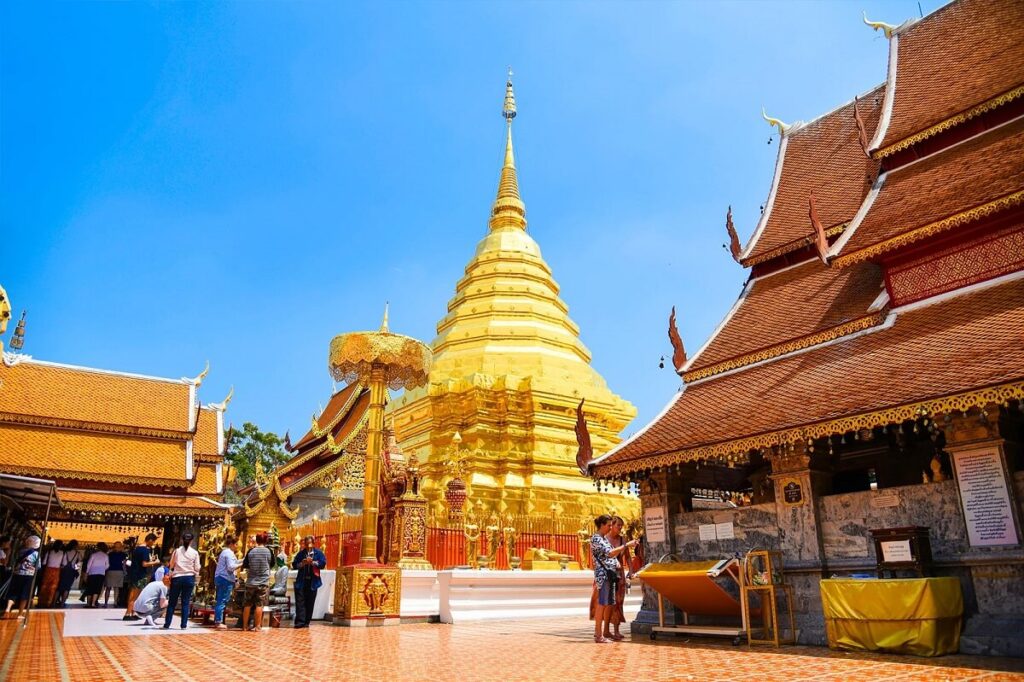
Journeying to Chiang Mai, one can’t help but be charmed by the vibrant blend of traditional and modern. Nestled amidst mountains and lush landscapes, it offers an escape from the city hustle. The cool breeze in August provides a pleasant atmosphere to explore the rich culture and heritage of this mountainous city.
August in Chiang Mai: What to See?
From visiting the awe-inspiring temples such as Wat Phra That Doi Suthep to exploring the bustling night bazaars, there’s no shortage of things to do in Chiang Mai. And don’t forget about the Elephant Nature Park, a sanctuary and rescue center for elephants where you can spend a day volunteering and learning about these gentle giants.
Read also: Top Thai Destinations to Explore in October
2. Krabi
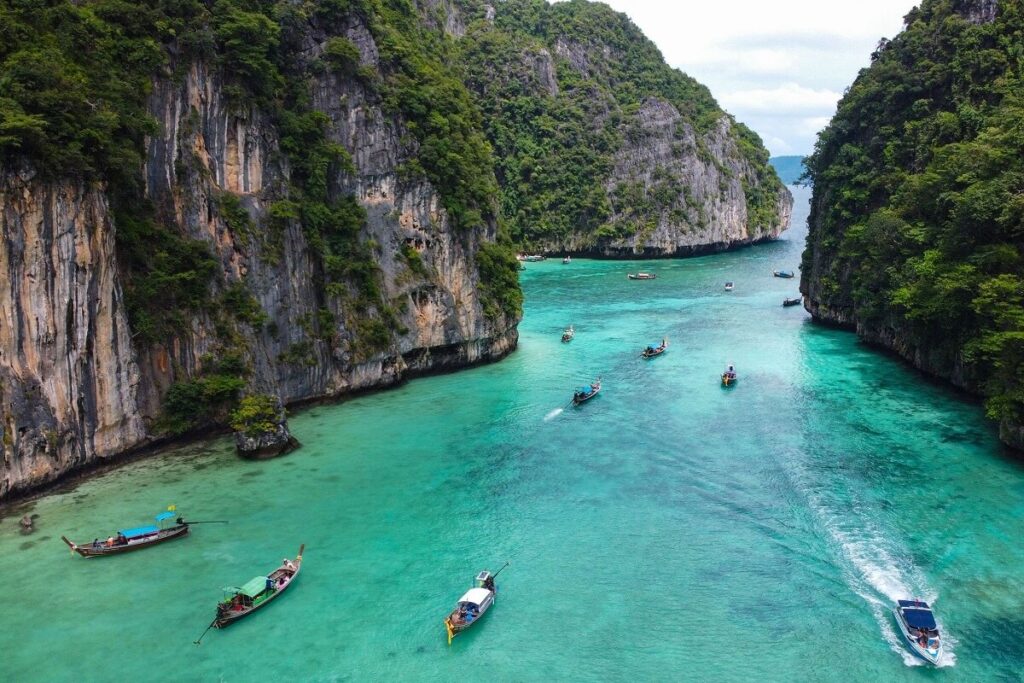
Known for its stunning beaches, clear waters, and breathtaking islands, Krabi is a tropical paradise that’s simply irresistible in August. As the rain subsides, it unveils some of the most beautiful, serene beaches with calm turquoise waters.
August in Krabi: What to Do?
Take a boat tour to the Phi Phi Islands, snorkel at Bamboo Island, or sunbathe at Railay Beach. Explore the Emerald Pool and hot springs, or try rock climbing at Tonsai Beach. Whatever you choose, Krabi promises an unforgettable experience.
3. Bangkok
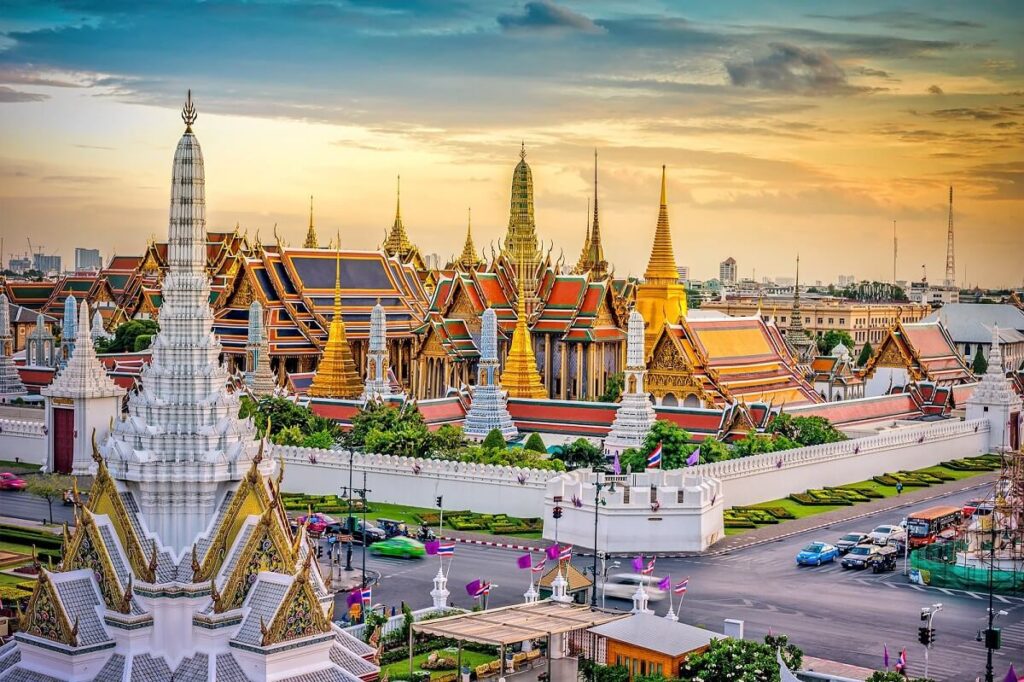
Bangkok, the Thai capital, is a city of contrasts with action at every turn. A medley of modern malls and ancient temples, bustling markets, and luxurious hotels, it’s a city that charms and bewilders in equal measures.
What are the best things to do in Bangkok in August?
Visit the opulent Grand Palace, marvel at the Reclining Buddha at Wat Pho, explore the vibrant streets of Chinatown, or take a boat tour along the Chao Phraya River. And let’s not forget the delectable street food! Bangkok is a foodie’s heaven.
4. Hua Hin
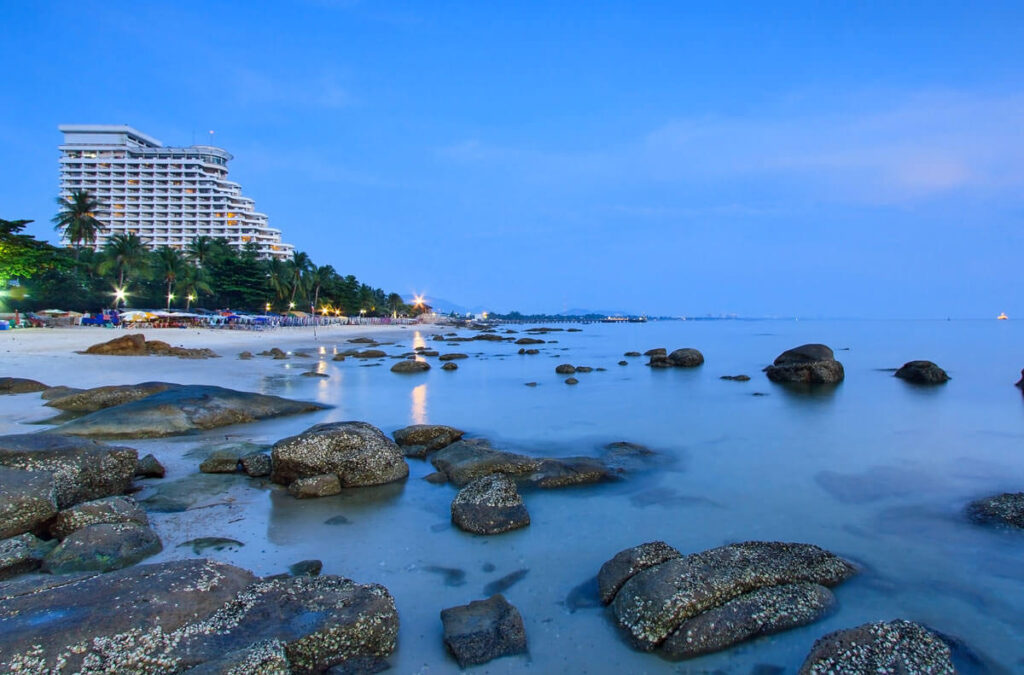
Hua Hin, the oldest beach town in Thailand, has been a favoured retreat for the Thai royal family. Its long stretches of clean beaches, clear waters, and tranquil ambiance make it a preferred destination for a relaxed, peaceful vacation.
The Best Things to Do in Hua Hin in August?
Explore the night markets, indulge in a traditional Thai massage, visit the artist’s village, or simply enjoy the stunning sunrise at the beach. Hua Hin is the perfect place to unwind.
5. Pattaya
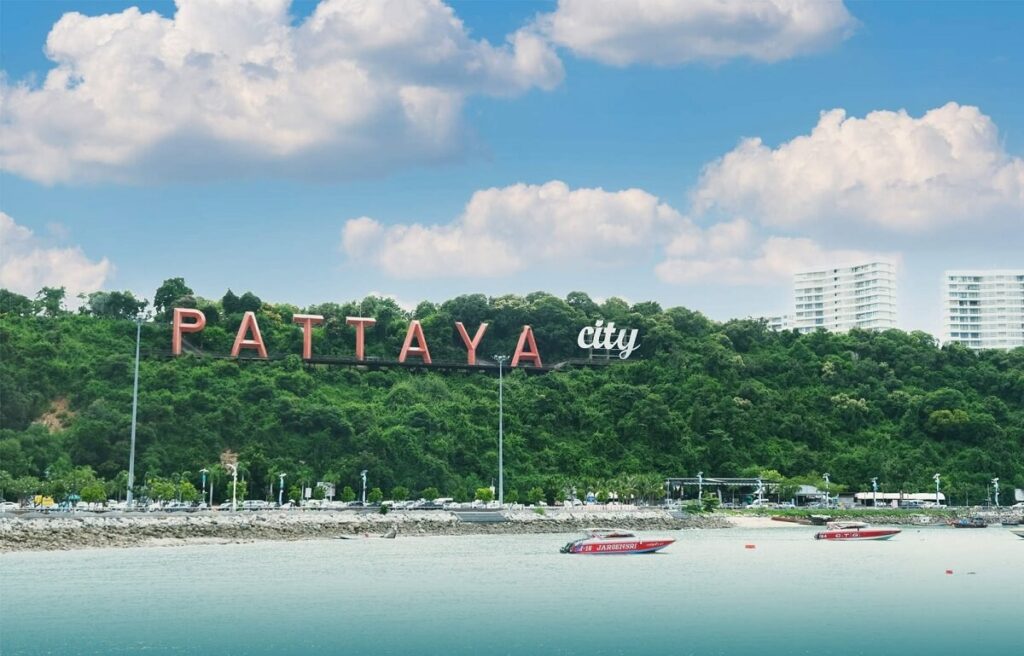
A resort city on the Eastern Gulf Coast, Pattaya is known for its beaches, water sports, and nightlife. While it has a bit of a reputation, it’s also a great place to experience authentic Thai culture.
Why should you visit Pattaya in August?
Visit the Sanctuary of Truth, a stunning wooden temple that pays homage to Thai craftsmanship, or the Nong Nooch Tropical Garden, famous for its beautiful landscapes and cultural shows. The Pattaya Floating Market is another must-visit attraction.
6. Ayutthaya
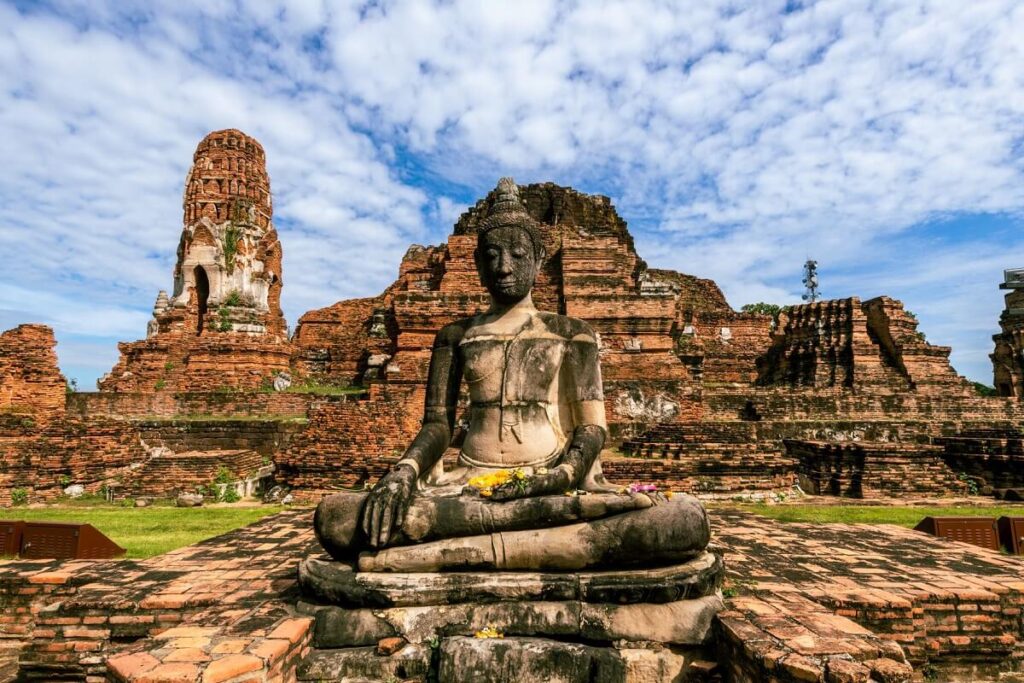
Ayutthaya, the former capital of Thailand, is a historical city that showcases the grandeur of a bygone era. Its ruins are now part of a UNESCO World Heritage Site, providing a fascinating glimpse into the country’s past.
Ayutthaya in August – What to See and Do?
Discover the ancient ruins of Wat Mahathat, the Royal Palace, and Wat Lokayasutharam. A boat tour around Ayutthaya is another popular activity that offers unique perspectives of these historical landmarks.
7. Phuket
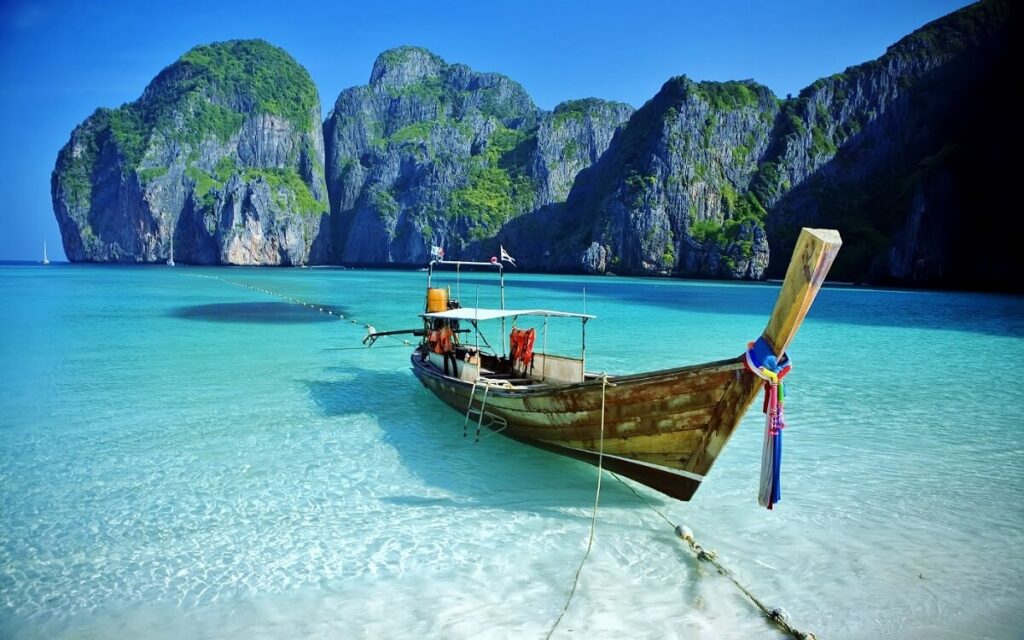
Phuket, Thailand’s largest island, is often dubbed the ‘Pearl of the Andaman’. With its beautiful beaches, lively nightlife, and range of outdoor activities, Phuket has something for everyone.
August: What to do in Phuket?
Explore the Old Town with its Sino-Portuguese architecture, visit the Big Buddha, party in Patong, or take a speedboat tour to the nearby Phi Phi Islands. Don’t miss the Simon Cabaret Show, a spectacular display of Thai performing arts.
8. Sukhothai
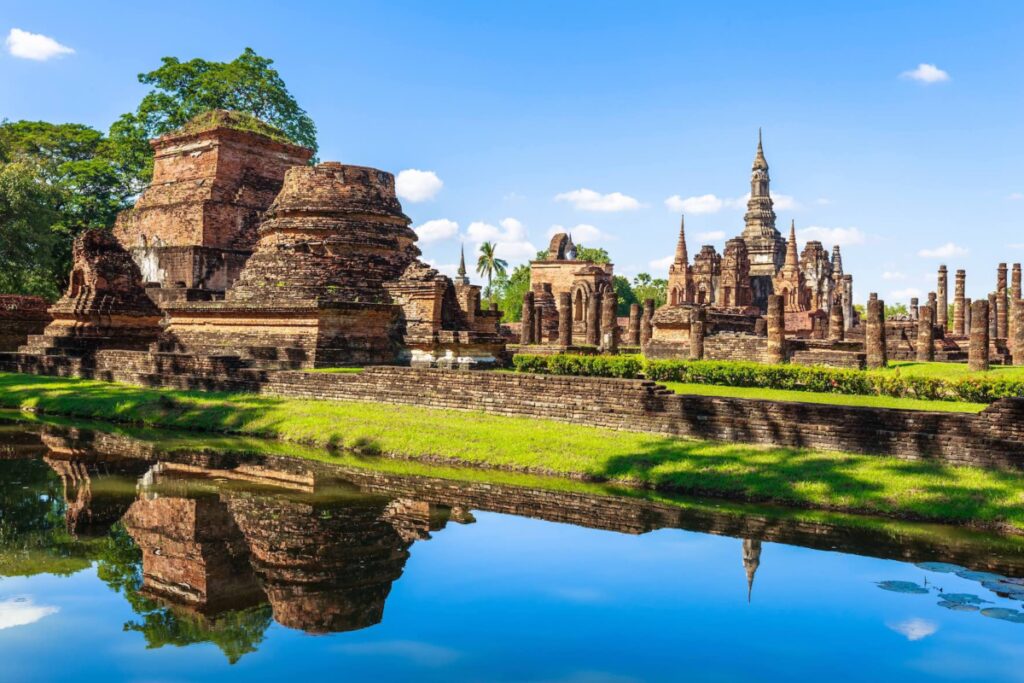
Sukhothai, the first independent Thai Kingdom, offers visitors a chance to delve into Thailand’s glorious past. It is home to the historic Sukhothai Historical Park, a UNESCO World Heritage Site.
Why visit Sukhothai in August?
Explore the historical park on a bicycle, visit the Ramkhamhaeng National Museum, and enjoy the serene atmosphere of Wat Traphang Thong. Sukhothai in August offers a less crowded experience, making it a perfect time to visit.
9. Koh Samui
Koh Samui is one of Thailand’s most popular island destinations, offering palm-lined beaches, temples, waterfalls, viewpoints and a wide selection of resorts. The Gulf of Thailand islands can be practical choices in August, although brief showers and changing sea conditions are still possible.
Highlights:
- Chaweng Beach: The island’s liveliest beach, with restaurants, shops and nightlife.
- Lamai Beach: A more relaxed coastal area suitable for swimming when conditions are safe.
- Fisherman’s Village: A historic area in Bophut filled with cafés, shops and restaurants.
- Ang Thong Marine Park: A scenic archipelago commonly visited on organised boat excursions.
Best Time to Visit: August is within the April-to-November period that Thailand’s tourism authority identifies as favourable for the islands of Surat Thani. Boat trips remain dependent on weather and sea conditions.
Activities: Beach visits, island tours, snorkelling, cooking classes, spa treatments, temple visits and sunset cruises
How to Reach: Koh Samui has its own airport. Ferries also operate from Donsak Pier in Surat Thani when weather conditions permit.
10. Koh Phangan
Koh Phangan is often associated with its famous beach parties, but much of the island consists of forests, waterfalls, temples and quiet bays. Travellers can choose between lively areas around Haad Rin and peaceful beaches in the north and northeast.
Highlights:
- Thong Nai Pan: Two beautiful bays surrounded by forested hills.
- Than Sadet Waterfall: A natural attraction within a protected landscape.
- Haad Rin: The island’s best-known entertainment and beach area.
- Northern Beaches: Quieter coastal locations suitable for relaxed resort stays.
Best Time to Visit: August can be suitable for visiting Koh Phangan, although showers and rough seas may occasionally affect ferry services and water activities.
Activities: Beach hopping, yoga, waterfall visits, snorkelling, kayaking and village exploration
How to Reach: Ferries connect Koh Phangan with Koh Samui, Koh Tao and mainland Surat Thani. The island has no airport.
11. Koh Tao
Koh Tao is a compact island known for coral reefs, diving schools, rocky viewpoints and attractive bays. It is especially popular among travellers learning to scuba dive, although non-divers can also enjoy beaches, boat trips and hiking routes.
Highlights:
- Sairee Beach: A popular west-coast beach known for sunsets and restaurants.
- Tanote Bay: A scenic bay suitable for swimming and snorkelling in calm conditions.
- Shark Bay: A protected-looking coastal area known for marine life.
- Koh Nang Yuan: A small nearby island famous for its sandbar and viewpoint.
Best Time to Visit: August can offer useful conditions around the Gulf islands, but diving visibility and boat schedules vary according to wind and rain.
Activities: Scuba diving, snorkelling, boat tours, viewpoint hikes, beach relaxation and underwater photography
How to Reach: Koh Tao is reached by ferry from Koh Samui, Koh Phangan, Chumphon or Surat Thani. It lies about 45 km north of Koh Phangan.
12. Kanchanaburi
Kanchanaburi combines forests, rivers, waterfalls, caves and important Second World War sites. August rainfall enhances the province’s waterfalls and vegetation, making it an appealing nature destination within easy reach of Bangkok.
Highlights:
- Bridge over the River Kwai: The province’s most recognised historical landmark.
- Erawan Waterfall: A multi-level waterfall surrounded by forest.
- Death Railway: A historic railway route passing through dramatic countryside.
- Sai Yok National Park: A protected area featuring waterfalls, caves and river landscapes.
Best Time to Visit: August is attractive for green forests and waterfalls, but strong water flow may lead to temporary restrictions at some natural sites.
Activities: Waterfall visits, train journeys, museum tours, river stays, cave visits and nature photography
How to Reach: Kanchanaburi is approximately two to three hours from Bangkok by road. Train and bus services also connect the two cities.
13. Chiang Rai
Chiang Rai is Thailand’s northernmost province and is known for Lanna culture, contemporary temple architecture, mountain scenery and the Golden Triangle region. August gives the countryside a rich green appearance, although frequent showers should be expected.
Highlights:
- White Temple: Wat Rong Khun is recognised for its elaborate white contemporary architecture.
- Blue Temple: Wat Rong Suea Ten features deep blue interiors and detailed Buddhist artwork.
- Baan Dam Museum: An unconventional art complex commonly called the Black House.
- Golden Triangle: A viewpoint over the Mekong region near the borders of Thailand, Laos and Myanmar.
Best Time to Visit: August is suitable for travellers interested in green landscapes, temples and fewer crowds. Mountain excursions should be planned around the daily weather.
Activities: Temple tours, tea plantation visits, cultural walks, market visits and countryside excursions
How to Reach: Chiang Rai has an international airport with domestic connections from Bangkok. Buses also operate from Chiang Mai and other northern cities.
14. Khao Sok National Park
Khao Sok National Park is one of southern Thailand’s most impressive nature destinations. It is known for evergreen rainforest, limestone formations, caves, rivers and the spectacular Cheow Lan reservoir.
Highlights:
- Cheow Lan Lake: A vast reservoir surrounded by steep limestone peaks.
- Floating Bungalows: Overnight accommodation is available on selected parts of the lake.
- Rainforest Trails: Guided routes provide opportunities to learn about tropical plants and wildlife.
- Caves and Rivers: Boat excursions and authorised tours explore the park’s varied landscape.
Best Time to Visit: August delivers lush rainforest scenery but can also bring heavy rain. Certain caves, trails and water activities may close when conditions become unsafe.
Activities: Guided jungle walks, lake cruises, canoeing, wildlife observation and floating-lodge stays
How to Reach: Surat Thani Airport is a convenient gateway. Road transfers connect the airport, Surat Thani town and nearby railway stations with the park.
15. Koh Samet
Koh Samet is a compact island in Rayong province known for white-sand beaches, resorts and easy access from Bangkok. It is popular for short holidays because travellers can reach it without taking a domestic flight.
Highlights:
- Hat Sai Kaew: The island’s best-known and liveliest beach.
- Ao Phrao: A quieter west-coast bay known for sunset views.
- Ao Wong Duean: A curved bay with restaurants and accommodation.
- Southern Beaches: Less developed beaches offer a quieter island experience.
Best Time to Visit: August can bring intermittent rain, but Koh Samet is known for comparatively favourable year-round conditions. Sea activities should still be planned according to local warnings.
Activities: Beach hopping, kayaking, snorkelling, sunset viewing and resort stays
How to Reach: Travel by road from Bangkok to Ban Phe Pier in Rayong, followed by a ferry or speedboat to the island.
16. Koh Chang
Koh Chang is Thailand’s second-largest island and is covered extensively by rainforest. It offers beaches, waterfalls, fishing communities, forested mountains and access to smaller islands in the surrounding marine region.
Highlights:
- White Sand Beach: One of the island’s principal resort areas.
- Klong Plu Waterfall: A popular forest waterfall with stronger flow during the rainy season.
- Bang Bao: A traditional pier settlement with restaurants and boat services.
- Kai Bae Viewpoint: A scenic stop overlooking nearby islands.
Best Time to Visit: August is one of Koh Chang’s wetter months. The island is very green, but boat services, swimming and mountain roads may be affected by heavy rain.
Activities: Waterfall visits, forest walks, beach stays, village exploration and island tours when the sea is calm
How to Reach: Buses and private vehicles connect Bangkok with Trat province. Ferries depart from mainland piers for Koh Chang.
17. Nan
Nan is a peaceful northern province known for historic temples, traditional communities, mountain roads and distinctive Tai Lue cultural influences. It offers a quieter alternative to Chiang Mai and Chiang Rai.
Highlights:
- Wat Phumin: A celebrated temple known for its historic murals.
- Wat Phra That Khao Noi: A hilltop temple and viewpoint overlooking Nan.
- Nan Old Town: A compact heritage district with wooden buildings and cafés.
- Mountain Countryside: Rural roads lead to villages, rice fields and national parks.
Best Time to Visit: August brings green rice fields and dramatic mountain scenery. Rain may affect remote roads and viewpoints, so a flexible schedule is recommended.
Activities: Temple visits, cycling, cultural walks, village excursions and landscape photography
How to Reach: Nan has a domestic airport with flights from Bangkok. Long-distance buses also connect the province with Bangkok and northern Thailand.
18. Khao Yai
Khao Yai is a large protected forest region northeast of Bangkok. It is known for waterfalls, wildlife, walking trails and cooler upland conditions. August rain transforms the forests and increases waterfall flow.
Highlights:
- Haew Suwat Waterfall: One of the park’s best-known waterfalls.
- Forest Wildlife: The wider landscape supports elephants, gibbons, hornbills and deer.
- Scenic Viewpoints: Roads through the park provide views over forested hills.
- Pak Chong: A convenient base with hotels, cafés and countryside attractions.
Best Time to Visit: August is excellent for greenery and waterfalls, but trails can be muddy and some areas may close temporarily during severe weather.
Activities: Wildlife watching, guided walks, waterfall visits, birdwatching and scenic driving
How to Reach: Khao Yai is around two to three hours from Bangkok by road. Pak Chong is the nearest major railway and bus town. The wider protected landscape extends through Nakhon Ratchasima and Prachin Buri provinces.
19. Nakhon Si Thammarat
Nakhon Si Thammarat combines historic temples, traditional performing arts, undeveloped beaches, waterfalls and forested national parks. It offers a deeper cultural experience than Thailand’s more commercial southern resorts.
Highlights:
- Wat Phra Mahathat: One of southern Thailand’s most important Buddhist temples.
- Khiriwong Village: A community surrounded by mountains, orchards and streams.
- Khanom Coast: A quieter coastal region known for beaches and marine scenery.
- Shadow-Puppet Tradition: The province is associated with traditional nang talung performances.
Best Time to Visit: August can bring rain, but the countryside and forest landscapes are especially green. Coastal excursions depend on sea conditions.
Activities: Temple visits, village tours, waterfall excursions, cultural performances and food experiences
How to Reach: Nakhon Si Thammarat has an airport and railway station. Flights, trains and buses connect it with Bangkok and other southern destinations.
20. Phetchaburi and Cha-am
Phetchaburi province offers a combination of royal palaces, historic temples, caves, beaches and mountain landscapes. It can be visited as a cultural stop between Bangkok and Hua Hin.
Highlights:
- Phra Nakhon Khiri: A royal palace complex located on a hill above Phetchaburi.
- Tham Khao Luang: A limestone cave containing Buddhist shrines and openings that allow sunlight inside.
- Cha-am Beach: A relaxed beach town popular with Thai families.
- Kaeng Krachan Region: A forested area known for reservoirs, wildlife and mountain scenery.
Best Time to Visit: August is suitable for cultural attractions and green countryside, although rain may affect forest activities and beach conditions.
Activities: Palace tours, cave visits, temple sightseeing, beach walks and local food tasting
How to Reach: Phetchaburi is connected with Bangkok by train, bus and road. The journey generally takes around two to three hours.
You May Also Like:
- Bangkok’s 20 Most Famous Cafes
- Top 12 Shopping Places in Bangkok
- Thailand’s 10 Famous Honeymoon Resorts
- Top 15 Popular Restaurants in Bangkok
- Thailand Places to Visit in November 2026
- Best Thailand Places to See in October 2026
- Thailand Shopping Guide: What To Buy And Where
- 10 Places to See in Thailand in March 2027
- Top 11 Destinations to Trekking in Thailand
- 10 Places in Thailand to See in December 2026
- Best Time to Visit Bangkok (The Heart of Thailand)
- Connecting Asia: The Kolkata-Bangkok Highway – A Road Trip Coming Soon
FAQs: Travel Tips, Weather, and More for Thailand in August
Is August a Good Time to Travel to Thailand?
August is indeed a good time to travel to Thailand, especially for those who don’t mind a bit of rain and enjoy lesser crowds. This is considered a low season, meaning hotels and flights can be significantly cheaper. Moreover, the landscapes are beautifully lush and green during this time.
How Rainy is Thailand in August?
While August falls within Thailand’s rainy season, don’t let that deter you. The rain usually comes in short, heavy bursts, mostly in the afternoon or evening, leaving plenty of sunshine-filled hours for exploration. So, while you might need an umbrella, you’ll also need your sunglasses.
Is it Good to Visit Phuket in August?
Visiting Phuket in August can be a unique experience. It is less crowded, and the island has a more relaxed feel compared to the peak season. While there can be rain, it often enhances the beauty of the beaches and natural scenery.
What is Krabi Like in August?
Krabi in August is characteristically tropical. Expect warm weather with bouts of afternoon showers. However, these are often followed by clear skies, and the rainfall only adds to the charm of the lush landscapes. It’s also a great time for enjoying waterfalls which are in full flow.
Is Phuket Rainy in August?
Yes, August is part of the monsoon season in Phuket, but the rain usually doesn’t last all day. It often rains for a couple of hours in the afternoon or night. These short, refreshing showers can be a welcome respite from the heat.
How Bad is Monsoon Season in Phuket?
Monsoon season in Phuket, which runs from May to October, is often misunderstood. It doesn’t mean constant rain. Instead, it’s characterized by periodic heavy downpours, usually in the late afternoon or evening. The rest of the time, you can enjoy typical tropical weather.
Is Phuket Affected by Monsoon?
Phuket is affected by the Southwest monsoon, but this is not a cause for concern. The island has adapted to these weather patterns, and life goes on as usual. The downpours are usually brief and followed by sunshine.
Are Beaches Open in Phuket in August?
Yes, beaches in Phuket remain open in August. While the sea might be a bit rough due to the monsoon, it doesn’t prevent visitors from enjoying the beautiful beaches. However, do pay attention to red flag warnings that signal dangerous swimming conditions.
Can We Visit Phi Phi Island in August?
Absolutely! You can visit Phi Phi Islands in August. The ferry services operate all year round, and while there may be some rain, it often doesn’t last long. Plus, the islands are less crowded during this time, giving you a more relaxed and intimate experience.
Is August a Good Time to Visit Koh Samui?
While August does fall in the rainy season, Koh Samui tends to experience less rainfall compared to other parts of Thailand. This means you can still enjoy plenty of sunny days on the island’s stunning beaches.
Which is the Best Month to Visit Phuket?
The best month to visit Phuket largely depends on what you’re looking for. November to February is considered the best time weather-wise, as it’s the cool, dry season. However, for lower prices and fewer tourists, the rainy season, including August, can offer its advantages.
What is the best time to visit Thailand?
While Thailand can be visited year-round, the best time to visit is during the cool and dry season between November and early April. However, August has its charm with less crowd and lower prices.
Is Thailand safe for tourists?
Yes, Thailand is generally safe for tourists. However, like any travel destination, it is important to be cautious, especially in crowded areas.
What should I pack for Thailand in August?
Light, breathable clothing is best for Thailand’s tropical climate. Also, pack a raincoat or umbrella as August can have occasional rains.
What are the must-try foods in Thailand?
Thailand is famous for its street food. Don’t miss out on Pad Thai, Green Curry, Som Tam (Papaya Salad), and Mango Sticky Rice.
Do I need a visa to visit Thailand?
Visa requirements vary by country. Please check with the Thai embassy in your country for the most up-to-date information.
Can I drink tap water in Thailand?
It’s recommended to drink bottled water in Thailand.
Conclusion
Exploring the 8 best places to visit in Thailand in August will surely leave you with unforgettable memories. Whether you are looking for a cultural immersion, historical exploration, beach retreat, or just a gastronomic adventure, Thailand has something for everyone. Embark on this journey and discover the magic that Thailand holds.
