

October is one of the most rewarding months to explore Madhya Pradesh. The monsoon has largely retreated, forests remain green, waterfalls still carry plenty of water, and temperatures gradually become more comfortable for sightseeing.
What makes Madhya Pradesh particularly interesting is its variety. You can spend one morning among the intricately carved temples of Khajuraho, take a tiger safari through sal forests a few days later, explore Buddhist monuments at Sanchi, walk through the palaces of Mandu, and finish beside the Narmada River at Omkareshwar or Bhedaghat.
For wildlife travellers, October is also the beginning of the new safari season. However, visitors arriving during the first half of the month should check individual park and zone availability carefully. Madhya Pradesh’s official forest rules allow some routes to reopen gradually between October 1 and 15 depending on weather and local conditions, while the official Bandhavgarh and Kanha information identifies mid-October onward as the main visiting period.
Travellers planning a broader journey can browse Madhya Pradesh tour packages, which currently include heritage, spiritual, wildlife and hill-station routes across the state.
Why Visit Madhya Pradesh in October?
October sits between the rainy season and winter, making it an attractive time for both nature and heritage trips.
Forests are greener than later in the dry season, waterfalls around Pachmarhi and Jabalpur can still be impressive, and historic destinations become easier to explore as the intense summer heat disappears.
It is particularly suitable for:
- Heritage and architecture
- Wildlife safaris
- Temple and pilgrimage journeys
- Waterfalls and nature
- Photography
- Road trips
- Family holidays
- First-time Central India itineraries
The state also works well for travellers who want a journey combining history and wildlife rather than focusing entirely on one theme.
Best 12 Madhya Pradesh Destinations for October 2026:
1. Khajuraho

Khajuraho is one of Madhya Pradesh’s most important cultural destinations and an excellent place to begin an October journey.
The UNESCO-listed temple complex is famous for its exceptionally detailed sculptures and medieval Nagara-style architecture. While the sensual carvings attract much attention, the temples cover a much broader range of subjects, including deities, musicians, warriors, everyday life and spiritual symbolism.
Start with the Western Group of Temples, where Kandariya Mahadeva Temple and Lakshmana Temple are major highlights. Then explore the Eastern Group, including important Jain temples such as Parsvanatha and Adinath.
October is an excellent month for walking between the monuments because temperatures are becoming more comfortable.
Allow time for the evening light-and-sound programme if operating during your visit, and consider visiting nearby Raneh Falls or Panna National Park if you have an extra day.
For a detailed sightseeing list, read 10 popular places to visit in Khajuraho.
Travellers still arranging transport can also use the guide on how to reach Khajuraho.
For a short heritage trip, Tusk Travel currently offers a three-day Khajuraho itinerary as well as longer Gwalior-Orchha-Khajuraho circuits.
Ideal stay: 2 nights
Best for: Architecture, history, culture and photography
Nearest airport: Khajuraho Airport
2. Bandhavgarh National Park

Bandhavgarh is one of India’s best-known tiger reserves and a major reason wildlife enthusiasts visit Madhya Pradesh.
Its landscape combines sal forest, grasslands, rocky hills and historic remains, creating an attractive setting even when wildlife sightings are unpredictable.
October marks the start of the new tourism season, but travellers should plan carefully. The official Madhya Pradesh forest portal lists October permits for the 2026-27 season, while Bandhavgarh’s official reserve information identifies October 15 to June 15 as its main recommended period. Early-October access may depend on route and weather conditions.
If wildlife is the main reason for your journey, try to schedule at least two safari drives rather than relying on a single outing. Tiger sightings are never guaranteed, and a good safari is also about watching deer, gaur, birds, langurs and the wider forest ecosystem.
Tala, Magadhi and Khitauli are among the reserve’s core tourism zones, while buffer areas provide additional safari possibilities.
For more ideas beyond the jeep safari, see things to do in Bandhavgarh.
Travellers who want to combine temples and wildlife can consider the current Khajuraho and Bandhavgarh journey, which links the reserve with one of Madhya Pradesh’s most important heritage destinations.
Ideal stay: 2-3 nights
Best for: Wildlife, tiger safaris and nature photography
Useful railhead: Umaria
3. Kanha National Park

Kanha is another outstanding wildlife destination for an October trip through Madhya Pradesh.
The reserve is known for broad meadows, sal and bamboo forests and its important population of barasingha, or swamp deer, alongside tigers, leopards, wild dogs, gaur and numerous bird species.
Kanha, Kisli, Mukki and Sarhi are among the principal core tourism zones.
Like Bandhavgarh, visitors should pay close attention to their October dates. Although the state’s 2026-27 permit system provides bookings from October 1, the official Kanha reserve information lists October 15 to June 30 as its primary visiting season.
October landscapes can be especially attractive because the forests remain fresh after the rains.
Read the complete Kanha National Park travel guide for safari zones, transport and planning information.
Tusk Travel also currently lists a 3-day Kanha safari from Jabalpur, useful for travellers who want a short wildlife extension rather than a full Madhya Pradesh circuit.
Ideal stay: 2-3 nights
Best for: Wildlife, birdwatching and forest landscapes
Nearest major airport: Jabalpur
4. Satpura National Park

Satpura is ideal for travellers looking for a quieter alternative to the better-known tiger reserves.
Its landscape of sandstone hills, forests, valleys, streams and the Denwa River gives it a distinct character.
Depending on the zone, weather and current forest regulations, visitor activities may include jeep safaris and other regulated nature experiences. Exact activities should always be checked when booking because availability can change seasonally.
October is attractive because the landscape remains intensely green after the monsoon.
Wildlife found across the wider reserve includes tigers, leopards, sloth bears, gaur, giant squirrels, sambar and a rich variety of birdlife.
For more information about Satpura and Madhya Pradesh’s other reserves, see the Tusk Travel guide to wildlife national parks in Madhya Pradesh.
Satpura also combines well with Pachmarhi for travellers who want to mix wildlife with a hill-station stay.
Ideal stay: 2 nights
Best for: Nature, quieter safaris and photography
Useful gateway: Bhopal or Itarsi/Pipariya depending on the route
5. Panna National Park

Panna is one of the easiest national parks to combine with a cultural journey because it lies close to Khajuraho.
The landscape includes forest, plateaus and the Ken River, creating a very different experience from the temples just a short drive away.
Panna is home to tigers, leopards, deer, crocodilians and numerous bird species. Wildlife sightings vary, so treat a safari as an exploration of the ecosystem rather than a guaranteed tiger excursion.
October’s greener post-monsoon scenery can make the park particularly photogenic.
If you have only a few days in the region, a Khajuraho + Panna combination is much more practical than trying to add one of the more distant reserves.
Tusk Travel currently offers a 3-day Khajuraho heritage and Panna tour, as well as a five-day route combining Khajuraho, Panna, Orchha and Jhansi.
For a wider overview of wildlife options, explore the guide to Madhya Pradesh’s national parks.
Ideal stay: 1-2 nights
Best for: Wildlife combined with Khajuraho
Nearest airport: Khajuraho
6. Amarkantak
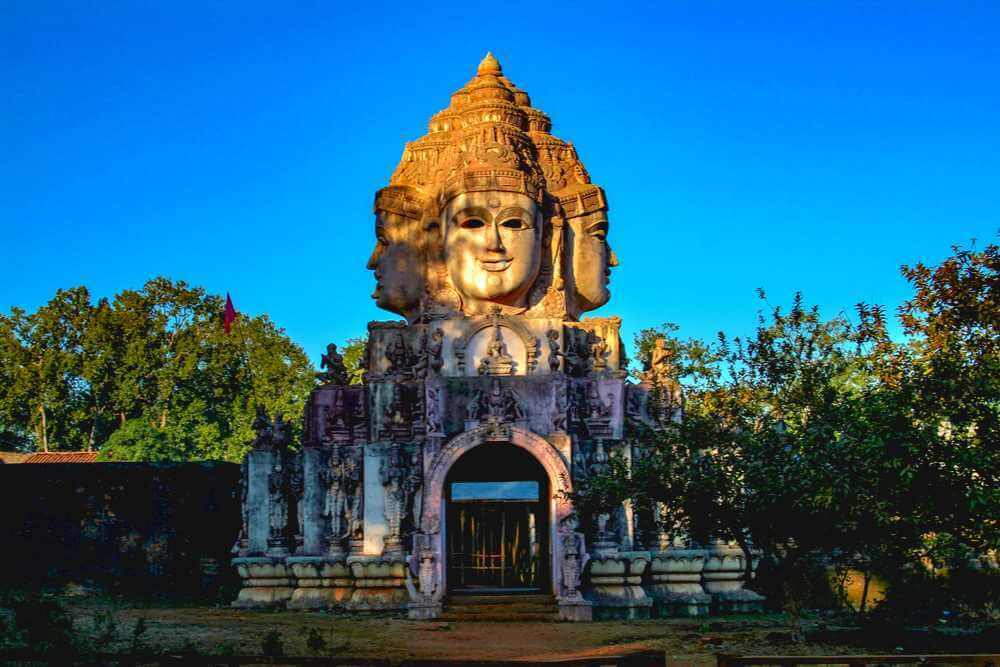
Amarkantak offers a completely different experience from Madhya Pradesh’s forts and tiger reserves.
Located in the Maikal Hills, this pilgrimage town is associated with the source of the Narmada River and is surrounded by forested landscapes, temples and waterfalls.
October is particularly appealing because the surrounding vegetation remains green after the rains and waterfalls may still have a good flow.
Important places include Narmada Udgam Temple, Kapildhara Falls and nearby forest areas.
Amarkantak suits travellers who enjoy a combination of spirituality and nature rather than conventional city sightseeing.
It is also a good destination to include on a slower road journey through eastern Madhya Pradesh.
For broader route inspiration, the Tusk Travel guide to the best places to visit in Madhya Pradesh covers Amarkantak along with the state’s major natural and heritage destinations.
Ideal stay: 1-2 nights
Best for: Pilgrimage, nature and waterfalls
Useful railheads: Pendra Road and Anuppur, depending on your route
7. Pachmarhi

Pachmarhi is Madhya Pradesh’s best-known hill station and one of the strongest choices for an October nature break.
The town sits within the Satpura landscape and is surrounded by forest, caves, viewpoints and waterfalls.
Popular attractions include Bee Falls, Jata Shankar Cave, Pandava Caves, Apsara Vihar and Dhoopgarh.
October is especially attractive because the monsoon has refreshed the forests and waterfalls, while conditions gradually become better for outdoor exploration.
Do not try to cover every point in a few hours. Staying at least two nights allows time for viewpoints, walks and slower forest drives.
The detailed Pachmarhi travel guide is useful for planning a longer stay.
Tusk Travel also currently offers a 3-day Pachmarhi tour from Nagpur.
Ideal stay: 2-3 nights
Best for: Families, couples, waterfalls and forest scenery
Nearest useful railway station: Pipariya
8. Mandu

Few historic destinations in Madhya Pradesh become as atmospheric after the monsoon as Mandu.
Set on a plateau, the ruined city contains palaces, mosques, tombs, reservoirs and viewpoints spread across a large area.
The most famous monument is Jahaz Mahal, whose elongated structure between water bodies gives it the appearance of a ship. Other highlights include Hindola Mahal, Hoshang Shah’s Tomb, Jami Masjid, Baz Bahadur’s Palace and Rani Roopmati’s Pavilion.
October combines post-monsoon greenery with increasingly pleasant walking conditions, making it an excellent month for exploring Mandu.
The surrounding Malwa region also makes it easy to connect Mandu with Maheshwar, Indore, Ujjain and Omkareshwar.
For more context on Mandu and other elevated retreats, see Tusk Travel’s guide to hill stations and scenic escapes in Madhya Pradesh.
Tusk Travel currently offers several relevant itineraries, including Indore-Mandu-Maheshwar and longer Mandu-Maheshwar-Omkareshwar journeys.
Ideal stay: 1-2 nights
Best for: Heritage, architecture, couples and photography
Nearest major airport: Indore
9. Omkareshwar

Omkareshwar is one of Madhya Pradesh’s most important pilgrimage destinations.
The sacred town sits along the Narmada River and is associated with one of the twelve Jyotirlingas dedicated to Lord Shiva.
Many visitors come primarily for Omkareshwar Jyotirlinga Temple, but the river ghats, bridges, surrounding temples and island setting make it worth spending more time here.
October is easier for walking than the hotter months, while the Narmada landscape still carries the freshness of the rainy season.
Omkareshwar pairs naturally with Indore, Maheshwar, Mandu and Ujjain, creating one of Madhya Pradesh’s strongest heritage and spiritual routes.
Tusk Travel currently offers a 3-day Ujjain and Omkareshwar journey along with longer Malwa circuits.
Ideal stay: 1 night
Best for: Pilgrimage, spirituality and river scenery
Nearest major airport: Indore
10. Gwalior

Gwalior is one of Madhya Pradesh’s strongest destinations for travellers interested in forts and dynastic history.
Dominating the city is Gwalior Fort, a vast hilltop complex containing palaces, temples and historic structures.
Inside and around the fort, major attractions include Man Mandir Palace, Teli Ka Mandir, Sas-Bahu Temples and Gujari Mahal. Jai Vilas Palace adds another layer of royal history.
October is a much more comfortable time for exploring the fort than the hotter months, particularly because sightseeing involves a fair amount of walking.
Give Gwalior at least two days if possible.
For a complete sightseeing list, see the guide to the best places to visit in Gwalior.
If transport planning is your concern, there is also a dedicated guide explaining how to reach Gwalior.
Gwalior combines particularly well with Orchha and Khajuraho, and Tusk Travel currently lists both five-day and seven-day versions of this heritage circuit.
Ideal stay: 2 nights
Best for: Forts, architecture, museums and history
Getting there: Gwalior has rail and air connectivity.
11. Sanchi & Bhimbetka

<p>Sanchi and Bhimbetka are very different sites, which is exactly why they work so well together.
<p><strong>Sanchi is one of India’s most important Buddhist archaeological sites. Its Great Stupa, gateways, monasteries and museum tell the story of Buddhism across centuries.
Bhimbetka, by contrast, takes visitors much further back in human history. Its rock shelters contain prehistoric paintings and evidence of long-term human occupation.
Bhopal works as the most practical base.
October’s milder weather makes both places more comfortable to explore on foot, although you should still carry water and sun protection.
The guide to things to do at Sanchi and nearby attractions also covers Bhimbetka and other regional heritage sites.
Tusk Travel’s current seven-day Madhya Pradesh route includes Bhopal, Sanchi and Bhimbetka before continuing to Ujjain, Indore, Mandu and Maheshwar.
Ideal stay: 2 nights in Bhopal
Best for: Archaeology, Buddhist heritage and ancient history
Best base: Bhopal
12. Bhedaghat and Marble Rocks

Near Jabalpur, the Narmada River passes between towering marble cliffs at Bhedaghat, creating one of Madhya Pradesh’s most striking natural landscapes.
Nearby Dhuandhar Falls is especially impressive after the monsoon as the river forces its way over the rocky drop and produces clouds of mist.
October is a transition period for river conditions. The waterfall can be powerful, but boating through the Marble Rocks should only be planned when officially operating and local water levels are considered safe.
Other attractions include Chausath Yogini Temple and viewpoints around the gorge.
Staying in Jabalpur gives you the easiest access.
For more regional sightseeing, see the guide to the best places to visit in Jabalpur, which includes both Bhedaghat and Dhuandhar Falls.
Ideal stay: 1-2 nights
Best for: Waterfalls, landscapes, photography and river scenery
Nearest city: Jabalpur
Madhya Pradesh in October: Quick Comparison
| Destination | Best For | Suggested Stay |
| Khajuraho | Temples & heritage | 2 nights |
| Bandhavgarh | Tiger safari | 2-3 nights |
| Kanha | Wildlife & forests | 2-3 nights |
| Satpura | Nature & quieter safari | 2 nights |
| Panna | Wildlife + Khajuraho | 1-2 nights |
| Amarkantak | Pilgrimage & waterfalls | 1-2 nights |
| Pachmarhi | Hills & nature | 2-3 nights |
| Mandu | Heritage & architecture | 1-2 nights |
| Omkareshwar | Pilgrimage | 1 night |
| Gwalior | Forts & palaces | 2 nights |
| Sanchi & Bhimbetka | Archaeology | 2 nights |
| Bhedaghat | Marble Rocks & waterfalls | 1-2 nights |
Madhya Pradesh Weather in October
October marks the transition from monsoon to the drier winter season.
Daytime temperatures are generally comfortable compared with summer, although places such as Gwalior, Khajuraho and the Malwa region can still feel warm around midday.
Nights become progressively cooler as the month advances.
Pachmarhi and forest regions may feel noticeably cooler in the early morning, particularly during safaris.
Occasional rain is still possible, especially early in the month, so carrying a lightweight rain jacket is sensible.
For most travellers, useful packing includes:
- Breathable daytime clothing
- Light jacket for safaris and evenings
- Comfortable walking shoes
- Hat and sunscreen
- Insect repellent
- Binoculars for wildlife trips
- Light rain protection
- Modest clothing for temples
Important October 2026 Safari Planning
Wildlife travellers should pay particular attention to dates.
The Madhya Pradesh Forest Department opened advance bookings for the October 1-31, 2026 period from August 1, 2026. However, official forest regulations also allow individual protected areas to reopen limited roads or zones gradually during October 1-15 according to weather and local conditions.
Bandhavgarh’s official information lists October 15 to June 15 as its best visiting period, while Kanha lists October 15 to June 30.
Therefore, if a wildlife safari is the main purpose of your trip, mid- to late October is generally a safer choice than the first few days of the month.
For October and November 2026, the state forest portal currently lists general safari timings of approximately 6:00 AM to 11:30 AM for morning excursions and 3:00 PM to 6:00 PM for evening excursions, although actual gate timings and access remain subject to individual reserve conditions.
Suggested 10-Day Madhya Pradesh October Itinerary:
For a first-time traveller wanting a balance of history and wildlife:
Day 1: Bhopal
Visit Upper Lake, museums and the old city.
Day 2: Sanchi and Bhimbetka
Explore Buddhist monuments and prehistoric rock shelters.
Day 3: Bhopal to Pachmarhi
Drive into the Satpura Hills.
Day 4: Pachmarhi
Visit waterfalls, caves and viewpoints.
Day 5: Pachmarhi to Jabalpur
Continue toward central Madhya Pradesh.
Day 6: Bhedaghat and Dhuandhar Falls
Explore the Marble Rocks region.
Days 7-8: Bandhavgarh
Plan at least two safari opportunities.
Day 9: Bandhavgarh to Khajuraho
Day 10: Khajuraho
Explore the temple complex before departure.
Travellers more interested in spirituality and heritage can instead follow:
Bhopal → Sanchi → Ujjain → Indore → Omkareshwar → Maheshwar → Mandu
Tusk Travel’s current 7-day Madhya Pradesh itinerary follows a similar heritage-focused route through Bhopal, Sanchi, Ujjain, Indore, Mandu and Maheshwar.
Tips for Visiting Madhya Pradesh in October
Book tiger safari permits as early as possible. Popular zones and dates can fill quickly, particularly around weekends and festival periods.
Do not build a wildlife itinerary around a guaranteed tiger sighting. The forest itself is part of the experience.
Keep driving times realistic. Madhya Pradesh is a large state, and trying to combine Gwalior, Khajuraho, Kanha, Mandu and Omkareshwar in a short trip creates too much time on the road.
For a first trip, choose either an eastern wildlife and heritage circuit or a western Malwa and spiritual circuit.
Carry layers for early-morning safaris. Open jeeps can feel surprisingly cool shortly after sunrise.
Check river conditions before planning boating at Bhedaghat and confirm waterfall, trekking or forest access locally following heavy rain.
At temples and pilgrimage sites such as Omkareshwar, dress respectfully and allow extra time during festival periods.
Frequently Asked Questions About Madhya Pradesh in October
Is October a good time to visit Madhya Pradesh?
Yes. October is one of the best transition months for Madhya Pradesh. The state remains green after the monsoon, heritage sightseeing becomes more comfortable, waterfalls retain good flow and wildlife tourism begins reopening.
Which are the best places to visit in Madhya Pradesh in October?
Khajuraho, Pachmarhi, Bandhavgarh, Kanha, Mandu, Gwalior, Sanchi, Bhimbetka, Omkareshwar and Bhedaghat are among the strongest choices.
Are Madhya Pradesh national parks open in October 2026?
The official Madhya Pradesh Forest Department has opened booking for October 2026, but routes and core tourism areas may reopen progressively during the first half of October depending on local conditions. Bandhavgarh and Kanha officially identify mid-October onward as their principal visiting period.
Which Madhya Pradesh national park is best for a first safari?
Bandhavgarh and Kanha are the two most popular choices. Bandhavgarh provides a compact tiger-focused experience, while Kanha offers expansive forests, meadows and excellent overall wildlife diversity.
How many days are enough for Madhya Pradesh?
Seven days is enough for one focused region. Around 10-14 days is better if you want to combine heritage sites with one or two national parks.
What is the best heritage route in Madhya Pradesh?
Gwalior-Orchha-Khajuraho works particularly well in the north and northeast. In western Madhya Pradesh, Indore-Mandu-Maheshwar-Omkareshwar-Ujjain creates an excellent heritage and spiritual circuit.
What should I wear in Madhya Pradesh in October?
Light cotton clothing works well during the day. Add a jacket or fleece for early-morning safaris, Pachmarhi and cooler evenings. Comfortable walking shoes are essential for forts, temples and archaeological sites.
Final Thoughts
October shows Madhya Pradesh at one of its most interesting moments of the year.
The forests are still green from the monsoon, Pachmarhi’s waterfalls remain lively, the Narmada flows strongly through Bhedaghat, and comfortable weather gradually returns to the state’s forts, temples and archaeological sites.
Wildlife travellers can begin returning to Bandhavgarh, Kanha, Panna and Satpura, although the first half of October requires slightly more careful planning because some roads and zones may reopen gradually.
For culture lovers, Khajuraho, Gwalior, Sanchi, Bhimbetka and Mandu provide centuries of history in remarkably different forms. For spiritual travellers, Omkareshwar and Amarkantak add sacred landscapes and river traditions.
Rather than trying to cover all 12 destinations in one trip, choose a route built around your interests. A wildlife-and-heritage circuit through Khajuraho, Panna and Bandhavgarh works beautifully, while Indore, Mandu, Maheshwar and Omkareshwar create an entirely different journey through western Madhya Pradesh.
For ready-made routes and custom trip ideas, explore Tusk Travel’s Madhya Pradesh tour packages, which currently include wildlife safaris, heritage circuits, pilgrimage journeys and shorter regional itineraries.
Last updated: September 2026
