
Karnataka is home to some of India’s most remarkable temples, from ancient stone monuments built by powerful dynasties to sacred shrines visited by thousands of devotees every day.
In Hampi, the Virupaksha Temple reflects centuries of worship and Vijayanagara history. Meanwhile, Murudeshwar’s towering Shiva statue overlooks the Arabian Sea, and Udupi Sri Krishna Matha remains one of South India’s most important Vaishnavite pilgrimage centres.
However, Karnataka’s temples are not only places of worship. Many also preserve extraordinary examples of Chalukya, Hoysala and Vijayanagara architecture.
This guide covers the 10 most famous temples in Karnataka, including their locations, main deities, historical importance and practical visiting information. Whether you are planning a pilgrimage or exploring South India’s architectural heritage, these temples offer a fascinating introduction to Karnataka’s religious traditions.
For a wider itinerary, explore our Karnataka travel guide, covering heritage towns, pilgrimage centres and other major attractions.
Top 10 Famous Temples in Karnataka with Names and Locations:
| Temple | Location | Main deity / significance |
| Virupaksha Temple | Hampi | Lord Shiva |
| Murudeshwar Temple | Murudeshwar | Lord Shiva |
| Udupi Sri Krishna Matha | Udupi | Lord Krishna |
| Dharmasthala Manjunatha Temple | Dharmasthala | Lord Shiva |
| Kukke Subramanya Temple | Subramanya | Lord Subramanya |
| Kollur Mookambika Temple | Kollur | Goddess Mookambika |
| Chennakeshava Temple | Belur | Lord Vishnu |
| Hoysaleswara Temple | Halebidu | Lord Shiva |
| Keshava Temple | Somanathapura | Lord Vishnu, historic monument |
| Vittala Temple | Hampi | Lord Vittala, historic monument |
These temples represent different periods and religious traditions. Some are active pilgrimage centres, while others are primarily protected heritage monuments.
1. Virupaksha Temple, Hampi

Location: Hampi, Vijayanagara district
Main deity: Lord Shiva
Best for: Spiritual heritage and Vijayanagara architecture
Virupaksha Temple is among the oldest and most important active temples in Karnataka.
Located within the UNESCO-listed ruins of Hampi, the temple is dedicated to Lord Virupaksha, a form of Shiva.
Although worship at the site has much older roots, the complex expanded significantly under the Vijayanagara rulers.
Its towering entrance gateway, pillared halls and historic courtyards remain among Hampi’s most recognisable landmarks.
Why Is Virupaksha Temple Famous?
The temple is particularly important because it remains an active place of worship within a vast archaeological landscape.
Moreover, its architecture provides a connection between the religious and political history of the Vijayanagara Empire.
Visitors can explore the main courtyard, admire the gateway and observe the temple’s traditional atmosphere while following local worship rules.
Visiting Tips
Early morning is usually more comfortable, particularly during warmer months.
However, remember that Hampi covers a large area, so allow additional time for nearby monuments.
You can also explore the most famous temples in Hampi before organising your sightseeing.
Recommended time: 1–2 hours for the temple, excluding other Hampi monuments.
2. Murudeshwar Temple, Uttara Kannada

Location: Murudeshwar, Uttara Kannada district
Main deity: Lord Shiva
Best for: Coastal scenery, pilgrimage and photography
Murudeshwar is one of the most visually striking Shiva temples in Karnataka.
The temple stands beside the Arabian Sea and is famous for its enormous Shiva statue and impressive entrance gopuram.
As a result, it attracts pilgrims, photographers and travellers exploring Karnataka’s western coastline.
The dramatic setting is part of the experience. Blue sea, surrounding hills and temple architecture create a view unlike most inland pilgrimage destinations.
What Makes Murudeshwar Temple Special?
The main temple is associated with the worship of Lord Shiva.
Meanwhile, the large Shiva statue overlooking the coastline has become the town’s most recognisable landmark.
Visitors can also admire the tall gopuram and explore viewpoints around the complex, subject to current access arrangements.
Best Time to Visit
October to March generally provides more comfortable conditions for coastal sightseeing.
However, the Arabian Sea can be rough during the monsoon, so avoid assuming swimming or boating is safe near the temple.
For additional nearby shrines, read our guide to the famous temples in Murudeshwar.
Recommended time: 1–2 hours, excluding beach sightseeing.
3. Udupi Sri Krishna Matha

Location: Udupi, coastal Karnataka
Main deity: Lord Krishna
Best for: Vaishnavite traditions and spiritual experiences
Udupi Sri Krishna Matha is among the most important Krishna temples in South India.
Associated with the philosopher-saint Madhvacharya, the temple is central to the Dvaita Vedanta tradition.
Unlike some archaeological temples that visitors explore mainly for architecture, Udupi remains an active religious centre with daily worship, devotional activities and established rituals.
Why Is Udupi Krishna Temple Famous?
One of its most distinctive features is Kanakana Kindi, a small window through which devotees view Lord Krishna.
The window is traditionally associated with Kanakadasa, the celebrated poet-saint.
Moreover, the temple is connected with the Ashta Matha system, in which eight monasteries share responsibility for religious administration through a rotating arrangement.
What Should Visitors Know?
The central temple area can become busy during major celebrations.
Therefore, allow additional time for darshan and follow the current rules concerning dress, footwear and photography.
If you have more time in the city, explore our guide to the 10 famous temples in Udupi, including nearby Shiva temples and important religious landmarks.
Recommended time: 1–2 hours, longer during festivals.
4. Dharmasthala Manjunatha Temple

Location: Dharmasthala, Dakshina Kannada district
Main deity: Lord Manjunatha, a form of Shiva
Best for: Pilgrimage and religious traditions
Dharmasthala is one of Karnataka’s most respected pilgrimage destinations.
Located near the foothills of the Western Ghats, the temple is dedicated to Lord Manjunatha.
However, what makes Dharmasthala particularly interesting is its distinctive religious administration.
The temple’s worship follows Shaivite traditions, its priests belong to the Madhwa Vaishnava tradition, and its hereditary administrators come from the Jain Heggade family.
As a result, Dharmasthala is often recognised for its long-standing traditions of religious coexistence.
What to See in Dharmasthala
The main attraction is the Manjunatha Temple, where devotees gather for darshan.
Additionally, visitors may explore the Bahubali statue and the Manjusha Museum, subject to their current opening arrangements.
Free meals offered to pilgrims are another important part of Dharmasthala’s tradition.
When Should You Visit?
October to March is generally comfortable.
However, major religious occasions can attract very large crowds.
Therefore, arrange accommodation and transport early if travelling during festival periods.
Recommended time: Half a day, depending on darshan queues.
5. Kukke Subramanya Temple

Location: Subramanya, Dakshina Kannada district
Main deity: Lord Subramanya
Best for: Pilgrimage and traditional rituals
Kukke Subramanya Temple lies in the lush foothills of the Western Ghats.
Dedicated to Lord Subramanya, the temple is particularly associated with serpent worship and important religious rituals.
The surrounding landscape adds to the atmosphere, with forested hills and the Kumaradhara River nearby.
Why Is Kukke Subramanya Famous?
Devotees visit the temple for darshan and specific religious ceremonies.
Among the best-known are Sarpa Samskara and Ashlesha Bali, which are performed according to temple traditions.
However, these rituals have specific procedures and may require advance arrangements.
Therefore, visitors planning a particular ceremony should consult the temple’s official booking information.
Travel Advice
The temple can become crowded during weekends and religious holidays.
Moreover, heavy rain may affect surrounding roads during the southwest monsoon.
A private vehicle is useful when combining Kukke Subramanya with Dharmasthala or other pilgrimage destinations in coastal Karnataka.
Recommended time: 1–2 hours for a regular visit; longer for booked rituals.
6. Kollur Mookambika Temple

Location: Kollur, Udupi district
Main deity: Goddess Mookambika
Best for: Goddess worship and pilgrimage
Kollur Mookambika Temple is one of Karnataka’s most important temples dedicated to the Divine Mother.
Located near the forests of the Western Ghats, it attracts devotees from Karnataka, Kerala and other parts of India.
The temple is associated with Goddess Mookambika, who is revered as a manifestation combining the powers of divine knowledge, strength and prosperity.
Why Visit Kollur Mookambika Temple?
The shrine is known for its spiritual traditions and longstanding connections with devotees from South India.
Furthermore, Kollur’s forested surroundings create a peaceful contrast to the state’s larger temple cities.
Major festivals, especially Navratri, can be particularly busy.
Visiting Tips
Follow the current dress requirements and temple rules.
Additionally, check darshan timings before departure because special religious events may affect normal schedules.
Kollur can be combined with Udupi or Murudeshwar on a coastal Karnataka pilgrimage route.
Recommended time: 1–2 hours, excluding additional waiting time.
7. Chennakeshava Temple, Belur

Location: Belur, Hassan district
Main deity: Lord Vishnu
Best for: Hoysala architecture and sculpture
Chennakeshava Temple is one of the finest examples of Hoysala architecture in Karnataka.
Commissioned during the reign of King Vishnuvardhana in the 12th century, the temple is celebrated for its extraordinary sculptural detail.
Unlike the towering gateway-focused architecture seen at some South Indian temples, Chennakeshava is especially admired for the craftsmanship covering its walls, pillars and decorative elements.
What Makes Chennakeshava Temple Special?
The temple’s exterior contains intricate carvings depicting deities, dancers, animals and scenes from traditional stories.
Moreover, its pillars and architectural details show the technical skill of Hoysala artisans.
The monument is part of the UNESCO-listed Sacred Ensembles of the Hoysalas.
How to Visit
Belur is commonly explored together with Halebidu.
Therefore, allow a full day for both towns rather than rushing through the monuments.
If you want more architectural details, explore our guide to the famous temples in Belur.
Recommended time: 1–2 hours.
8. Hoysaleswara Temple, Halebidu

Location: Halebidu, Hassan district
Main deity: Lord Shiva
Best for: Ancient sculpture and Hoysala heritage
Hoysaleswara Temple is another outstanding example of Karnataka’s architectural heritage.
Built during the Hoysala period, the temple is famous for its detailed stone carvings and elaborate sculptural panels.
The complex includes two principal Shiva shrines and extensive decorations depicting religious stories, animals, dancers and mythological scenes.
Why Is Hoysaleswara Temple Important?
The building demonstrates the extraordinary precision of Hoysala craftsmanship.
Moreover, its horizontal sculptural bands allow visitors to examine countless narrative scenes and decorative motifs.
Although Halebidu is smaller and quieter than many famous South Indian pilgrimage towns, it is among Karnataka’s most rewarding heritage destinations.
Best Way to Explore
Combine Halebidu with Belur.
A knowledgeable heritage guide can help explain the sculptures and their historical significance.
For more background on the region, see our guide to the historical monuments of Karnataka.
Recommended time: 1–2 hours.
9. Keshava Temple, Somanathapura
Location: Somanathapura, near Mysuru
Main deity: Lord Vishnu, historically
Best for: Hoysala sculpture and heritage photography
Keshava Temple at Somanathapura is one of Karnataka’s most remarkable historic temple monuments.
Constructed in the 13th century, the temple is known for its intricate exterior carvings, symmetrical design and detailed Hoysala craftsmanship.
Unlike active pilgrimage centres such as Udupi or Dharmasthala, Somanathapura is primarily visited as a protected historical monument.
What Makes Keshava Temple Famous?
The temple features a distinctive star-shaped architectural plan and a richly decorated exterior.
Furthermore, its sculptural panels depict Hindu deities, mythological stories and ornamental designs.
Together with Belur and Halebidu, Somanathapura forms part of the UNESCO-listed Sacred Ensembles of the Hoysalas.
How to Plan Your Visit
Somanathapura can be visited from Mysuru.
Therefore, it is a good addition for travellers combining Mysuru’s royal heritage with Karnataka’s ancient temple architecture.
Allow enough time to walk around the monument and appreciate its detailed exterior rather than treating it as a quick photo stop.
Recommended time: 1–1.5 hours.
10. Vittala Temple, Hampi

Location: Hampi, Vijayanagara district
Main deity: Lord Vittala, a form of Vishnu
Best for: Stone Chariot and Vijayanagara architecture
Vittala Temple is one of the most celebrated architectural monuments in Karnataka.
Located within the Hampi UNESCO World Heritage Site, the complex is famous for its stone chariot, elaborately carved pillars and impressive temple halls.
Unlike the nearby Virupaksha Temple, Vittala is primarily experienced as a protected historical monument rather than a functioning pilgrimage shrine.
Why Is Vittala Temple Famous?
The Stone Chariot is among Hampi’s most recognisable monuments.
Moreover, the complex contains intricately carved pillars associated with the architectural and artistic achievements of the Vijayanagara Empire.
The surrounding temple courtyards and halls provide a fascinating view of the former imperial capital.
Visitor Advice
Hampi’s archaeological sites are spread across a large area.
Therefore, organise your transport and sightseeing route carefully.
Visit earlier in the day when possible because the exposed stone landscape can become hot.
For a broader heritage itinerary, see our Hampi and Badami travel guide.
Recommended time: 1–2 hours, excluding other Hampi attractions.
Other Famous Temples in Karnataka Worth Visiting:
Although the ten temples above provide an excellent introduction, Karnataka has many more important religious and historical sites.
Durga Temple, Aihole

The Durga Temple at Aihole is a major example of early Chalukyan architecture.
Despite its name, the monument should not automatically be described as a currently active Durga shrine. Its historical name and architectural identity require a distinction from active pilgrimage temples.
Badami Cave Temples
Badami’s rock-cut cave temples contain remarkable Hindu and Jain sculptures.
For visitors interested in early temple architecture, read our guide to the temples of Badami.
Banashankari Amma Temple, Badami
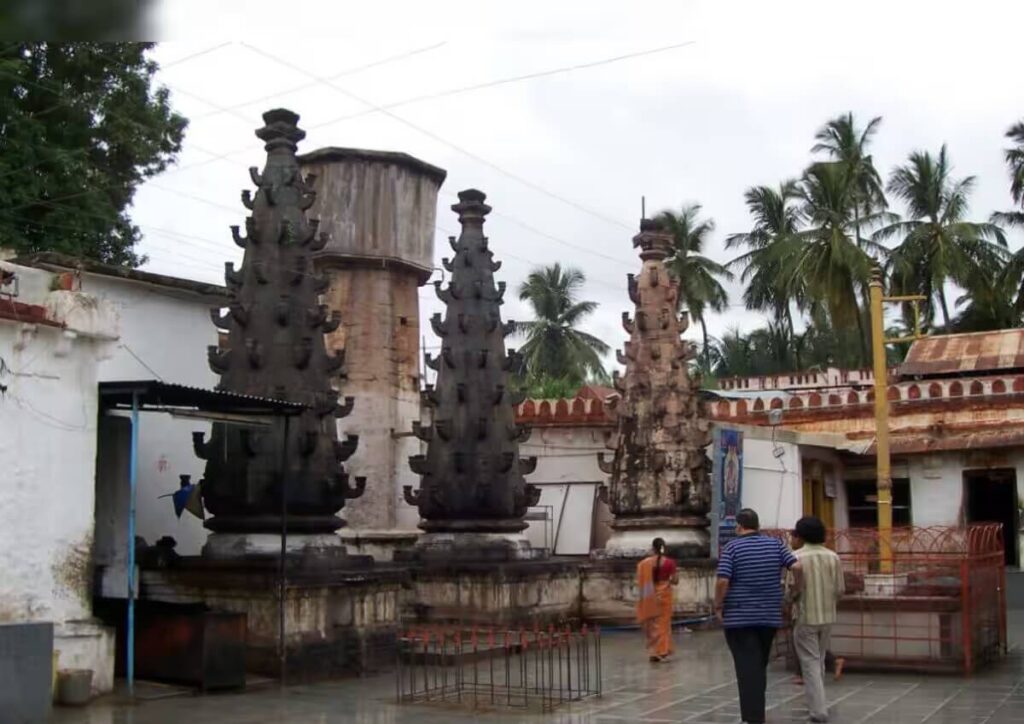
This active temple dedicated to Goddess Banashankari is an important pilgrimage destination near Badami.
It is particularly associated with regional devotional traditions and annual religious celebrations.
Sringeri Sharada Peetham
Sringeri is an important centre of Advaita Vedanta and is associated with Adi Shankaracharya.
Its historic Vidyashankara Temple is especially notable for its architecture and religious significance.
Mahabaleshwar Temple, Gokarna
Gokarna’s Mahabaleshwar Temple is dedicated to Lord Shiva and is associated with the Atmalinga tradition.
Moreover, its location makes it possible to combine pilgrimage with Karnataka’s coastal scenery.
Kotilingeshwara Temple, Kolar District

Kotilingeshwara is known for its extensive collection of Shiva lingas and large religious structures.
It is a popular pilgrimage excursion from the Bengaluru region.
Which Is the Most Famous Temple in Karnataka?
There is no official single ranking of Karnataka’s temples.
However, different temples stand out for different reasons.
| Interest | Temple to consider |
| Famous Shiva temple | Murudeshwar or Virupaksha |
| Krishna pilgrimage | Udupi Sri Krishna Matha |
| Goddess temple | Kollur Mookambika |
| Major pilgrimage centre | Dharmasthala |
| Hoysala architecture | Chennakeshava, Hoysaleswara or Keshava |
| UNESCO heritage | Hampi, Belur, Halebidu, Somanathapura |
| Coastal pilgrimage | Murudeshwar, Udupi or Gokarna |
| Ancient rock-cut architecture | Badami Cave Temples |
| Traditional religious rituals | Kukke Subramanya |
For visitors interested mainly in architectural history, Hampi and the Hoysala temples are particularly rewarding.
Meanwhile, devotees may prefer a pilgrimage route connecting Udupi, Kollur, Dharmasthala and Kukke Subramanya.
Famous Shiva Temples in Karnataka
Karnataka has a long and diverse tradition of Shiva worship.
Among the most famous Shiva temples are:
- Virupaksha Temple, Hampi
- Murudeshwar Temple
- Dharmasthala Manjunatha Temple
- Hoysaleswara Temple, Halebidu
- Mahabaleshwar Temple, Gokarna
- Kotilingeshwara Temple, Kolar district
However, each offers a different experience.
Murudeshwar is known for its coastal location and enormous Shiva statue. Virupaksha is important for its long religious history, while Hoysaleswara is especially celebrated for Hoysala sculpture.
Therefore, choose according to your interests rather than treating every Shiva temple as the same type of destination.
Best Time to Visit Famous Temples in Karnataka:
October to March is generally the most comfortable period for exploring Karnataka’s temple destinations.
However, weather varies significantly between inland heritage towns and the humid coastline.
October to February
These months are usually suitable for temple sightseeing, particularly in Hampi, Badami, Belur and Halebidu.
Daytime temperatures are generally more comfortable for walking around exposed archaeological monuments.
March to May
Summer can become very hot in northern Karnataka.
Therefore, visit outdoor monuments early in the morning and take breaks during the hottest hours.
June to September
The monsoon brings greenery to coastal Karnataka and the Western Ghats.
However, heavy rainfall can affect roads and outdoor sightseeing.
Pilgrimage remains possible, although travellers should check local conditions.
How to Plan a Karnataka Temple Tour:
Karnataka’s famous temples are spread across a large state.
Consequently, visiting all of them in one short trip is not practical.
Instead, organise your itinerary by region.
Route 1: Coastal Karnataka Pilgrimage
Mangaluru → Dharmasthala → Kukke Subramanya → Udupi → Kollur → Murudeshwar → Gokarna
Allow approximately 6–8 days.
This route works well for travellers interested in active temples, religious rituals and coastal scenery.
However, check the final driving sequence against your arrival and departure points to avoid unnecessary backtracking.
Route 2: Karnataka Heritage Temples
Bengaluru → Mysuru → Somanathapura → Belur → Halebidu → Hampi → Badami
Allow approximately 8–10 days.
This itinerary focuses on the Hoysala, Vijayanagara and Chalukya architectural traditions.
It is particularly suitable for heritage enthusiasts, photographers and international travellers interested in South Indian history.
For a longer cultural journey, our 15-day South India heritage tour includes Mysuru, Somanathapura, Belur, Halebidu, Hampi, Aihole, Pattadakal and Badami before continuing to Goa.
Route 3: Hampi, Aihole, Pattadakal and Badami
Hampi → Aihole → Pattadakal → Badami
Allow around 4–5 days, depending on your starting point.
This route connects three major architectural periods and provides a deeper understanding of Karnataka’s early temple-building traditions.
For additional itinerary ideas, explore our Karnataka tour packages.
Important Travel Tips for Visiting Karnataka Temples:
Follow Temple Dress Codes
Dress requirements vary between active temples.
Therefore, check the rules before travelling and carry a scarf or shawl when useful.
Some shrines may have specific dress requirements for visitors, depending on temple traditions and religious customs.
Remove Footwear Where Required
Footwear must normally be removed before entering active Hindu temples.
However, archaeological monuments may have different rules.
Consequently, follow posted instructions rather than assuming the same rule applies at every site.
Check Darshan and Ritual Timings
Active temples often follow daily worship schedules.
As a result, certain areas may close temporarily between rituals.
If you are planning a special puja, confirm booking procedures and timings directly with the temple.
Respect Photography Restrictions
Photography may be allowed outside some temples but prohibited within sacred areas.
Therefore, ask before taking pictures and never interrupt worshippers for photographs.
Allow Time for Temple Queues
Major pilgrimage centres such as Dharmasthala, Udupi and Kukke Subramanya can become busy during weekends and religious festivals.
Consequently, avoid scheduling several long darshan visits on the same day.
Frequently Asked Questions About Famous Temples in Karnataka
Which are the top 10 famous temples in Karnataka?
Virupaksha Temple, Murudeshwar Temple, Udupi Sri Krishna Matha, Dharmasthala Manjunatha Temple, Kukke Subramanya Temple, Kollur Mookambika Temple, Chennakeshava Temple, Hoysaleswara Temple, Keshava Temple at Somanathapura and Vittala Temple are among Karnataka’s most notable temples.
Which is the most famous Shiva temple in Karnataka?
Murudeshwar and Virupaksha are among the best-known Shiva temples. Dharmasthala and Gokarna’s Mahabaleshwar Temple are also important pilgrimage centres.
Which is the biggest temple in Karnataka?
The answer depends on whether “biggest” refers to land area, architectural size, height or pilgrimage complex. Murudeshwar is particularly known for its tall gopuram and enormous Shiva statue, but these features do not establish a definitive ranking of all Karnataka temples by overall size.
Which Karnataka temples are UNESCO World Heritage Sites?
Virupaksha and Vittala form part of the UNESCO-listed Group of Monuments at Hampi. Chennakeshava at Belur, Hoysaleswara at Halebidu and Keshava at Somanathapura form the Sacred Ensembles of the Hoysalas.
What are the most famous ancient temples in Karnataka?
Hampi’s temples, the Badami Cave Temples, Aihole’s Durga Temple, the Pattadakal temple group and the Hoysala monuments at Belur, Halebidu and Somanathapura are important examples of Karnataka’s historic temple architecture.
Which temple is famous for Lord Krishna in Karnataka?
Udupi Sri Krishna Matha is one of the state’s most important Krishna temples. It is associated with Madhvacharya and the Dvaita Vedanta tradition.
Which temple is famous for Goddess worship in Karnataka?
Kollur Mookambika Temple is one of Karnataka’s best-known Goddess temples. Banashankari Amma Temple near Badami is another important pilgrimage destination.
How many days are needed for a Karnataka temple tour?
A short regional pilgrimage can take three to five days. However, a broader temple tour covering coastal Karnataka, Hampi, Badami and the Hoysala sites may require 10–15 days or longer.
Can I visit Belur and Halebidu in one day?
Yes. Belur and Halebidu are close enough to visit on the same day. However, allow sufficient time for both monuments and their detailed sculptures.
What is the best time to visit Karnataka temples?
October to March generally offers comfortable weather for many temple destinations. However, festivals and pilgrimage crowds vary throughout the year.
Are photography and mobile phones allowed inside Karnataka temples?
Rules differ by temple. Some permit photography in external areas but restrict it inside sanctums. Therefore, follow the current instructions displayed at each location.
Which temples should first-time visitors to Karnataka choose?
Travellers interested in history should prioritise Hampi, Belur and Halebidu. Meanwhile, pilgrims may prefer Udupi, Dharmasthala, Kukke Subramanya and Kollur. Murudeshwar is particularly attractive for those combining temples with a coastal holiday.
Final Thoughts
Karnataka’s famous temples reveal the state’s extraordinary religious diversity and architectural history.
From Virupaksha Temple in Hampi and the elaborate Hoysala shrines of Belur and Halebidu to the active pilgrimage centres of Udupi, Dharmasthala and Kollur, each temple offers a different experience.
For first-time visitors, it is better to explore one region properly rather than rushing across the entire state.
A heritage-focused journey through Mysuru, Belur, Halebidu, Hampi and Badami provides an excellent introduction to Karnataka’s ancient architecture.
Meanwhile, a coastal pilgrimage covering Udupi, Kollur, Murudeshwar and Gokarna combines spiritual traditions with beautiful Arabian Sea landscapes.
If you are planning a longer journey, explore our Karnataka tour packages for routes that can be customised around your preferred temples, travel dates and interests.

Pingback: List of the Most Popular Temples of India - Tusk Travel
Pingback: Dussehra Celebration in India - Tusk Travel