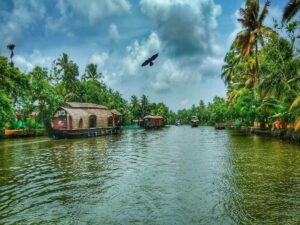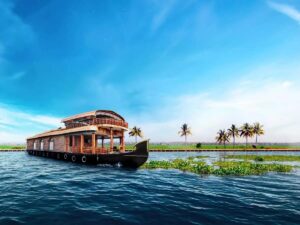

Kerala is one of those destinations where the journey feels as important as the places you visit. One morning you may be walking through a tea plantation high in the Western Ghats, and a day later you could be drifting past coconut palms and rice fields on a traditional houseboat. Continue south, and the landscape opens onto long stretches of Arabian Sea coastline, fishing villages, cliff-top cafés, and palm-fringed beaches.
Located along India’s southwestern coast, Kerala is particularly attractive to travellers who want to experience India at a slower pace. The state combines nature, heritage, food, wildlife, Ayurveda, beaches, and the famous Kerala backwaters without requiring constant long-distance travel.
For first-time visitors, the most popular route generally connects Kochi, Munnar, Thekkady, Alleppey or Kumarakom, followed by a few relaxing days on the coast. Tusk Travel’s current Kerala tour packages include variations from short backwater trips to longer journeys combining hills, wildlife areas, houseboats, and beaches.
This Kerala travel guide covers the places worth visiting, the best backwater experiences, Kerala’s beaches, ideal trip length, weather, food, transportation, and practical advice for planning your holiday.
Why Travel to Kerala?
Kerala’s strongest attraction is its variety.
You can explore the colonial lanes of Fort Kochi, see acres of tea plantations around Munnar, look for wildlife in the forests near Thekkady, spend a night aboard a houseboat in Alleppey, and finish your journey beside the Arabian Sea.
Yet Kerala rarely feels like a destination where you need to rush from attraction to attraction.
Many of its best experiences are simple ones: watching fishermen work beside a canal, drinking fresh tea overlooking a plantation, taking a small canoe through a village, eating a banana-leaf meal, seeing sunset from a beach, or waking aboard a houseboat surrounded by water and palms.
For travellers visiting South India for the first time, the Kerala guide for first-time visitors is also useful before finalising an itinerary.
Kerala Backwaters: What Makes Them Special?
The Kerala backwaters are an extensive landscape of lakes, canals, rivers, lagoons, villages, coconut groves, and agricultural land.
What makes a backwater journey memorable is not simply the scenery. These waterways remain closely connected with everyday life. As you travel, you may see houses facing narrow canals, fishermen casting nets, local boats carrying residents, small temples and churches along the banks, and fields stretching behind coconut palms.
The experience becomes even better when you move away from the larger waterways and explore smaller canals where everyday village life is easier to observe.
Travellers interested specifically in this side of the state can also read Tusk Travel’s guide to the best backwater destinations in Kerala, which covers places including Alleppey, Kollam, Kumarakom, Kochi, and Kuttanad.
1. Alleppey
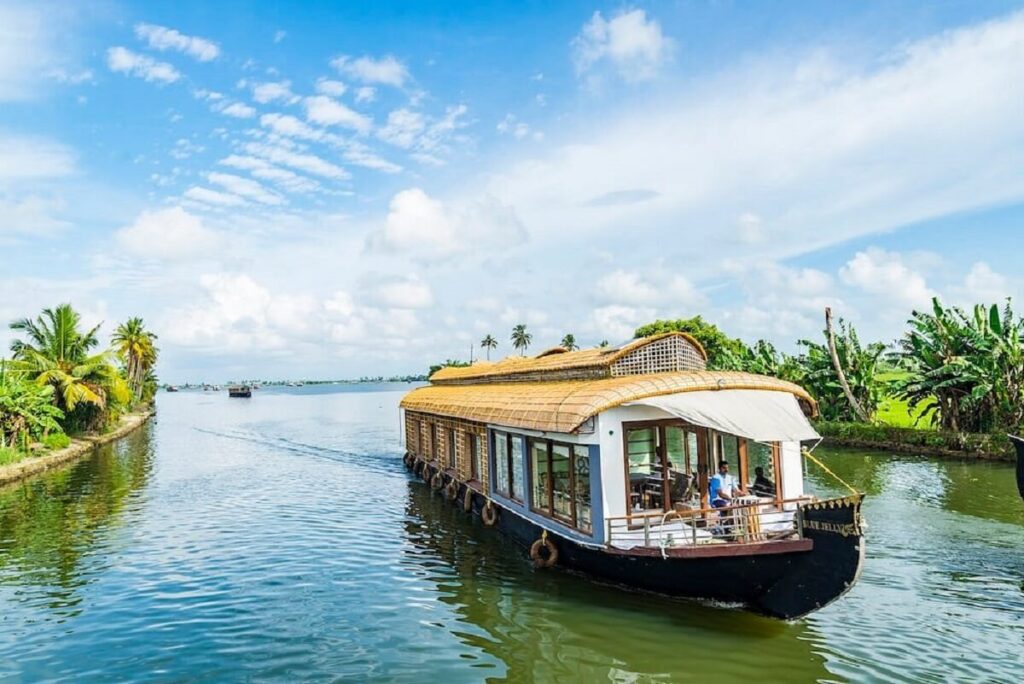
Alappuzha, better known to travellers as Alleppey, is the best-known starting point for Kerala houseboat journeys.
Traditional cargo boats once used to transport products through Kerala’s waterways have evolved into comfortable tourist houseboats. Today, travellers can choose from simple boats to more luxurious private vessels with air-conditioned bedrooms, attached bathrooms, dining areas, and onboard crews.
A typical overnight cruise begins around midday. The boat spends the afternoon navigating through canals and waterways before stopping for the evening. Meals are normally prepared onboard, and the journey continues briefly the following morning before checkout. Tusk Travel recommends one night aboard for most visitors, since it gives enough time to experience the waterways without making the itinerary repetitive.
Is an overnight houseboat worth it?
For a first Kerala trip, yes.
The best part comes after the day visitors disappear. Sunset, dinner beside the water, and waking early in the backwaters create an experience that a short afternoon cruise cannot fully reproduce.
Travellers with limited time can consider Tusk Travel’s 5-day Kerala backwaters itinerary, while longer Kerala routes combine Alleppey with Munnar, Thekkady, Kumarakom, or the coast.
2. Kumarakom
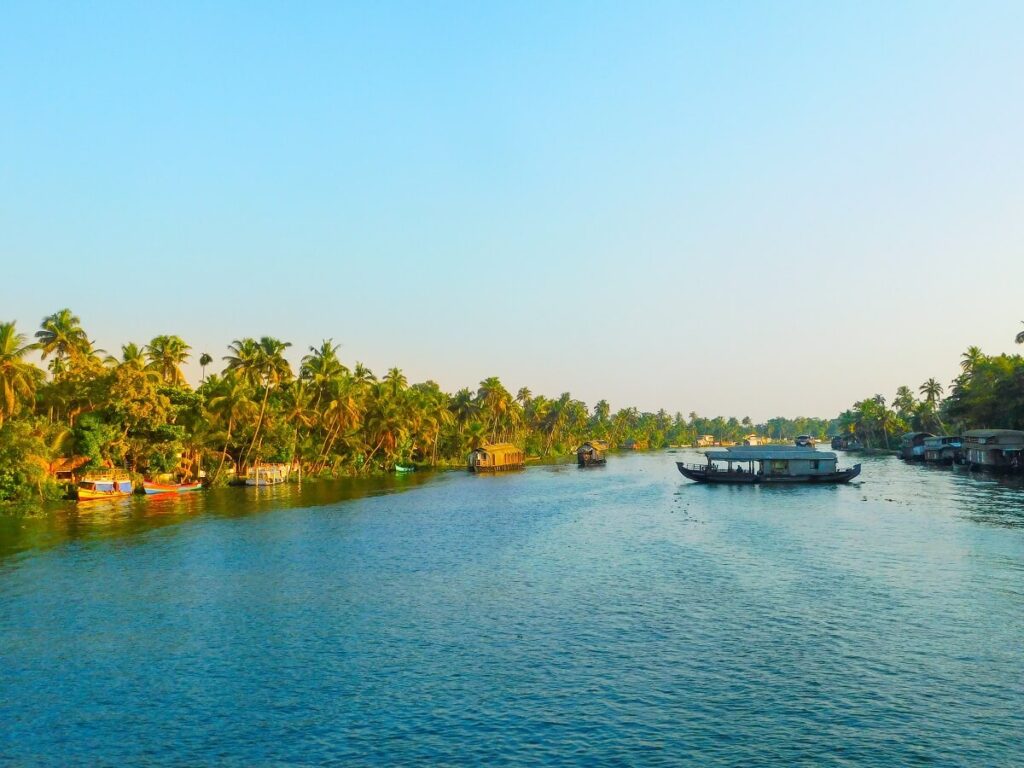
Around Vembanad Lake, Kumarakom offers a slightly different backwater experience.
Where Alleppey is strongly associated with houseboats, Kumarakom works particularly well for travellers who want to stay at a peaceful lakeside hotel or resort for two or three nights.
Days can include canoe trips, village walks, birdwatching, local food experiences, and time simply enjoying views across Vembanad Lake.
Kumarakom Bird Sanctuary is one of the area’s better-known nature attractions, while the surrounding waterways make the destination attractive for photographers and slow travellers.
Combining Kumarakom with one night on an Alleppey houseboat often produces a more balanced experience than spending several consecutive nights aboard a boat.
3. Kuttanad
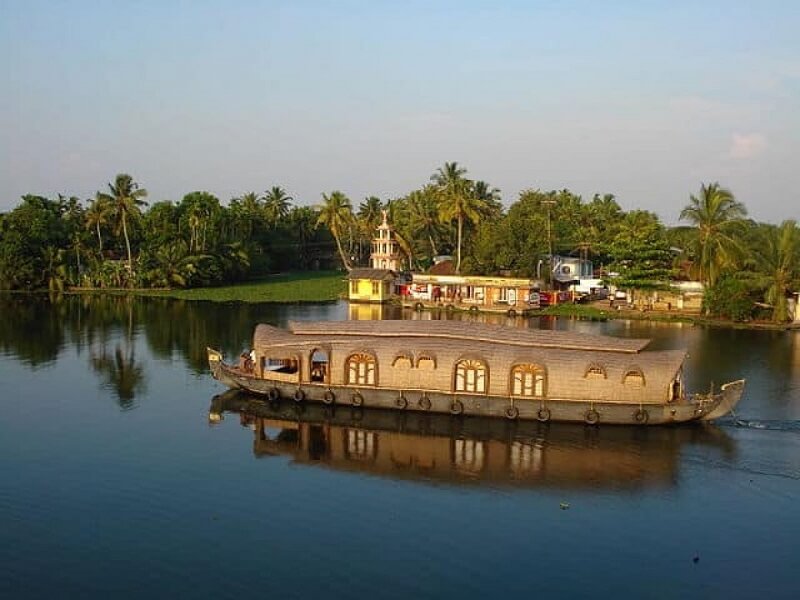
Kuttanad gives travellers a closer look at Kerala’s agricultural life.
Rather than thinking of it as another sightseeing stop, consider it part of the wider backwater landscape. Paddy fields, coconut trees, small canals, houses, and village communities create the scenery.
A smaller canoe is often better than a large houseboat for discovering narrow waterways. Travelling quietly through these canals allows you to see parts of Kerala that remain invisible from the main roads.
Best Beaches in Kerala
Kerala’s coastline stretches along the Arabian Sea, but its beaches are very different from one another.
Some are developed resort destinations, while others remain quiet fishing communities. Choosing the right beach therefore depends on whether you want swimming, restaurants, Ayurveda, nightlife, surfing, dramatic scenery, or simply somewhere peaceful to finish your holiday.
Tusk Travel has a separate guide to the popular beaches of Kerala for travellers planning a beach-focused extension.
4. Kovalam
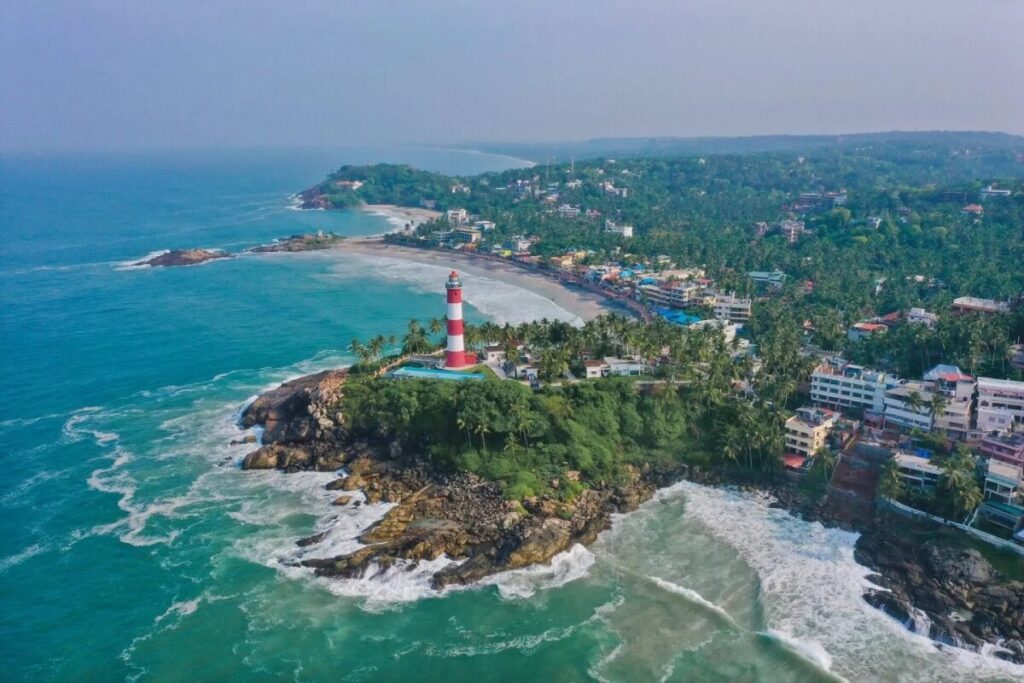
Kovalam is one of Kerala’s most established seaside destinations.
It is convenient for travellers who want beach time combined with comfortable hotels, restaurants, Ayurveda centres, and relatively easy access to Thiruvananthapuram.
Rather than visiting only for a quick photograph, stay at least two nights if relaxation is important to you.
Kovalam works particularly well at the end of a classic Kerala journey. After several days travelling between Kochi, Munnar, Thekkady, and Alleppey, having two or three days with very little planned can make the overall trip feel far less rushed.
5. Varkala
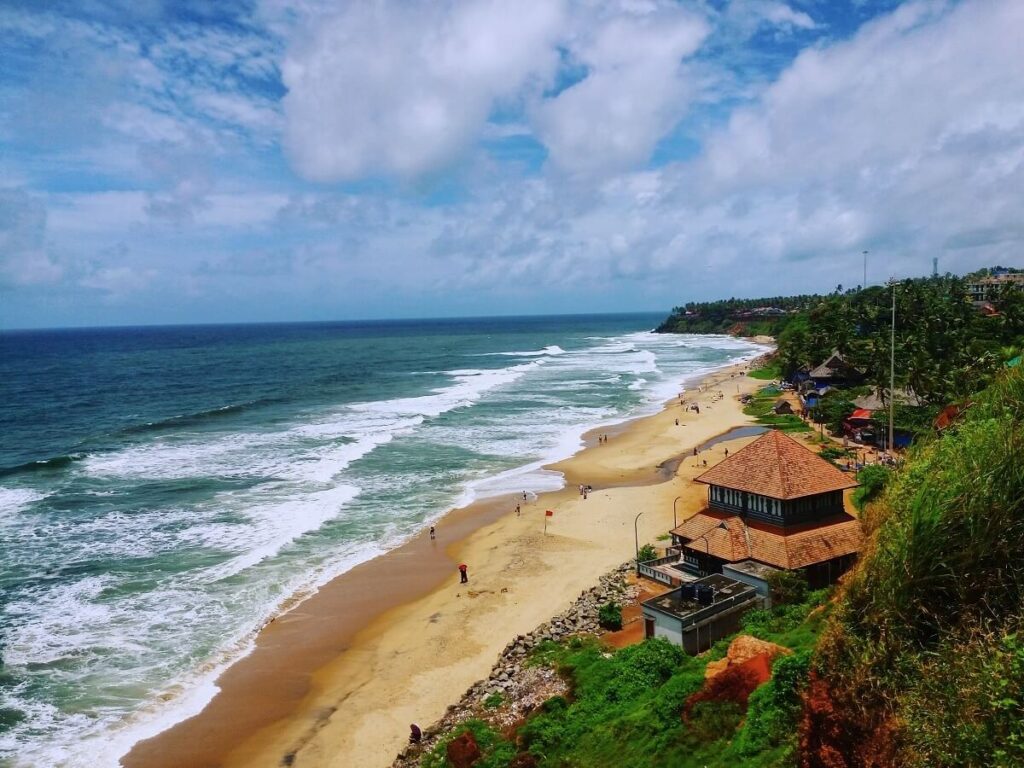
Varkala offers one of Kerala’s most distinctive coastal landscapes.
The beach lies beneath a long cliff lined with cafés, restaurants, shops, guesthouses, and small hotels. From above, travellers can watch the sea and sunset before following paths down to the sand.
Varkala tends to suit independent travellers, couples, younger visitors, yoga enthusiasts, and anyone who likes having restaurants and cafés within walking distance.
It can also be incorporated into a coastal Kerala itinerary. Tusk Travel currently features a six-day Kerala beach route connecting Thiruvananthapuram, Kanyakumari, Kovalam, and Varkala.
6. Marari Beach
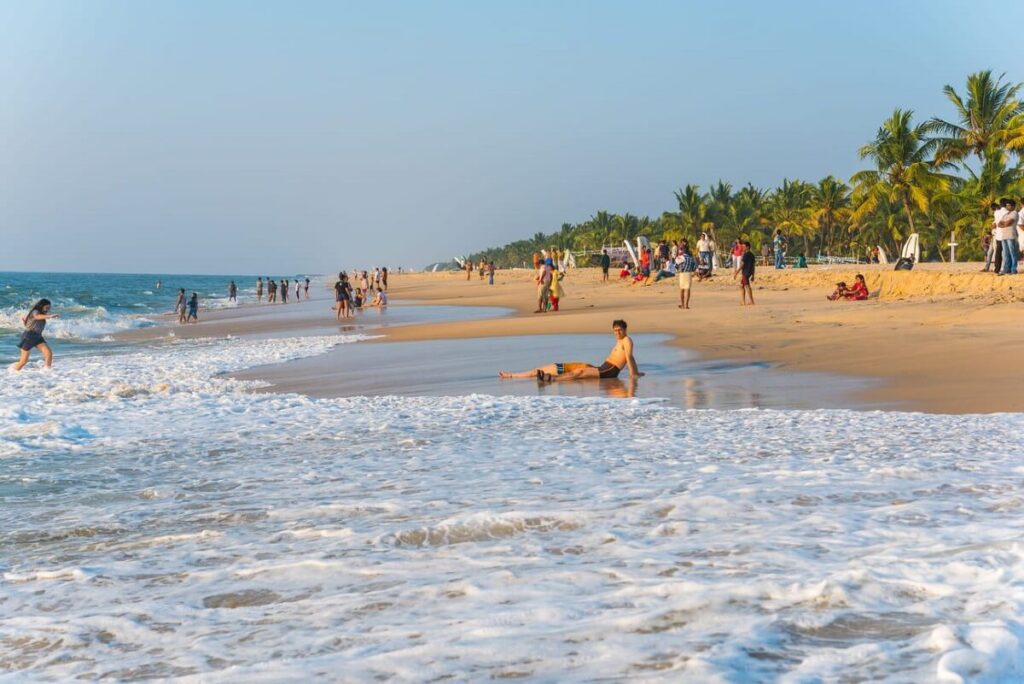
Travellers looking for fewer crowds should consider Marari Beach, near Alappuzha.
Mararikulam retains more of a relaxed village atmosphere than Kerala’s major resort beaches. Coconut groves, fishing communities, small resorts, and long stretches of coast make it particularly suitable for couples and travellers interested in quiet beach time.
Its location also makes it convenient after an Alleppey backwater experience.
A journey could include a houseboat overnight followed by two nights at Marari, giving you both the waterways and coast without a long transfer.
You can explore more ideas in the Tusk Travel guide to Mararikulam.
Don’t Miss Kerala’s Hills
Although backwaters and beaches may be the focus of your holiday, Kerala’s mountains provide an important contrast.
Munnar
Situated among rolling tea-growing hills, Munnar is considerably cooler than the coast.
Tea estates cover slopes surrounding the town, while viewpoints, waterfalls, plantation visits, nature walks, and tea experiences fill one or two relaxed days.
Two nights are usually the minimum worth considering. Three nights are better for travellers who enjoy walking and prefer a slower schedule.
Thekkady and Periyar
Continue south from Munnar and you reach Thekkady, the main gateway to the Periyar landscape.
The area is known for forests, wildlife activities, spice plantations, nature walks, and opportunities to learn about crops such as cardamom and pepper. Tusk Travel also recommends experiences such as plantation visits and traditional Kalaripayattu performances.
Munnar and Thekkady fit naturally before the backwaters, creating the classic sequence of hills, forest, water, and coast.
Begin Your Kerala Journey in Kochi
Most international visitors arrive through Kochi, and it deserves more than an airport transfer.
Fort Kochi reveals several layers of the region’s maritime history through churches, colonial architecture, traditional streets, cafés, galleries, markets, and the famous Chinese fishing nets.
Spend your first evening exploring Fort Kochi slowly. The area is particularly atmospheric around sunset.
One or two nights are generally sufficient unless you are especially interested in history, cuisine, art, or local neighbourhoods.
Best Time to Visit Kerala
For most travellers, October to March is the best time to visit Kerala. Conditions are generally comfortable for exploring the coast, backwaters, and hill stations, and this period is Kerala’s main travel season.
April and May become hotter and more humid along the coast, although higher destinations such as Munnar remain comparatively pleasant.
The monsoon, broadly from June through September, completely changes the landscape. Kerala becomes extraordinarily green, accommodation can offer better value, and there are fewer visitors. Rain, however, can affect outdoor plans, road journeys, beach conditions, and boat activities.
Travellers particularly interested in Ayurveda sometimes deliberately choose the monsoon period.
How Many Days Do You Need in Kerala?
Seven days is enough for the principal highlights, but 9 to 12 days gives Kerala the breathing room it deserves.
A practical first-time itinerary could look like this:
| Day | Destination | Experience |
| 1 | Kochi | Arrival and Fort Kochi |
| 2 | Kochi | Heritage sightseeing |
| 3 | Munnar | Drive into the Western Ghats |
| 4 | Munnar | Tea gardens and viewpoints |
| 5 | Thekkady | Spice country and nature |
| 6 | Alleppey | Overnight houseboat |
| 7 | Marari/Kovalam | Transfer to beach |
| 8 | Beach | Relaxation |
| 9 | Beach | Leisure/Ayurveda |
| 10 | Departure | Airport transfer |
Travellers with only a week can follow Kochi, Munnar, Thekkady, and Alleppey.
With 10 to 12 days, adding Kumarakom, Marari, Kovalam, or Varkala creates a much more relaxing journey. Tusk Travel currently lists Kerala itineraries ranging from short four and five-day trips to 10 and 12-day circuits.
What to Eat in Kerala
Food is an essential part of travelling through Kerala.
Coconut, curry leaves, rice, seafood, vegetables, spices, and regional breads appear throughout local cuisine. Try dishes such as appam with stew, puttu, Kerala-style fish curry, vegetable thali, dosa, idiyappam, and locally prepared seafood.
Breakfast is particularly interesting because it introduces dishes very different from the standard North Indian breakfast familiar to many overseas travellers.
Houseboat meals can also be a highlight. If you have dietary restrictions or prefer mild food, communicate that before boarding so the crew can prepare meals accordingly. Vegetarian, vegan, Jain, gluten-free, and halal requirements can generally be accommodated when arranged in advance.
Getting Around Kerala
For most international travellers, a private air-conditioned vehicle with a driver is the easiest way to explore Kerala.
Distances may appear short on a map, but journeys into Munnar and Thekkady follow winding hill roads and can take longer than expected.
Avoid planning too many stops on transfer days.
Kerala rewards slower travel. A journey with four well-chosen destinations will normally be more enjoyable than trying to see seven places in the same amount of time.
Ayurveda and Wellness
Kerala has a longstanding association with Ayurveda, and treatments are available throughout the state.
However, there is an important difference between a casual spa massage and a structured Ayurvedic programme.
For simple relaxation, hotels and reputable wellness centres can provide short treatments. If you are seeking treatment for a specific health concern, choose an established Ayurvedic facility with qualified practitioners rather than selecting a centre only because it offers the lowest price.
Yoga and wellness stays can also be added around Varkala, Kovalam, or quieter beach areas.
Practical Kerala Travel Tips
Pack lightweight cotton clothing for the coast and an extra layer for Munnar, particularly during cooler evenings. Carry comfortable walking shoes, sandals, mosquito repellent, sun protection, and a lightweight rain jacket if travelling during the wetter months.
When visiting temples, wear modest clothing and follow local rules regarding footwear, photography, and entry. Some temples have restrictions for non-Hindus, so check before visiting.
If you are prone to motion sickness, carry suitable medication for the winding roads between Kerala’s hill destinations.
For houseboats, compare the boat standard carefully instead of booking purely on price. Cabin quality, cleanliness, crew, food, route, air-conditioning arrangements, and boat maintenance can make a significant difference.
Backwaters or Beaches: Which Should You Choose?
Ideally, both.
The backwaters reveal Kerala’s inland landscapes and traditional waterside life. Beaches provide the downtime many travellers need after several days of touring.
If you have seven days or fewer, prioritise the backwaters.
If you have nine days or more, adding two or three nights beside the sea makes the itinerary noticeably better.
Travellers who want to understand how many experiences can be combined in one journey may also enjoy Tusk Travel’s guide to unique experiences in Kerala, covering backwaters, tea country, Kathakali, Ayurveda, Varkala, boat races, birdwatching, and other regional highlights.
Final Thoughts
Kerala is not a destination that needs an exhausting sightseeing schedule.
Its appeal comes from contrast and pace: cool tea-covered mountains followed by tropical forests, quiet villages beside waterways, an overnight houseboat, and finally the open Arabian Sea.
For a first trip, Kochi, Munnar, Thekkady, Alleppey, and a Kerala beach form an excellent foundation. Add Kumarakom if you enjoy slow travel, Varkala for cliff-top coastal atmosphere, Marari for peaceful beach time, or Kovalam for a comfortable resort-style finish.
Most importantly, leave some space in the itinerary.
The moments travellers often remember most are not necessarily the major attractions. They are the sunset from a houseboat, morning mist above the tea fields, fresh fish beside the coast, a canoe moving through a silent village canal, or an evening spent watching the Arabian Sea.
That combination of Kerala backwaters, beaches, hills, culture, food, and unhurried travel is precisely what makes the state one of South India’s most rewarding destinations.
For trip ideas covering different durations and travel styles, explore the current Kerala tours and itineraries from Tusk Travel, including backwater holidays, hill station journeys, beach routes, family tours, and longer Kerala circuits.