
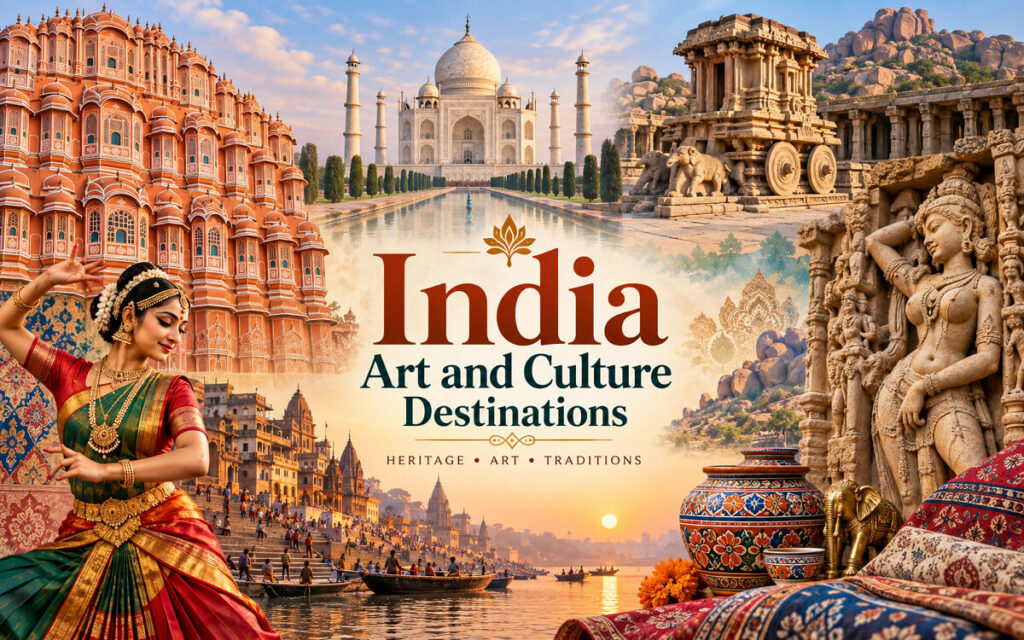
India is not simply a country of famous monuments. It is a living gallery where architecture, painting, sculpture, music, dance, textiles, crafts, festivals, food, and spiritual traditions continue to shape everyday life.
Travel from Rajasthan to Tamil Nadu or from Varanasi to Kolkata, and the cultural landscape changes dramatically. One city may introduce you to royal palaces covered with miniature paintings, while another takes you through ancient temple corridors filled with stone sculptures. Elsewhere, you may meet silk weavers, watch classical dancers, explore centuries-old bazaars, or discover contemporary artists working in modern galleries.
For travelers interested in history, creativity, architecture, and traditional lifestyles, exploring the best art and culture destinations in India can become one of the most rewarding ways to understand the country.
If cultural experiences are the main focus of your journey, you can also explore India cultural tour itineraries from Tusk Travel or browse India tour packages to combine several destinations in one trip.
Best 10 Cultural Destinations in India for Art Lovers:
1. Jaipur, Rajasthan: Royal Art & Crafts
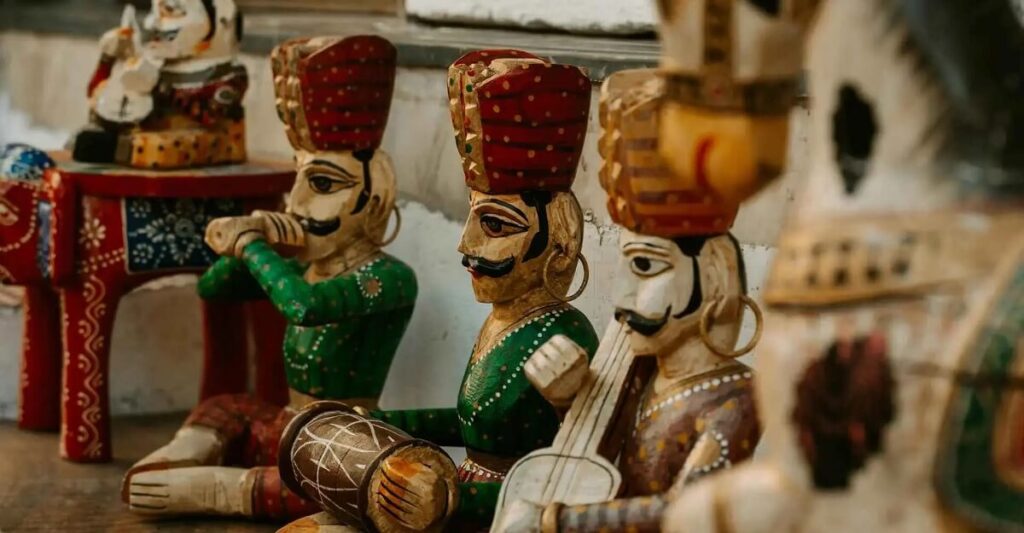
Jaipur deserves a place near the top of any list of cultural destinations in India. Known as the Pink City, the Rajasthan capital brings together royal architecture, historic museums, colorful markets, traditional crafts, jewelry, textiles, and performing arts.
Begin with Amber Fort, where courtyards, gateways, mirror work, frescoes, and decorative interiors reveal the artistic sophistication of Rajasthan’s royal period. Continue to the City Palace, where collections include historic costumes, textiles, weapons, paintings, manuscripts, and royal objects.
The Albert Hall Museum is another worthwhile stop for travelers interested in sculpture, decorative arts, paintings, and historical artifacts. Jaipur also has specialized cultural institutions and galleries covering jewelry, folk traditions, music, and contemporary art.
However, Jaipur’s artistic culture is not limited to museums. Visit its bazaars to see block-printed textiles, blue pottery, lac bangles, gemstone jewelry, handwoven fabrics, miniature paintings, and traditional footwear.
For a longer journey through the state’s cultural heritage, explore Rajasthan tour packages.
Best for: Royal architecture, handicrafts, textiles, museums and traditional markets
Recommended stay: 2-3 days
2. Udaipur, Rajasthan: Palaces & Miniature Art
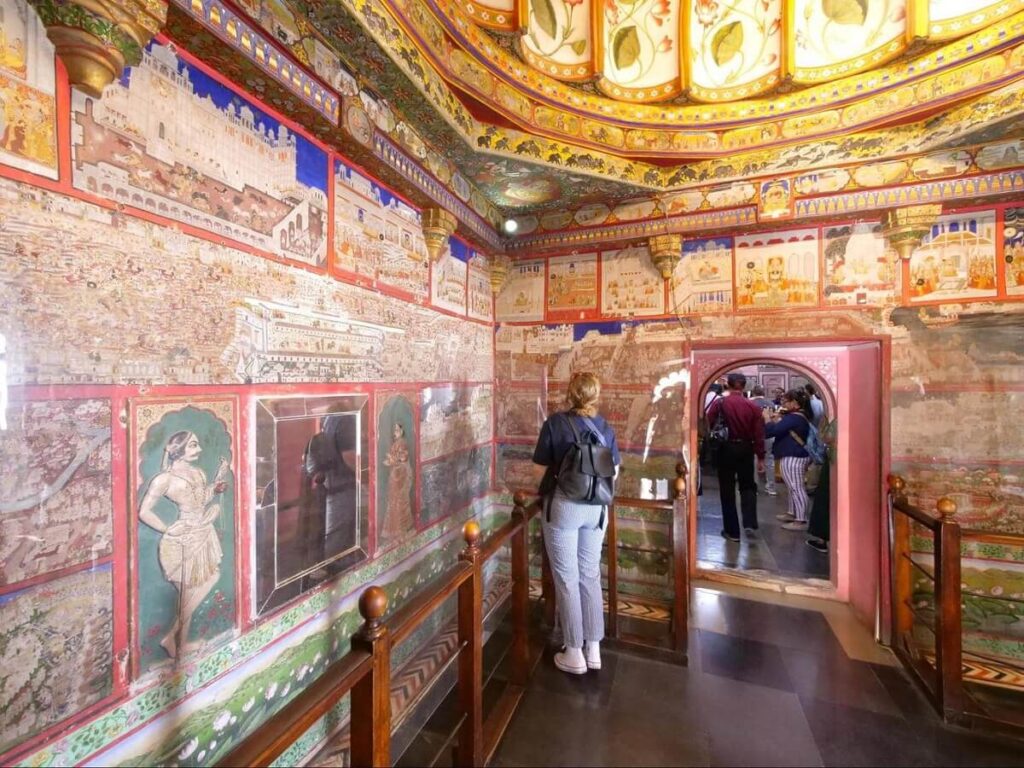
While Jaipur feels energetic and colorful, Udaipur offers a more romantic introduction to Rajasthan’s artistic heritage.
The spectacular City Palace overlooking Lake Pichola is the city’s cultural centerpiece. Its courtyards, balconies, mosaics, decorative glass, murals, and royal chambers reveal centuries of Mewar craftsmanship.
Udaipur is particularly famous for its tradition of Mewar miniature painting. Small workshops and galleries around the old city provide opportunities to see artists creating detailed works using techniques passed from one generation to another.
Traditional Rajasthani music, puppetry and folk dance are also important parts of Udaipur’s cultural identity. Visitors can attend performances featuring local instruments, colorful costumes and storytelling traditions.
A sunset boat ride on Lake Pichola provides another perspective on Udaipur’s architecture, including palaces and historic buildings surrounding the water.
Best for: Miniature painting, palace architecture, folk performance and photography
Recommended stay: 2 days
3. Jodhpur: Art & Heritage of the Blue City
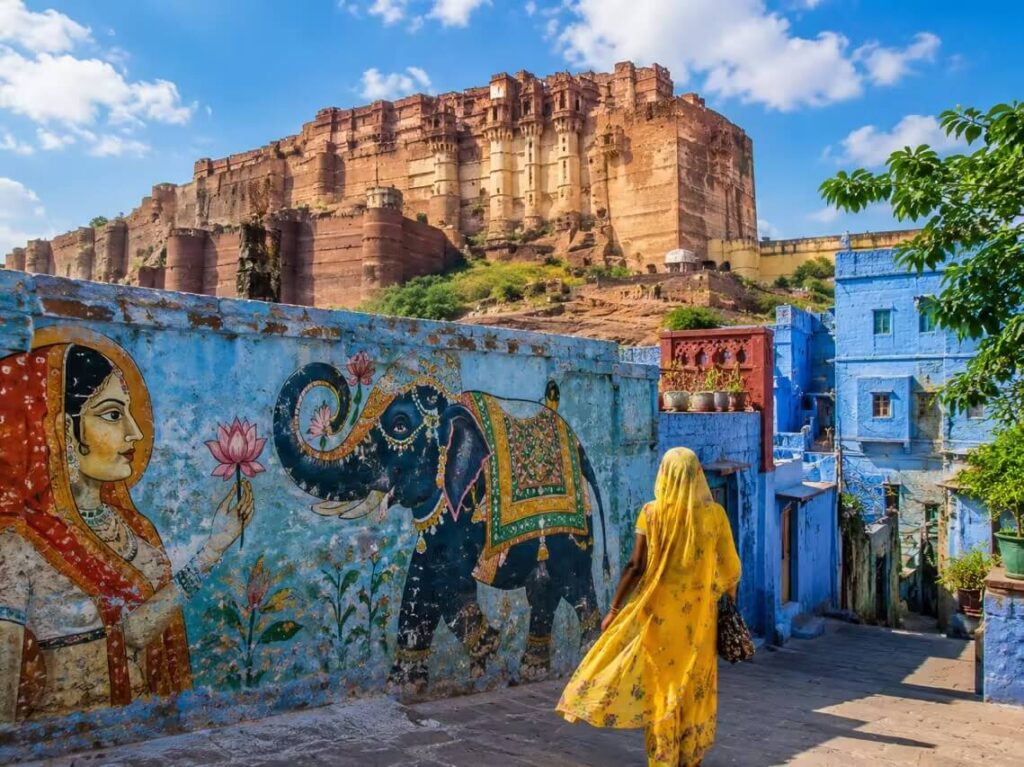
Jodhpur combines monumental architecture with vibrant everyday culture.
Dominating the skyline is Mehrangarh Fort, one of Rajasthan’s most impressive historic complexes. Its museum collections include royal objects, paintings, costumes, arms, decorative arts and intricately designed interiors.
Below the fort lies Jodhpur’s old city, recognizable by its famous blue-painted houses. Wandering through these narrow streets introduces travelers to markets, workshops, religious shrines and traditional homes.
Jodhpur is also associated with textiles, leatherwork, furniture and traditional handicrafts. Shopping here can be especially interesting for visitors who want to understand how Rajasthan’s craft traditions continue to support local livelihoods.
Together, Jaipur, Jodhpur, Udaipur and Jaisalmer make Rajasthan one of India’s strongest regions for travelers seeking royal history, architecture, crafts and folk traditions.
4. Varanasi: India’s Living Culture
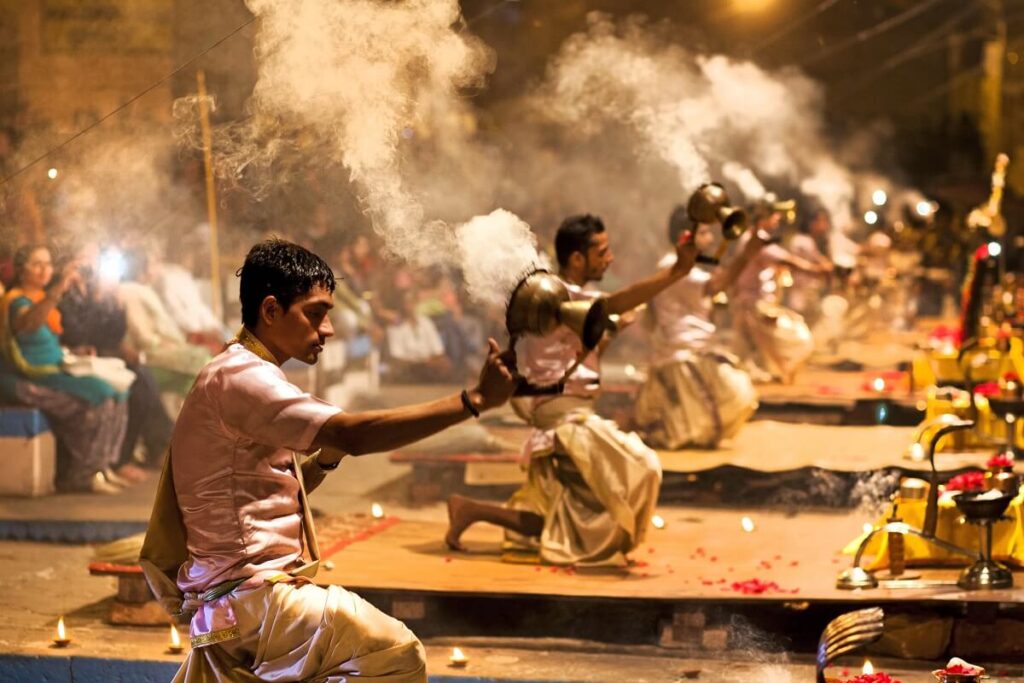
Few places demonstrate India’s concept of living heritage as powerfully as Varanasi.
Situated beside the River Ganges, the city has been associated with religion, philosophy, music, education and craftsmanship for centuries. Instead of visiting Varanasi purely as a sightseeing destination, experience it through its daily rituals.
Take an early-morning boat ride along the Ganges as pilgrims gather beside the ghats. Explore the old lanes, listen to temple bells, visit local markets and return to the river in the evening for the Ganga Aarti ceremony.
Varanasi is also closely connected with Indian classical music. The city has contributed significantly to traditions of Hindustani music and has long attracted musicians, scholars and spiritual teachers.
Another important element of local culture is Banarasi silk weaving. Visiting a weaving workshop helps travelers understand the skill involved in producing elaborate saris and textiles.
A visit to nearby Sarnath, where Buddha gave his first sermon after enlightenment according to Buddhist tradition, adds another cultural and religious dimension to the journey.
Read more about things to do in Varanasi when planning your stay.
Best for: Spiritual culture, classical music, silk weaving and living traditions
Recommended stay: 2-3 days
5. Khajuraho: Art Carved in Stone
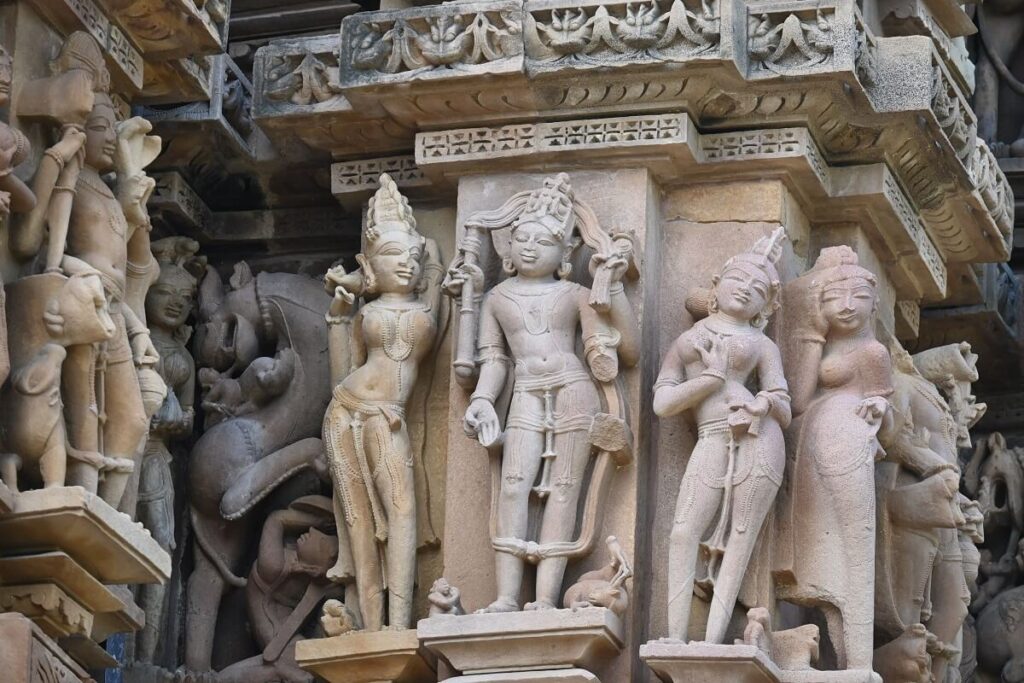
For lovers of sculpture and temple architecture, Khajuraho is essential.
Built mainly between the 10th and 11th centuries under the Chandela rulers, the Khajuraho temples represent an extraordinary achievement in Indian architecture and stone carving. The surviving temples are known for remarkably detailed sculptures depicting gods, celestial figures, musicians, dancers, animals, warriors, everyday activities and human relationships.
The Western Group contains some of the best-known monuments, including Kandariya Mahadeva Temple and Lakshmana Temple.
Although Khajuraho is often associated mainly with its erotic sculptures, they form only one element of a far broader artistic program. Looking carefully at the walls reveals scenes connected with mythology, domestic life, music, dance, spirituality and medieval society.
Spend time observing the details rather than rushing through the complex.
Best for: Temple architecture, stone sculpture and medieval Indian art
Recommended stay: 1-2 days
6. Hampi: Art Among Ancient Ruins
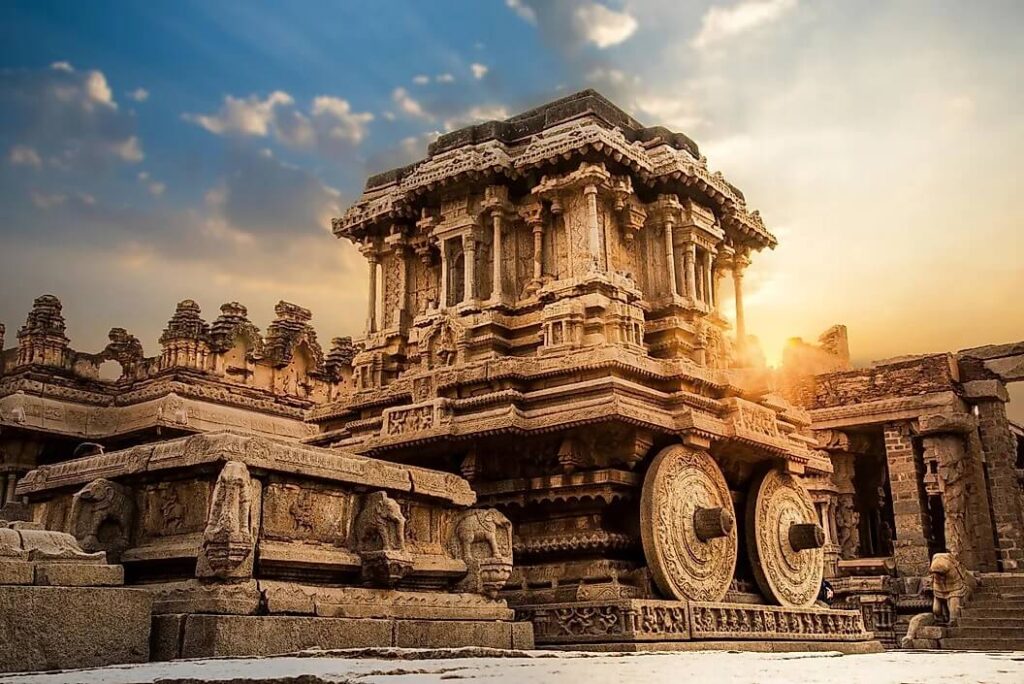
Hampi feels unlike almost anywhere else in India.
The former capital of the Vijayanagara Empire spreads across a dramatic landscape of granite boulders, temple complexes, ruined markets, royal enclosures and ancient waterways.
Among its most celebrated structures is Vittala Temple, known for elaborate stone craftsmanship and its famous stone chariot. Virupaksha Temple, royal enclosures, gateways, pillared halls and market streets provide further evidence of the scale and sophistication of the former imperial capital.
Hampi is particularly rewarding because architecture and landscape are inseparable. Temples appear between massive rocks, historic pathways cross open countryside, and viewpoints reveal ruins stretching across the valley.
Travelers with additional time can combine Hampi with Badami, Aihole and Pattadakal for an even deeper exploration of Karnataka’s architectural heritage.
Best for: Ancient ruins, temple architecture, archaeology and photography
Recommended stay: 2-3 days
7. Kolkata: Literature, Art & Museums
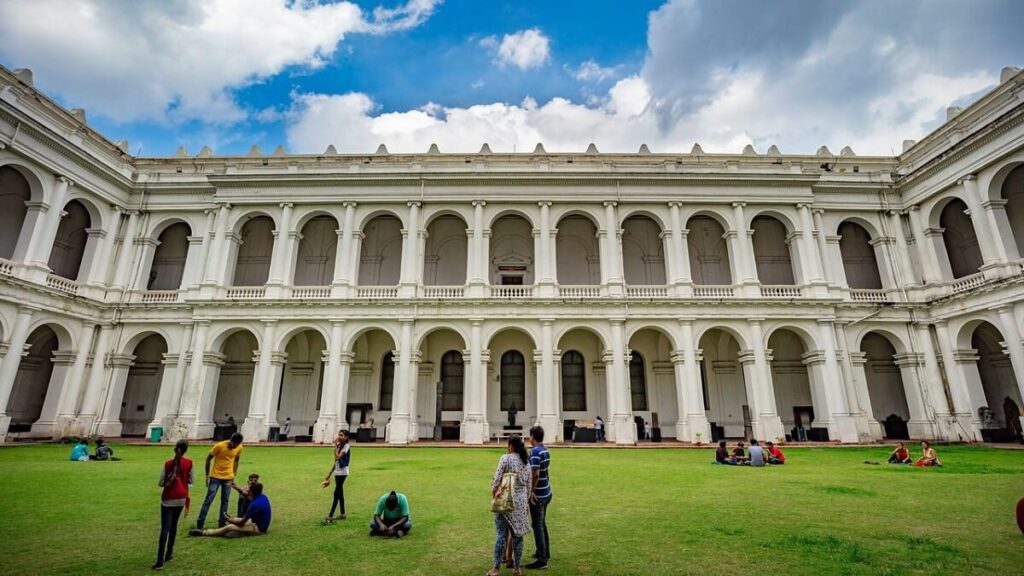
Kolkata offers a completely different cultural experience.
Long associated with literature, theatre, cinema, visual art, political thought and intellectual life, the city became one of the most influential cultural centers of modern India.
The Indian Museum, founded in the early 19th century, is one of the country’s major institutions for history, archaeology, art and natural heritage. Kolkata also contains several other museums and cultural institutions covering everything from colonial history to Bengali art.
But Kolkata’s cultural personality is best experienced beyond its museums. Explore College Street and its bookshops, visit traditional neighborhoods, experience Bengali cuisine, and spend time around the city’s galleries and cultural centers.
If possible, visit during Durga Puja, when artists and craftspeople transform neighborhoods with temporary installations and elaborate representations of the goddess Durga. During this period, the entire city effectively becomes a giant public art exhibition.
Best for: Literature, museums, Bengali culture, contemporary art and festivals
Recommended stay: 2-3 days
8. Delhi: Art, History & Heritage
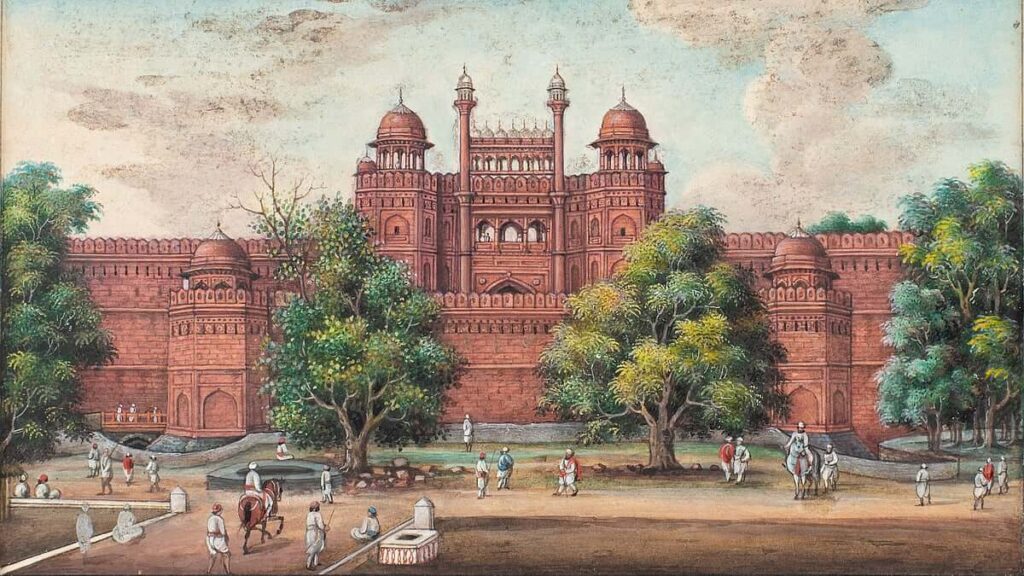
Delhi’s cultural importance comes from the number of civilizations and dynasties that have influenced it.
The city contains Mughal monuments, medieval ruins, colonial architecture, modern museums, religious landmarks, galleries and active traditional markets.
Old Delhi provides one of the most atmospheric cultural experiences. Walk through the lanes surrounding Jama Masjid and Chandni Chowk to see historic shops, religious buildings, street food traditions and bazaars.
Elsewhere, major monuments such as Humayun’s Tomb, Qutub Minar and the Red Fort reveal different architectural periods.
Museum lovers can devote considerable time to Delhi because the capital contains important collections covering archaeology, crafts, history, modern art and India’s cultural development. Tusk Travel’s broader guide to museums to visit in India can help art-focused travelers identify additional institutions around the country.
Best for: Museums, Mughal architecture, historic neighborhoods and galleries
Recommended stay: 2-3 days
9. Agra: Mughal Art & Architecture
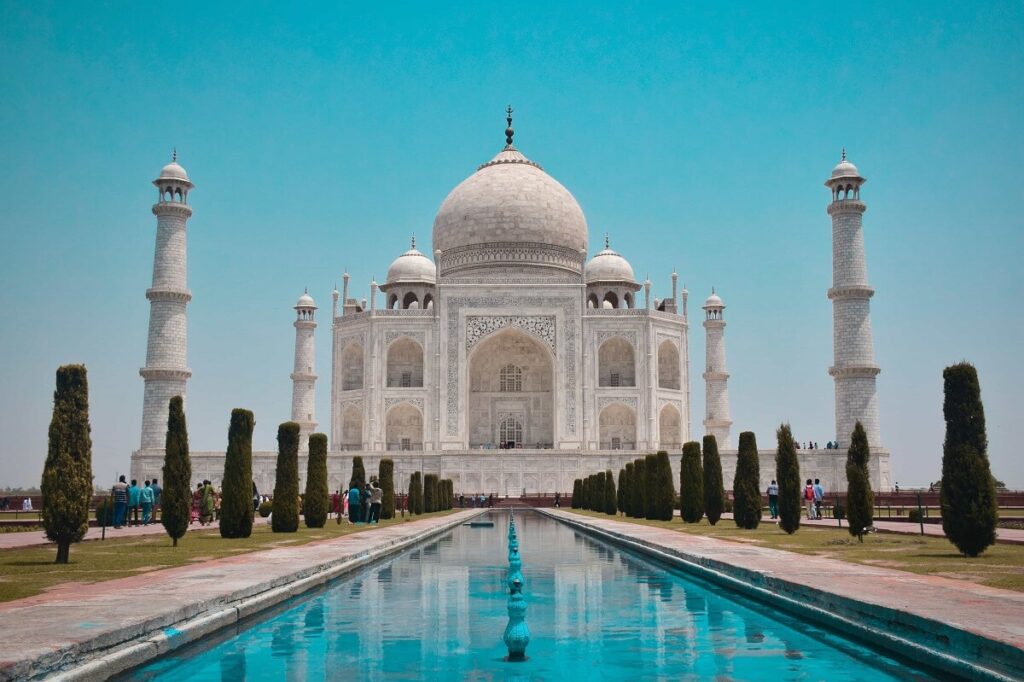
The Taj Mahal alone makes Agra one of the world’s great artistic destinations, but the city’s cultural heritage extends beyond its most famous monument.
Look closely at the Taj Mahal rather than viewing it only from a distance. The monument demonstrates extraordinary symmetry, marble carving, calligraphy, geometric design and pietra dura, a decorative technique using carefully cut colored stones inlaid into marble.
Nearby Agra Fort introduces visitors to another side of Mughal architecture, combining military design with royal palaces and decorative interiors.
Local workshops also continue traditions associated with marble inlay, embroidery and handicrafts.
Agra fits naturally into India’s Golden Triangle route with Delhi and Jaipur, making it easy to experience Mughal and Rajput artistic traditions within one journey.
10. Kochi: A Blend of Cultures
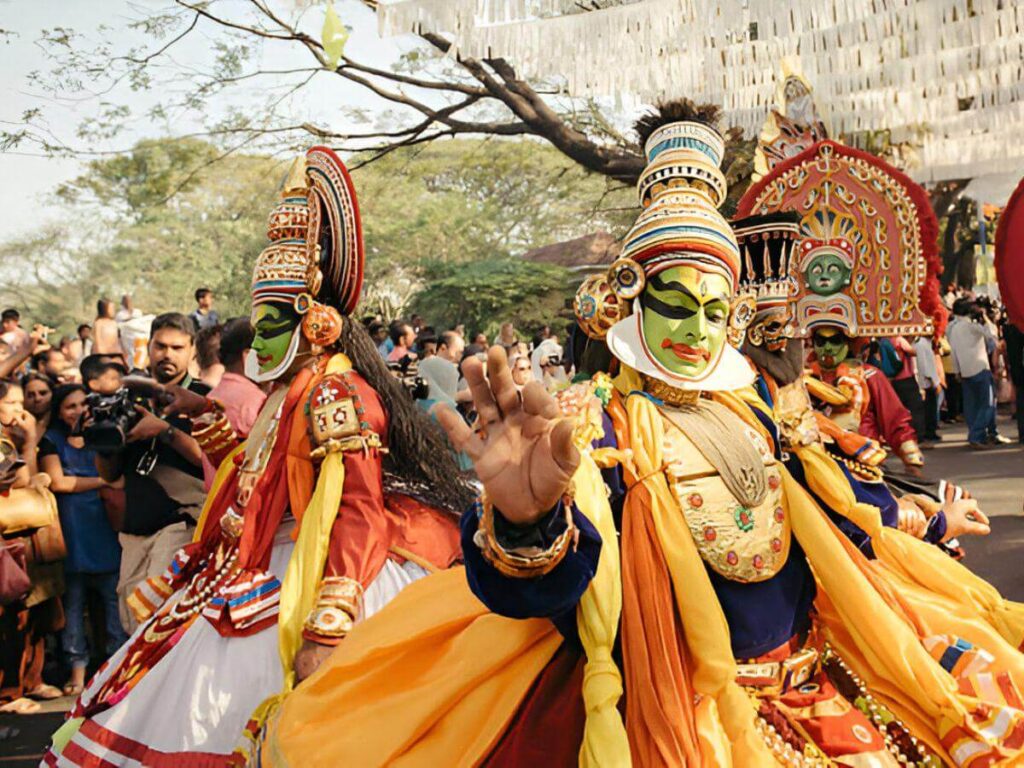
Kochi’s artistic identity developed through centuries of maritime trade and interaction between different communities.
The historic neighborhoods of Fort Kochi and Mattancherry contain churches, colonial-era buildings, traditional houses, spice warehouses, galleries and places connected with Kerala’s Jewish heritage.
Kerala’s performing arts provide another reason to visit. Watching a Kathakali performance introduces travelers to one of India’s most distinctive theatrical traditions, combining elaborate makeup, costume, facial expression, gesture, music and storytelling.
Contemporary art has also become increasingly visible in Kochi, giving the city an appealing mix of traditional and modern creative culture.
Best for: Performing arts, multicultural heritage and contemporary creativity
Recommended stay: 2 days
Other Art and Culture Destinations Worth Adding
India’s cultural map is far too large to limit to ten places. Depending on your interests, consider adding:
- Thanjavur, Tamil Nadu: Famous for Chola architecture, bronze sculpture and Tanjore painting.
- Madurai, Tamil Nadu: Known for the colorful Meenakshi Amman Temple and Tamil cultural traditions.
- Mysore, Karnataka: Royal palaces, traditional painting, silk and classical performing arts.
- Bhubaneswar, Odisha: Outstanding historic temples and traditional Odishan architecture.
- Puri and Raghurajpur, Odisha: Ideal for discovering Pattachitra painting and artisan communities.
- Ahmedabad, Gujarat: Historic architecture, textiles, museums and traditional neighborhoods.
- Lucknow, Uttar Pradesh: Famous for Nawabi culture, embroidery, architecture, poetry and cuisine.
Best Time for an Art and Culture Tour of India
For most travelers, October to March offers comfortable conditions for sightseeing across Delhi, Rajasthan, Agra, Varanasi, Khajuraho and much of central India.
South India can also be explored during this period, although regional weather varies considerably across the country.
India is vast enough that there is no single perfect season for every destination. When designing an itinerary, consider geography, festival dates and the types of cultural experiences you want to include.
How Many Days Do You Need?
A meaningful cultural trip should not try to cover the entire country at once.
For 7-10 days, concentrate on Delhi, Agra and Jaipur.
With 12-14 days, consider adding Varanasi, Udaipur or Khajuraho.
For two to three weeks, you can combine North India with places such as Hampi, Kochi or Kolkata while maintaining a more comfortable pace.
Travelers who want a broader introduction can explore Tusk Travel’s India travel guide and tour ideas before choosing a route.
Tips for Cultural Travelers in India
- Hire knowledgeable local guides at major archaeological sites. A skilled guide can explain symbols, architecture and historical context that are easy to miss when exploring alone.
- Visit markets and artisan workshops as well as monuments. India’s living crafts are just as important as its historic buildings.
- Ask permission before photographing people, religious ceremonies or artisans at work.
- Dress respectfully when visiting temples, mosques and other sacred places, and be prepared to remove shoes where required.
- Most importantly, leave room in your itinerary for unexpected discoveries. A conversation with a craftsperson or an evening musical performance may become as memorable as a famous monument.
Final Thoughts
The must-visit art and culture destinations in India demonstrate just how diverse the country’s heritage is.
Jaipur and Udaipur reveal royal Rajasthan through palaces, paintings and crafts. Varanasi presents culture as a living spiritual tradition. Khajuraho transforms sandstone into storytelling. Hampi preserves the remains of a powerful empire, while Kolkata celebrates literature, museums and modern creativity. Delhi and Agra reveal layers of Islamic, Mughal and colonial history, and Kochi introduces travelers to the multicultural heritage of India’s southern coast.
The best cultural journeys do more than connect monuments on a map. They connect architecture with people, historic art with living craftsmanship, and ancient traditions with contemporary India.
Rather than trying to see everything in one trip, choose a few regions and explore them slowly. India’s cultural heritage has developed across thousands of years. Giving yourself time to observe, listen and interact is the best way to appreciate it.
