
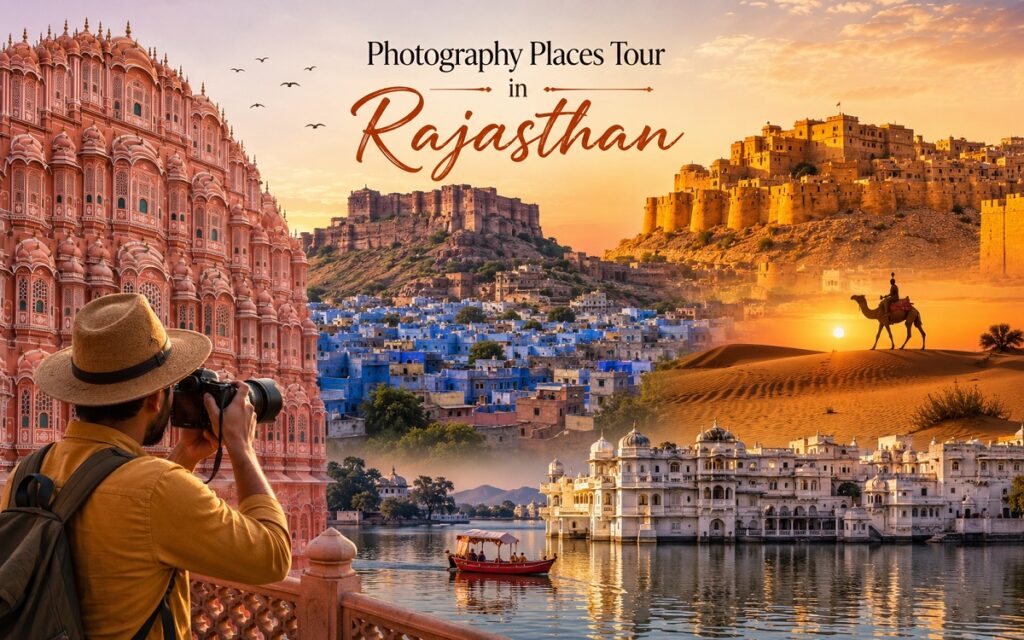
Rajasthan is one of the most visually rewarding destinations in India. From golden desert landscapes and blue-painted old quarters to ornate palaces, ancient forts, colorful markets, tribal villages, lakes, wildlife, and religious fairs, almost every part of the state offers a different photography experience.
For photographers, Rajasthan is not simply about famous monuments. Some of the strongest images come from ordinary moments: a shopkeeper opening his store in Jaipur, a camel herder crossing the Thar Desert, women carrying water near Jaisalmer, morning prayers beside Pushkar Lake, a leopard resting on granite hills, or the first sunlight touching the walls of Mehrangarh Fort.
A well-planned Rajasthan photography tour can combine architecture, street life, portraits, landscapes, wildlife, festivals, culture, and night photography within the same journey.
Whether you use a professional mirrorless camera, DSLR, compact camera, or smartphone, this complete guide covers the best places for photography in Rajasthan, the best times to photograph them, useful shooting ideas, and practical travel tips.
Why Rajasthan Is Perfect for Photography
Few destinations in India offer as much photographic variety within one region as Rajasthan.
Every city has its own visual identity. Jaipur is dominated by pink and terracotta shades. Jodhpur is famous for blue houses beneath a massive fort. Jaisalmer almost seems to merge into the surrounding desert because its buildings were constructed using golden sandstone. Udaipur is defined by lakes and white palaces, while Pushkar offers temples, ghats, pilgrims, camels, and colorful markets.
Beyond the cities, photographers can explore desert villages, wildlife reserves, Aravalli landscapes, ancient stepwells, historic forts, rural markets, and pilgrimage centers.
Rajasthan is especially rewarding for:
- Architectural photography
- Street photography
- Travel portraits
- Landscape photography
- Wildlife photography
- Festival photography
- Cultural documentation
- Night and astrophotography
- Desert photography
- Documentary photography
The most successful Rajasthan photo tours allow enough time at each destination instead of rushing between monuments. Returning to the same location during different lighting conditions can often produce completely different photographs.
Top 13 Photography Places in Rajasthan for Travelers:
1. Jaipur: Architecture, Markets and Street Photography
Jaipur is one of the best places to begin a photography tour of Rajasthan. Known as the Pink City, Jaipur combines royal architecture, historic streets, markets, forts, temples, local craftsmen, and everyday city life.
Photographers planning a dedicated visit can explore available Jaipur tours and build additional photography time into the itinerary.
Hawa Mahal
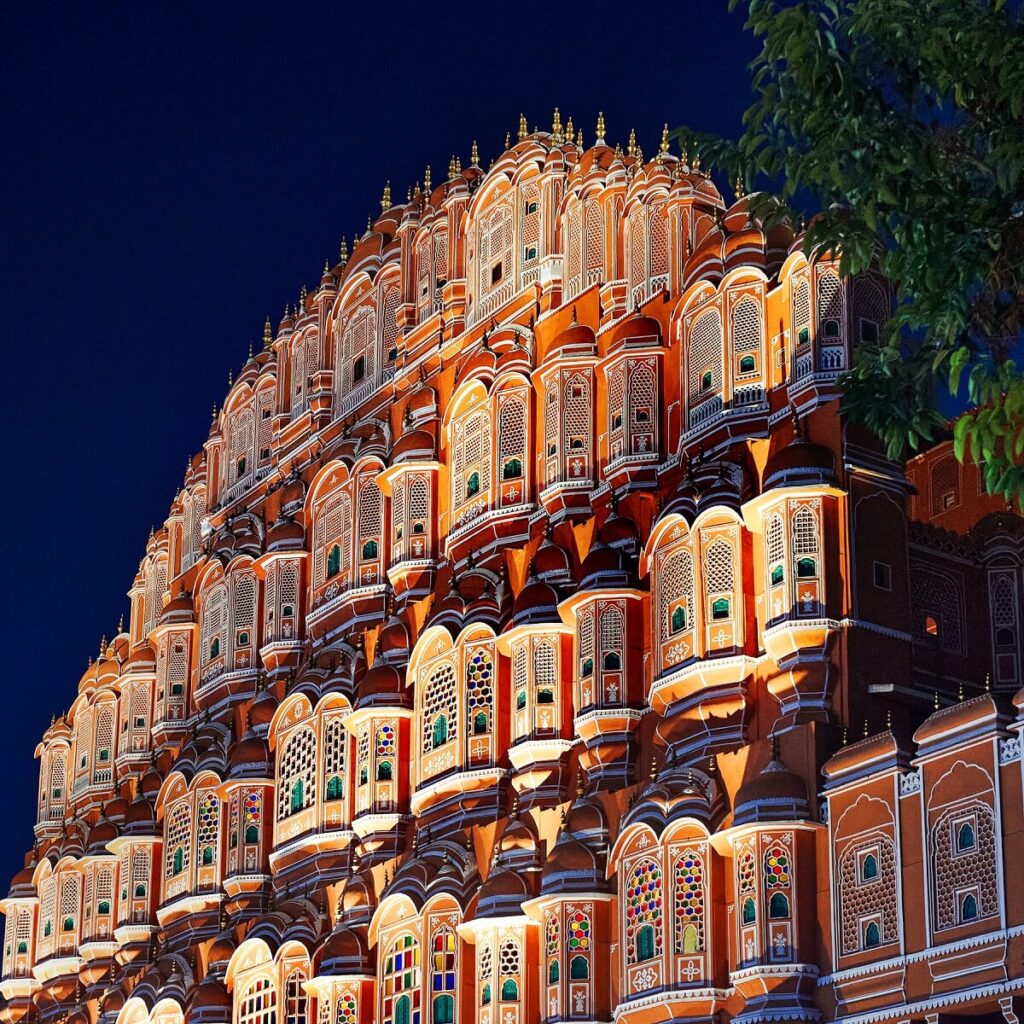
Hawa Mahal is probably Jaipur’s most photographed building.
Its intricate façade contains hundreds of small windows and balconies. Early morning is usually the best time for photography because the rising sun illuminates the front of the building.
Photographers often shoot the monument from cafés and terraces on the opposite side of the road.
A telephoto lens can help isolate individual windows and architectural patterns, while a wider lens allows you to photograph the entire façade along with Jaipur’s street activity.
Amber Fort
Amber Fort provides excellent opportunities for architectural, landscape, and detail photography.
Photograph the fort from the road below during the morning, or explore its courtyards, gateways, mirrored halls, arches, and corridors.
The geometric patterns of Ganesh Pol and the reflective decorations inside Sheesh Mahal are particularly interesting.
Panna Meena ka Kund
Close to Amber Fort, Panna Meena ka Kund is an old stepwell featuring symmetrical staircases arranged in striking geometric patterns.
It works especially well for wide-angle compositions.
Jaipur Markets
For street photographers, Johari Bazaar, Bapu Bazaar, Tripolia Bazaar, and the lanes around the old city are excellent areas.
Look for:
- Turban shops
- Flower sellers
- Vegetable markets
- Traditional jewelry stores
- Textile merchants
- Cycle rickshaws
- Spice shops
- Street food stalls
- Temple visitors
Early morning provides calmer streets, while late afternoon brings more activity and color.
Jal Mahal
Jal Mahal appears to float in Man Sagar Lake. Sunrise and early evening are the most rewarding times to photograph it.
Longer focal lengths are useful because visitors cannot normally enter the palace itself.
2. Jodhpur: Photograph the Famous Blue City
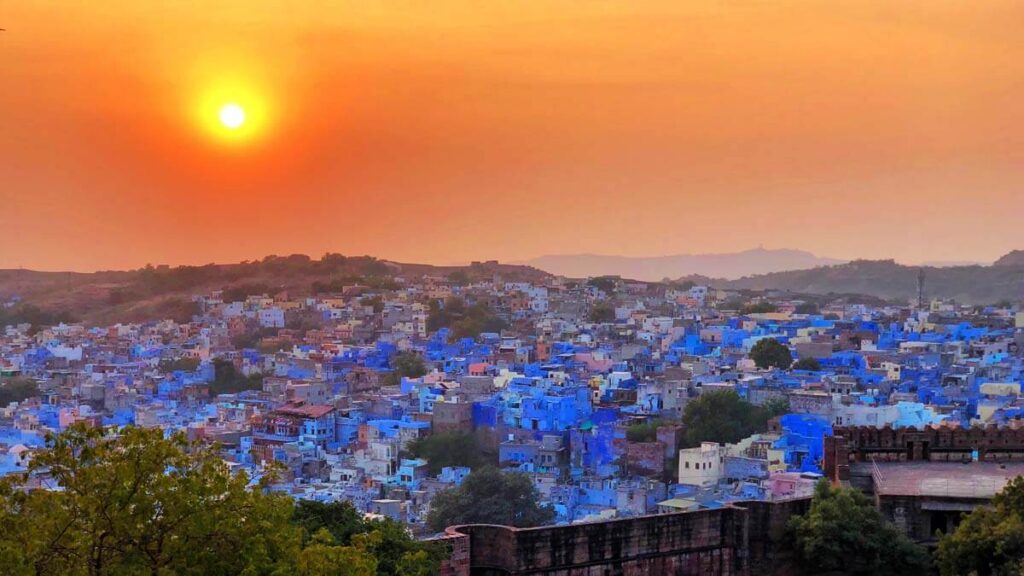
Jodhpur is instantly recognizable because of the blue-painted houses surrounding Mehrangarh Fort.
Travelers interested in spending more time photographing the city can explore Jodhpur tours.
Mehrangarh Fort
Mehrangarh is among India’s most dramatic forts.
Built high above Jodhpur, it provides panoramic views across the Blue City. From its ramparts, photographers can create wide cityscapes showing hundreds of blue houses extending toward the horizon.
Inside the fort, photograph:
- Ornamental windows
- Royal rooms
- Historic cannons
- Courtyards
- Carved stonework
- Museum collections
- Decorative doors
Late afternoon often produces warm light across the fort’s sandstone walls.
Blue City Streets
Walking through the neighborhoods below Mehrangarh can be even more interesting than photographing the fort itself.
Narrow lanes lead past blue houses, old doorways, temples, workshops, scooters, cows, and local homes.
This area is ideal for environmental portraits and street photography.
Instead of photographing people secretly, interact with residents where possible. A short conversation can lead to much more natural portraits.
Clock Tower and Sardar Market
The area surrounding Ghanta Ghar, or Clock Tower, becomes extremely lively during the day.
Photograph spice shops, textile stalls, vegetable vendors, local snacks, people negotiating prices, and traditional market scenes.
For photographers interested in everyday Rajasthan rather than only monuments, this is an essential stop.
3. Jaisalmer: Desert Photography and Golden Architecture
Jaisalmer offers an entirely different visual experience.
Located near the Thar Desert, the city is built primarily from yellow sandstone, creating its famous golden appearance.
Explore Jaisalmer tours if you want to combine city photography with desert landscapes and village experiences.
Jaisalmer Fort
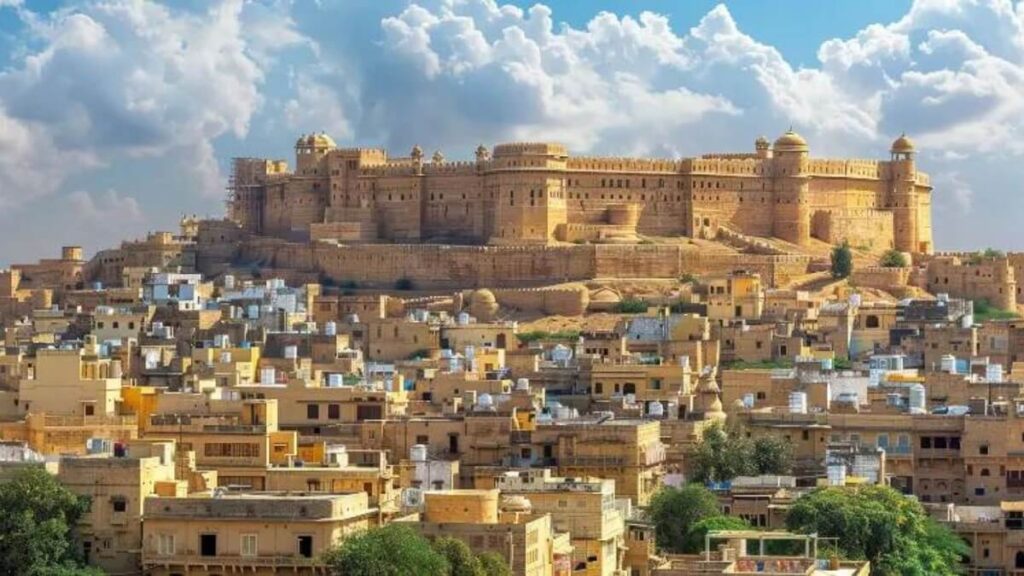
Unlike many historic forts in India, Jaisalmer Fort remains inhabited.
Inside its narrow lanes you will find houses, temples, shops, cafés, guesthouses, and residents going about their daily lives.
Excellent photography subjects include:
- Jain temple carvings
- Sandstone balconies
- Traditional doors
- Narrow lanes
- Rooftop views
- Local residents
- Evening silhouettes
Early morning is particularly attractive because the lanes are quieter.
Patwon Ki Haveli
This group of historic mansions contains extraordinary carved façades and detailed stonework.
A telephoto or medium zoom lens is useful for capturing balconies, windows, decorative screens, and repeating architectural patterns.
Gadisar Lake
Sunrise is one of the best times to visit Gadisar Lake.
Temples, pavilions, birds, reflections, and boats can all become part of your compositions.
On calm mornings, the reflections can be especially beautiful.
Sam or Khuri Sand Dunes
No Rajasthan photography tour feels complete without desert photography.
The dunes near Sam are popular and easy to access, while Khuri generally offers a quieter atmosphere.
Potential subjects include:
- Camel silhouettes
- Desert portraits
- Footprints in sand
- Dune patterns
- Sunset landscapes
- Traditional musicians
- Camps under the stars
For cleaner desert photographs, move away from crowded camel activity whenever possible.
Astrophotography in the Thar Desert
Clear nights outside Jaisalmer can offer good opportunities for photographing stars.
A sturdy tripod, wide-angle lens, and manual camera settings are essential.
Ask your camp or driver to take you farther from artificial lighting if astrophotography is one of your priorities.
4. Udaipur: Lakes, Palaces and Romantic Landscapes
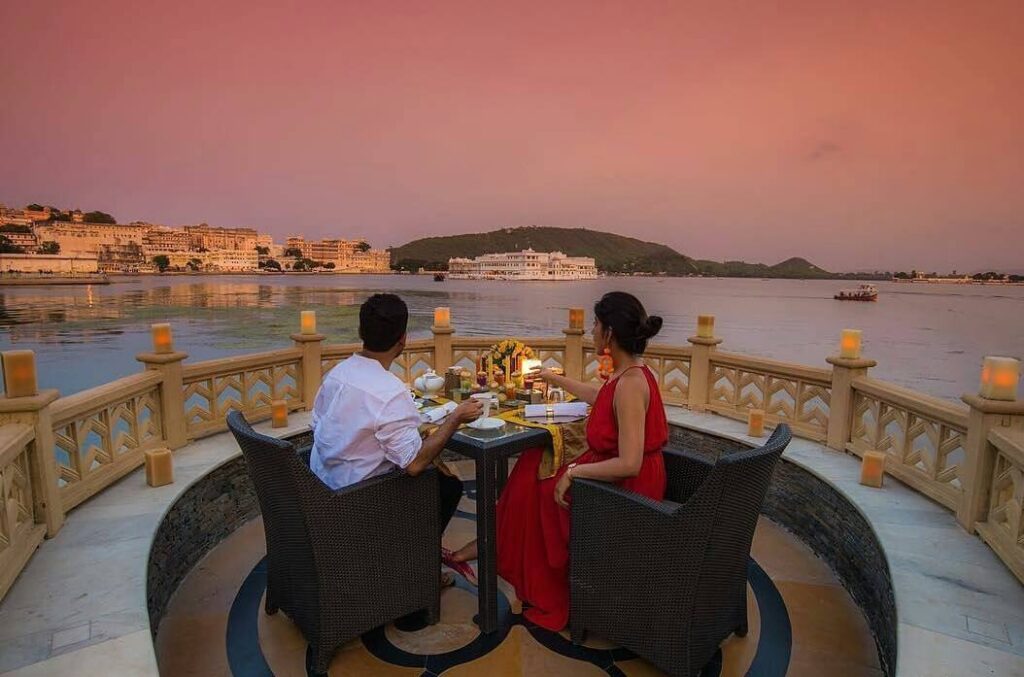
Udaipur is one of Rajasthan’s most elegant photography destinations.
Surrounded by lakes and Aravalli hills, the city is famous for white palaces, ghats, temples, rooftops, narrow lanes, and reflected light.
You can browse Udaipur tours when planning a longer stay.
Lake Pichola
Lake Pichola offers countless compositions.
Photograph City Palace rising above the lake, Jag Mandir, boats crossing the water, local ghats, and changing reflections.
Sunset is beautiful, but sunrise can be more peaceful.
City Palace
Udaipur City Palace is full of photographic details.
Look for:
- Arched windows
- Colored glass
- Mosaic work
- Courtyards
- Balconies
- Decorative tiles
- Lake views
Some indoor areas have limited light, so a camera with good high-ISO performance is useful.
Gangaur Ghat
Gangaur Ghat is one of the best places for photographing daily life near Lake Pichola.
Morning activity can include residents bathing, washing clothes, praying, feeding birds, or sitting beside the water.
Always photograph religious activities respectfully.
Ambrai Ghat
Ambrai Ghat provides an excellent view toward City Palace.
Blue hour, just after sunset, is especially rewarding when the palace lights reflect on the water.
A tripod is useful for longer exposures.
5. Pushkar: Portraits, Pilgrims and Religious Life
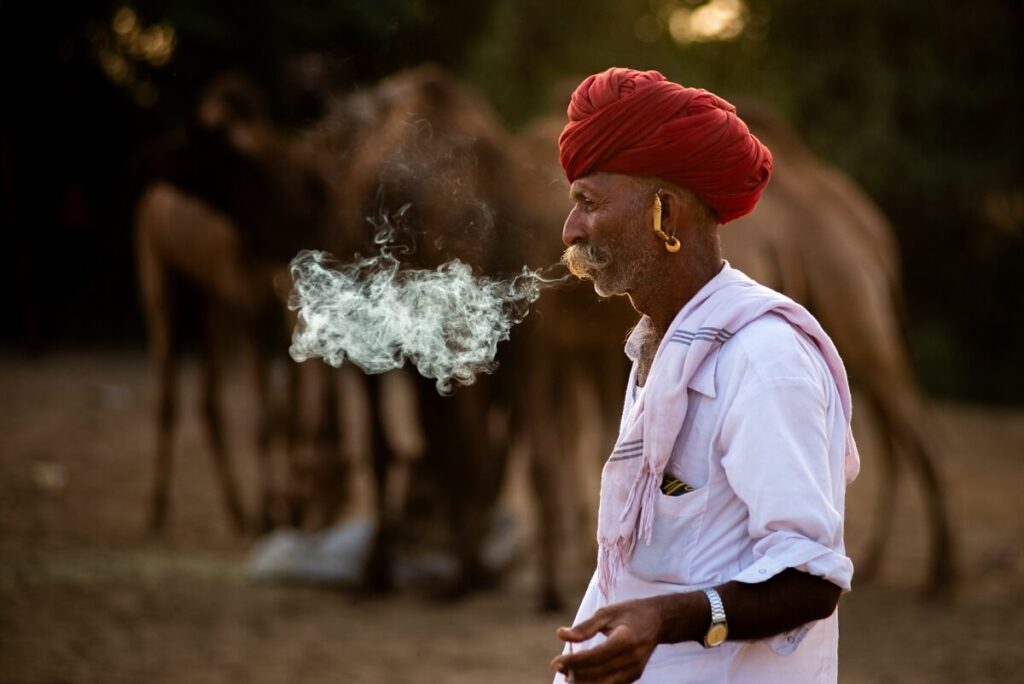
Pushkar is one of Rajasthan’s most fascinating destinations for cultural photography.
The holy lake, Brahma Temple, narrow markets, rooftop cafés, pilgrims, priests, sadhus, and surrounding desert create an enormous range of visual possibilities.
Travelers can explore Pushkar tours when designing their Rajasthan route.
Pushkar Lake and Ghats
Early morning is the best time to photograph the ghats.
The atmosphere is quieter, and soft light gradually illuminates temples surrounding the water.
You may see pilgrims performing rituals, pigeons flying over the lake, priests preparing offerings, and people beginning their day.
Certain ghats may restrict photography, especially during religious ceremonies. Check before taking pictures.
Pushkar Streets
Pushkar’s compact old town is excellent for street photography.
Interesting subjects include flower sellers, cafés, clothing stalls, musicians, pilgrims, colorful doors, and wandering cows.
Pushkar Camel Fair
If your trip coincides with the Pushkar Camel Fair, the photographic possibilities increase dramatically.
Photographers come from around the world to capture camel traders, decorated animals, competitions, rural families, musicians, pilgrims, and temporary desert camps.
Morning and evening are ideal for portraits because the light is softer and the fairgrounds are visually more dramatic.
6. Ranthambore: Wildlife Photography in Rajasthan
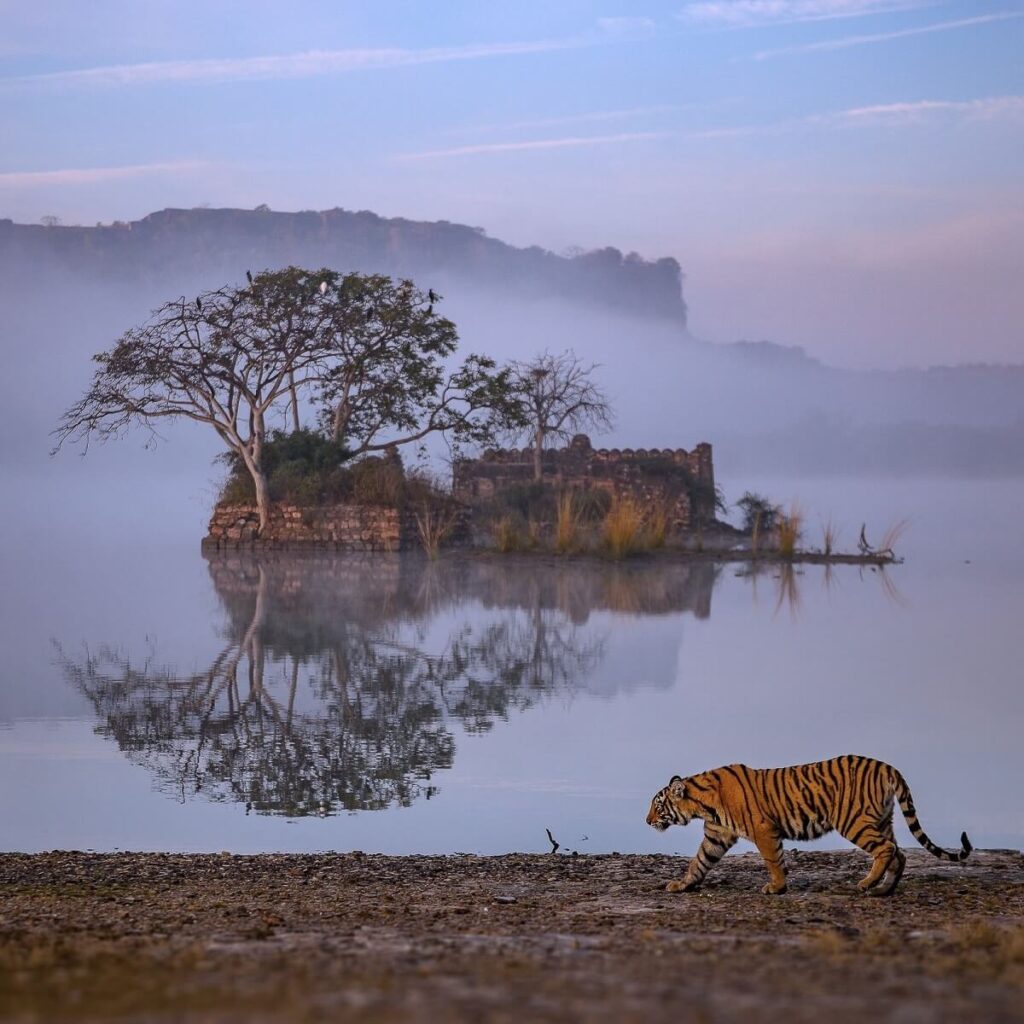
Rajasthan is not only about forts and deserts.
Ranthambore National Park is one of India’s most popular wildlife destinations and a major stop for photographers hoping to photograph Bengal tigers.
Explore available Ranthambore tours when planning your wildlife photography schedule.
Tiger Photography
Tiger sightings are never guaranteed, which is part of the challenge of wildlife photography.
When a tiger does appear, photographers may have only a short opportunity to compose the shot.
A telephoto zoom such as 100-400mm or 200-500mm is highly useful.
Do not concentrate only on close portraits. Environmental images showing a tiger walking through forest, grassland, lakes, or ancient ruins can be even more powerful.
Other Wildlife
Ranthambore also offers opportunities to photograph:
- Leopards
- Sambar deer
- Spotted deer
- Nilgai
- Sloth bears
- Crocodiles
- Langurs
- Peacocks
- Owls
- Water birds
The combination of wildlife and ruined architecture gives Ranthambore a distinctive visual atmosphere.
7. Chittorgarh: Historic Fort Photography
For dramatic fort architecture, Chittorgarh deserves a place on a Rajasthan photography itinerary.
The enormous hilltop fort contains palaces, towers, temples, reservoirs, gateways, and historic ruins spread across a large area.
You can check Chittorgarh tours when organizing the journey.
Vijay Stambh
The Victory Tower is one of the fort’s most recognizable landmarks.
Photograph it from different distances rather than only standing directly beside it. Trees, ruins, archways, or people can be used to provide scale.
Kirti Stambh
Kirti Stambh offers excellent opportunities for detail photography because of its intricate carvings.
Fort Landscapes
Chittorgarh Fort works especially well for wide-angle photography.
Late-afternoon sunlight creates strong shadows across the ruins and adds warm tones to the stone structures.
8. Mount Abu: Forests, Hills and Sunset Photography
Mount Abu feels completely different from Rajasthan’s desert cities.
Located in the Aravalli Range, it offers forests, rocky landscapes, lakes, viewpoints, temples, and cooler weather.
Photography-focused travelers can include Mount Abu tours while exploring southern Rajasthan.
Nakki Lake
Morning is ideal for photographing reflections around Nakki Lake.
Boats, surrounding hills, and changing weather can create attractive landscape compositions.
Dilwara Temples
The marble carvings of the Dilwara Jain Temples are extraordinary, but photography rules can be strict.
Always check current restrictions before attempting to photograph temple interiors.
Sunset Point
Sunset Point offers panoramic views across the surrounding hills.
Instead of photographing only the sun, use rock formations, trees, and people as foreground elements.
9. Bundi: A Hidden Gem for Photography
Bundi is frequently overlooked by travelers rushing between Rajasthan’s better-known cities, but photographers often appreciate its quieter streets and traditional atmosphere.
The town offers blue houses, historic stepwells, murals, narrow lanes, markets, and an impressive palace.
Bundi Palace
The palace contains some remarkable murals and architectural details.
Its elevated position also provides views across Bundi.
Stepwells
Raniji Ki Baori is one of the best-known stepwells in town.
Symmetry, stairways, pillars, and shadow patterns offer excellent possibilities for architectural photography.
Old Town
Bundi is ideal for slow street photography.
The relatively compact old town makes it easy to wander without a fixed plan and photograph doors, workshops, temples, homes, and neighborhood scenes.
10. Bikaner: Old City, Camels and Desert Culture
Bikaner combines royal heritage with desert culture.
Junagarh Fort is its main landmark, but photographers should also spend time in the city’s old neighborhoods.
Junagarh Fort
Unlike many Rajasthan forts, Junagarh was built on relatively flat land.
Its interiors contain highly decorated halls, courtyards, windows, and painted surfaces.
Rampuria Havelis
The red sandstone Rampuria Havelis are among Bikaner’s most photogenic architectural landmarks.
Visit early in the morning for cleaner compositions and softer light.
National Research Centre on Camel
Photographers interested in Rajasthan’s camel culture can also explore opportunities around Bikaner, especially in rural areas outside the city.
11. Jawai: Leopard and Rural Photography
Jawai has become one of Rajasthan’s most exciting destinations for wildlife photographers.
The region is known for leopards living among dramatic granite hills.
Unlike dense forest reserves, Jawai’s relatively open terrain can provide interesting opportunities to photograph leopards within a broader landscape.
The area is also home to Rabari pastoral communities, creating opportunities for respectful cultural photography.
A successful Jawai photography itinerary should include several drives rather than relying on a single safari.
12. Keoladeo National Park: Bird Photography
Near Bharatpur, Keoladeo National Park is among India’s famous birding destinations.
Winter brings large numbers of migratory birds.
Photographers can explore the park by bicycle, rickshaw, or on foot in designated areas.
Potential subjects include:
- Painted storks
- Kingfishers
- Herons
- Egrets
- Pelicans
- Owls
- Raptors
- Waterfowl
A long telephoto lens is useful, although shorter focal lengths can create strong environmental images showing birds within wetlands.
13. Rural Rajasthan: Where Documentary Photography Comes Alive
Major monuments attract most visitors, but villages often provide some of the most meaningful photography experiences.
Areas around Jodhpur, Jaipur, Pushkar, Jaisalmer, and Udaipur provide access to rural communities where traditional farming, pottery, weaving, animal herding, and handicrafts remain part of everyday life.
Village photography should never feel like photographing people as exhibits.
Ask permission for close portraits, interact with families, and consider working with a knowledgeable local guide who can facilitate respectful introductions.
Good documentary photography depends as much on trust as technical skill.
Best Time for a Rajasthan Photography Tour:
The best overall period for photography in Rajasthan is generally October to March.
Temperatures are more comfortable, skies are often clearer, and outdoor photography is easier.
October to November
Excellent for general travel photography.
Post-monsoon landscapes may retain some greenery, particularly around Udaipur and the Aravallis.
Pushkar Fair usually occurs during this broader seasonal period, although exact dates vary by year.
December to February
These are among the most comfortable months for exploring Rajasthan.
Mornings can be cold, particularly in desert regions.
Winter is also excellent for bird photography around Bharatpur.
March
March can still be enjoyable, although daytime temperatures begin increasing.
Holi can provide extraordinary photography opportunities, but photographers must protect cameras from colored powder and water.
April to June
Summer temperatures can become extreme.
Photography remains possible, but early morning and evening shooting schedules are strongly recommended.
July to September
Monsoon brings dramatic skies and greener landscapes.
Udaipur, Bundi, Kota, and Mount Abu can look particularly attractive during or shortly after rain.
Best Camera Equipment for Rajasthan Photography:
You do not need to carry every lens you own.
A simple, flexible kit is often better.
Wide-angle lens
Useful for forts, palaces, interiors, stepwells, street scenes, and landscapes.
A focal range around 16-35mm is practical for full-frame cameras.
Standard zoom
A 24-70mm or similar lens can handle a large portion of Rajasthan travel photography.
It is useful for monuments, portraits, markets, food, streets, and general travel images.
Telephoto lens
A 70-200mm works well for portraits, architectural details, distant landscapes, and candid street scenes.
Wildlife photographers should consider longer lenses such as 100-400mm or 200-500mm.
Tripod
Useful for:
- Sunrise
- Sunset
- Blue-hour cityscapes
- Astrophotography
- Long exposures
- Night photography
Check whether tripods are permitted before entering protected monuments.
Extra batteries
Cold mornings, long days, video recording, and mirrorless cameras can drain batteries quickly.
Carry several fully charged batteries.
Memory cards and backup drive
Rajasthan is highly photogenic, and photographers can easily shoot hundreds of images each day.
Back up files regularly rather than keeping everything on a single memory card.
Suggested 12-Day Rajasthan Photography Tour:
A practical first photography itinerary could follow this route:
Day 1: Arrive Delhi
Day 2: Delhi to Jaipur, evening street photography
Day 3: Jaipur architecture and markets
Day 4: Jaipur to Pushkar
Day 5: Pushkar sunrise and onward to Jodhpur
Day 6: Jodhpur Blue City and Mehrangarh Fort
Day 7: Jodhpur to Jaisalmer
Day 8: Jaisalmer Fort and old city
Day 9: Desert photography near Jaisalmer
Day 10: Fly or travel onward toward Udaipur
Day 11: Udaipur lakes, palace and old city
Day 12: Udaipur sunrise and departure
Photographers with more time can extend the route to Ranthambore, Chittorgarh, Bundi, Jawai, Bikaner, or Mount Abu.
Travelers combining Rajasthan with western or central India may also consider visiting Gujarat. For example, Vadodara tours can be added when extending a journey toward Gujarat’s heritage sites and cultural destinations.
Rajasthan Photography Tour for Different Types of Photographers:
For architecture photographers
Prioritize:
Jaipur, Jodhpur, Jaisalmer, Udaipur, Chittorgarh, Bundi and Bikaner.
For street photographers
Focus on:
Jaipur’s old city, Jodhpur’s Blue City, Pushkar, Jaisalmer Fort, Bundi and Bikaner markets.
For wildlife photographers
Include:
Ranthambore, Jawai and Keoladeo National Park.
For landscape photographers
Consider:
Jaisalmer desert, Jawai hills, Udaipur lakes, Mount Abu and the Aravalli countryside.
For portrait photographers
Pushkar, Jodhpur, rural Rajasthan and local markets provide many opportunities, provided photography is done respectfully and with permission.
Frequently Asked Questions About Rajasthan Photography Tours
Which is the best place for photography in Rajasthan?
There is no single best location because each destination offers something different. Jaipur is excellent for architecture and markets, Jodhpur for blue-city street scenes, Jaisalmer for desert photography, Udaipur for lake landscapes, Pushkar for cultural photography, and Ranthambore for wildlife.
How many days are enough for a Rajasthan photography tour?
Around 10 to 14 days is ideal for a first photography-focused trip covering Jaipur, Pushkar, Jodhpur, Jaisalmer and Udaipur. Wildlife photographers may need additional days for Ranthambore or Jawai.
What is the best month for photography in Rajasthan?
November through February offers comfortable weather and generally good outdoor conditions. October and March are also excellent for many itineraries.
Can I photograph people in Rajasthan?
Street photography is common, but permission is recommended when photographing individuals closely. Always respect requests not to be photographed, especially during religious or personal moments.
Is Rajasthan good for smartphone photography?
Yes. Rajasthan’s strong colors, architecture, street scenes and landscapes work extremely well with smartphones. Modern phones are particularly effective for wide-angle architecture, low-light cityscapes and quick street photography.
Can photography tours be customized?
Yes. Photography trips work best when the schedule is designed around sunrise, sunset and specific interests such as wildlife, architecture, festivals or portraits rather than following a standard sightseeing schedule.
Is Jaisalmer good for astrophotography?
Yes. Desert areas outside Jaisalmer can offer much darker skies than the city. Choose a location away from camp lights and check moon phases when planning serious astrophotography.
Final Thoughts
A photography tour in Rajasthan is more than a journey between beautiful monuments. It is an opportunity to document one of India’s most visually diverse regions through architecture, landscape, wildlife, religious traditions, markets, portraits, food, craftsmanship, and everyday life.
Jaipur provides monumental architecture and colorful streets. Jodhpur offers blue neighborhoods beneath an imposing fort. Jaisalmer brings golden sandstone and the open Thar Desert. Udaipur adds lakes and elegant palaces, while Pushkar introduces spiritual life and powerful portrait opportunities. Ranthambore and Jawai bring wildlife into the story, and places such as Bundi, Bikaner, Chittorgarh and Mount Abu reveal quieter sides of Rajasthan.
The key is to travel slowly.
Leave space in the itinerary for early mornings, sunset sessions, unplanned walks and second visits to promising locations. Rajasthan rewards photographers who observe rather than rush.
The best photograph may not come from the palace you planned to visit. It may appear while walking through a market, stopping beside a desert road, talking to an artisan, watching morning light reach a temple doorway, or waiting quietly beside a lake.
That unpredictability is exactly what makes a Rajasthan photography tour such an extraordinary experience.
