
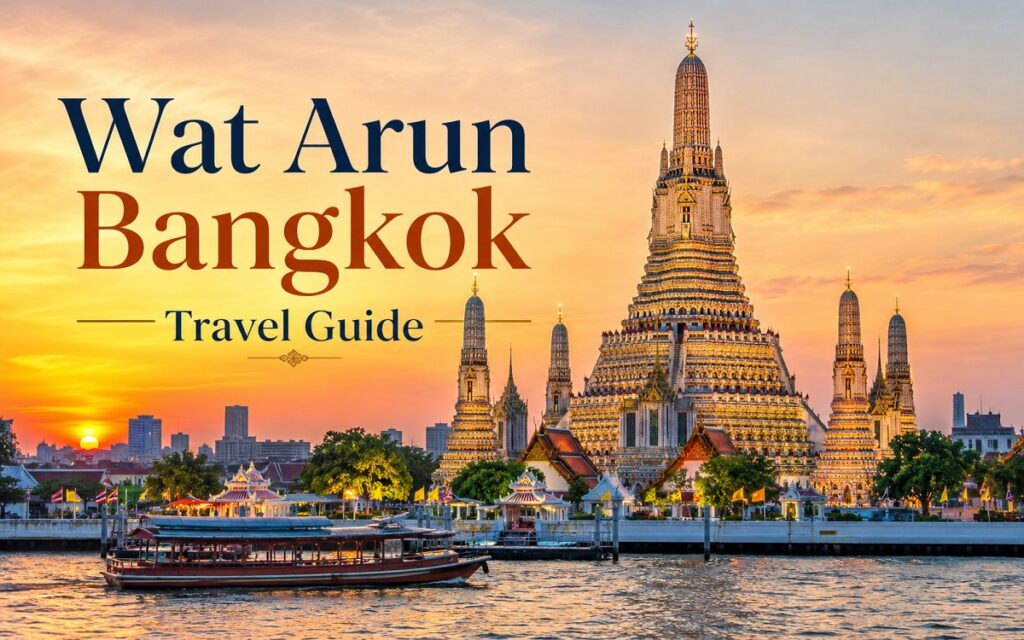
Bangkok is a city where golden temples, modern towers, lively markets, and traditional riverside communities exist side by side. Among its many landmarks, few are as instantly recognizable as Wat Arun, the magnificent Buddhist temple rising from the western bank of the Chao Phraya River.
Also known as the Temple of Dawn, Wat Arun is famous for its tall central tower, intricate porcelain decorations, steep staircases, and beautiful riverside setting. Whether viewed from a ferry crossing the river, explored closely during the daytime, or admired while illuminated after sunset, the temple remains one of the most memorable sights in Thailand.
A visit to Wat Arun is not only about taking photographs. It is an opportunity to experience Thai architecture, Buddhist traditions, royal history, and the slower rhythm of Bangkok’s historic Thonburi side.
This travel guide to visiting Wat Arun, Bangkok, covers everything you need to know, including its history, entrance fee, opening hours, dress code, transportation options, photography tips, nearby attractions, and the best time to visit.
Quick Information About Wat Arun
- Official name: Wat Arun Ratchawararam Ratchawaramahawihan
- Common name: Wat Arun or Temple of Dawn
- Location: Bangkok Yai district, on the west bank of the Chao Phraya River
- Opening hours: Daily from 8:00 a.m. to 6:00 p.m.
- Entrance fee for foreign visitors: 200 Thai baht
- Recommended visiting time: Around one to two hours
- Dress code: Shoulders and knees should be covered
- Best time to visit: Early morning or late afternoon
The Tourism Authority of Thailand currently lists Wat Arun as open daily between 8:00 a.m. and 6:00 p.m., with an entrance fee of 200 baht for foreign visitors. Because admission policies and operating hours can change during ceremonies or maintenance, it is sensible to verify the details shortly before your visit.
Why Is Wat Arun Famous?
Wat Arun is best known for its central Khmer-style tower, or prang, which rises dramatically above the surrounding temple complex. The tower is decorated with thousands of pieces of coloured porcelain, ceramic fragments, seashells, floral designs, mythological figures, and ornamental patterns.
From a distance, the surface appears pale and elegant. When viewed closely, however, it reveals an extraordinary amount of detail. Tiny ceramic pieces have been arranged into flowers, leaves, geometric patterns, and decorative borders.
The temple is especially striking because of its position beside the Chao Phraya River. The water creates a natural foreground, while Bangkok’s historic buildings and temple roofs frame the skyline behind it.
Although its English name is the Temple of Dawn, Wat Arun is equally impressive at sunset. From the opposite side of the river, the temple’s silhouette stands against the changing sky before becoming illuminated after dark.
Wat Arun also remains an active Buddhist temple. Monks live and worship within the complex, religious ceremonies take place throughout the year, and local devotees visit to pray and make offerings. Visitors should therefore treat it as a sacred space rather than simply a tourist attraction.
The History of Wat Arun
The history of Wat Arun stretches back to the Ayutthaya period, before Bangkok became the capital of Thailand. The temple was originally known as Wat Makok, possibly referring to the olive-like plants once found in the area.
Its importance increased during the late eighteenth century, when King Taksin established Thonburi as the capital after the fall of Ayutthaya. According to tradition, the king arrived at the temple around dawn, inspiring its later association with the rising sun.
For a period, the temple was known as Wat Chaeng, meaning the Temple of Dawn. It also temporarily housed the Emerald Buddha before the sacred image was moved across the river to Wat Phra Kaew within the Grand Palace complex.
The central prang seen today was enlarged and developed during the early Rattanakosin period, particularly under Kings Rama II and Rama III. Its design reflects Khmer architectural influences while incorporating distinctively Thai decorative elements.
Wat Arun takes its name from Aruna, the Hindu deity associated with the glow of the rising sun. The temple therefore carries layers of Buddhist, Hindu, royal, and artistic symbolism.
Architecture of Wat Arun:
Wat Arun’s architecture is one of the main reasons to visit. While many Bangkok temples are known for glittering gold surfaces, Wat Arun has a lighter, more textured appearance.
The Central Prang
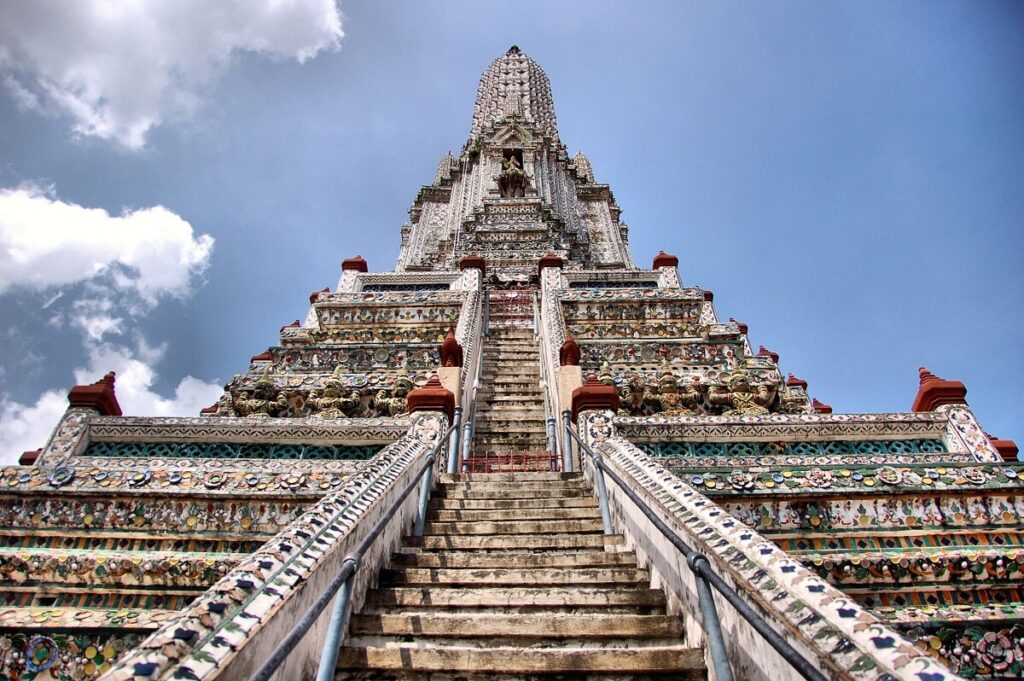
The central prang dominates the temple complex. It represents Mount Meru, the sacred mountain considered the centre of the universe in Hindu and Buddhist cosmology.
The tower is surrounded by four smaller prangs, creating a balanced and symbolic arrangement. Together, the structures represent a cosmic landscape inhabited by deities and mythological beings.
Rows of sculpted figures appear to support the different levels of the tower. These include demons, monkeys, warriors, animals, and guardian figures.
Porcelain and Ceramic Decoration
One of the most distinctive features of Wat Arun is its porcelain decoration. Much of the material is believed to have arrived in Thailand as ballast on trading ships from China.
Rather than discarding the broken ceramics, craftspeople incorporated them into the temple’s surface. The result is a form of decorative recycling that has become one of Bangkok’s most celebrated architectural details.
Look closely and you will notice pieces of bowls, plates, cups, and ceramic flowers embedded in the plaster.
Steep Staircases
Visitors can climb part of the central prang using steep stone steps. Access may occasionally be restricted, and the permitted climbing height can vary depending on conservation work.
The stairs are narrow and sharply inclined, so visitors should move carefully and use the handrails. The climb offers elevated views over the temple roofs, the Chao Phraya River, Wat Pho, and the Grand Palace area.
The descent can feel more difficult than the climb. Wear secure footwear and avoid attempting the stairs during heavy rain.
The Ordination Hall
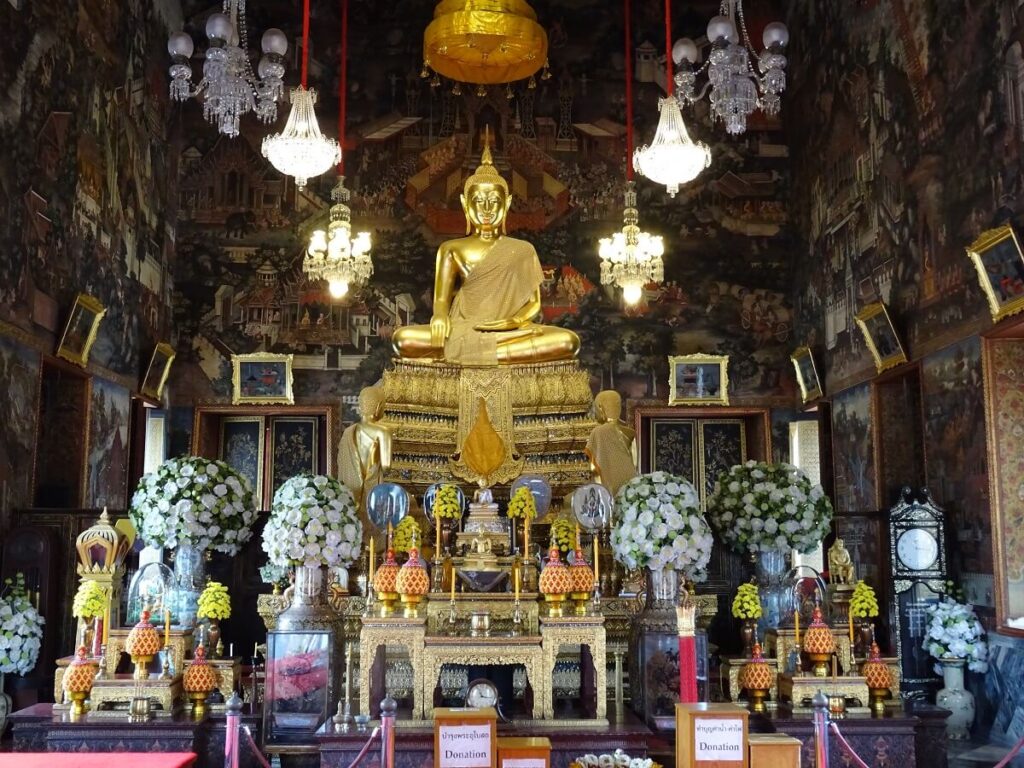
The ordination hall, or ubosot, is another important part of Wat Arun. It contains a principal Buddha image and is surrounded by rows of seated Buddha statues.
The hall’s quieter atmosphere contrasts with the busy central tower. Take time to observe the murals, decorative doors, roof details, and worship practices.
Shoes must generally be removed before entering sacred interior spaces. Place them neatly outside and avoid blocking entrances.
Wat Arun Opening Hours
Wat Arun is generally open every day from 8:00 a.m. until 6:00 p.m. The ticket counter may stop admitting visitors shortly before closing, so arriving by 5:00 p.m. is safer than reaching the temple at the last minute.
Hours may be adjusted during religious festivals, royal events, renovation work, or special ceremonies.
The exterior of the temple can still be admired from across the river after the complex closes. In fact, watching Wat Arun become illuminated at dusk is one of the best free experiences in Bangkok.
Wat Arun Entrance Fee
The published entrance fee for foreign visitors is currently 200 Thai baht per person. Thai nationals may have different admission conditions.
Carry some cash in smaller denominations because cash remains useful for temple tickets, ferries, refreshments, donations, and local transport.
The entrance ticket normally provides access to the main visitor areas of the temple complex. Personal expenses such as costume rental, guided tours, photography services, drinks, and souvenirs are separate.
Best Thailand Holiday Packages:
- 4-Day Bangkok City Tour Package
- 4-Day Bangkok and Pattaya Travel Itinerary
- 8-Day Thailand Adventure Holiday Package
- 6-Day Thailand Tour Itinerary
Best Time to Visit Wat Arun
The best time to visit Wat Arun depends on whether your priority is comfortable sightseeing, photography, or seeing the temple illuminated.
Early Morning
Arriving between 8:00 a.m. and 9:00 a.m. is ideal for avoiding the strongest heat and the largest tour groups.
Morning light highlights the details of the porcelain decoration, and the temple grounds generally feel calmer. This is the best option for travellers who want to explore the architecture closely.
Despite the name Temple of Dawn, the official visitor area does not usually open at sunrise. You can still photograph the temple from the opposite riverbank before opening hours.
Late Afternoon
Late afternoon offers warmer light and softer shadows. Visiting around 4:00 p.m. allows enough time to explore before closing, after which you can cross the river and wait for sunset.
This creates an excellent two-part experience: first seeing the temple closely, then viewing its full riverside silhouette from across the Chao Phraya.
Sunset and Evening
The western side of the river is not always the best place to photograph Wat Arun at sunset because the most famous panoramic view is from the eastern bank.
After your daytime visit, take the cross-river ferry to the Tha Tien area. Several riverside restaurants, public viewpoints, and small lanes offer views of the temple.
As daylight fades, Wat Arun’s towers become illuminated, creating one of Bangkok’s most atmospheric evening scenes.
Weekdays Versus Weekends
Weekday mornings are usually quieter than weekends and Thai public holidays. Tour groups often arrive from mid-morning onwards.
During major Buddhist festivals, the temple may be busier but also more culturally interesting. Religious activities should be observed respectfully and without interrupting worshippers.
How to Reach Wat Arun:
Wat Arun is located in the Thonburi area on the west bank of the Chao Phraya River. Reaching it by boat is usually the most scenic and enjoyable option.
By MRT and Ferry
One of the easiest routes is to take Bangkok’s MRT Blue Line to Sanam Chai Station.
From the station, walk through the historic area towards Tha Tien Pier. The walk takes roughly 10 to 15 minutes, depending on your pace and the exit used.
From Tha Tien Pier, take the short cross-river ferry directly to Wat Arun Pier. The crossing lasts only a few minutes and gives you a beautiful first view of the temple.
This route also makes it easy to combine Wat Arun with Wat Pho, the Grand Palace, Pak Khlong Talat flower market, or Museum Siam.
By Chao Phraya Express Boat
The Chao Phraya Express Boat is convenient for visitors staying near riverside areas such as Sathorn, Silom, Bang Rak, or Khao San Road.
Depending on the boat service, you may need to get off near Tha Tien and take the cross-river ferry. Check the flag colour, route map, and stopping pattern before boarding, as not every boat stops at every pier.
The river journey is part of the experience. Along the way, you can see hotels, old warehouses, temples, bridges, local houses, and modern developments.
By Tourist Boat
The hop-on, hop-off tourist boat connects several major riverside attractions. It is generally more expensive than local ferries but offers English announcements, route maps, and easier navigation for first-time visitors.
It can be practical when visiting several riverside attractions in one day.
By Taxi or Ride-Hailing Service
A metered taxi or ride-hailing car can take you directly to Wat Arun by road. This is convenient for families, elderly travellers, or visitors carrying bags.
However, road traffic in Bangkok can be unpredictable. A seemingly short journey may take much longer during rush hour.
Enter the full temple name or address in your navigation app, as searching only for “Temple of Dawn” may occasionally produce less precise results.
By Tuk-Tuk
A tuk-tuk ride can be enjoyable for a short distance, but agree on the fare before starting. Be cautious if a driver claims the temple is closed and offers to take you to shops, tailors, or alternative attractions.
Check the official opening information yourself rather than relying on unsolicited advice from drivers or strangers.
Wat Arun Dress Code
Wat Arun is an active Buddhist temple, and visitors are expected to dress respectfully.
Your clothing should cover:
- Shoulders
- Upper arms
- Chest
- Knees
Avoid sleeveless tops, crop tops, transparent clothing, very short skirts, short shorts, and clothing with offensive images or words.
Lightweight trousers, long skirts, loose dresses, and shirts with sleeves work well in Bangkok’s warm climate.
Cover-ups or suitable garments may sometimes be available near the entrance, but it is better to arrive appropriately dressed. Visitor guidance consistently advises covering the shoulders and knees inside the temple complex.
Bring socks only if you prefer not to walk barefoot when shoes must be removed. Remember that socks may become dirty on temple floors.
Temple Etiquette and Rules
- Respectful behaviour is essential when visiting Wat Arun.
- Remove your shoes before entering halls where required. Avoid pointing your feet towards Buddha images, monks, or shrines. In Thai culture, the feet are considered the lowest and least respectful part of the body.
- Do not touch Buddha statues or climb on religious structures unless an area is clearly open for visitors.
- Keep your voice low, particularly inside prayer halls. Silence your phone and avoid loud conversations.
- When sitting on the floor, tuck your feet behind you or sit cross-legged without pointing your soles towards the altar.
- Never interrupt monks or worshippers for photographs. Women should avoid direct physical contact with Buddhist monks.
- Public displays of affection should be avoided within the temple.
- Drone photography is not appropriate without formal permission, and professional equipment may be subject to additional rules.
What to See Inside Wat Arun:
Most visitors focus on the central prang, but the wider temple complex deserves attention.
The Main Tower
Walk slowly around the central prang to appreciate the ceramic decoration from different angles. The patterns change depending on the light and viewing distance.
Each side offers different photographic compositions, with smaller towers, statues, trees, and temple roofs creating natural frames.
Guardian Figures
Large guardian statues stand near entrances and gates. Their expressive faces, elaborate clothing, weapons, and colourful details connect Wat Arun with Thai mythology and religious symbolism.
Buddha Images
Several halls contain Buddha images in different postures. Observe how local visitors bow, light incense, place flowers, and make merit.
Photography may be restricted in certain areas, so check signs before taking pictures.
Chinese-Style Statues
The temple grounds include stone figures influenced by Chinese artistic traditions. These reflect Bangkok’s long commercial and cultural connections with China.
Riverside Area
The riverside edge of the temple offers views towards Wat Pho, the Grand Palace area, and passing boats.
It is a pleasant place to pause, especially when a breeze comes off the river.
Monastic Buildings
Parts of the complex are used by monks and are not intended as tourist attractions. Respect private or restricted areas and follow signs.
Photography Tips for Wat Arun:
Wat Arun is one of Bangkok’s most photographed landmarks, but thoughtful planning can make a significant difference.
Photograph the Temple from Across the River
For the classic full-temple view, photograph Wat Arun from the eastern bank of the Chao Phraya River near Tha Tien.
Sunset creates colourful skies behind or around the temple, while blue hour produces a rich contrast between the illuminated tower and the deepening sky.
Use the Ferry as a Viewpoint
The short ferry crossing provides excellent angles of the temple and river. Keep your camera ready but hold it securely, especially when boarding or leaving the boat.
Capture the Details
Do not limit yourself to wide-angle photographs. Look for porcelain flowers, guardian figures, bells, carved doors, roof decorations, and reflections.
A standard smartphone camera is sufficient for many of these details.
Avoid Harsh Midday Light
Between late morning and early afternoon, the sun can create strong highlights and deep shadows. Morning and late-afternoon light usually produces more balanced images.
Be Patient
Wat Arun is popular, so completely empty photographs may be difficult. Wait for a short gap between groups rather than blocking pathways.
Respect Worshippers
Never ask someone to move while they are praying. Avoid photographing people closely without permission.
Thai Costume Photography at Wat Arun
Thai traditional costume rental has become popular around Wat Arun. Several nearby shops rent colourful outfits and may offer hairstyling, accessories, makeup, or professional photography.
The temple’s pale porcelain towers create a beautiful background for traditional clothing, making the experience especially popular with Thai visitors and international travellers.
Choose a costume that allows you to walk comfortably and remains respectful for a religious setting. Avoid blocking staircases, doors, prayer areas, or narrow pathways during a photo session.
Prices vary depending on fabric quality, accessories, rental duration, and whether professional photography is included.
How Long Do You Need at Wat Arun?
Most travellers need around one to two hours to explore Wat Arun.
Allow approximately one hour for a straightforward visit covering the main tower, temple grounds, ordination hall, and riverside.
Plan closer to two hours if you want to study the architecture, climb the permitted stairs, take photographs, rent Thai clothing, or spend time observing worship rituals.
Add another hour or more if you plan to cross the river, have a drink, and wait for sunset.
Suggested Wat Arun Itinerary:
Morning Visit
Begin at Sanam Chai MRT Station and walk to Wat Pho. Explore the Reclining Buddha and surrounding stupas before continuing to Tha Tien Pier.
Cross the river by ferry and enter Wat Arun shortly after opening.
Spend one to two hours exploring the temple, then continue into the Thonburi neighbourhood or take a canal tour.
This schedule helps you avoid the strongest afternoon heat.
Afternoon and Sunset Visit
Visit the Grand Palace or Wat Pho earlier in the day.
Cross to Wat Arun around 3:30 or 4:00 p.m. Explore the temple before closing, then return across the river.
Find a riverside viewpoint or restaurant and watch the temple change from a pale daytime monument into an illuminated evening landmark.
Attractions Near Wat Arun:
Wat Arun can be combined with several of Bangkok’s most important attractions.
1. Wat Pho
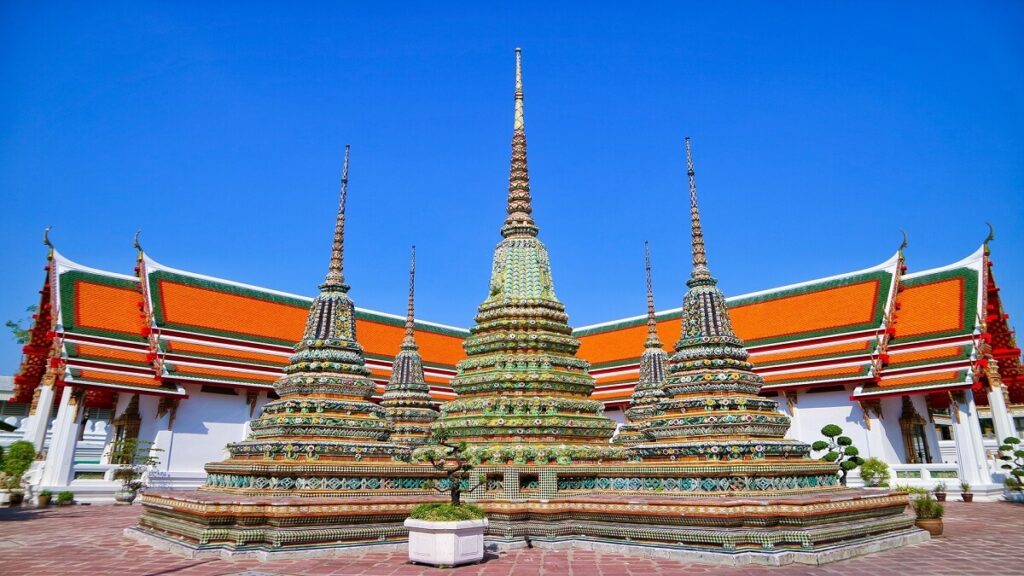
Located directly across the river, Wat Pho is famous for its enormous Reclining Buddha, decorative stupas, historic murals, and traditional massage school.
It is one of the easiest attractions to combine with Wat Arun.
2. The Grand Palace and Wat Phra Kaew
The Grand Palace is a short distance from Tha Tien. Within its grounds, Wat Phra Kaew houses the revered Emerald Buddha.
Allow at least two hours for the complex and follow its stricter dress requirements.
3. Museum Siam
Museum Siam presents Thai history, identity, and culture through interactive exhibitions. It is close to Sanam Chai MRT Station and provides a comfortable air-conditioned break.
4. Pak Khlong Talat Flower Market
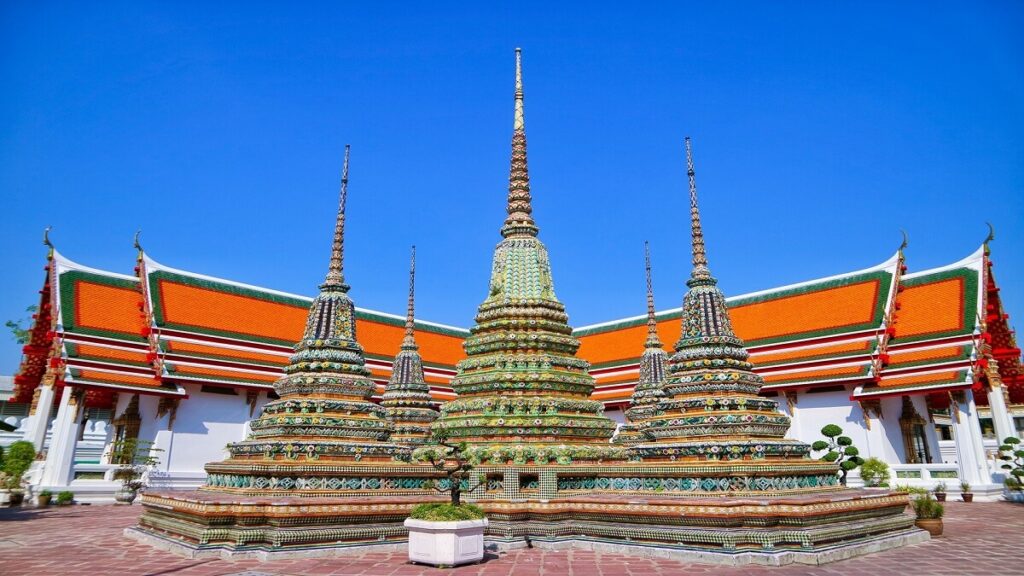
Bangkok’s famous flower market operates around the clock, although activity levels vary throughout the day.
Vendors sell orchids, marigolds, roses, lotus flowers, garlands, fruit, and vegetables. It is especially atmospheric in the evening and early morning.
5. Thonburi Canals
A long-tail boat tour through the Thonburi canals provides a different perspective on Bangkok. You may see wooden houses, small temples, waterside gardens, local communities, and monitor lizards.
Tours can often be arranged from riverside piers, but prices should be agreed upon clearly.
6. Santa Cruz Church and Kudichin Community
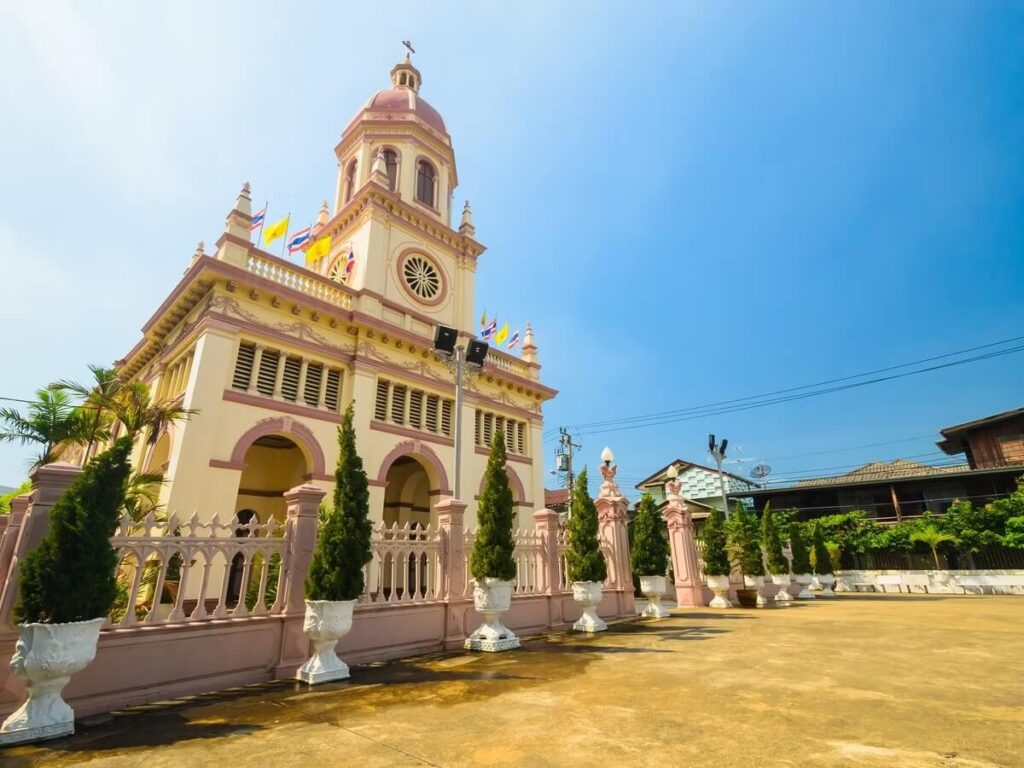
South of Wat Arun lies the historic Kudichin neighbourhood, known for its Portuguese heritage, narrow lanes, local snacks, and Santa Cruz Church.
It offers a quieter experience than Bangkok’s major tourist sites.
Where to Eat Near Wat Arun
- There are small cafés, local restaurants, snack stalls, and drink vendors around the temple and nearby Thonburi streets.
- For a memorable meal, many travellers cross to the eastern bank, where riverside restaurants offer direct views of Wat Arun.
- Sunset tables are popular and may require reservations. Prices at restaurants with unobstructed temple views are usually higher than those at local establishments a few streets away.
- Try Thai dishes such as pad kra pao, green curry, tom yum, grilled river prawns, pad Thai, mango sticky rice, or coconut ice cream.
- Carry drinking water, especially during the hot season.
Best Season to Visit Wat Arun:
Bangkok can be visited throughout the year, but each season offers a different experience.
November to February
This is generally Bangkok’s most comfortable period, with relatively lower humidity and cooler mornings.
It is also the busiest tourist season, so arrive early to avoid crowds.
March to May
These months can be extremely hot. Morning visits are strongly recommended.
Wear breathable clothing, use sun protection, and drink water regularly.
June to October
The rainy season brings high humidity and frequent showers, although rain does not necessarily last all day.
Cloudy skies can create soft light for photography, and visitor numbers may be lower. Carry a compact umbrella or lightweight rain jacket.
Temple steps can become slippery after rainfall, so walk carefully.
Accessibility and Practical Considerations
- The ground-level areas of Wat Arun are easier to navigate than the steep tower stairs. Visitors with limited mobility can still appreciate the temple’s architecture, gardens, halls, and riverside setting without climbing.
- Some surfaces are uneven, and raised thresholds may be present around traditional buildings.
- Families with young children should supervise them closely near stairs and busy ferry piers.
- Large luggage is inconvenient and may not be allowed in some areas. Leave suitcases at your hotel or a secure storage facility.
- Public toilets are available in or around the temple area, though carrying tissues and hand sanitiser is useful.
Is Wat Arun Worth Visiting?
- Wat Arun is absolutely worth visiting, especially for first-time travellers to Bangkok.
- Its appeal comes from more than its appearance. The journey by river, the layered history, the active religious atmosphere, the unusual porcelain decoration, and the views across old Bangkok combine to create a complete cultural experience.
- The temple is compact enough to visit without consuming an entire day, yet detailed enough to reward slow exploration.
- Even travellers who have seen many Buddhist temples often find Wat Arun distinctive. Its riverside position and pale ceramic surfaces set it apart from Bangkok’s predominantly golden temple architecture.
Frequently Asked Questions About Wat Arun
What is Wat Arun known for?
Wat Arun is known for its tall central prang, colourful porcelain decoration, riverside location, steep stairs, and beautiful views at sunrise, sunset, and night.
Why is Wat Arun called the Temple of Dawn?
The temple is associated with Aruna, the Hindu deity representing the radiance of the rising sun. Historical traditions also connect the site with King Taksin arriving in the area at dawn.
What is the entrance fee for Wat Arun?
The published entrance fee for foreign visitors is currently 200 Thai baht.
What are the opening hours of Wat Arun?
Wat Arun is generally open daily from 8:00 a.m. to 6:00 p.m.
Can you climb Wat Arun?
Visitors may usually climb a permitted section of the central prang, although access can be restricted during maintenance, ceremonies, or wet weather.
Is Wat Arun open at night?
The ticketed temple grounds generally close in the evening, but the illuminated temple can be viewed from across the river after dark.
What should I wear to Wat Arun?
Wear clothing that covers your shoulders and knees. Avoid sleeveless, transparent, cropped, or very short clothing.
Can I visit Wat Arun and Wat Pho together?
Yes. The two temples are located on opposite sides of the Chao Phraya River and are connected by a short ferry ride.
How much time should I spend at Wat Arun?
Plan at least one hour. Allow two hours for photography, architectural details, Thai costume rental, or a relaxed visit.
Is Wat Arun suitable for children?
Yes, but children should be supervised near steep staircases and ferry piers.
Is photography allowed?
Personal photography is generally allowed in outdoor areas, but restrictions may apply inside religious halls or during ceremonies. Follow signs and avoid disturbing worshippers.
More Thailand Travel Guides:
- 15 Best Beaches Near Bangkok for a Short Escape
- 12 Best Shopping Places in Bangkok for Travellers
- 10 Best Tourist Attractions to Visit in Bangkok
- Thе Grand Palacе, Bangkok – A Complеtе Guidе
- 15 Romantic Things to Do in Bangkok for Honeymoon Couples
- Best Time to Visit Bangkok: Weather, Temperature and Travel Tips
- 20 Best Cafes in Bangkok for Coffee and Food Lovers
- Top Shopping Destinations in Bangkok for First-Time Visitors
- 15 Best Restaurants in Bangkok for Thai Food and Fine Dining
- 10 Must-See Tourist Places in Bangkok
- Best Things to Do in Chiang Mai, Thailand
- Northern Thai Cuisine Guide: 10 Best Dishes and Where to Try Them
Final Travel Tips for Visiting Wat Arun
Arrive early for cooler temperatures and smaller crowds. Dress modestly, carry water, and wear footwear suitable for steep stairs and uneven surfaces.
Use the river ferry whenever possible because it provides both convenient transport and memorable views.
Take time to observe the small details in the porcelain decoration rather than focusing only on the temple’s height.
Combine Wat Arun with Wat Pho, the Grand Palace, Museum Siam, or a Thonburi canal tour, but avoid packing too many major temples into one hot afternoon.
Most importantly, remember that Wat Arun is a living place of worship. A respectful visit will give you a deeper appreciation of its beauty, religious significance, and continuing role in Bangkok life.
Conclusion
A visit to Wat Arun offers one of the finest introductions to Bangkok’s cultural heritage. Rising above the Chao Phraya River, the Temple of Dawn brings together centuries of history, Buddhist symbolism, Khmer-inspired architecture, Chinese porcelain, royal patronage, and everyday religious life.
Its famous central prang may be the first feature that catches your attention, but the quieter details often become the most memorable: ceramic flowers embedded in the tower, monks walking between buildings, bells moving in the breeze, boats crossing the river, and the temple gradually glowing as daylight disappears.
Whether you visit early in the morning, explore during the afternoon, or watch the illuminated towers from across the river at night, Wat Arun deserves a place on every Bangkok itinerary.
With careful planning, respectful clothing, and enough time to explore beyond the main viewpoint, your visit to Wat Arun can become much more than a quick sightseeing stop. It can be one of the defining experiences of your journey through Thailand.
