

Few cities in India feel quite like Varanasi. Known as Kashi and Banaras as well as Varanasi, this ancient city on the banks of the Ganges is shaped by temples, sacred ghats, narrow lanes, morning prayers, classical music, silk weaving and rituals that have continued for generations.
However, Varanasi is not a destination you should experience only through a checklist of monuments. Some of its most memorable moments happen early in the morning when boats glide past the ghats, while others unfold after sunset during the Ganga Aarti.
For first-time visitors, the essential places to visit in Varanasi include Kashi Vishwanath Temple, Dashashwamedh Ghat, Assi Ghat, Manikarnika Ghat and Sarnath. Meanwhile, travellers with more time can explore Ramnagar Fort, historic temples, quieter ghats and the old lanes of Banaras.
Ideally, allow 2 to 3 days in Varanasi. This gives you enough time for a sunrise boat ride, temple visits, Sarnath, an old-city walk and the evening Ganga Aarti without rushing.
If you prefer a private trip with local sightseeing and guides arranged in advance, explore these Varanasi tour packages, which include short city stays as well as longer journeys combining Varanasi with Sarnath, Prayagraj, Ayodhya, Delhi, Agra and Jaipur.
Best Tourist Places to Visit in Varanasi and Banaras:
1. Kashi Vishwanath Temple

Kashi Vishwanath Temple is the spiritual heart of Varanasi and one of the city’s most important places to visit.
Dedicated to Lord Shiva, the temple is home to one of India’s twelve Jyotirlingas. Consequently, devotees arrive from across India throughout the year.
The temple stands close to the Ganges within the historic old city. Around it, narrow lanes are filled with flower sellers, religious shops, sweet stalls and pilgrims moving towards the shrine.
The Kashi Vishwanath Corridor has also created a broader connection between the temple precinct and the riverfront.
Because security is strict, carry as little as possible and check the latest entry rules before visiting.
Why visit: Spiritual significance, Hindu traditions and old Kashi
Time needed: Around 1–2 hours
Nearby: Dashashwamedh Ghat and Vishwanath Gali
2. Dashashwamedh Ghat
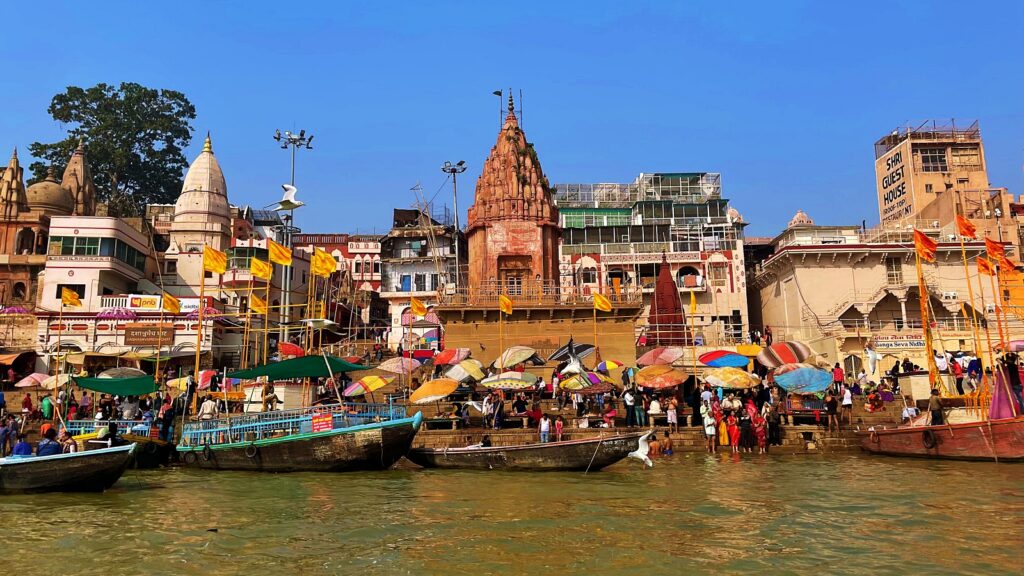
Dashashwamedh Ghat is arguably the most famous ghat in Varanasi.
During the daytime, pilgrims bathe, priests conduct rituals and boats move continuously across the river. However, the atmosphere changes dramatically as sunset approaches.
Every evening, the ghat becomes the main setting for Varanasi’s famous Ganga Aarti.
Priests perform coordinated rituals using large oil lamps while devotional music, bells and chanting fill the riverfront.
Therefore, if you have only one evening in Varanasi, this should be a priority.
You can watch from the steps of the ghat or from a boat on the Ganges. The ghat provides a closer experience, whereas the river gives you a wider view.
For timings, viewing locations and practical advice, read our detailed Ganga Aarti in Varanasi guide.
Why visit: Ganga Aarti and riverfront atmosphere
Best time: Late afternoon and evening
Nearby: Kashi Vishwanath Temple
3. Assi Ghat

Assi Ghat offers a gentler introduction to life beside the Ganges.
Located towards the southern end of the main riverfront, it is popular with pilgrims, local residents, students and travellers.
Early morning is the best time to visit.
The Subah-e-Banaras programme combines prayer, music and yoga as the city wakes up. Afterwards, you can walk along the river or stop at one of the cafés around the neighbourhood.
Moreover, Assi Ghat is an excellent starting point for a sunrise boat ride.
It usually feels more spacious than Dashashwamedh, so travellers who want time to sit beside the river often prefer spending longer here.
Why visit: Sunrise, morning rituals and relaxed atmosphere
Best time: Sunrise
Nearby: Tulsi Ghat and Sankat Mochan Temple
4. Manikarnika Ghat

Manikarnika Ghat is one of the most sacred and emotionally powerful places in Varanasi.
It is primarily a cremation ground rather than a conventional tourist attraction.
According to Hindu beliefs, cremation in Kashi is closely associated with liberation from the cycle of birth and rebirth.
Funeral pyres operate throughout the day and night. Therefore, visitors should approach the area with sensitivity and respect.
Do not photograph grieving families, cremations or bodies.
Instead, observe quietly from an appropriate distance or visit with a knowledgeable local guide who can explain the traditions without turning them into a spectacle.
For deeper background, read our dedicated guide to Manikarnika Ghat in Varanasi.
Why visit: Understanding Varanasi’s beliefs about life, death and moksha
Important: Maintain respectful distance and avoid intrusive photography
5. Sarnath

Sarnath is one of the most important places to visit near Varanasi and should be included in almost every first-time itinerary.
After attaining enlightenment at Bodh Gaya, Gautama Buddha delivered his first sermon here. Consequently, Sarnath became one of Buddhism’s most significant pilgrimage destinations.
The Dhamek Stupa is the principal landmark. In addition, you can explore ancient monastic ruins, Buddhist temples and other archaeological remains.
The atmosphere feels remarkably calm compared with central Varanasi.
Therefore, Sarnath works particularly well after a busy morning among the ghats and lanes of Banaras.
Allow around half a day.
For transport, sightseeing and planning advice, read our Varanasi to Sarnath travel guide.
You can also learn more about the Buddhist site’s history in our guide explaining why Sarnath is famous.
Why visit: Buddhist history, archaeology and peaceful surroundings
Time needed: Around half a day
Distance: Roughly 10 km from Varanasi
6. Man Mandir Ghat and Observatory


Man Mandir Ghat combines river views with history and architecture.
Raja Man Singh of Amber built the palace associated with the ghat, while the astronomical observatory above it contains instruments used for studying celestial movements.
Therefore, this is one of the better places in Varanasi for travellers interested in something beyond temples and religious ceremonies.
Its elevated position also provides excellent views across the Ganges.
Because it lies close to Dashashwamedh Ghat, it fits naturally into an old-city walking route.
Why visit: Astronomy, architecture and Ganges views
Combine with: Dashashwamedh Ghat and old-city lanes
7. Sankat Mochan Hanuman Temple

Sankat Mochan Hanuman Temple is another important spiritual attraction in Varanasi.
Dedicated to Lord Hanuman, the temple attracts large numbers of worshippers, particularly on Tuesdays and Saturdays.
However, visitors seeking a quieter experience may prefer another weekday.
The temple lies south of the main old-city area and can easily be combined with Assi Ghat, Tulsi Manas Temple and Banaras Hindu University.
Security restrictions may apply, so carry only essential belongings.
Why visit: Hindu worship and local religious traditions
Combine with: Assi Ghat and Tulsi Manas Temple
8. Ramnagar Fort

Ramnagar Fort stands across the Ganges from central Varanasi.
The riverside complex is associated with the former royal family of Banaras and offers a different perspective on the city’s history.
Its architecture, courtyards and collections reflect the region’s royal heritage.
However, the fort should not be expected to feel like one of Rajasthan’s carefully restored palace museums. Its attraction lies more in its history, setting and connection with Banaras.
The journey also takes you away from Varanasi’s busiest neighbourhoods.
Why visit: Royal history and river scenery
Time needed: Around 1–2 hours
9. Durga Kund Temple
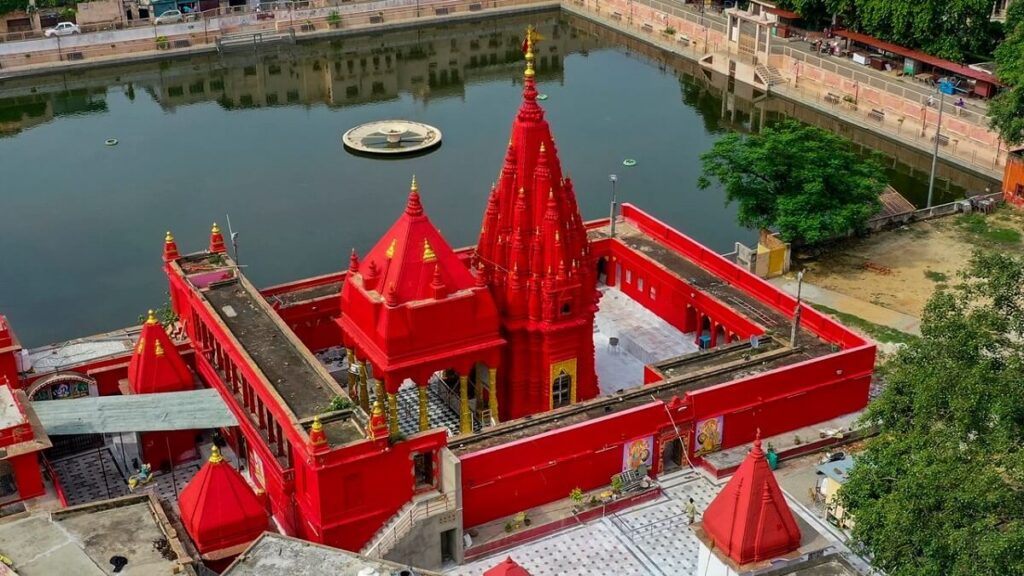
Durga Kund Temple is one of the most recognisable temples in Varanasi because of its striking red exterior.
Dedicated to Goddess Durga, the temple stands beside a rectangular sacred pond known as Durga Kund.
Religious activity becomes especially lively during major festivals. Nevertheless, even on an ordinary day the temple provides another perspective on Varanasi’s devotional traditions.
Furthermore, its location makes it easy to combine with Sankat Mochan and Tulsi Manas Temple.
Why visit: Temple architecture and religious culture
Combine with: Tulsi Manas and Sankat Mochan
10. Tulsi Manas Temple
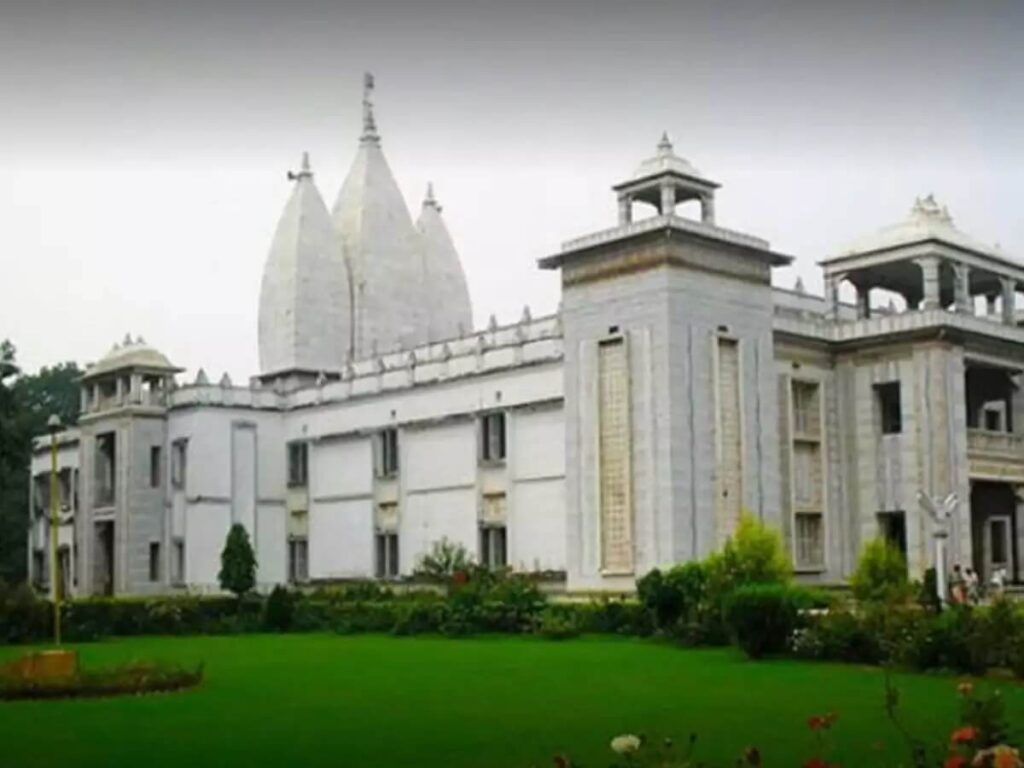
Tulsi Manas Temple connects Varanasi’s spiritual identity with its literary heritage.
The temple honours Goswami Tulsidas, who is traditionally associated with composing the Ramcharitmanas in Varanasi.
Verses from the sacred text appear on the walls.
As a result, the temple is particularly interesting for visitors who want to understand how literature, devotion and local culture overlap in Banaras.
It is generally quieter than Kashi Vishwanath Temple, which can make the visit more relaxed.
Why visit: Literature, devotion and culture
Time needed: Around 30–45 minutes
11. Banaras Hindu University and New Vishwanath Temple

Banaras Hindu University, or BHU, gives visitors a completely different view of the city.
The large campus has broad roads and green spaces that contrast sharply with the crowded lanes near the ghats.
Within the campus area, visitors often stop at the New Vishwanath Temple.
BHU can therefore be included within a South Varanasi sightseeing route alongside Assi Ghat and Sankat Mochan.
Moreover, travellers interested in art and history may also want to explore Bharat Kala Bhavan, subject to current opening hours.
Why visit: Education, architecture and quieter surroundings
Combine with: Assi Ghat and Sankat Mochan
12. Nepali Temple
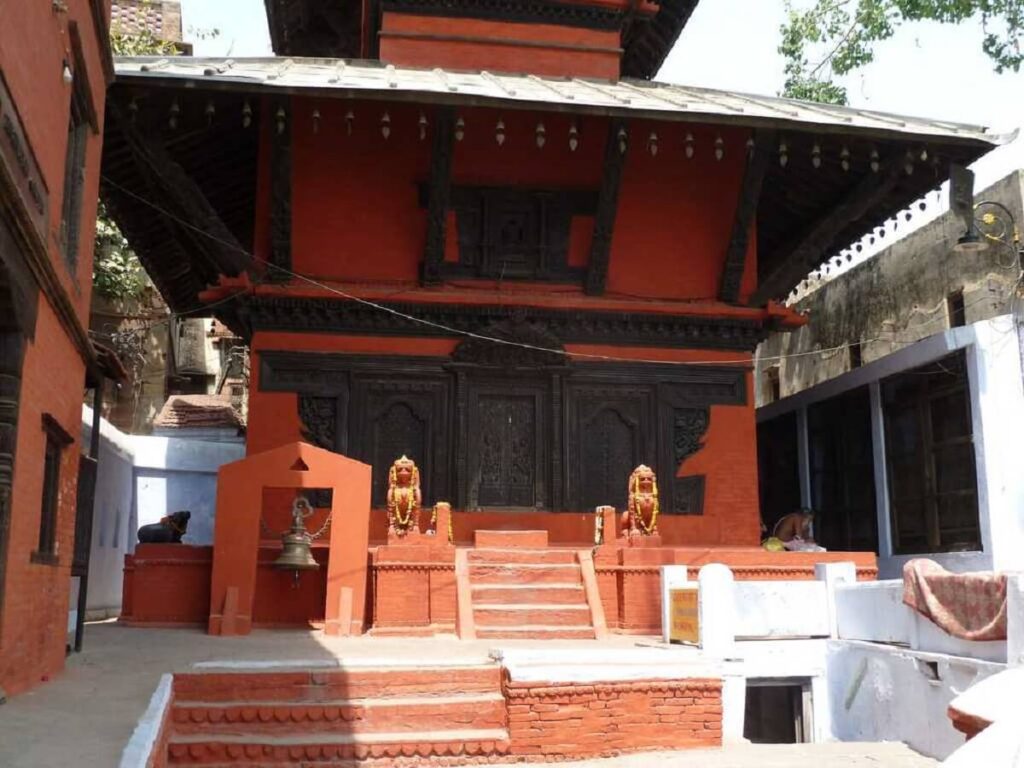
The Nepali Temple near Lalita Ghat is one of the most visually distinctive religious buildings on the riverfront.
Its carved wooden architecture and Nepalese design make it very different from many surrounding temples.
The location is particularly atmospheric because it sits within the old riverside neighbourhood close to the Ganges.
Instead of making a special vehicle trip, include the temple during an old-city or ghat walk.
Why visit: Architecture and photography
Nearby: Lalita Ghat and Kashi Vishwanath area
13. Kedar Ghat
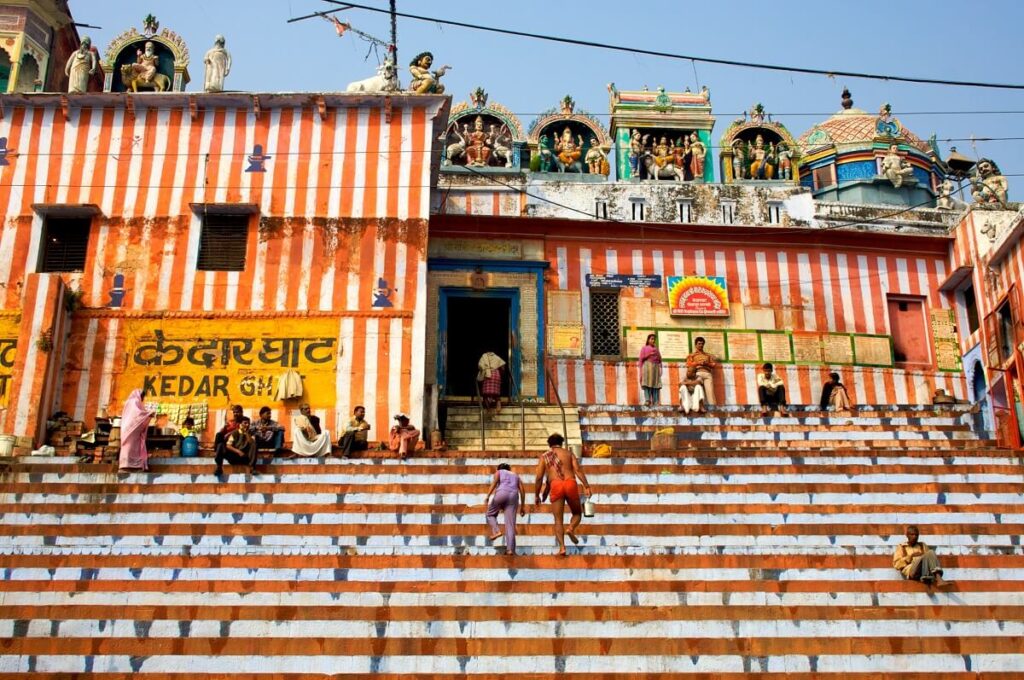
Kedar Ghat is one of the most colourful ghats along the Ganges.
Its distinctive temple architecture and riverside setting make it particularly attractive for photographers.
Morning is the best time to visit, when pilgrims arrive for prayers and bathing.
Furthermore, Kedar Ghat works well as part of a longer riverfront walk rather than as an isolated sightseeing stop.
Walk north from Assi and explore several smaller ghats along the way.
Why visit: Photography and everyday riverfront life
Best time: Morning
14. Bharat Mata Temple

Bharat Mata Temple differs significantly from most religious attractions in Varanasi.
Instead of being dedicated to a traditional deity, it honours the idea of Mother India.
Its most unusual feature is a large relief map of the Indian subcontinent.
Consequently, the site is more closely linked with modern Indian history and national identity than conventional temple worship.
The visit does not take long, so it can easily be added between other attractions.
Why visit: Modern history and unusual design
Time needed: Around 30 minutes
15. Vishwanath Gali and the Old Banaras Lanes
One of the best places to experience Varanasi is not a single monument at all.
The historic lanes around Kashi Vishwanath and the ghats contain small temples, flower sellers, sweet shops, traditional homes, cafés and workshops.
They can appear chaotic at first.
However, these narrow passages reveal the everyday character of Banaras better than many formal tourist attractions.
Walk slowly rather than trying to rush between landmarks.
Moreover, consider taking a guided heritage walk on your first day. A good local guide can explain shrines, architecture and customs that would otherwise be easy to overlook.
Why visit: Local culture, street life and food
Time needed: At least 1–2 hours
Best Ghats to Visit in Varanasi
Varanasi has many riverfront ghats, but first-time visitors do not need to see every one.
The most important include:
- Dashashwamedh Ghat: Best for evening Ganga Aarti
- Assi Ghat: Best for sunrise and morning activities
- Manikarnika Ghat: Important for understanding cremation traditions
- Man Mandir Ghat: Best for architecture and history
- Kedar Ghat: Excellent for photography
- Lalita Ghat: Convenient for the Nepali Temple
- Harishchandra Ghat: Another important cremation ghat
- Tulsi Ghat: Associated with the cultural history of Banaras
For more details about the riverfront, read our guide to the famous ghats of Varanasi.
Take a Sunrise Boat Ride on the Ganges
A sunrise boat ride is one of the experiences that makes Varanasi unforgettable.
Before sunrise, the river is usually quieter and the ghats slowly begin coming to life.
Pilgrims perform morning prayers, residents bathe in the Ganges and temples open for the day.
Meanwhile, the rising sun illuminates the long line of ghats from across the river.
A traditional rowboat generally creates a quieter experience than a motorboat.
Your route may pass Assi, Dashashwamedh, Man Mandir, Manikarnika and several smaller ghats.
Therefore, even travellers with limited time can see a significant part of the riverfront in one morning.
Experience the Evening Ganga Aarti
The evening Ganga Aarti at Dashashwamedh Ghat is another essential Varanasi experience.
The ceremony normally begins around sunset, although the exact time changes with the season.
Arrive around 45 to 60 minutes early if you want a comfortable position.
You can watch from the steps or from a boat.
A place on the ghat brings you closer to the priests and rituals. A boat, on the other hand, offers a wider view of the illuminated riverfront.
Neither option is automatically better. Instead, choose according to the experience you want.
For complete planning information, see the Varanasi Ganga Aarti timings and visitor guide.
What Is Varanasi Famous For?
Varanasi is famous for its sacred relationship with the River Ganges, but the city offers much more.
It is particularly known for its ancient ghats, Kashi Vishwanath Temple, Hindu pilgrimage traditions, sunrise boat rides and evening Ganga Aarti.
In addition, Banaras has a strong reputation for classical music, silk weaving, Sanskrit learning, street food and traditional crafts.
Sarnath adds an important Buddhist dimension to the destination.
Therefore, a well-planned trip should combine spirituality with history, local culture, food and everyday riverfront life rather than focusing only on temples.
Best Places in Varanasi for First-Time Visitors
If your schedule is limited, prioritise:
Spiritual experience: Kashi Vishwanath Temple
Ganga Aarti: Dashashwamedh Ghat
Sunrise: Assi Ghat and a boat ride
Sacred traditions: Manikarnika Ghat
Buddhist heritage: Sarnath
Old Banaras: Vishwanath Gali
History: Ramnagar Fort and Man Mandir Ghat
Local culture: Ghats and old-city lanes
Places to Visit in Varanasi in One Day:
One day is possible, although the schedule will be busy.
Early Morning
Start with a sunrise boat ride on the Ganges.
Afterwards, walk through Assi Ghat or along the riverfront.
Morning
Visit Kashi Vishwanath Temple and explore Vishwanath Gali.
Continue towards Dashashwamedh and Man Mandir Ghat.
Afternoon
Visit Sarnath if it is a priority.
Alternatively, stay within Varanasi and explore BHU, Sankat Mochan and Durga Kund.
Evening
Return to Dashashwamedh Ghat for the Ganga Aarti.
However, if you can add another day, you will enjoy the city considerably more.
Best 2-Day Varanasi Itinerary:
Day 1: Ghats and Old Banaras
Begin with a sunrise boat ride.
After breakfast, explore Assi Ghat before travelling towards the old city.
Visit Kashi Vishwanath Temple, walk through Vishwanath Gali and explore the riverfront.
Later, visit Man Mandir Ghat and nearby historic areas.
Finish at Dashashwamedh Ghat for the evening Ganga Aarti.
Day 2: Sarnath and South Varanasi
Travel to Sarnath in the morning.
Explore Dhamek Stupa and the Buddhist archaeological area.
Afterwards, return to Varanasi and visit BHU, Sankat Mochan, Tulsi Manas and Durga Kund.
Spend your final evening enjoying local food or returning to Assi Ghat.
Best 3-Day Varanasi Itinerary
Three days is my preferred duration for first-time visitors.
Day 1
Sunrise boat ride → Assi Ghat → Kashi Vishwanath → Old City → Ganga Aarti
Day 2
Sarnath → BHU → Sankat Mochan → Tulsi Manas → Assi Ghat
Day 3
Ramnagar Fort → Heritage walk → Lesser-known ghats → Local markets and food
If you prefer the transport and sightseeing to be prearranged, compare the 3-day Varanasi tour.
How Many Days Are Enough for Varanasi?
For most travellers:
1 day: Only the essential highlights
2 days: Enough for the main ghats, temples and Sarnath
3 days: Best duration for first-time visitors
4 days: Ideal for photography, food, slower exploration and cultural experiences
Therefore, I recommend 2 nights and 3 days if Varanasi is an important part of your India journey.
Best Time to Visit Varanasi:
The most comfortable period is generally between October and March.
October and November
The weather becomes more comfortable after the monsoon. Moreover, mornings beside the Ganges are particularly pleasant.
December to February
Winter brings cooler temperatures.
However, mornings can occasionally be foggy, so boat rides may sometimes have reduced visibility.
March
Conditions start warming up but remain suitable for sightseeing.
April to June
Temperatures can become extremely hot.
Therefore, schedule outdoor sightseeing early in the morning and late in the afternoon.
July to September
The monsoon brings rain, humidity and rising river levels.
As a result, access to some ghats and boat services may change according to conditions.
What to Eat in Varanasi
Exploring Banaras without trying its food would leave the trip incomplete.
Start a morning with kachori sabzi and jalebi.
Later, try tamatar chaat, lassi and traditional sweets.
During winter, look for malaiyyo, a delicate seasonal speciality.
Banarasi paan is another famous local tradition.
Moreover, evening food walks are a good way to explore neighbourhoods beyond the main monuments.
Choose busy food stalls with good turnover, particularly if you are not accustomed to Indian street food.
Varanasi With Ayodhya and Prayagraj
Travellers interested in spirituality often combine Varanasi with Ayodhya and Prayagraj.
A practical route could be:
Varanasi → Ayodhya → Prayagraj → Varanasi
Alternatively, begin in Lucknow before travelling through Ayodhya and Prayagraj to Varanasi.
For a short pilgrimage journey, see the 4-day Ayodhya, Prayagraj and Varanasi tour.
A slightly slower option is the 5-day Varanasi, Ayodhya and Prayagraj tour.
Varanasi With Delhi, Agra and Jaipur
International visitors often combine Varanasi with India’s Golden Triangle.
A popular route is:
Delhi → Agra → Jaipur → Varanasi
This journey combines Old Delhi, the Taj Mahal, Rajasthan’s royal heritage and the spiritual atmosphere of the Ganges.
For first-time visitors to India, the 8-day Golden Triangle with Varanasi follows this combination.
Travellers seeking higher-end hotels and a slower style of travel can also consider the 10-day Luxury Golden Triangle and Varanasi tour.
Varanasi With Bodhgaya and Sarnath
Buddhist travellers can extend their journey beyond Sarnath to Bodhgaya.
Sarnath represents the place where Buddha delivered his first sermon after enlightenment, while Bodhgaya is associated with the enlightenment itself.
Consequently, combining the two creates a much deeper Buddhist pilgrimage journey.
Tusk Travel’s 8-day Uttar Pradesh religious tour combines Varanasi and Sarnath with Bodhgaya, Prayagraj, Ayodhya and other important spiritual destinations.
Practical Tips for Visiting Varanasi
Start early whenever possible because sunrise is one of the city’s most atmospheric times.
Wear comfortable footwear because the old city requires plenty of walking.
Moreover, dress modestly when visiting religious sites.
Carry only essential belongings around Kashi Vishwanath Temple because security procedures are strict.
Always agree on the boat route, duration and price before departure unless it has already been arranged through your hotel or tour operator.
Avoid photographing funeral ceremonies at Manikarnika and Harishchandra Ghats.
Keep valuables secure in crowded areas.
Furthermore, allow more travel time than expected because Varanasi traffic can be slow.
A good local guide is particularly useful in the old city, where hundreds of shrines, lanes and historic buildings are easy to pass without understanding their significance.
Frequently Asked Questions About Varanasi
What are the best places to visit in Varanasi?
Kashi Vishwanath Temple, Dashashwamedh Ghat, Assi Ghat, Manikarnika Ghat and Sarnath should be priorities for first-time visitors.
What are the top 10 tourist places in Varanasi?
The top choices include Kashi Vishwanath Temple, Dashashwamedh Ghat, Assi Ghat, Sarnath, Manikarnika Ghat, Ramnagar Fort, Man Mandir Ghat, Sankat Mochan Temple, Tulsi Manas Temple and BHU.
Is Varanasi and Banaras the same place?
Yes. Varanasi is also widely known as Banaras or Benares and Kashi.
Is 2 days enough for Varanasi?
Yes. Two full days are enough for the principal temples, ghats, Ganga Aarti, a sunrise boat ride and Sarnath. However, three days gives you a more comfortable experience.
Which is the most famous ghat in Varanasi?
Dashashwamedh Ghat is the most famous for the evening Ganga Aarti. Meanwhile, Assi Ghat is particularly popular at sunrise, and Manikarnika Ghat has deep religious significance.
What is the best time for a boat ride in Varanasi?
Sunrise is generally the best time because the river is calmer, morning rituals are taking place and the light across the ghats is beautiful.
Is Sarnath worth visiting?
Yes. Sarnath is one of Buddhism’s most important pilgrimage sites and is close enough to Varanasi for a half-day visit.
What is Varanasi famous for?
Varanasi is famous for the River Ganges, sacred ghats, Kashi Vishwanath Temple, Hindu pilgrimage traditions, Ganga Aarti, Banarasi silk, classical music and its ancient old-city neighbourhoods.
How many days should I spend in Varanasi?
Two to three days is ideal for most first-time visitors.
Can Varanasi be combined with the Taj Mahal?
Yes. Varanasi combines very well with Agra, Delhi and Jaipur. A Golden Triangle and Varanasi itinerary is especially popular among first-time international visitors.
Final Thoughts
Varanasi is not a city that should be rushed.
Kashi Vishwanath Temple, Dashashwamedh Ghat, Sarnath and the other famous tourist places are certainly important. However, the moments between those attractions often become the most memorable part of the journey.
Wake early and watch Banaras emerge from the darkness during a sunrise boat ride.
Walk through its old lanes.
Spend time sitting beside the Ganges.
Listen to temple bells echo through the narrow streets.
Later, watch the evening Ganga Aarti illuminate the riverfront.
For first-time visitors, 3 days in Varanasi offers the best balance. It gives you enough time for the major temples, ghats, Sarnath and cultural experiences without turning the journey into a rushed sightseeing checklist.
If you prefer a privately planned trip, explore Tusk Travel’s Varanasi tour packages. The collection includes short Varanasi stays as well as longer journeys combining the city with Sarnath, Prayagraj, Ayodhya, Delhi, Agra and Jaipur.
