


Well Organized Trip
We appreciated our travel design er (Ovijit) was able to customize our trip to add in additional stops and tailor our hotels to what we were looking for.

This 6 Days Pushkar Camel Fair Photography Tour is designed for photographers who want to capture the visual energy of one of Rajasthan’s best-known seasonal gatherings. The itinerary combines camel traders, livestock camps, rural portraits, market activity, festival crowds, Pushkar Lake and the old town for a varied cultural photography experience.
The tour is paced around the strongest photography periods, especially sunrise and late afternoon when dust, backlight, long shadows and warmer tones can transform the fair grounds. Midday is used for markets, details, street photography and rest between more demanding sessions.
The character of the Pushkar Fair changes throughout the event. Camel and livestock activity may be stronger on some days than others, while cultural programmes, competitions and crowd levels depend on the official schedule for the selected year.
Close portraits of traders, visitors and local residents should always be made respectfully. Ask permission where appropriate and avoid creating staged images unless the subject is genuinely comfortable with the interaction.
Pushkar is also an important pilgrimage town. Photography around the ghats and temples should follow local religious rules, and private rituals or worshippers should not be photographed intrusively.
Arrive in Jaipur and meet your representative for the road journey towards Pushkar.
On arrival, check in at the hotel and take time to prepare camera equipment for dusty outdoor conditions. Keep lens changes to a minimum around the fair grounds where wind and fine dust can be significant.
In the late afternoon, begin with a gentle orientation walk through selected old-town streets and market areas. Photograph textiles, shopfronts, signs, pilgrims, vendors and everyday movement.
Continue towards a suitable public area around Pushkar Lake or a nearby elevated viewpoint for the first sunset session.
At the ghats, follow all local rules regarding footwear, access and photography. Avoid photographing private rituals or worshippers at close range without permission.
Overnight stay in Pushkar.

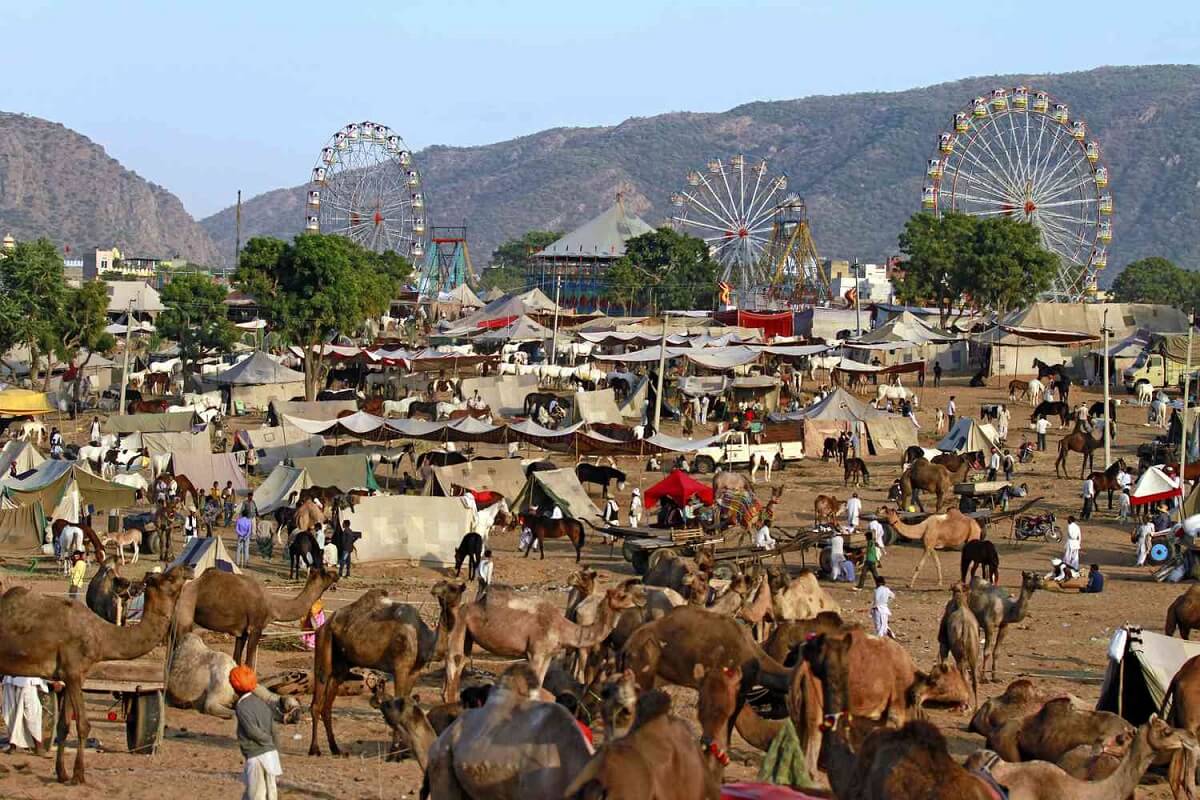
Begin before sunrise and move towards the Pushkar Camel Fair grounds or current livestock camping area according to the official fair layout.
Early morning is one of the strongest periods for photography. Work with silhouettes of camels, traders preparing for the day, smoke, dust and the first warm light across the camps.
Use longer focal lengths to isolate people and animals against simple backgrounds, while wider lenses can show groups of camels, tents and the surrounding fair environment.
Spend time building rapport before making close portraits of traders. A natural environmental portrait often tells more than a tightly cropped face because it includes clothing, animals, camp equipment and context.
Return to the hotel during the stronger midday light for breakfast and rest, then return in late afternoon for another session as dust and backlight create different photographic possibilities.
Overnight stay in Pushkar.
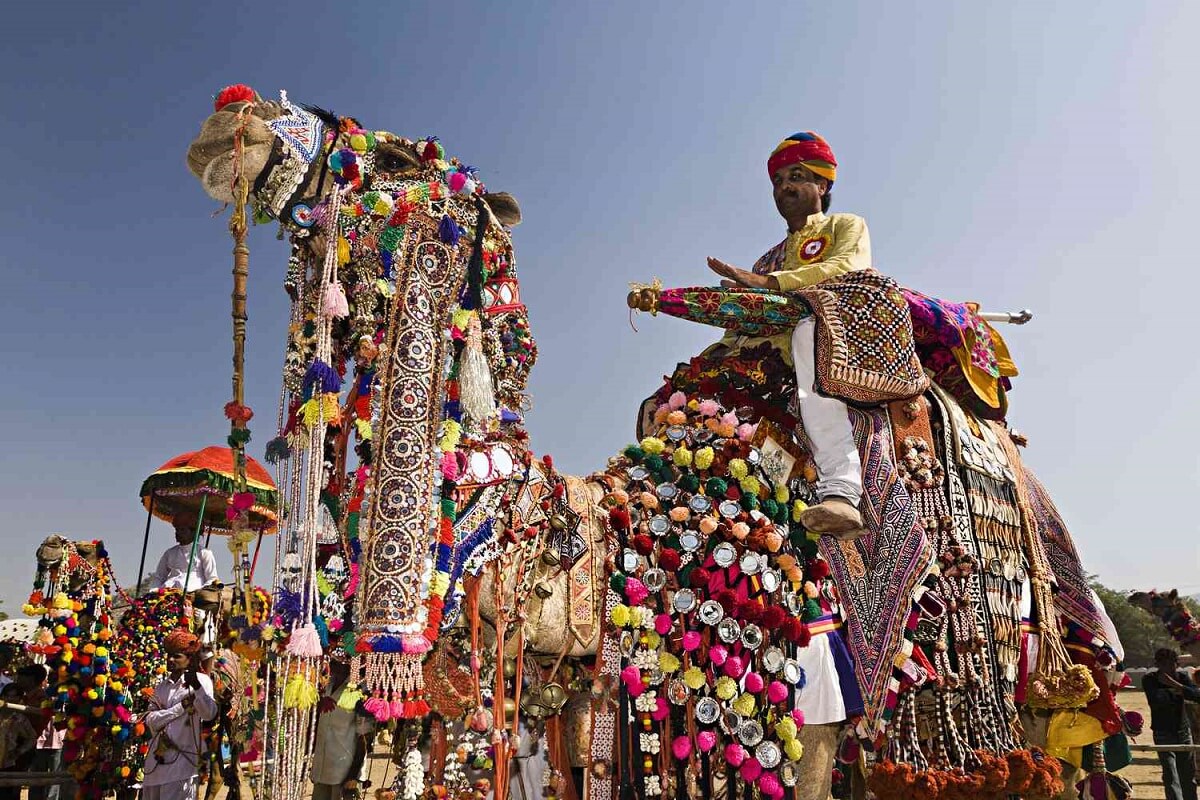
Return early to the fair grounds for another morning photography session, concentrating on action, movement and interaction rather than repeating the same portraits from Day 2.
Photograph traders moving animals, groups crossing the dusty ground, conversations, tack, ropes, decorated camels and small details that help explain the working side of the fair.
Use faster shutter speeds for movement, then experiment with controlled panning when animals or people move predictably across the frame.
During the middle of the day, explore market areas for textiles, jewellery, food stalls, utensils, traditional goods and crowd scenes.
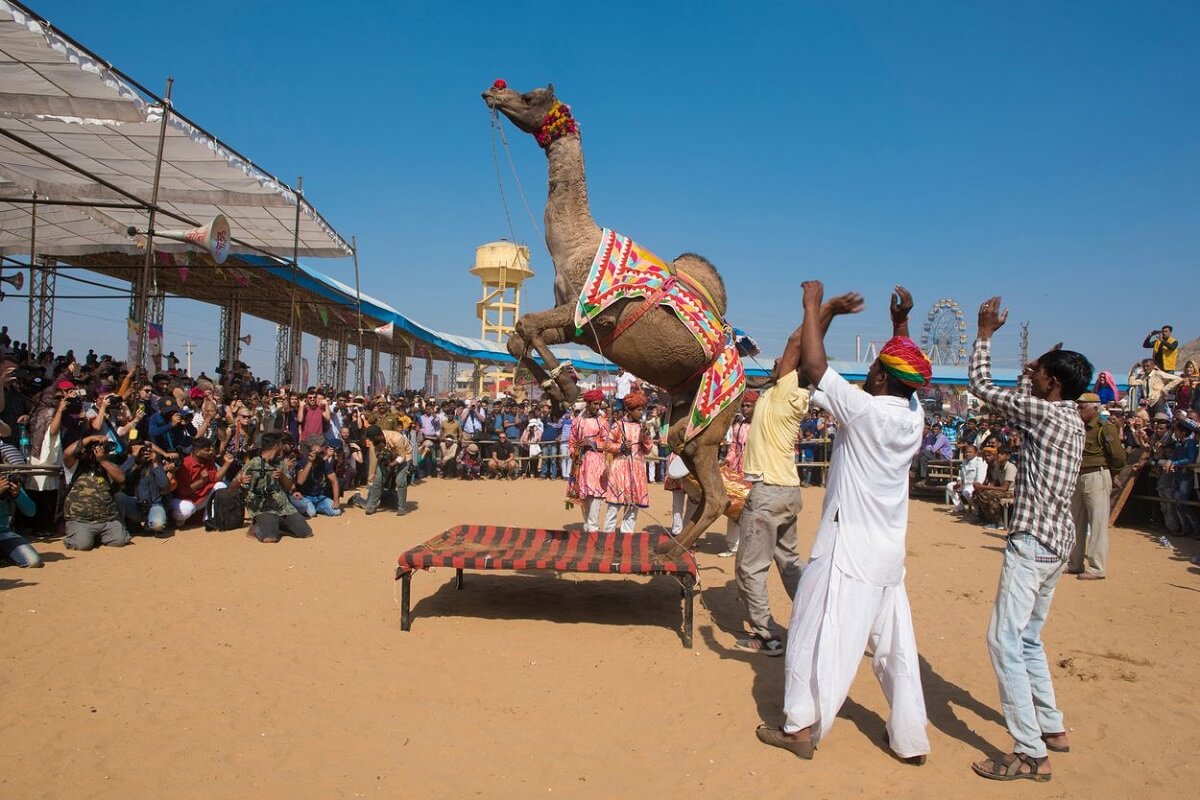
If the official fair programme includes public competitions or cultural events, photograph them from designated areas without obstructing participants or spectators.
Overnight stay in Pushkar.
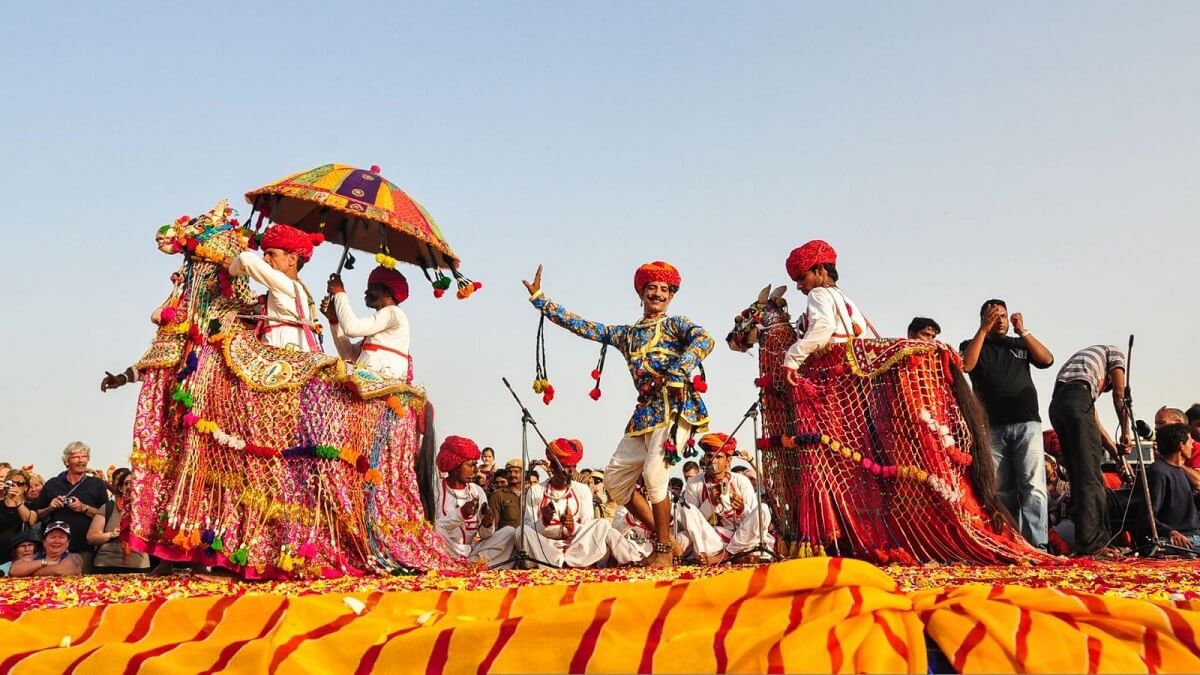
Begin with a slower morning session in suitable rural surroundings outside the busiest fair areas. Depending on local conditions, photograph agricultural landscapes, village roads, livestock, traditional homes and everyday activity.
Rural photography should remain observational and respectful. Do not enter homes, fields or compounds without permission, and avoid directing people into artificial poses unless they genuinely wish to participate.
Use the quieter environment to work on environmental portraits that show people within their real surroundings. Doorways, animals, tools, walls and fields can add useful visual context.
After a midday break, return to the fair grounds in late afternoon for one of the strongest sunset sessions of the tour.
Work with backlight, silhouettes, dust, long shadows and layers of camels and people. Protect highlights around the sun and use exposure compensation when necessary.
Overnight stay in Pushkar.
Begin before breakfast around Pushkar Lake for a quieter cultural photography session.
Work with reflections, temple architecture, flower sellers, pigeons, pilgrims and the morning atmosphere from suitable public areas.
Religious sensitivity is especially important at the ghats. Follow local instructions and avoid close photography of bathing, prayer or private ritual unless permission is clearly given.
Later, return to the fair for one final documentary session. By now, concentrate on completing visual themes rather than simply adding more subjects.
Revisit a trader, market area, camel group or viewpoint that produced strong images earlier and work on better timing, cleaner backgrounds and more coherent sequences.
Overnight stay in Pushkar.

Begin the final day with one short sunrise photography session if the current fair activity and departure schedule make it worthwhile.
Use the last morning to complete unfinished themes, whether that means camel silhouettes, camp life, trader portraits or quieter details from the fair grounds.
Rather than moving continuously, select one productive area and wait for stronger light, cleaner movement or a more meaningful interaction.
Return to the hotel for breakfast and check-out. Clean dust carefully from camera bodies and lenses, back up memory cards and pack equipment before departure.
Later, drive back towards Jaipur. Your 6 Days Pushkar Camel Fair Photography Tour concludes after a focused journey through camel camps, rural portraits, markets, pilgrimage scenes and Rajasthan festival life.
Tour concludes on return towards Jaipur.
Clear details of what is covered in your private tour.
Share your travel dates, preferred hotels and interests. Our travel experts will customize this itinerary to match your trip duration, travel style and budget.
Get quick assistance with itinerary changes, hotels, transport, sightseeing and tour extensions.
Chat on WhatsAppReal moments and recent experiences shared by travellers who planned their holidays with Tusk Travel.
We appreciated our travel design er (Ovijit) was able to customize our trip to add in additional stops and tailor our hotels to what we were looking for.
The most beautiful trip I have ever had. With Tusk Travel I felt very happy and safe.
Tusk arranged a custom trip for us that included luxurious resort stay, elephant watching with ethical guides, hiking in the Knuckles mountain range.
My family and I loved the experience of getting to know India and the Maldives, which we will cherish in our memories and with a desire to return. And we are grateful to you and Tusk Travel for providing us with this experience.
Hello, I wanted to thank all the staff of the company for their work in organizing the tour and the good treatment they had with us.
Share your trip details. We’ll send a personalized itinerary and quote within 24 hours.