


Well Organized Trip
We appreciated our travel design er (Ovijit) was able to customize our trip to add in additional stops and tailor our hotels to what we were looking for.

This 6 Days Hornbill Festival Photography Tour is designed for photographers who want to document Nagaland through festival performances, traditional dress, portraiture, cultural details, village life and the atmosphere around Kisama Heritage Village.
The itinerary combines festival photography at Kisama with time in Kohima and Khonoma, creating a broader visual story than a festival-only visit. The focus is on people, movement, colour, cultural context, environmental portraits and storytelling rather than simply photographing stage performances.
The Hornbill Festival programme varies by day and year. Performance schedules, participating groups, ceremonial activities, stalls and evening events should always be followed according to the official festival programme available for the selected departure.
Festival grounds can be crowded and fast-moving. Photographers should work respectfully, avoid blocking performers or visitors, and ask permission before close portraits outside formal public performances.
Khonoma is a living village, not a staged photo location. Private homes, community spaces and local photography preferences should always be respected.
Entry and travel permit requirements in Nagaland can vary by nationality and current government rules. Required permits should be checked before confirming travel.
Arrive in Dimapur and meet your representative for the road journey towards Kohima.
The transfer introduces the hill landscapes of Nagaland. Keep your camera accessible for suitable roadside scenes only where stopping is safe and permitted.
On arrival in Kohima, check in at the hotel and prepare equipment for the coming festival days. Festival photography often requires a flexible combination of wide-angle, normal and short telephoto lenses.
If daylight permits, take a short orientation walk around a suitable part of Kohima for street scenes, shopfronts, traffic, local architecture and evening atmosphere.
Keep the first session light. The aim is to become familiar with local conditions before the more intense festival photography begins.
Overnight stay in Kohima.

After breakfast, travel to Kisama Heritage Village for the first full day of Hornbill Festival photography.
Begin by studying the festival layout and identifying suitable public positions for photographing cultural performances, processions, traditional dress and crowd interaction.
Use faster shutter speeds for movement and dance, while slower shutter speeds can be used creatively for controlled motion blur when conditions allow.
Between performances, look for details such as textiles, jewellery, headgear, musical instruments, hands, expressions and interactions between participants.
Do not assume that every person in traditional dress wishes to pose for photographs. Ask permission before making close portraits outside formal public performances.
Overnight stay in Kohima.
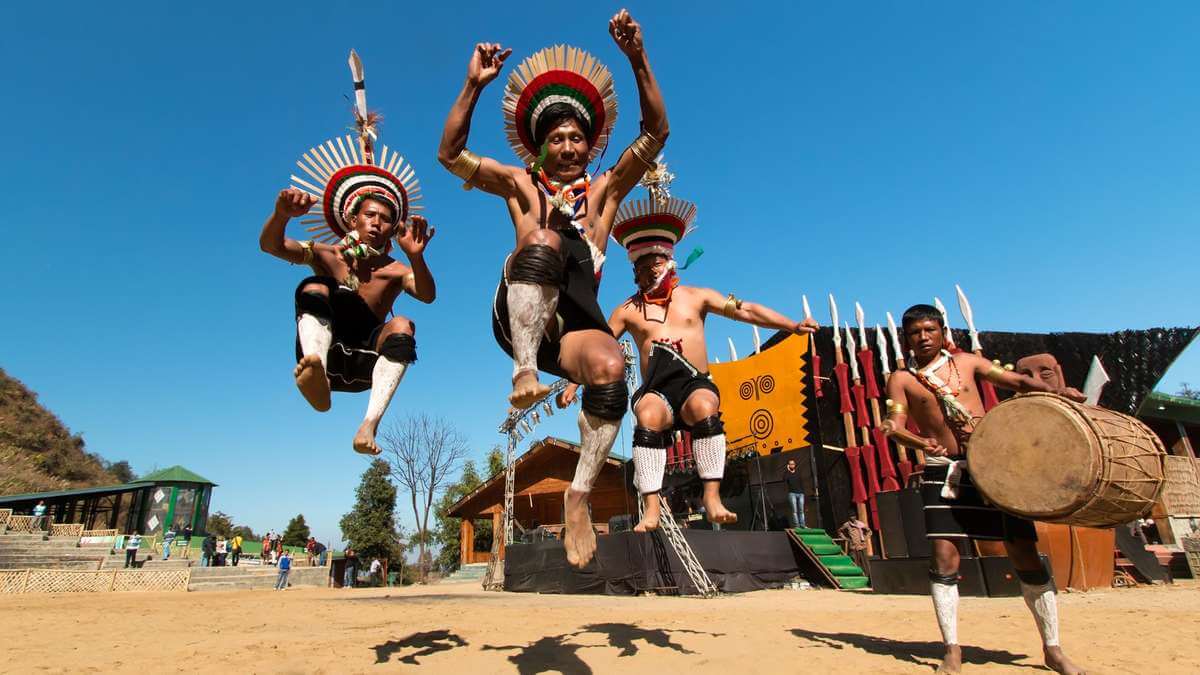
Return to Kisama for a second full day, this time concentrating less on recording everything and more on building stronger photographic stories.
Focus on environmental portraits, small groups, costume details, hands, instruments and moments before or after public performances.
A short telephoto lens can help isolate faces and gestures while keeping a respectful distance. Wider lenses are useful for showing participants within the context of morungs, festival structures and crowds.
If the official programme includes suitable evening activities, remain for low-light photography. Increase ISO as needed, protect highlights and avoid excessive flash that may disturb performers.
Use the second festival day to produce a more coherent visual narrative rather than only collecting individual portraits.
Overnight stay in Kohima.
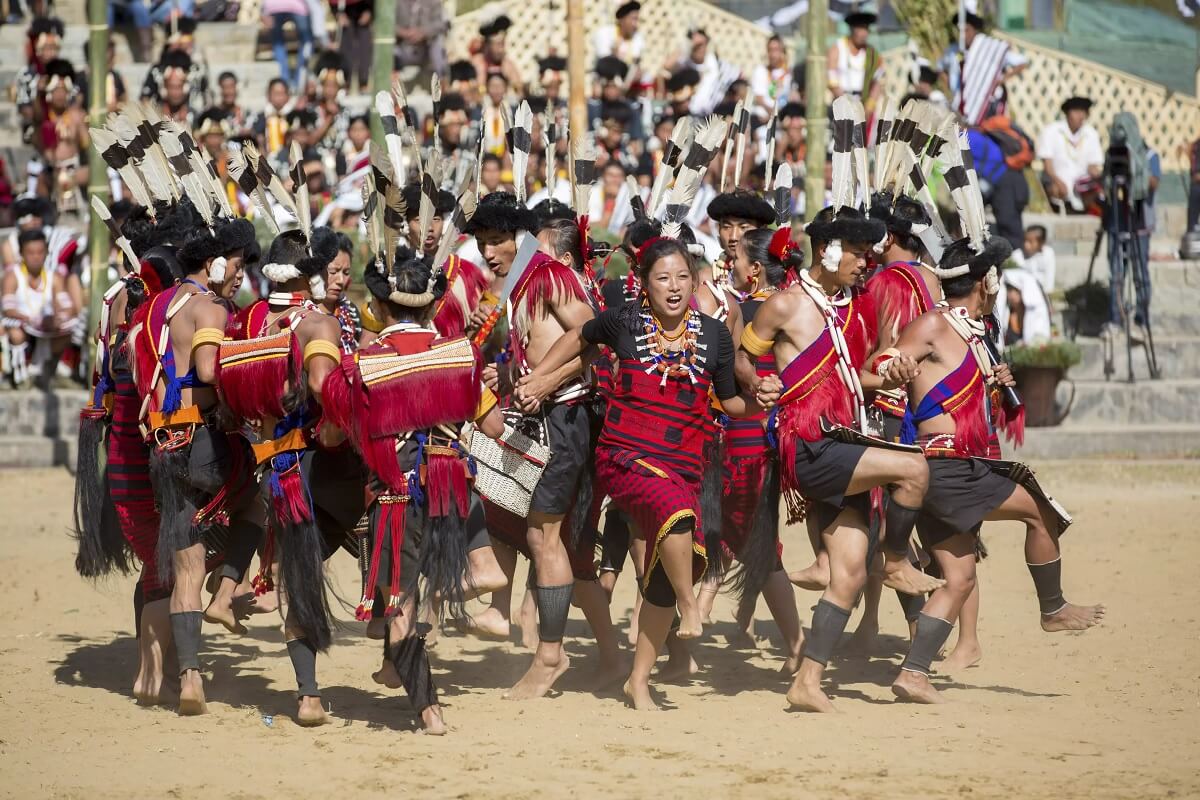
After breakfast, leave Kohima for an excursion to Khonoma, a living village surrounded by terraced landscapes and forested hills.
Walk through publicly accessible areas with local guidance where arranged. Photograph traditional lanes, stonework, village architecture, agricultural terraces and the relationship between settlement and landscape.
Use environmental compositions rather than focusing only on close portraits. Doorways, pathways, tools, roofs, walls and fields can help tell a fuller story of place.
Khonoma is not a staged attraction. Do not enter private homes, photograph interiors or take close portraits without permission.
Finish with a landscape session from a suitable public viewpoint before returning to Kohima. Weather and cloud cover can strongly influence the mood of the scene.
Overnight stay in Kohima.

Begin with a morning photography walk through suitable areas of Kohima. Focus on street life, markets, shopfronts, public transport, food stalls and everyday details.
The city provides useful contrast to the ceremonial atmosphere of Kisama and helps create a more complete visual story of contemporary Nagaland.
Later, return to Kisama for a final festival session according to the official programme. Use this visit to concentrate on subjects or themes that were incomplete during the previous days.
Revisit strong portrait opportunities, wider performance scenes, details or evening atmosphere rather than attempting to cover every event.
Keep equipment light enough to move safely through crowds and remain aware of other visitors, performers and restricted areas.
Overnight stay in Kohima.

After breakfast, check out from the hotel and begin the return journey from Kohima to Dimapur.
This is primarily a transfer day, so avoid planning demanding photography stops unless time and road conditions comfortably permit.
Use any safe roadside opportunity for final hill landscapes, village scenes or atmospheric details that help complete the visual narrative of the journey.
Hill-road conditions, traffic and weather can affect travel time, so allow a generous buffer before your onward flight or train.
Your 6 Days Hornbill Festival Photography Tour concludes after combining festival performances, portraits, village life, cultural details and everyday scenes across Kohima and Kisama.
Tour concludes in Dimapur.

Clear details of what is covered in your private tour.
Share your travel dates, preferred hotels and interests. Our travel experts will customize this itinerary to match your trip duration, travel style and budget.
Get quick assistance with itinerary changes, hotels, transport, sightseeing and tour extensions.
Chat on WhatsAppReal moments and recent experiences shared by travellers who planned their holidays with Tusk Travel.
We appreciated our travel design er (Ovijit) was able to customize our trip to add in additional stops and tailor our hotels to what we were looking for.
The most beautiful trip I have ever had. With Tusk Travel I felt very happy and safe.
Tusk arranged a custom trip for us that included luxurious resort stay, elephant watching with ethical guides, hiking in the Knuckles mountain range.
My family and I loved the experience of getting to know India and the Maldives, which we will cherish in our memories and with a desire to return. And we are grateful to you and Tusk Travel for providing us with this experience.
Hello, I wanted to thank all the staff of the company for their work in organizing the tour and the good treatment they had with us.
Share your trip details. We’ll send a personalized itinerary and quote within 24 hours.