
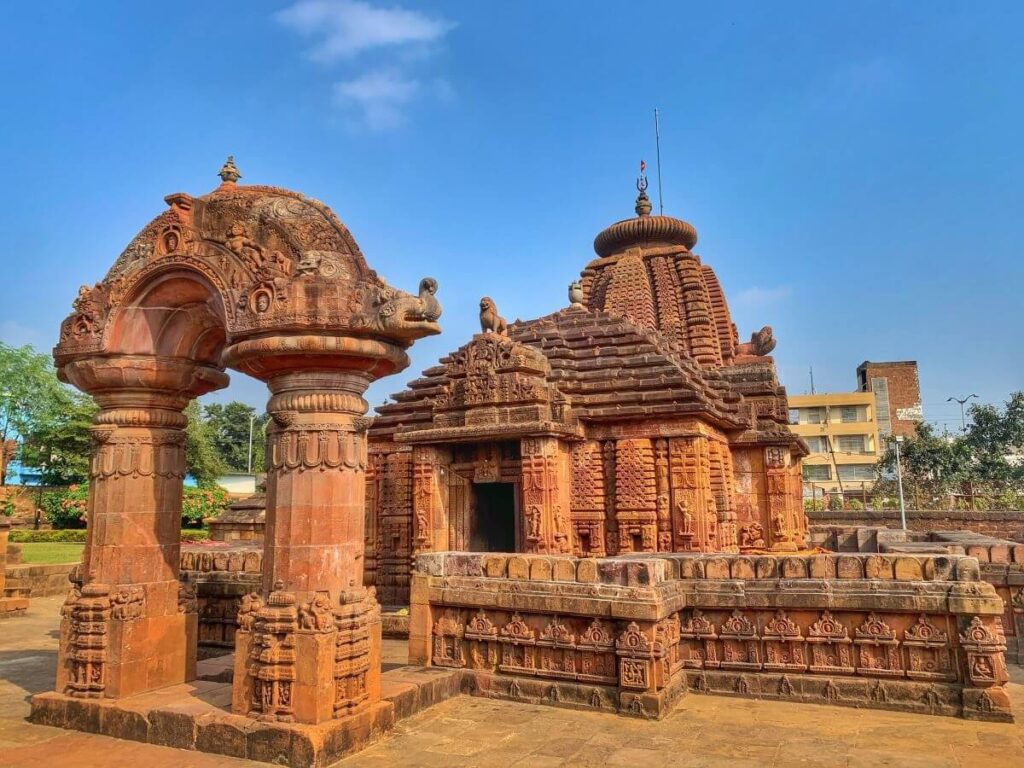
October is when Bhubaneswar begins moving out of the monsoon season and into one of Odisha’s more comfortable travel periods.
The city is still green after the rains, temple courtyards feel fresher, outdoor sightseeing becomes easier, and the festive season can add colour to neighbourhoods across the capital.
But October is not winter. Days can still feel warm and humid, particularly early in the month, and occasional showers remain possible. That makes mornings and late afternoons particularly useful for temples, caves and heritage walks, while museums and indoor attractions work well during the warmer middle of the day.
For first-time visitors, Bhubaneswar offers far more than temples. You can explore ancient Jain caves, learn about Odisha’s tribal cultures, visit Buddhist heritage linked with Emperor Ashoka, taste traditional Odia food and use the city as a base for Konark, Puri and the wider Odisha cultural circuit.
Here are the 12 best things to do in Bhubaneswar in October 2026, followed by weather advice and practical itinerary ideas.
Top Things to Do in Bhubaneswar in October
| Experience | Best For | Suggested Time |
| Lingaraj Temple | Temple architecture & spirituality | 1–2 hours |
| Mukteshwar Temple | Kalinga architecture | 45–60 min |
| Rajarani Temple | Sculpture & photography | 45–60 min |
| Udayagiri & Khandagiri Caves | History & archaeology | 2–3 hours |
| Ekamra Kshetra | Heritage walking | 2–3 hours |
| Dhauli Shanti Stupa | Buddhist history | 1–2 hours |
| Odisha State Museum | Art & history | 2 hours |
| Tribal Museum | Indigenous culture | 1–2 hours |
| Nandankanan Zoological Park | Families & wildlife | Half day |
| Ekamra Haat | Crafts & shopping | 1–2 hours |
| Odia Food Experience | Local culture | Evening |
| Konark & Chandrabhaga | Day trip | Full day |
1. Lingaraj Temple

Lingaraj Temple is the natural starting point for understanding why Bhubaneswar is known as India’s Temple City.
The vast temple complex is one of the city’s most important religious landmarks and one of the finest expressions of Kalinga temple architecture.
Instead of seeing it simply as another monument, pay attention to the rising profile of the temple towers, stone carvings and smaller shrines that surround the main sanctuary.
Early morning is generally the best time to experience the atmosphere before the day becomes hotter and busier.
Visitors should remember that Lingaraj is an active Hindu temple rather than a museum attraction. Dress modestly, follow local rules and respect restrictions around photography and entry.
Best for: Spirituality, architecture and first-time visitors
Suggested time: 1–2 hours
Best time: Morning
For deeper historical and practical information, read the dedicated Lingaraja Temple Bhubaneswar travel guide.
2. Carvings at Mukteshwar Temple
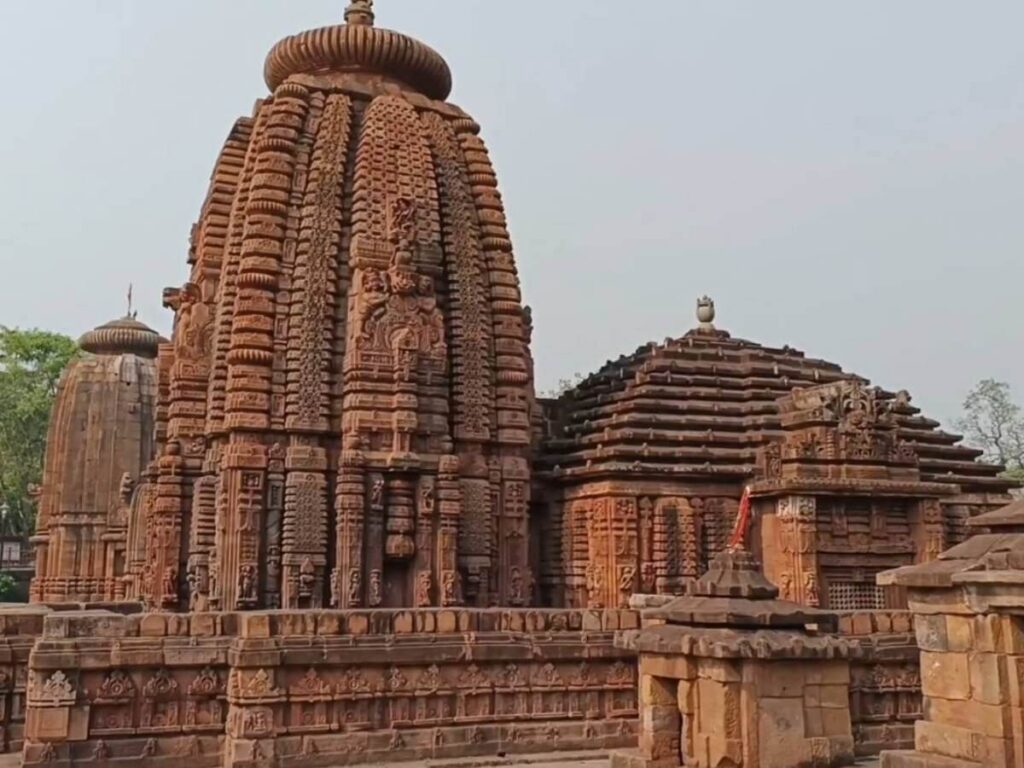
Mukteshwar Temple may be much smaller than Lingaraj, but it is one of Bhubaneswar’s most rewarding architectural stops.
Its beautifully carved stone gateway, decorative details and compact proportions make it easier to study closely.
The temple is particularly useful for travellers who want to understand the evolution of Odisha’s Kalinga architecture rather than simply ticking off the city’s largest temples.
October mornings provide pleasant conditions for walking through this historic part of Bhubaneswar.
Combine Mukteshwar with nearby temples instead of making a separate journey later in the day.
Best for: Architecture and photography
Suggested time: 45–60 minutes
Combine with: Parasurameshwar and Lingaraj Temple
3. Visit Rajarani Temple
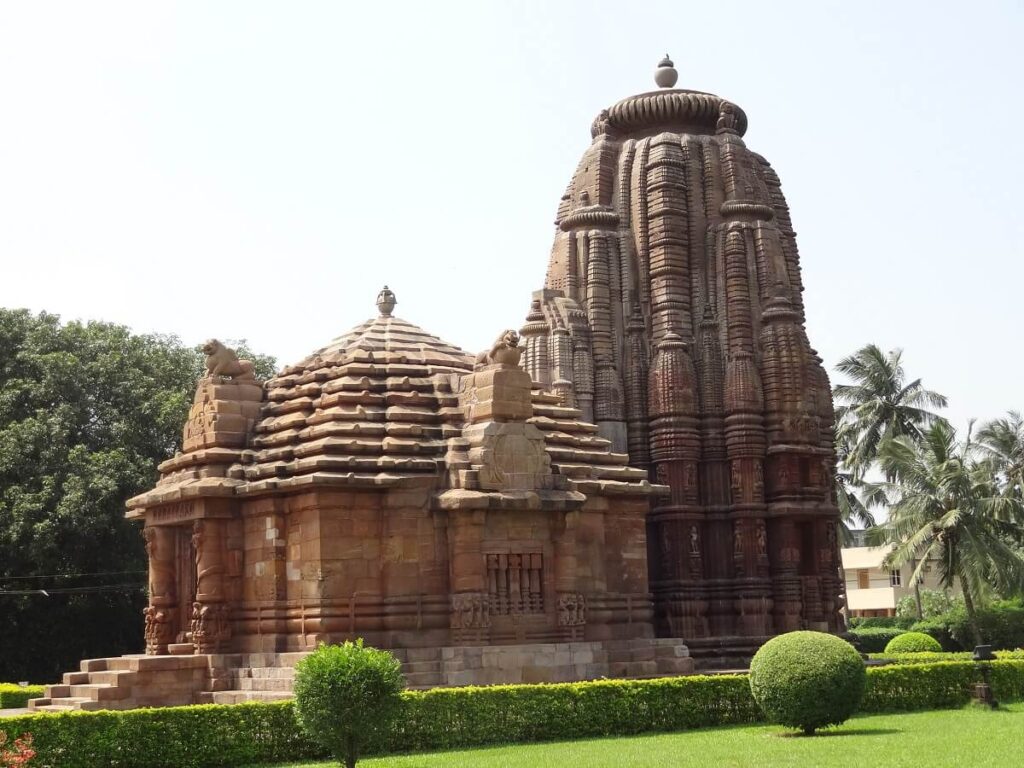
Rajarani Temple provides another side of Bhubaneswar’s temple heritage.
Its warm-coloured sandstone, sculptural panels and landscaped surroundings make it one of the city’s most photogenic historical sites.
Unlike many of Bhubaneswar’s major temples, Rajarani is especially interesting for visitors who want to concentrate on sculpture and architectural detail.
Walk around the exterior slowly rather than simply viewing the building from the front.
The carvings reward close attention.
Best for: Sculpture, architecture and photography
Suggested time: Around 45 minutes
Best time: Morning or late afternoon
Travellers interested in architecture can also read the guide to historical places in Odisha.
4. Explore Udayagiri and Khandagiri Caves
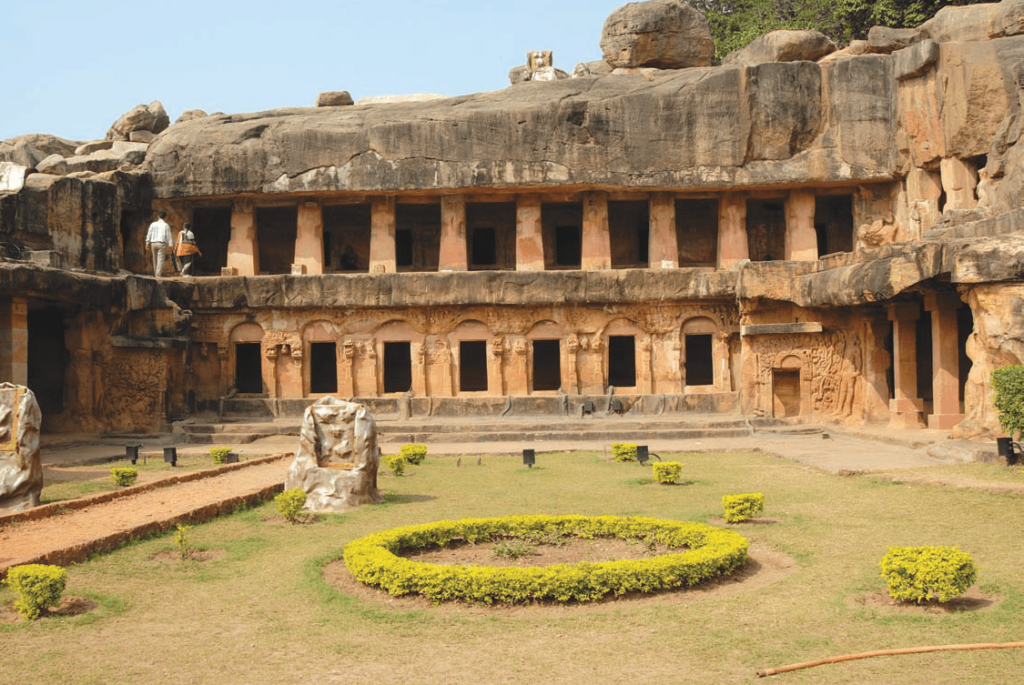
For a completely different chapter of Bhubaneswar’s history, travel to the twin hills of Udayagiri and Khandagiri.
These ancient rock-cut caves are associated with Jain history and were created more than two thousand years ago.
Udayagiri contains some of the most impressive carved caves, including Rani Gumpha, while climbing higher also gives you broad views across modern Bhubaneswar.
This attraction involves considerably more walking and climbing than the city’s temple visits.
October helps because the intense summer heat has passed, but mornings remain preferable.
Wear proper walking shoes because stone surfaces can still be slippery after rain.
Best for: Archaeology, history and active travellers
Suggested time: 2–3 hours
Best time: Early morning
5. Take an Ekamra Kshetra Heritage Walk
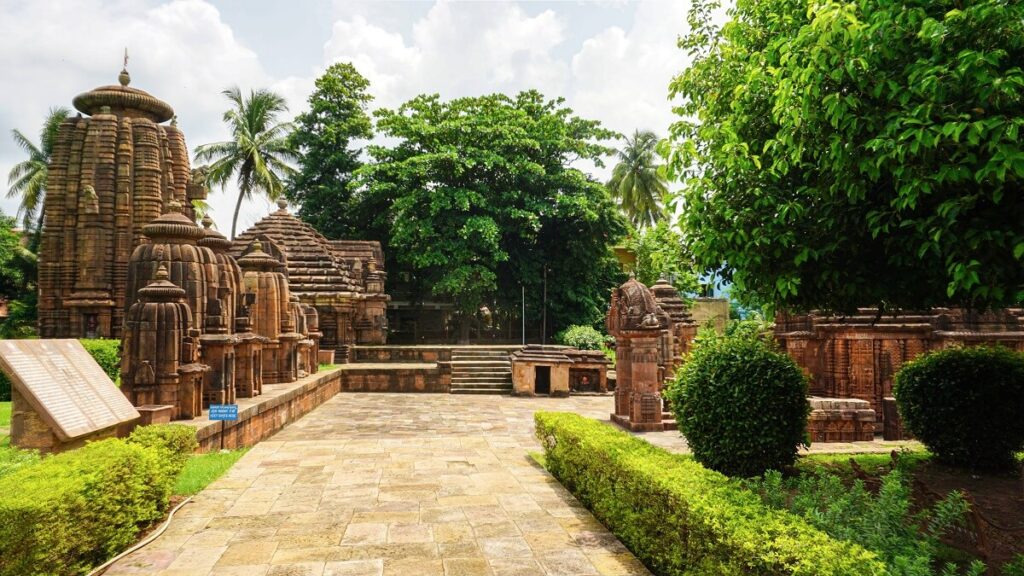
One of the best ways to understand Bhubaneswar is to explore Old Town on foot.
The Ekamra Kshetra area contains temples, sacred water tanks, traditional neighbourhoods and traces of the city’s long religious history within a compact area.
A guided heritage walk adds much more value than visiting individual temples without context.
You begin to understand how the temples relate to one another, how water features such as Bindusagar fit into the sacred landscape, and why this part of Bhubaneswar developed as such an important religious centre.
October is particularly suited to this experience because outdoor walking gradually becomes more comfortable.
Best for: First-time visitors and cultural travellers
Suggested time: 2–3 hours
Best time: Early morning
6. Visit Dhauli Shanti Stupa
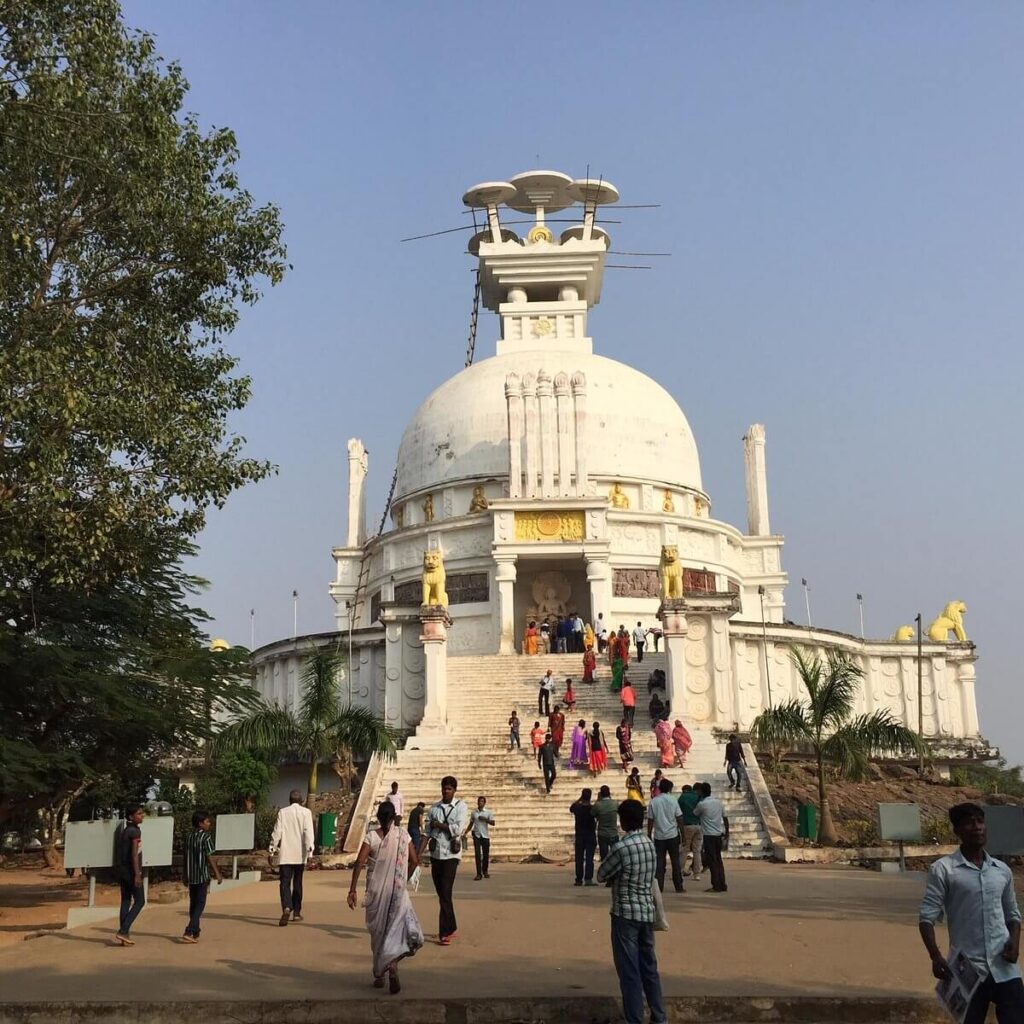
Dhauli deserves more than a quick photograph.
Located outside central Bhubaneswar beside the Daya River, the site is closely associated with the Kalinga War and the transformation traditionally linked with Emperor Ashoka’s embrace of Buddhist principles.
The white Shanti Stupa sits on the hill, while Ashokan rock edicts nearby connect the landscape with an important chapter of ancient Indian history.
Late afternoon is particularly attractive because the heat eases and the views across the surrounding countryside become softer.
If an official light-and-sound programme is operating during your visit, it can be added after daytime sightseeing, but verify current timings rather than designing the itinerary around an old schedule.
Best for: Buddhist history and panoramic views
Suggested time: 1–2 hours
Best time: Late afternoon
For travellers interested in this history, the article on Buddhist places to visit in Odisha provides a useful next read.
7. Explore the Odisha State Museum
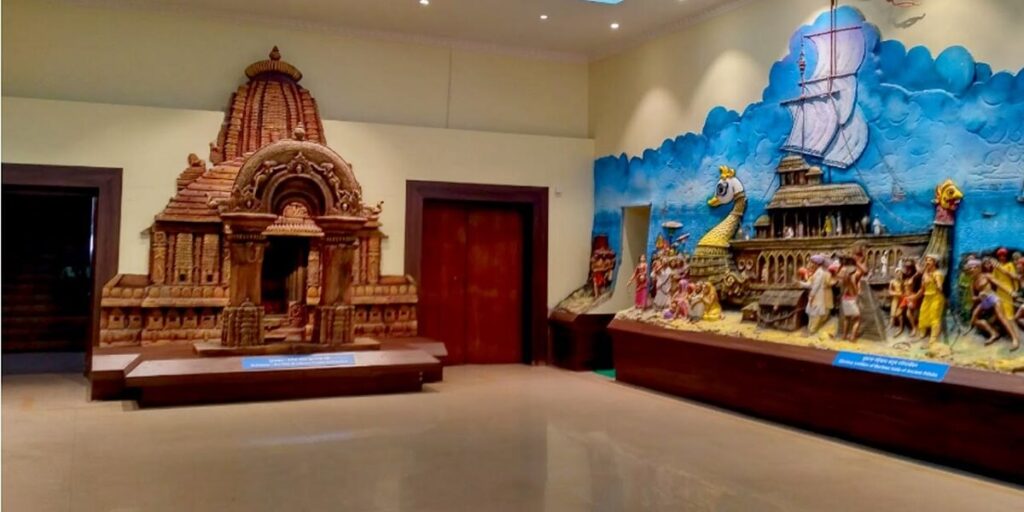
After several hours of outdoor sightseeing, the Odisha State Museum gives you an opportunity to understand the region beyond its monuments.
Collections cover archaeology, sculpture, coins, traditional art and manuscripts.
The palm-leaf manuscript collection is particularly relevant for anyone interested in Odisha’s literary and artistic traditions.
Allow at least a couple of hours if museums genuinely interest you.
This is also a practical activity for a warm October afternoon or during a passing shower.
Best for: History, art and families
Suggested time: Around 2 hours
8. Discover Odisha’s Tribal Heritage
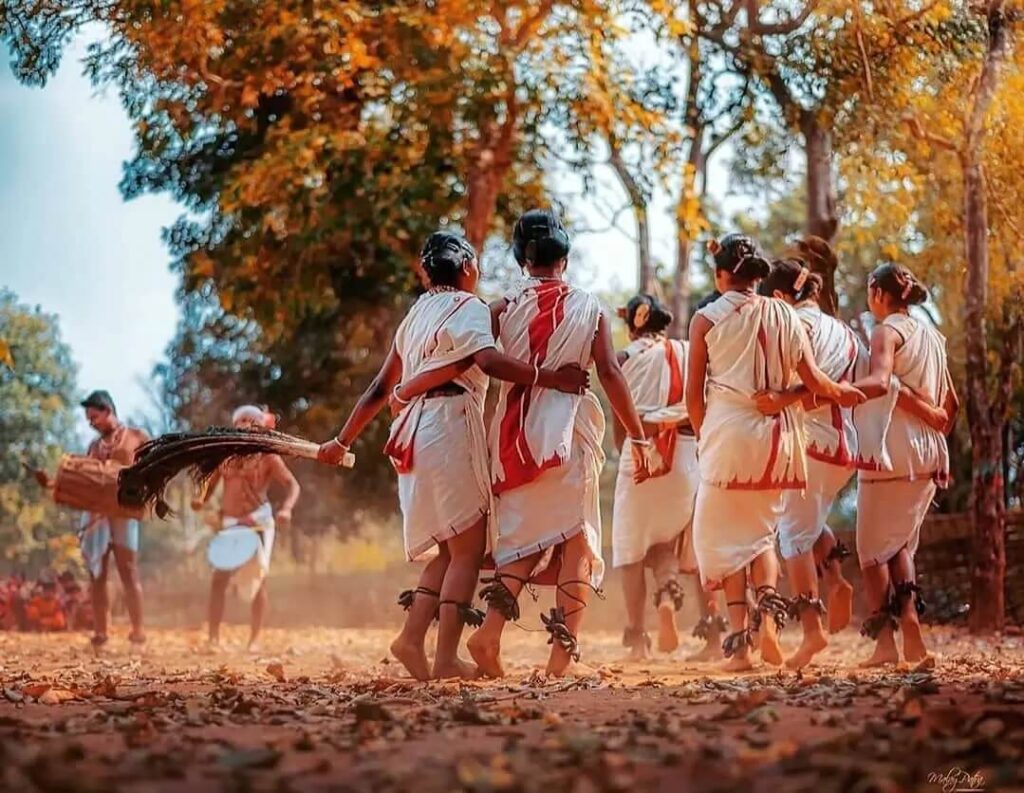
The Museum of Tribal Arts and Artefacts adds another dimension to a Bhubaneswar visit.
Odisha is home to numerous tribal communities with distinctive artistic, cultural and social traditions.
Displays introduce visitors to clothing, jewellery, tools, household objects, religious traditions and artistic practices.
Instead of treating tribal culture as something separate from Odisha’s history, visiting the museum helps place the state’s cultural diversity into a broader context.
Best for: Culture, anthropology and educational visits
Suggested time: 1–2 hours
This section also connects naturally with longer Odisha cultural and tribal itineraries.
9. Spend Half a Day at Nandankanan Zoological Park
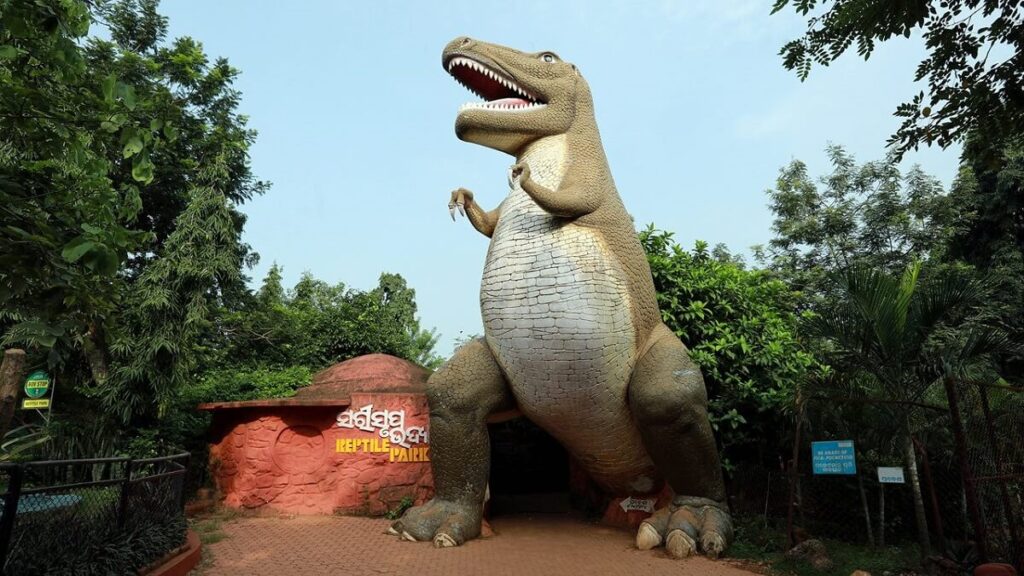
Nandankanan sits outside central Bhubaneswar and is better treated as a half-day excursion rather than another quick city attraction.
The zoological park is set within a green landscape and is particularly well known for its association with white tigers and its safari experiences.
Families will usually find this one of the easiest ways to balance Bhubaneswar’s temple-heavy sightseeing schedule.
Because the park covers a large area, wear comfortable shoes and allow enough time rather than trying to squeeze it between several heritage stops.
October’s greener surroundings can make the setting particularly attractive after the monsoon.
Best for: Families, wildlife and children
Suggested time: Half day
Tip: Check the current weekly closure day and safari availability before visiting.
10. Shop for Odisha Crafts at Ekamra Haat
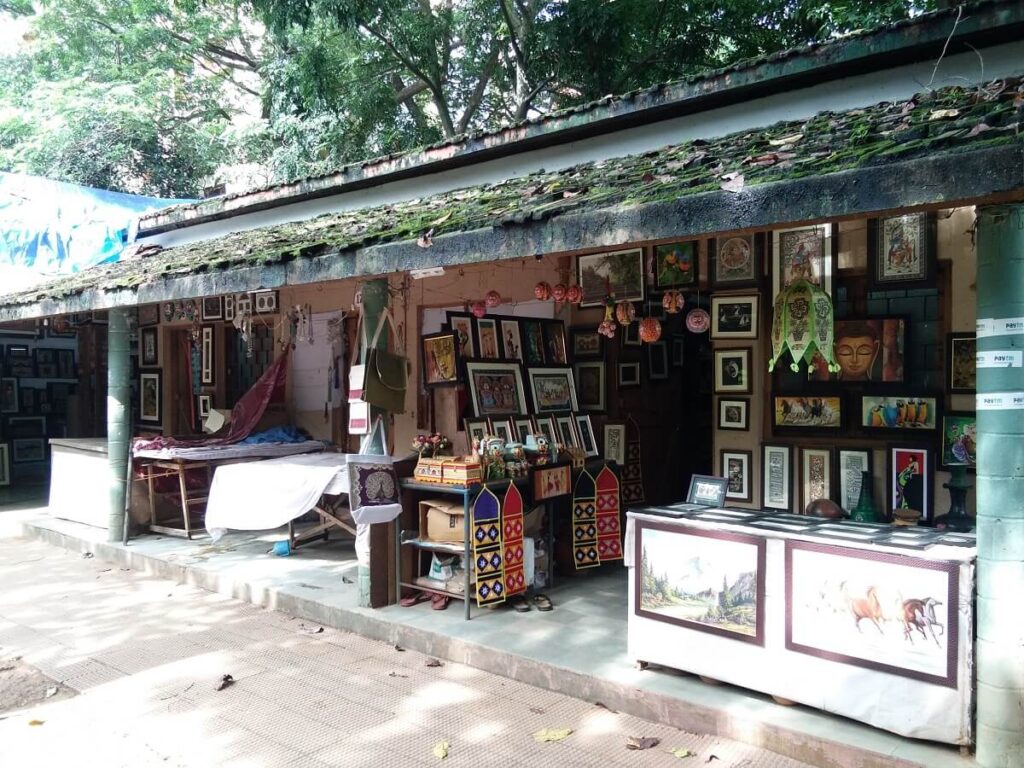
A cultural journey through Bhubaneswar should include Odisha’s living crafts, not only its ancient monuments.
Ekamra Haat provides an accessible introduction to local textiles, handicrafts and regional art traditions.
Look for products connected with Odisha’s weaving, appliqué, silver work and traditional painting styles.
Shopping here becomes much more meaningful if you have already spent time learning about Odisha’s history and artistic traditions.
An early evening visit works particularly well after sightseeing.
Best for: Handicrafts, souvenirs and local culture
Suggested time: 1–2 hours
Travellers continuing toward Puri can later visit Raghurajpur Artist Village for a deeper encounter with Pattachitra painting traditions.
11. Taste Traditional Odia Food

Food deserves its own place in a Bhubaneswar itinerary.
Start with a traditional Odia thali if you want to experience several flavours together.
Look for dishes such as dalma, pakhala when seasonally available, vegetable preparations, fish cooked with mustard and local sweets.
Dahi bara aloo dum is one of the region’s best-known street-food combinations, while chhena poda is an excellent choice for dessert.
Instead of relying entirely on hotel restaurants, try at least one well-regarded local restaurant during your stay.
Best for: Everyone
Suggested time: Lunch or dinner
Food is also one of the easiest ways to experience Odisha’s culture after temples and museums close for the day.
12. Take a Day Trip to Konark and Chandrabhaga Beach
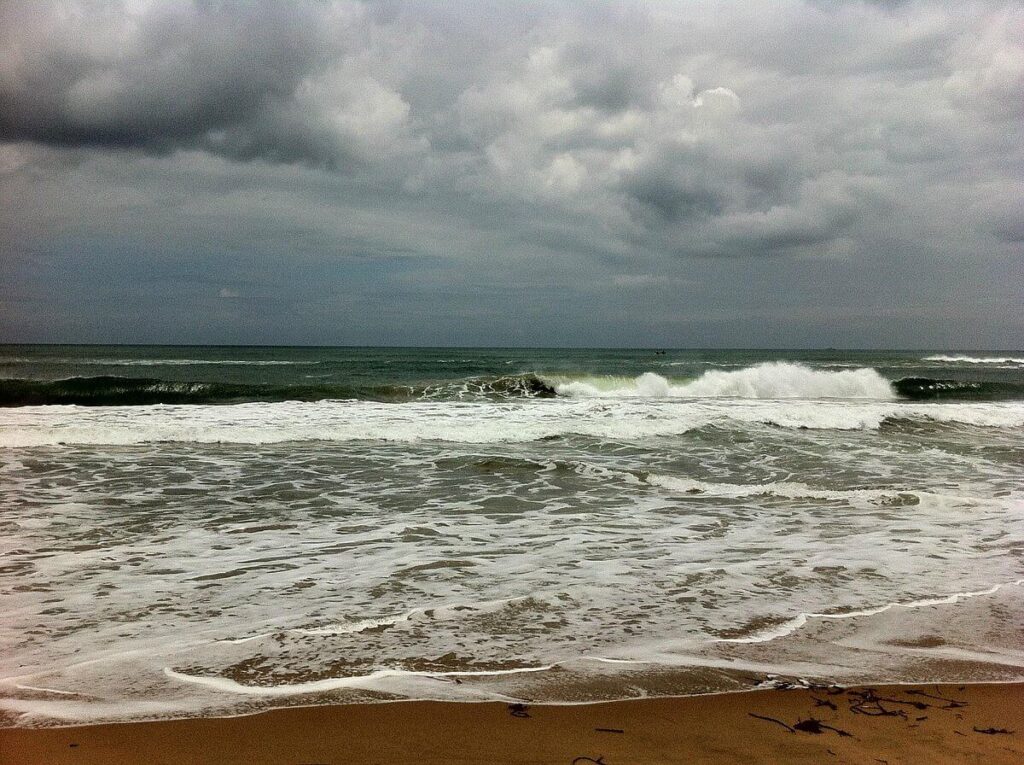
If you have an additional day, travel beyond Bhubaneswar to Konark.
The UNESCO-listed Sun Temple is one of India’s great architectural monuments and lies roughly 65 kilometres from Bhubaneswar.
Its stone chariot design, sculpted wheels and detailed carvings deserve several hours rather than a rushed photo stop.
After visiting the temple, continue toward nearby Chandrabhaga Beach for a short coastal break.
October is generally part of the more comfortable sightseeing season, although coastal weather can still be changeable.
This combination works much better as a proper day trip than presenting Chandrabhaga Beach as a Bhubaneswar city attraction.
Best for: Architecture, history and coastal scenery
Suggested time: Full day
For planning, read the guide on how to reach Konark Sun Temple from Bhubaneswar.
Is October a Good Time to Visit Bhubaneswar?
Yes. October marks the beginning of Odisha’s main travel season.
However, it is better described as a post-monsoon transition month than as cool winter weather.
You can generally expect:
- Warm daytime temperatures
- Humid conditions, particularly early in the month
- Gradually improving outdoor sightseeing weather
- Occasional showers
- Greener post-monsoon landscapes
- Festival activity depending on the lunar calendar
The Bay of Bengal can also experience severe weather systems during the post-monsoon period, so travellers should check forecasts before longer coastal excursions.
November through February generally provides cooler and more dependable sightseeing conditions, but October offers greener landscapes and a lively festive atmosphere.
Durga Puja in Bhubaneswar
Depending on the year’s Hindu lunar calendar, Durga Puja may fall partly or fully in October.
When dates coincide with your trip, Bhubaneswar becomes considerably more festive.
Neighbourhoods such as Saheed Nagar, Nayapalli and Rasulgarh are known for large Puja celebrations, decorated pandals and evening crowds.
Do not assume the festival falls on identical dates every October. Check the calendar for your specific travel year.
If attending in the evening, allow extra travel time because traffic can be heavy around major pandals.
Best 1-Day Bhubaneswar Itinerary
If you have only one day, focus on the city’s strongest heritage sites.
Morning:
Lingaraj Temple → Mukteshwar Temple → Old Town / Bindusagar
Late Morning:
Udayagiri & Khandagiri Caves
Afternoon:
Odisha State Museum
Late Afternoon:
Dhauli Shanti Stupa
Evening:
Traditional Odia dinner
This gives you temples, archaeology, history, Buddhist heritage and food in one day without travelling far outside Bhubaneswar.
Best 2-Day Bhubaneswar Itinerary
Day 1: Temple City & Heritage
Lingaraj Temple → Mukteshwar → Rajarani Temple → Ekamra heritage area → Odisha State Museum → local Odia dinner
Day 2: Caves, Culture & Dhauli
Udayagiri and Khandagiri → Tribal Museum → Dhauli Shanti Stupa → Ekamra Haat
Families can replace one museum with Nandankanan Zoological Park.
3 Days: Add Konark
With three days, keep two days for Bhubaneswar and use the third for:
Bhubaneswar → Konark Sun Temple → Chandrabhaga Beach → Bhubaneswar
If you have four or five days, continue onward to Puri rather than returning to Bhubaneswar every evening.
Bhubaneswar, Puri and Konark: How Many Days?
A short Odisha heritage trip works best over 4–6 days.
One practical route is:
Day 1: Arrive Bhubaneswar
Day 2: Bhubaneswar sightseeing
Day 3: Dhauli → Pipili → Konark → Puri
Day 4: Puri
Day 5: Chilika Lake or return to Bhubaneswar
This compact route covers Odisha’s three strongest introductory destinations without excessive driving.
What to Pack for Bhubaneswar in October
Pack mainly for warm weather.
Bring:
- Lightweight cotton or breathable clothing
- Comfortable walking shoes
- Umbrella or light rain jacket
- Sun protection
- Reusable water bottle
- Modest clothing for temples
- Insect repellent
- Small day bag
A heavy winter jacket is unnecessary for normal Bhubaneswar sightseeing in October.
Temple Etiquette in Bhubaneswar
Bhubaneswar’s temples are active religious places.
Dress modestly and follow photography rules.
Remove footwear wherever required and avoid disturbing prayers or rituals.
Entry restrictions can apply at certain temples, so international visitors should confirm access before arrival rather than assuming every temple operates like an archaeological monument.
Even where entry to an inner temple complex is restricted, surrounding heritage areas can still be worth exploring with a knowledgeable local guide.
Where to Go After Bhubaneswar
Bhubaneswar works exceptionally well as the starting point for a wider Odisha journey.
Continue toward:
Puri for Jagannath heritage and the coast.
Konark for the UNESCO-listed Sun Temple.
Chilika Lake for lagoons, birdlife and boat journeys.
Raghurajpur for traditional Pattachitra art.
Ratnagiri, Lalitgiri and Udayagiri for Odisha’s Buddhist heritage.
A longer itinerary can continue south toward Gopalpur or into Odisha’s tribal regions.
Final Thoughts
Bhubaneswar in October is much more interesting when you treat it as a living cultural city rather than simply a collection of temples.
Start with Lingaraj, Mukteshwar and Rajarani to understand its Kalinga architecture. Explore Udayagiri and Khandagiri for a much older chapter of Odisha’s history, then visit Dhauli to connect the region with Emperor Ashoka and the Kalinga War.
The museums introduce Odisha’s artistic and tribal traditions, while Ekamra Haat and local restaurants show how those traditions continue today.
Families can add Nandankanan, while travellers with an extra day should make the journey to Konark.
October is not the coolest month of the year, but the combination of post-monsoon greenery, improving sightseeing conditions and festival atmosphere makes it a rewarding time to begin an Odisha journey.
For most first-time visitors, allow at least two days in Bhubaneswar and another two or three for Puri, Konark and the coast.
