
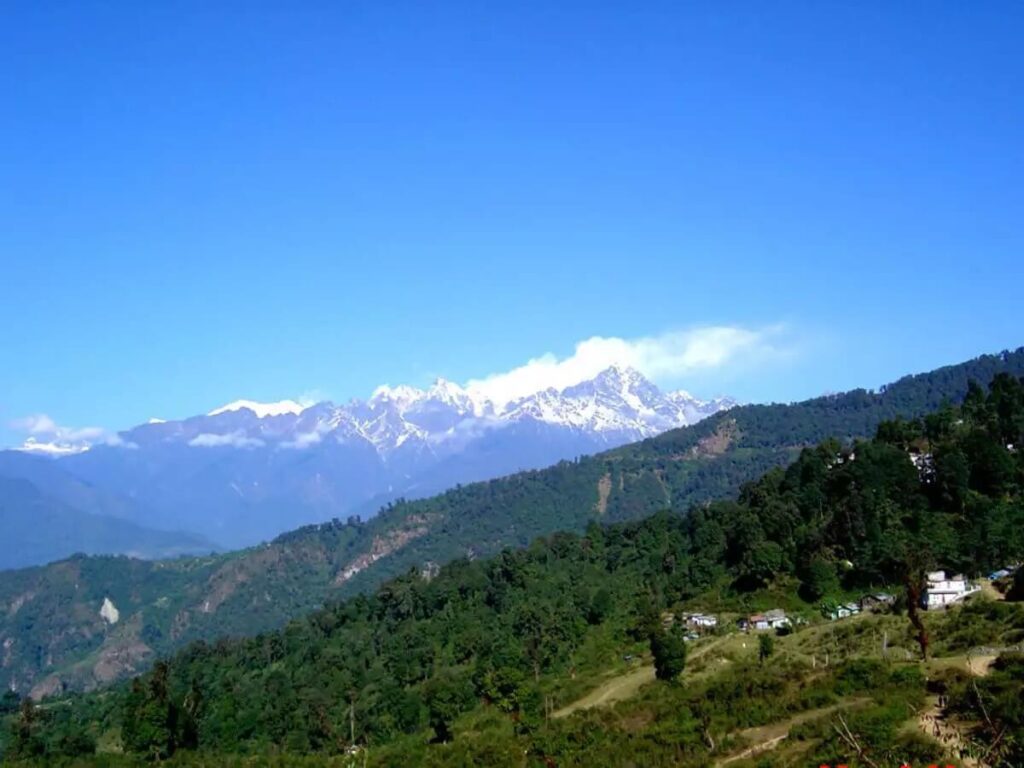
October is one of Sikkim’s most rewarding travel months—but it is not the same trip at every altitude. Gangtok, Pelling and South Sikkim usually feel pleasantly cool after the monsoon. Tsomgo, Nathula and North Sikkim can be bitterly cold, windy and affected by sudden road restrictions. That contrast is exactly why a good October itinerary needs more thought than a list of attractions.
If this is your first visit, use Gangtok as your starting point, add either North Sikkim or Pelling rather than trying to squeeze in both, and keep one flexible day if a high-altitude excursion matters to you. The places below are arranged as practical travel clusters, so you can see which ones naturally fit together.
Quick answer: For a balanced first trip in October, choose Gangtok, Tsomgo Lake and Baba Mandir, then add Lachung–Yumthang if the North Sikkim road is open. Travellers who prefer a gentler, less permit-dependent holiday should pair Gangtok with Ravangla and Pelling instead.
Is October a good time to visit Sikkim?
Yes. By October, the heaviest monsoon rain has normally eased, humidity falls and the mountain views often become clearer. It is also a busy season: popular hotels, local vehicles and North Sikkim permits can be in demand around the Durga Puja and Diwali holiday periods.
The month has two distinct personalities. Early October may still bring residual rain, cloud and road repairs after the monsoon. Later in the month is generally drier and colder, with shorter daylight hours and a greater chance of frost or occasional snow at high passes. Snow should be treated as a possibility, not a promise.
Sikkim weather in October: what to expect
There is no single useful “Sikkim temperature” because the state rises from subtropical valleys to passes above 4,000 metres. A sunny afternoon in Gangtok can feel comfortable while the same day at Tsomgo Lake or Nathula requires a warm jacket, gloves and protection from the wind.
| Area | Useful planning range | What October feels like |
|---|---|---|
| Gangtok and lower towns | Roughly 10–22°C | Cool mornings and evenings; mild afternoons when sunny |
| Pelling, Ravangla and Yuksom | Roughly 8–20°C | Cool, often clear; colder after sunset |
| Lachung and Lachen | Roughly 2–15°C | Cold nights; temperatures vary sharply with cloud and wind |
| Tsomgo, Nathula, Zero Point and Gurudongmar approaches | Near freezing to about 10°C, sometimes lower | Cold and exposed; wind chill and sudden weather changes matter |
These are broad planning ranges, not forecasts. Check the forecast for each town and ask your registered local operator about the latest road situation before departure.
At a glance: which places fit your trip?
| Place or circuit | Time to allow | Best for | Main October caution |
|---|---|---|---|
| Gangtok | 2 nights | First visit, food, monasteries, easy local sightseeing | Holiday traffic and hotel demand |
| Tsomgo–Baba Mandir–Nathula | 1 day | High-altitude scenery from Gangtok | Permit, quota, weather and road approval |
| Lachung–Yumthang | 2–3 days | North Sikkim landscapes | Long drives and changeable road access |
| Lachen–Gurudongmar | Only if currently open | Experienced, fit high-altitude travellers | Very high altitude; access may be suspended |
| Pelling | 2 nights | Kanchenjunga views, monasteries, slower pace | Mountain views depend on cloud |
| Ravangla | 1–2 nights | Couples, families, calm hill scenery | Cool evenings and limited late transport |
| Namchi and Temi | 1 day or 1 night | Culture, gardens and tea landscapes | Best planned as a South Sikkim route |
| Yuksom | 1–2 nights | History, forest walks, trekking gateway | Slow mountain roads |
| Zuluk and Old Silk Route | 2 days | Hairpin roads, remote eastern scenery | Permit and basic accommodation |
| Goecha La trek | 8–11 trekking days | Fit, prepared trekkers | Not an add-on sightseeing excursion |
10 best places to visit in Sikkim in October
1. Gangtok: the sensible place to begin
Gangtok is more than a night halt. It is the easiest place to adjust to the altitude, organise permit-controlled excursions and understand how the weather is behaving before heading higher. Spend your first day gently: walk along MG Marg, visit the Namgyal Institute of Tibetology and choose one or two viewpoints rather than racing between every stop on a standard taxi list.
For a quieter morning, visit Rumtek Monastery outside the centre or include Enchey Monastery and Ganesh Tok on a local circuit. October evenings are lively around MG Marg, but a warm layer is useful once the sun drops.
Plan it well: Stay at least two nights if you want an East Sikkim excursion. Do not arrive late and assume a Nathula or Tsomgo permit can always be arranged for the next morning. Read this guide to places near Gangtok before deciding how much to fit into one day.
2. Tsomgo Lake, Baba Mandir and Nathula Pass: one permit-controlled day
This is the classic high-altitude day trip from Gangtok. Tsomgo Lake sits in a stark glacial landscape that looks especially crisp under an October sky. Many approved itineraries continue to Baba Mandir, while Nathula is an additional permit-controlled stop near the international border.
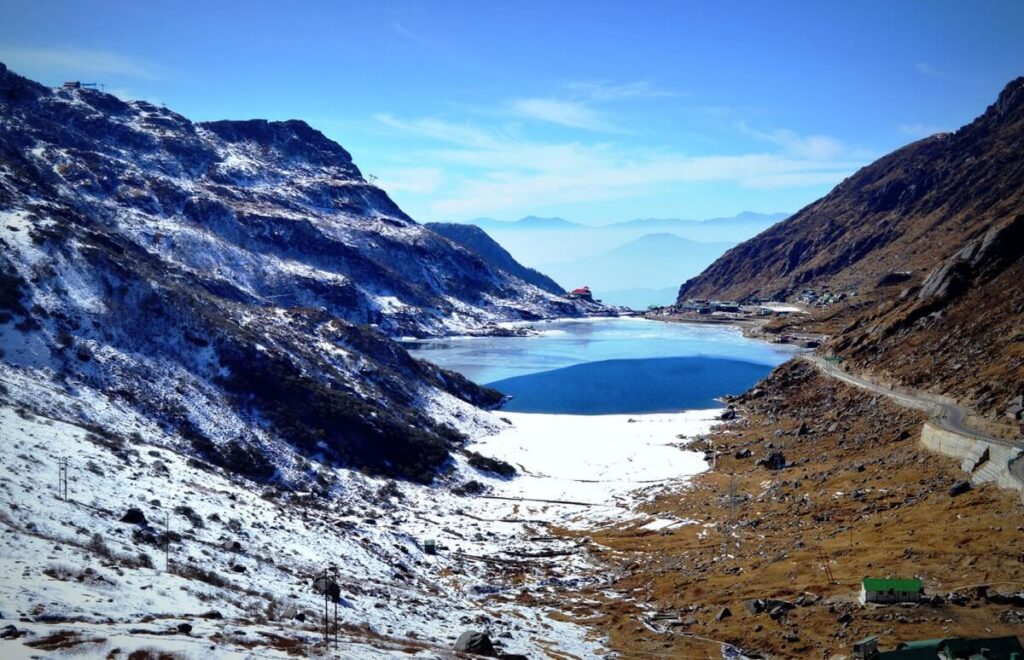
The important detail is that these stops are not guaranteed merely because you have a free day. Permits, daily quotas, road conditions, defence restrictions and weather all affect the route. Nathula is reached by road; it should not be described as a casual trekking attraction. If Nathula permission is unavailable, Tsomgo and Baba Mandir may still make a worthwhile day, subject to local clearance.
Plan it well: Carry your original identity documents and the photographs requested by your operator. Start early, dress in layers and tell your driver immediately if anyone develops a severe headache, nausea, unusual breathlessness or confusion. Travellers with heart or respiratory conditions should seek medical advice before high-altitude excursions.
3. Lachung and Yumthang Valley: the practical North Sikkim choice
If the North Sikkim road is open, Lachung is the base for Yumthang Valley. The drive from Gangtok is long and often slow, but it passes waterfalls, steep river valleys and settlements that feel very different from the capital. A two-night plan is more humane than treating the circuit as a race.
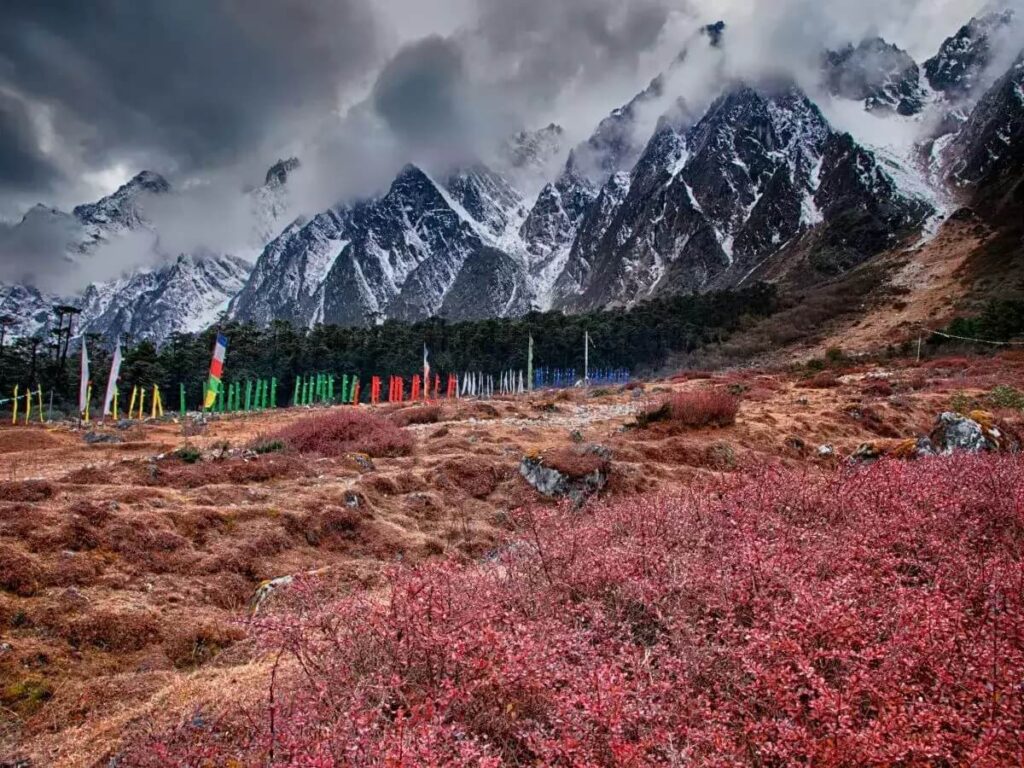
October is not Yumthang’s main flower season; the rhododendron display belongs largely to spring. The reward now is the broad valley, clearer air, yellowing vegetation and the chance of fine mountain views. Zero Point may be offered as an extra excursion when the road and authorities allow it, but it is higher, colder and not included in every package.
Plan it well: Expect early starts, basic but welcoming accommodation and considerable time in a vehicle. Pack a small overnight bag because shared North Sikkim vehicles may have limited luggage space. See the Lachung tour options and Yumthang itineraries, then verify the live road status before paying for non-refundable arrangements.
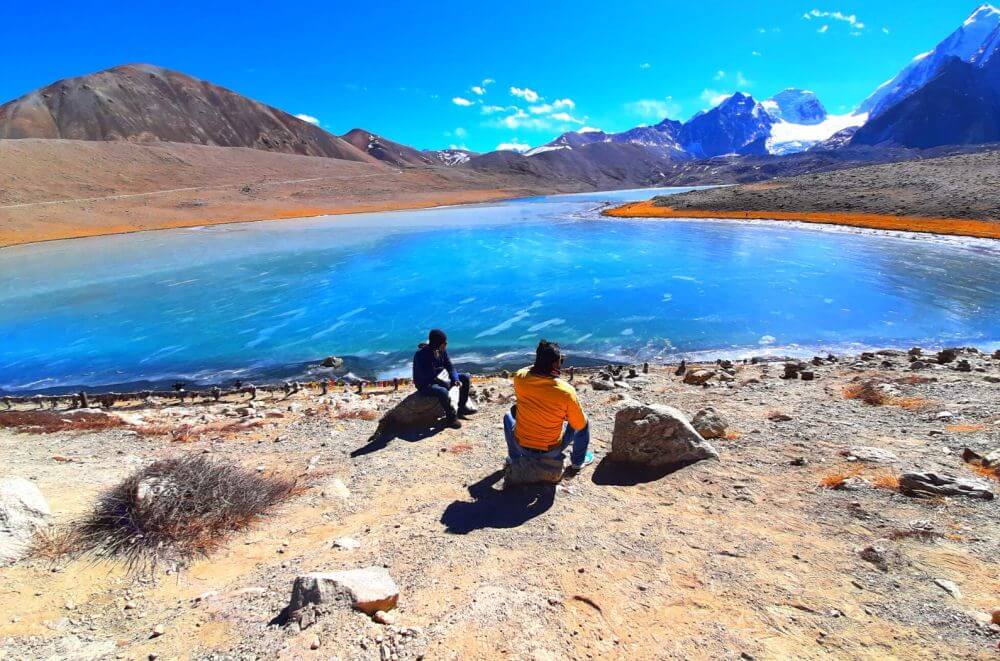
4. Lachen and Gurudongmar Lake: only when access is officially open
Gurudongmar Lake is visually extraordinary, but it is the place most likely to be mishandled in a generic Sikkim list. The lake is at extreme altitude, the journey is strenuous, and the Lachen approach can be closed for long periods after landslides, infrastructure damage, snowfall or administrative restrictions.

Do not choose a tour solely because an old itinerary displays a Gurudongmar photograph. Ask whether the route is currently authorised, what the substitute plan is if it closes, and how the operator handles acclimatisation. Young children, older travellers and people with relevant health conditions may be better served by a lower-altitude route.
Plan it well: Treat Gurudongmar as conditional, not as the centrepiece of a fixed booking. Never hide symptoms of altitude illness to complete a sightseeing checklist.
5. Pelling: mountain views without an extreme-altitude day
Pelling works beautifully in October because the post-monsoon air can reveal broad views of the Kanchenjunga range, especially early in the morning. Pemayangtse Monastery, Rabdentse Ruins, Khecheopalri Lake and the surrounding forest give the town more depth than its viewpoints alone.
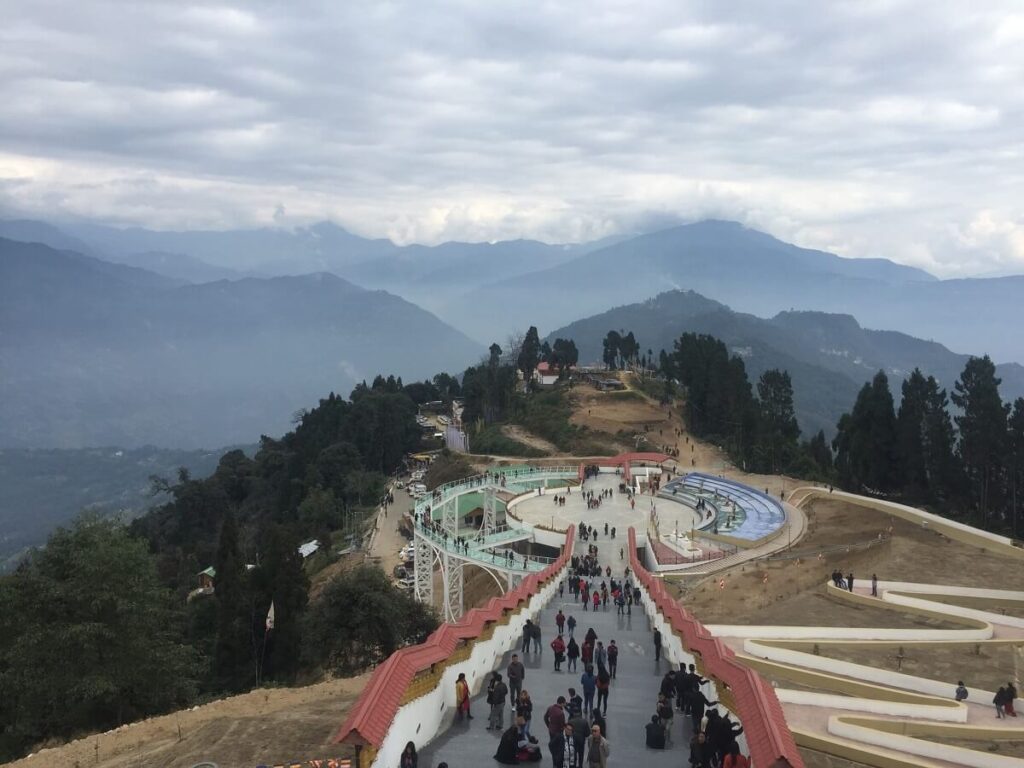
Pelling is also a useful counterweight to the long vehicle days of North Sikkim. Two nights allow one full local sightseeing day and a sunrise without making the stay feel like a transit stop.
Plan it well: Choose a room for location and comfort rather than paying only for a “mountain-view” label; cloud can obscure the range anywhere. Compare the available Pelling tour plans and read about other places to visit in Sikkim.
6. Ravangla: a slower South Sikkim base
Ravangla suits travellers who want open views and a quieter pace. Buddha Park is the headline stop, but the real pleasure is the unhurried rhythm: mist lifting from the hills, monastery visits and time to walk rather than spend the entire day changing vehicles.
It fits naturally between Gangtok and Pelling. One night is enough for a compact route, while two nights make sense for couples, families or anyone recovering from a demanding North Sikkim circuit.
Plan it well: Combine Ravangla with Namchi or Temi rather than returning to Gangtok between each stop. This reduces backtracking and makes better use of daylight.
7. Namchi and Temi Tea Garden: South Sikkim without the rush
Namchi adds culture and wide hill views to an October itinerary. Depending on your interests and available time, a local route can include Siddhesvara Dham, Samdruptse and nearby viewpoints. Temi Tea Garden brings a different landscape: neat tea slopes, village roads and a pleasant break from high-altitude excursions.
This pairing is particularly useful for families or mixed-age groups. It delivers variety without requiring everyone to tolerate a freezing pass or a ten-hour mountain drive.
Plan it well: Travel Gangtok–Temi–Namchi–Ravangla–Pelling in one direction. A well-routed private vehicle costs more than shared transfers but can save substantial backtracking.
8. Yuksom: history, forests and the start of a bigger adventure
Yuksom is peaceful, historically important and surrounded by forest. It is associated with Sikkim’s first Chogyal and is also the gateway for the Dzongri and Goecha La trekking routes. Even without a long trek, travellers can enjoy village walks and a slower day around the heritage sites.
The road journey takes time, so Yuksom is not a sensible out-and-back add-on from Gangtok. It belongs in a West Sikkim circuit with Pelling, or at the start of a properly organised trek.
Plan it well: Stay at least one night and carry cash for small purchases. If trekking is the priority, review this practical guide to hiking to Dzongri.
9. Zuluk and the Old Silk Route: remote scenery with simple stays
Zuluk appeals to travellers who enjoy remote roads, small settlements and the famous switchbacks of the Old Silk Route. October can bring clear views, but fog, frost or an early spell of snow can change the experience quickly.
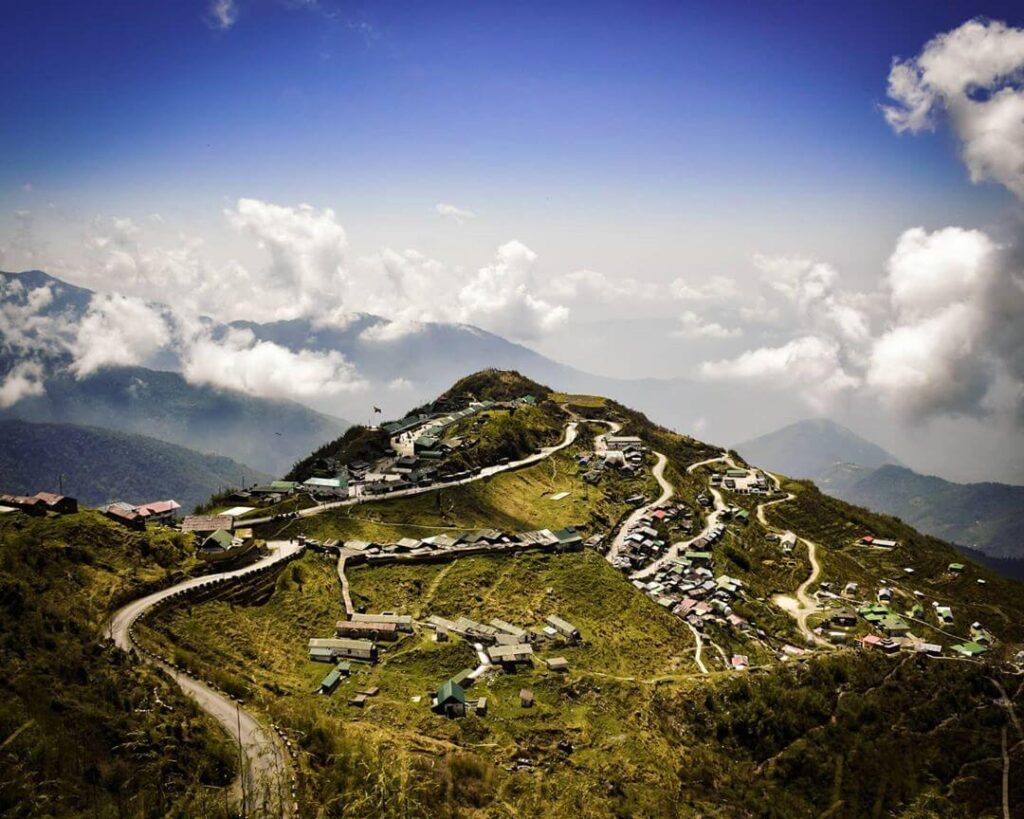
Homestays are part of the appeal, but standards are simpler than in Gangtok. The route also requires permits and careful vehicle planning. It is not the best choice for somebody who becomes carsick on repeated hairpin bends.
Plan it well: Allow two days and confirm the exact entry and exit route. Do not assume that a permit for one East Sikkim circuit automatically covers every restricted road.
10. Goecha La: a separate trek, not a sightseeing stop
October is one of the preferred periods for the Goecha La trek because the monsoon has usually withdrawn and the mountain views can be excellent. But this is a demanding, multi-day trek from Yuksom—not a place to “cover” between Pelling and Gangtok.
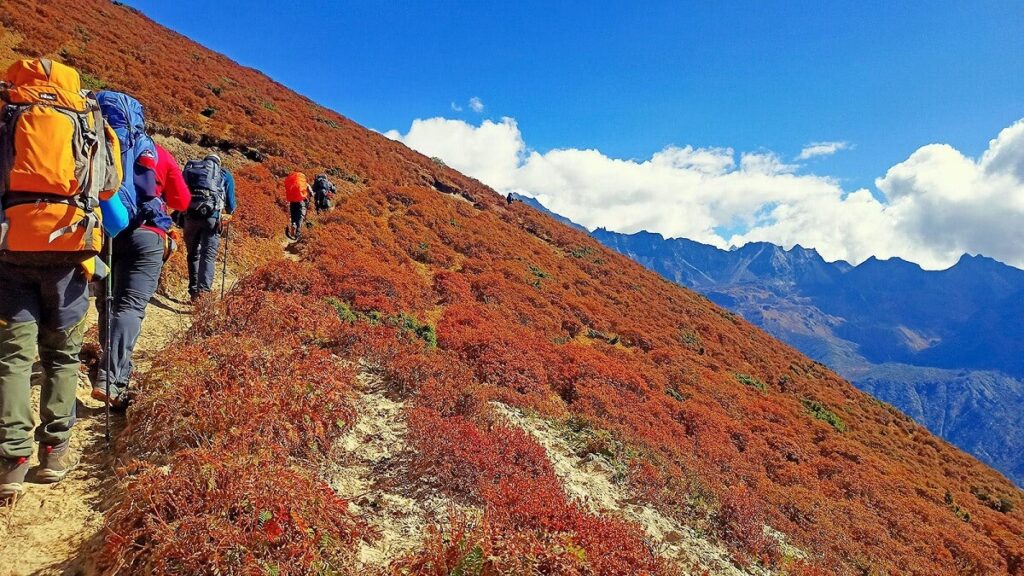
Cold nights, long walking days and altitude are central to the experience. Choose an authorised organiser, ask about guide credentials, emergency procedures, acclimatisation, group size, sleeping equipment and waste practices. Add buffer days for mountain weather.
Plan it well: Reserve roughly 8–11 trekking days depending on the exact route and acclimatisation plan, plus travel time to and from Yuksom. For alternatives, see the guide to the best treks in Sikkim.
Realistic Sikkim itineraries for October
4 days: Gangtok and East Sikkim
- Day 1: Arrive in Gangtok; easy MG Marg evening.
- Day 2: Gangtok local sightseeing and permit preparation.
- Day 3: Tsomgo Lake and Baba Mandir; add Nathula only if permitted.
- Day 4: Depart with adequate road-to-airport or station buffer.
This is the cleanest short plan. A four-day Gangtok itinerary can be adapted to current permits and road conditions.
6 days: Gangtok, Lachung and Yumthang
- Day 1: Arrive in Gangtok.
- Day 2: Gangtok sightseeing; confirm North Sikkim permit.
- Day 3: Drive to Lachung.
- Day 4: Yumthang Valley; Zero Point only if appropriate and open; second night in Lachung.
- Day 5: Return to Gangtok.
- Day 6: Depart.
If the North Sikkim route is unavailable, replace it with Ravangla and Pelling rather than waiting indefinitely in Gangtok.
7 days: Gangtok, Ravangla and Pelling
- Days 1–2: Gangtok and one East Sikkim day, subject to permits.
- Day 3: Gangtok to Ravangla, with Temi en route if timing permits.
- Day 4: Ravangla and Namchi.
- Day 5: Ravangla to Pelling.
- Day 6: Pelling sightseeing.
- Day 7: Depart for NJP or Bagdogra with an early start.
This is the more dependable choice for families, older travellers and people who value culture and scenery over extreme altitude.
9 days: a balanced first Sikkim trip
- Days 1–2: Gangtok.
- Days 3–5: Lachung and Yumthang, if open; otherwise add South and West Sikkim.
- Day 6: Gangtok to Ravangla.
- Day 7: Ravangla, Namchi or Temi.
- Days 8–9: Pelling and onward departure.
Do not add Zuluk and Gurudongmar merely to increase the destination count. Each belongs to a different route and adds permits, altitude and considerable driving.
Sikkim permits: what travellers need to know
Permit rules depend on nationality, destination and the current security or road situation. Restricted high-altitude areas cannot be treated like ordinary self-drive sightseeing.
- Indian travellers: A registered local operator normally processes the required permissions for routes such as Tsomgo, Nathula and parts of North Sikkim. Carry the original identification specified by the operator and recent photographs if requested.
- Foreign visitors: Entry and protected-area requirements differ, and some border routes may be prohibited or allowed only under specific conditions. Check the current Restricted Area Permit guidance and Protected Area Permit guidance on the official Sikkim Tourism website before booking.
- Everyone: A permit is not a promise that a road will open. The administration, police, defence authorities and weather conditions can still stop travel on the day.
Permit procedures change. For more background, use Tusk Travel’s Sikkim PAP and RAP guide, but verify the final requirements with official sources and your registered operator.
How to reach Sikkim and move around
By air: Bagdogra Airport is the most commonly used gateway. Pakyong Airport is closer to Gangtok but has fewer services and can be affected by mountain weather.
By train: New Jalpaiguri (NJP) is the main railhead. The road to Gangtok commonly takes several hours, and October holiday traffic or road repairs can extend the journey.
Within Sikkim: Shared and private local vehicles are the practical options. Permit-controlled areas generally require approved local arrangements. Build a generous transfer buffer before a flight or long-distance train; a mountain road journey should never be timed to the last hour.
What to pack for Sikkim in October
- Layered clothing: light base layers, fleece and a wind-resistant outer jacket
- A warmer insulated jacket, gloves, cap and warm socks for high-altitude days
- Comfortable shoes with grip; October roads and paths may remain damp
- Sunscreen, sunglasses, lip balm and a reusable water bottle
- Personal medication and a small day bag for permit excursions
- Original identity documents plus the copies/photos requested by your operator
- Some cash, because card or mobile payment connectivity can be unreliable outside towns
Pack for the highest place on your itinerary, not for the temperature in Gangtok at lunchtime.
October planning mistakes to avoid
- Planning around guaranteed snow: October can bring snow at high altitude, but many visitors will see none.
- Assuming every North Sikkim route is open: Verify Lachen and Lachung axes separately; one may operate while another is closed.
- Using one temperature for the whole state: Altitude changes the weather dramatically.
- Trying to cover Gangtok, North Sikkim, Pelling and Zuluk in a week: The map hides long, tiring road journeys.
- Ignoring acclimatisation: A permit does not make a traveller physically ready for extreme altitude.
- Booking a tight same-day connection: Landslides, traffic and road works can delay the return to Bagdogra or NJP.
Frequently asked questions
What is the weather like in Sikkim in October?
October is generally drier and clearer than the monsoon months. Gangtok and the lower towns usually have mild days and cool nights, while Tsomgo, Nathula and North Sikkim can be close to freezing, particularly in the morning, at night or during bad weather.
What is the temperature in Sikkim in October?
As a broad guide, lower and mid-altitude towns may range from about 8–22°C, while high-altitude areas can fall near or below freezing. Always check a destination-specific forecast rather than a state-wide average.
Can I visit Nathula Pass in October?
Often, yes, but only when permits, quotas, road conditions and official clearance allow. Apply through an authorised local operator and keep a fallback plan. Access schedules and eligibility can change.
Is Yumthang Valley open in October?
Yumthang is commonly visited in October when the North Sikkim road is operating. The valley’s appeal is autumn scenery and clear mountain air; October is not the peak rhododendron flowering period.
Is North Sikkim safe to visit in October?
It can be visited when the authorities and local operators confirm the route is safe, but conditions are not uniform. Landslides, repairs, snowfall and high-altitude health risks can affect individual roads. Check Lachung and Lachen access separately and follow local instructions.
Does it snow in Sikkim in October?
Snow is possible at very high elevations, especially later in the month, but it is not guaranteed. Gangtok, Pelling and most lower towns do not normally offer a snow experience in October.
How many days are enough for Sikkim in October?
Four days suit Gangtok and one East Sikkim excursion. Six days can include Lachung and Yumthang if the road is open. Seven to nine days are better for combining Gangtok with South and West Sikkim at a comfortable pace.
Is October suitable for children and older travellers?
Yes for Gangtok, Pelling, Ravangla and Namchi in most cases. High-altitude trips need individual medical judgment and should never be treated as compulsory. A lower-altitude itinerary can still be an excellent Sikkim holiday.
A final practical recommendation
Sikkim in October rewards travellers who leave room for the mountains to make the final decision. Put Gangtok at the centre of a first visit, choose one ambitious route rather than three, and agree on a backup plan before the trip begins. If the passes open and the sky clears, consider it a gift. If they do not, Pelling, Ravangla, Namchi and Yuksom still offer a rich journey without turning the holiday into a contest against the road.
For help matching the route to your available days, health considerations and preferred pace, ask Tusk Travel for a customised plan with a written alternative for any permit-dependent sector.
