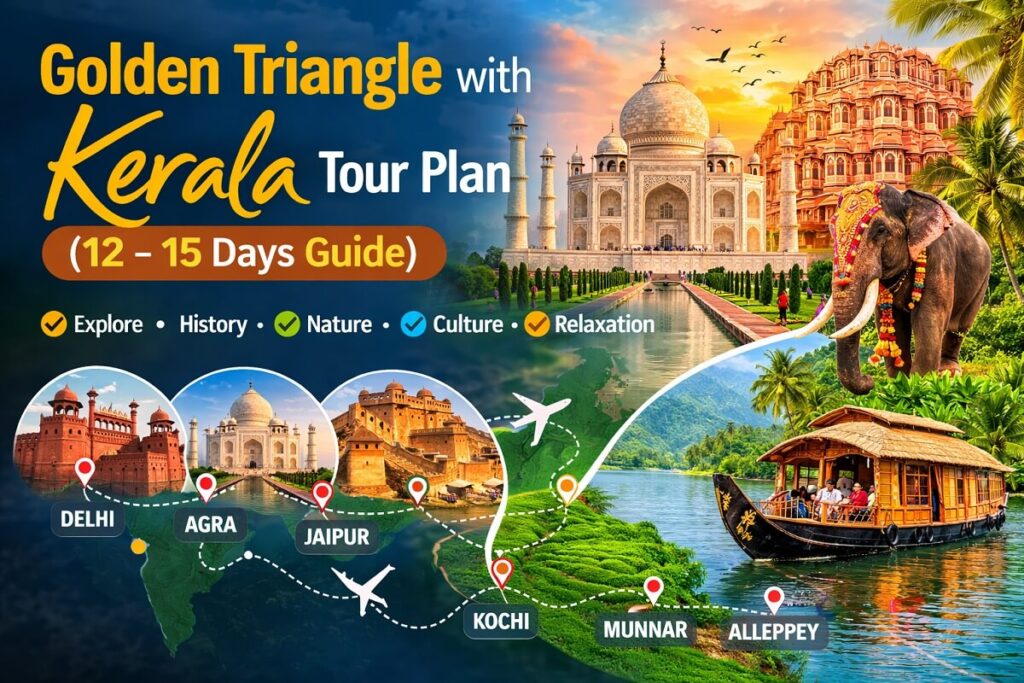
India is a country of remarkable diversity. Within a single journey, travelers can experience grand Mughal architecture, royal palaces, bustling cities, lush green mountains, peaceful backwaters, and tropical beaches. One of the best ways to experience this diversity is by planning a Golden Triangle with Kerala tour.
This itinerary combines the famous Golden Triangle circuit — Delhi, Agra, and Jaipur — with the natural beauty of Kerala in South India. It offers travelers a balanced journey through history, culture, nature, and relaxation. For many first-time visitors to India, this combination is the ideal introduction to the country.
A 12 to 15 day Golden Triangle with Kerala trip allows enough time to explore the historical landmarks of North India while also enjoying the tranquil landscapes of Kerala. This guide explains everything you need to know about planning this journey, including the best time to visit, recommended itinerary, travel routes, places to explore, and useful travel tips.
What Is the Golden Triangle with Kerala Tour?
The Golden Triangle is India’s most popular travel circuit. It connects three historic cities:
- Delhi – India’s capital city filled with historic monuments and vibrant markets
- Agra – Home to the world-famous Taj Mahal
- Jaipur – The Pink City of Rajasthan known for royal palaces and forts
These three cities form a triangle on the map, which is how the route received its name.
When Kerala is added to the itinerary, travelers experience a completely different side of India. Kerala is located in the southwestern part of the country and is famous for:
- Backwater houseboats
- Tea plantations in the hills
- Wildlife reserves
- Tropical beaches
- Ayurveda wellness traditions
The combination of Golden Triangle history and Kerala’s natural beauty creates a well-rounded travel experience.
Why Combine Golden Triangle with Kerala?
Many travelers choose this route because it offers a complete picture of India in one trip.
1. Cultural Diversity
North India and South India have different languages, architecture, cuisine, and traditions. By visiting both regions, travelers experience India’s incredible cultural variety.
2. Historical Landmarks
The Golden Triangle showcases the architectural wonders of the Mughal and Rajput empires, including forts, palaces, and UNESCO World Heritage Sites.
3. Natural Beauty
Kerala provides a refreshing contrast to North India’s busy cities. The region is known for green landscapes, calm waterways, and scenic mountains.
4. Balanced Travel Experience
The trip begins with energetic city exploration and gradually transitions into peaceful nature experiences in Kerala.
Best Time to Plan the Trip:
Choosing the right travel season can make a big difference in your experience.
October to March – Best Time
This period is considered the ideal time for a Golden Triangle with Kerala trip. The weather is pleasant in North India and comfortable in Kerala.
Temperatures are moderate, making sightseeing more enjoyable.
April to June – Summer Season
Summer can be very hot in Delhi, Agra, and Jaipur. However, Kerala hill stations like Munnar remain cooler.
July to September – Monsoon Season
Kerala becomes extremely lush during monsoon season. While rainfall may affect sightseeing plans, it is the best season for Ayurveda treatments.
Ideal Duration for the Tour:
A well-planned Golden Triangle tour requires about 5 to 6 days, while Kerala destinations typically need another 5 to 7 days.
Therefore, the ideal trip duration is 12 to 15 days. This allows travelers to explore each destination comfortably without rushing.
Typical duration breakdown:
- Delhi – 2 days
- Agra – 1 to 2 days
- Jaipur – 2 days
- Kochi – 1 day
- Munnar – 2 days
- Thekkady – 1 to 2 days
- Alleppey backwaters – 1 day
- Relaxation or beach extension – 1 to 2 days
Golden Triangle Tour Packages
- Delhi Agra Jaipur 7 Days Golden Triangle Itinerary
- Luxury Golden Triangle India Tour 8 Days Package
- Golden Triangle with Varanasi Spiritual Tour 8 Days
- Golden Triangle and Ranthambore Safari Tour 9 Days
- Golden Triangle with Haridwar Rishikesh Pilgrimage Tour
- Golden Triangle and Amritsar Tour from Mumbai 10 Days
Day-by-Day Golden Triangle with Kerala Itinerary (15 Days):
Below is a recommended itinerary that offers a balanced travel pace.
Day 1 – Arrival in Delhi
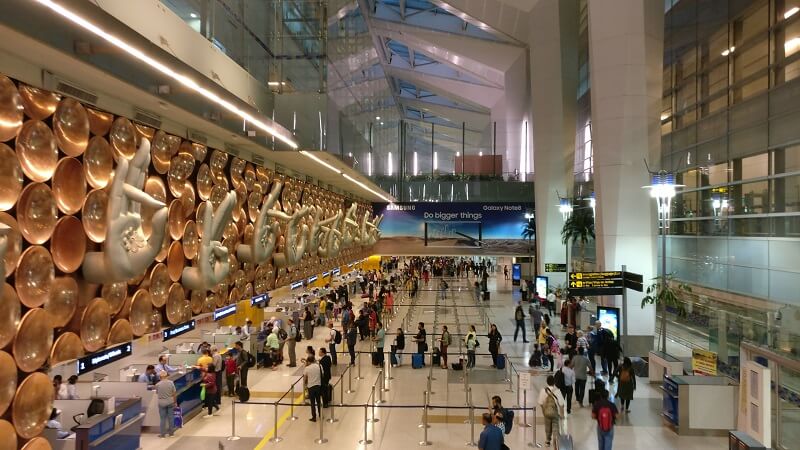
Your journey begins in Delhi, India’s capital city and a major international gateway.
After arriving at the airport, transfer to your hotel and rest after your flight.
Depending on your arrival time, you may explore nearby attractions such as:
- Connaught Place shopping district
- India Gate illuminated at night
- Local restaurants serving North Indian cuisine
Delhi offers a fascinating introduction to India with its mix of ancient heritage and modern urban life.
Day 2 – Exploring Delhi
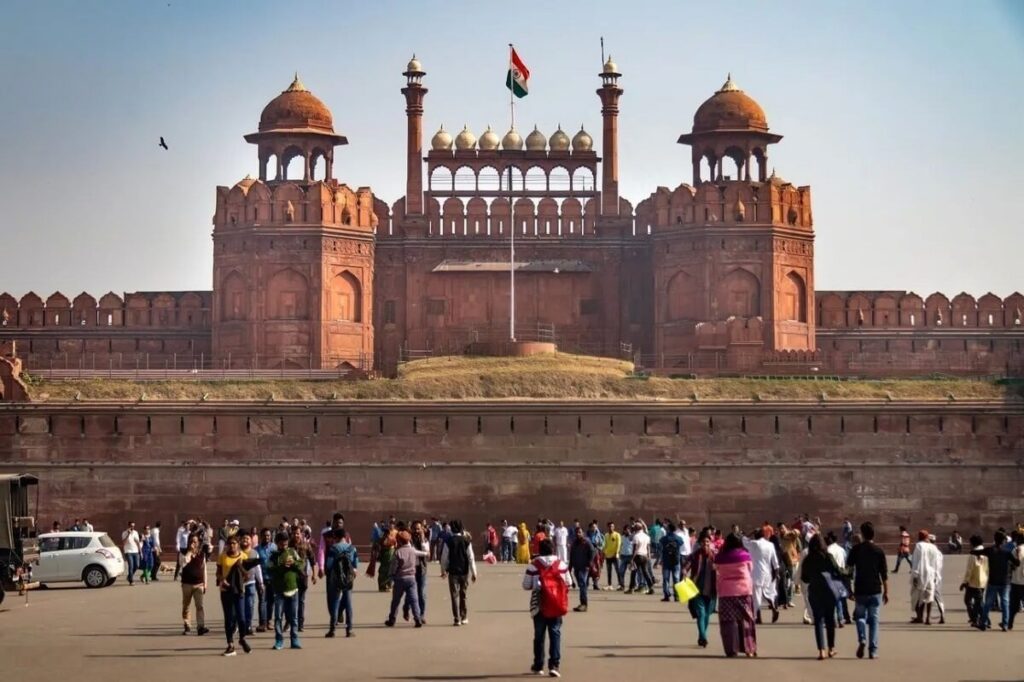
Delhi is divided into two parts: Old Delhi and New Delhi, each offering a unique perspective on the city.
Old Delhi Highlights
Old Delhi is filled with narrow lanes, historic mosques, and bustling markets.
Important sites include:
- Red Fort
- Jama Masjid Mosque
- Chandni Chowk Market
- Raj Ghat memorial of Mahatma Gandhi
- A rickshaw ride through Chandni Chowk is a memorable experience.
New Delhi Highlights
New Delhi features wide boulevards and colonial architecture.
Major attractions include:
- India Gate war memorial
- Rashtrapati Bhavan (Presidential Palace)
- Qutub Minar
- Humayun’s Tomb
- Lotus Temple
By evening, visitors often enjoy street food tours or cultural performances.
Day 3 – Delhi to Agra

After breakfast, travel from Delhi to Agra, the city of the Taj Mahal.
The distance is about 230 kilometers, and the journey takes around 3 to 4 hours by road.
Once in Agra, visit Agra Fort, an impressive Mughal fortress built with red sandstone.
From the fort’s balconies, visitors can enjoy distant views of the Taj Mahal.
Later, visit Mehtab Bagh, a garden located across the Yamuna River that offers beautiful sunset views of the Taj Mahal.
Day 4 – Taj Mahal and Fatehpur Sikri
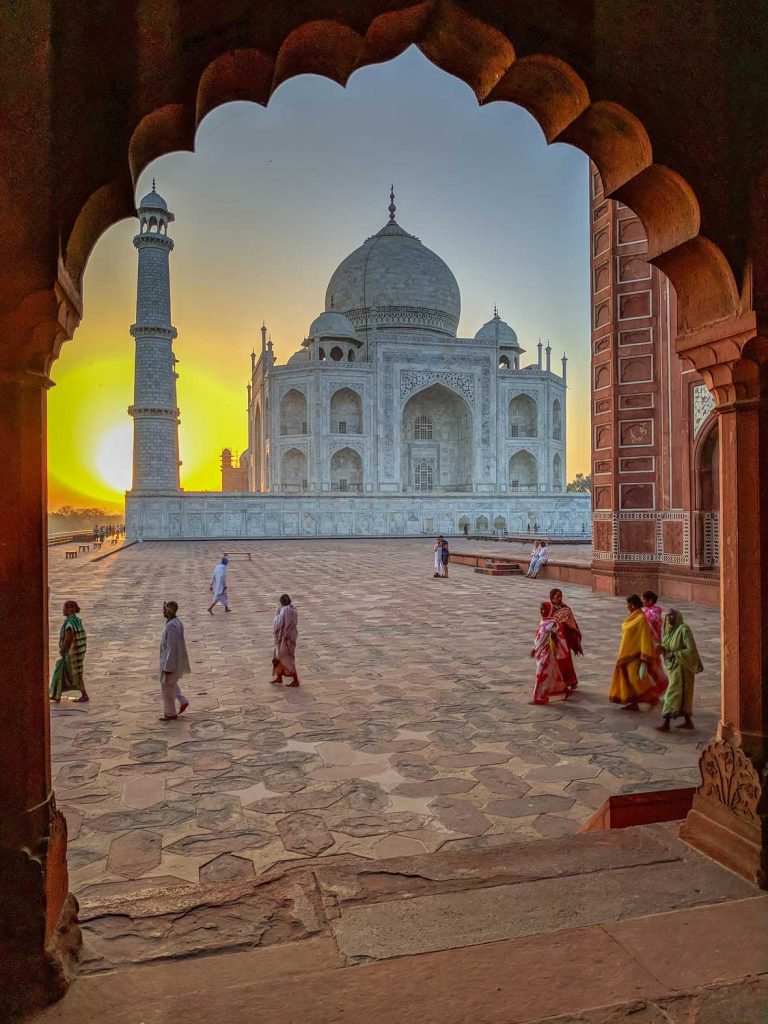
Wake early to visit the Taj Mahal at sunrise. Early morning is the best time to see the monument with fewer crowds and soft golden light.
The Taj Mahal was built by Emperor Shah Jahan in memory of his wife Mumtaz Mahal and is considered one of the greatest monuments of love in the world.
After exploring the Taj Mahal, drive toward Jaipur. Along the way, stop at Fatehpur Sikri, an abandoned Mughal city built in the 16th century.
Important structures in Fatehpur Sikri include:
- Buland Darwaza
- Jama Masjid
- Panch Mahal
Continue your journey to Jaipur and check into your hotel.
Day 5 – Jaipur Sightseeing

Jaipur, the capital of Rajasthan, is known as the Pink City because of its distinctive pink-colored buildings.
Start the day with a visit to Amber Fort, located on a hill outside the city. The fort features grand courtyards, intricate mirror work, and impressive architecture.
Other must-visit attractions include:
- City Palace
- Jantar Mantar Observatory
- Hawa Mahal (Palace of Winds)
- Jal Mahal water palace
Jaipur is also famous for handicrafts, jewelry, textiles, and traditional markets.
Day 6 – Jaipur Cultural Experiences
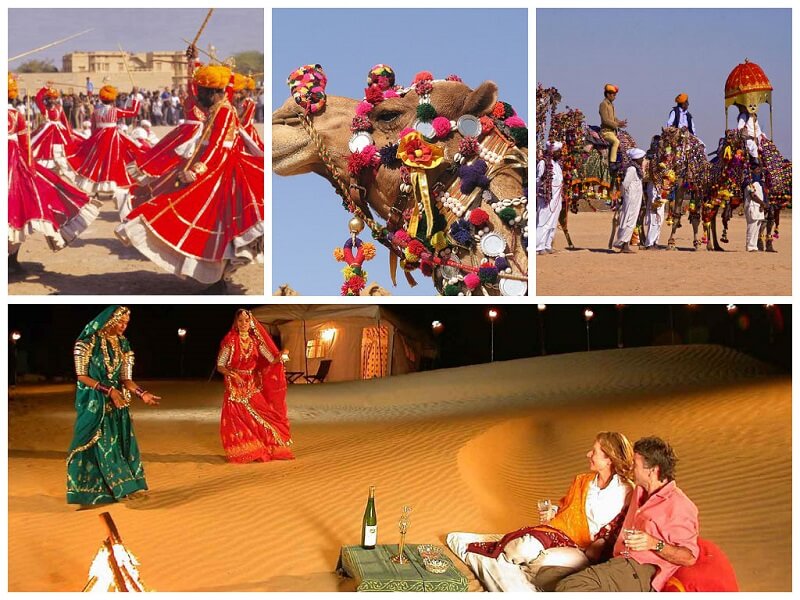
Spend another day exploring Jaipur’s culture and local life.
Possible experiences include:
- Visiting Nahargarh Fort for panoramic city views
- Exploring local bazaars such as Johari Bazaar
- Attending a Rajasthani folk dance performance
- Enjoying traditional Rajasthani cuisine
Jaipur offers an authentic glimpse into Rajasthan’s royal heritage.
Day 7 – Return to Delhi and Fly to Kochi
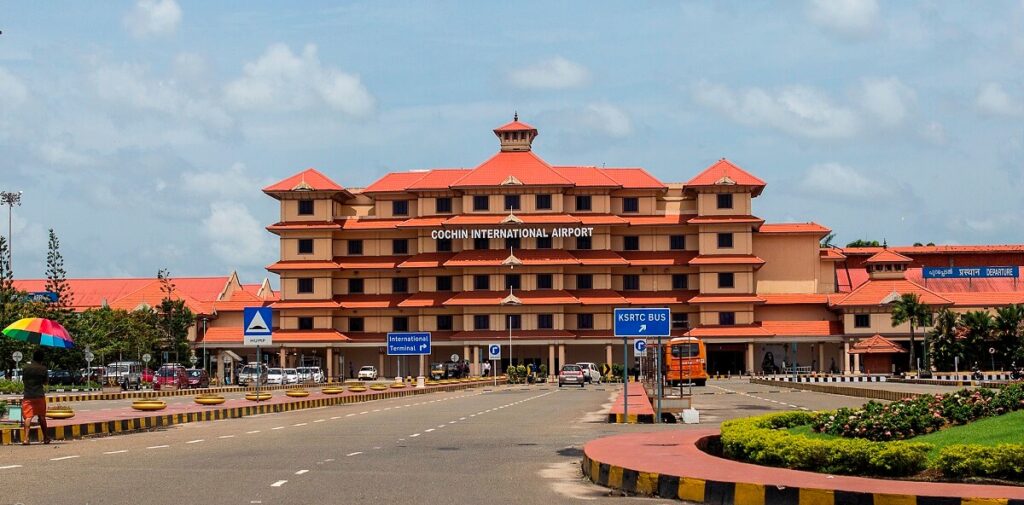
Travel back to Delhi and take a domestic flight to Kochi, the gateway to Kerala.
The flight takes around 3 hours.
Upon arrival, check into your hotel in Fort Kochi and relax.
The atmosphere in Kerala is noticeably different from North India, with palm trees, coastal breezes, and colonial architecture.
Day 8 – Kochi Sightseeing
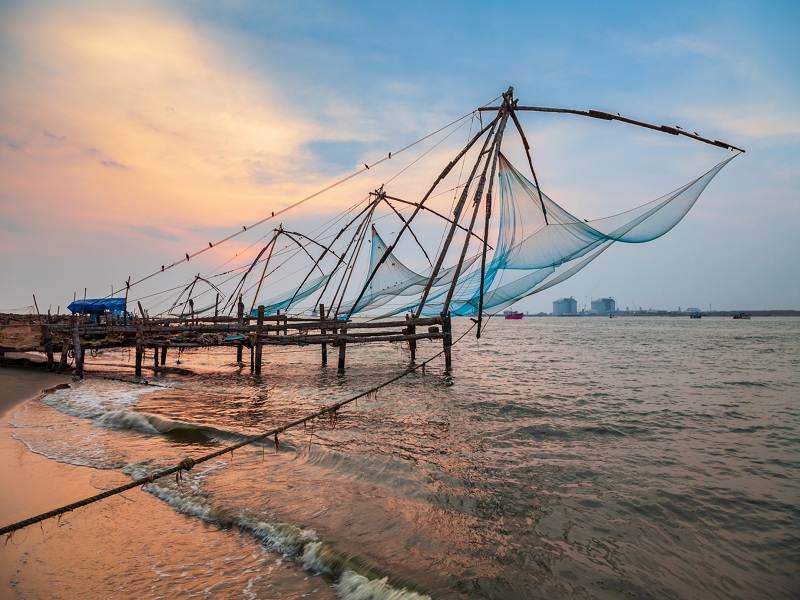
Kochi is one of India’s most historic port cities and has been influenced by Portuguese, Dutch, and British traders.
Important places to visit include:
- Fort Kochi
- Chinese fishing nets
- Mattancherry Palace
- Jewish Synagogue
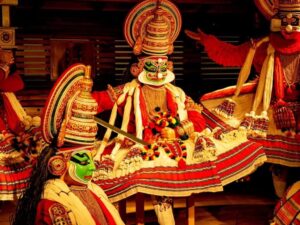
In the evening, visitors often watch a Kathakali dance performance, a traditional form of storytelling through dance and facial expressions.
Day 9 – Kochi to Munnar
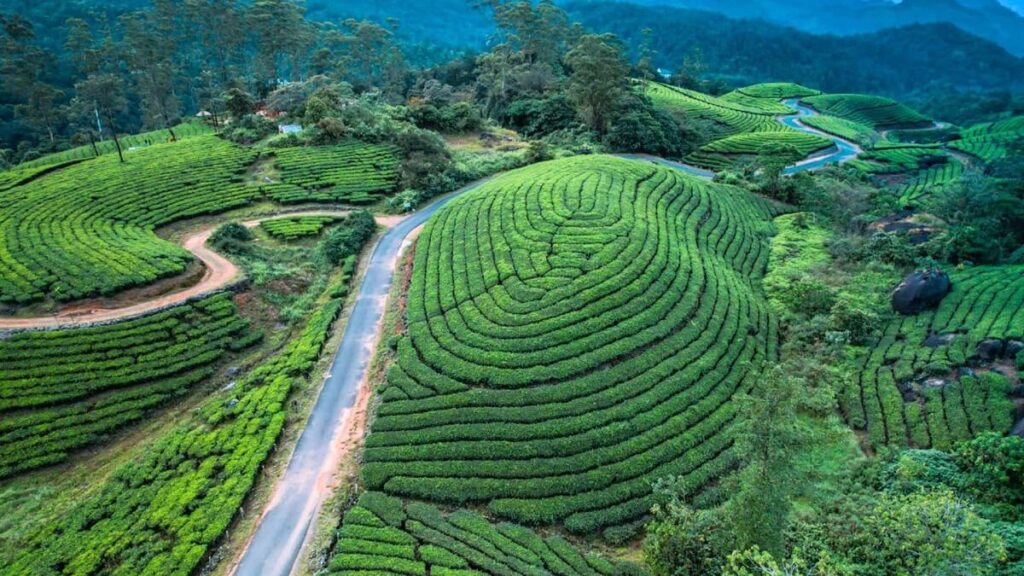
Drive from Kochi to Munnar, a scenic hill station famous for its tea plantations.
The drive takes about 4 to 5 hours and passes through winding mountain roads, waterfalls, and spice gardens.
Munnar’s cool climate and green hills make it one of the most beautiful destinations in Kerala.
Day 10 – Exploring Munnar
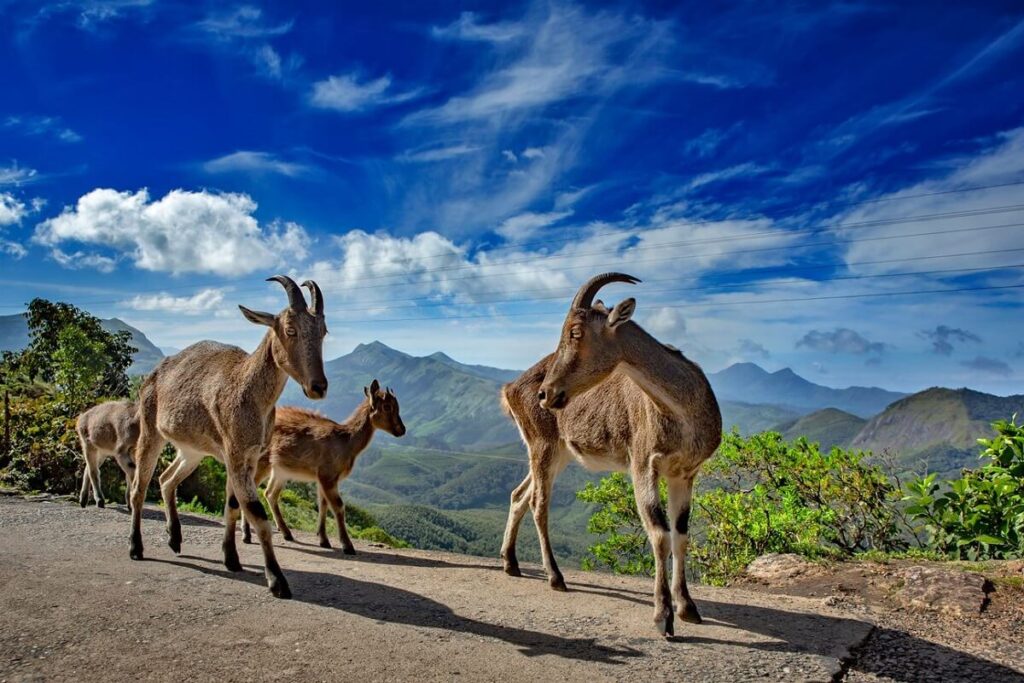
Spend a full day exploring Munnar’s natural beauty.
Key attractions include:
- Eravikulam National Park – home to the rare Nilgiri Tahr
- Tea Museum – learn about tea production
- Mattupetty Dam
- Echo Point
- Scenic tea gardens
The landscapes here are ideal for photography and nature walks.
Day 11 – Munnar to Thekkady
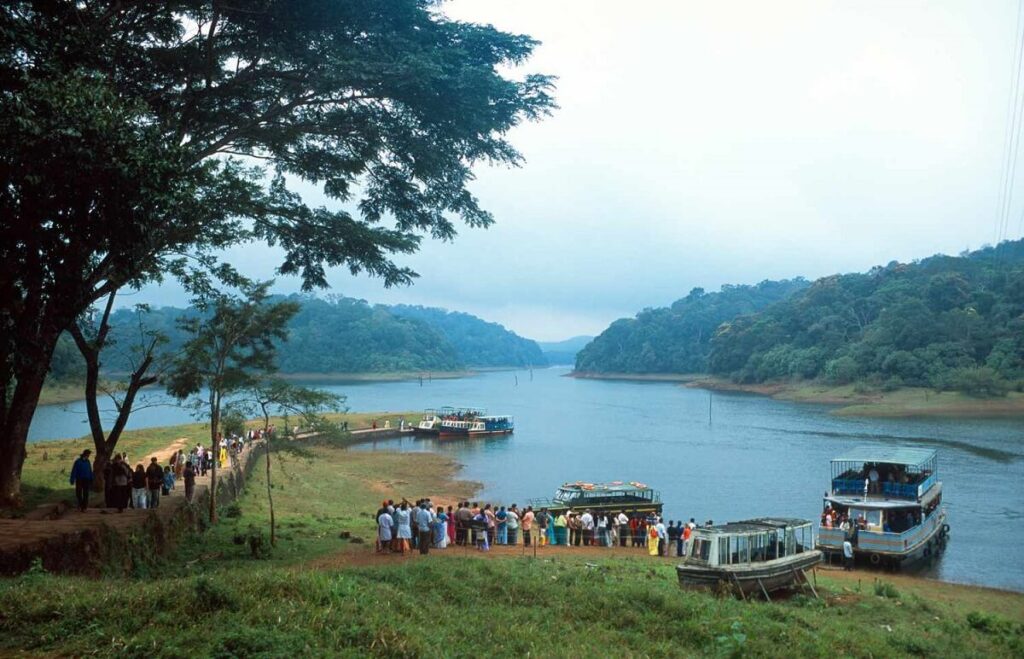
Next, travel to Thekkady, home to the famous Periyar Wildlife Sanctuary.
This region is known for spice plantations producing cardamom, pepper, cinnamon, and cloves.
Activities in Thekkady include:
- Boat safari in Periyar Lake
- Spice plantation tours
- Cultural performances
- Elephant interaction experiences
Day 12 – Thekkady to Alleppey Backwaters
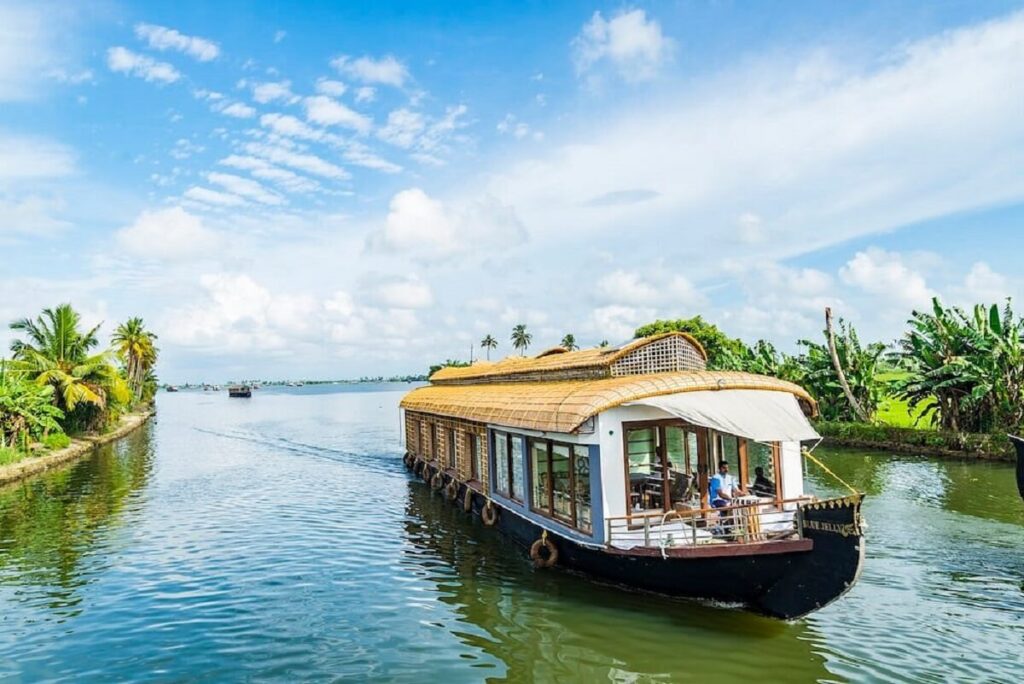
Travel to Alleppey, the heart of Kerala’s backwaters.
Here you will board a traditional houseboat, also called a “kettuvallam”.
Houseboat cruises take visitors through peaceful canals lined with coconut palms and small villages.
During the cruise, guests enjoy:
- Traditional Kerala meals
- Views of village life
- Quiet sunsets over the water
An overnight houseboat stay is one of the most memorable experiences in Kerala.
Day 13 – Relaxation in Kumarakom or Marari Beach
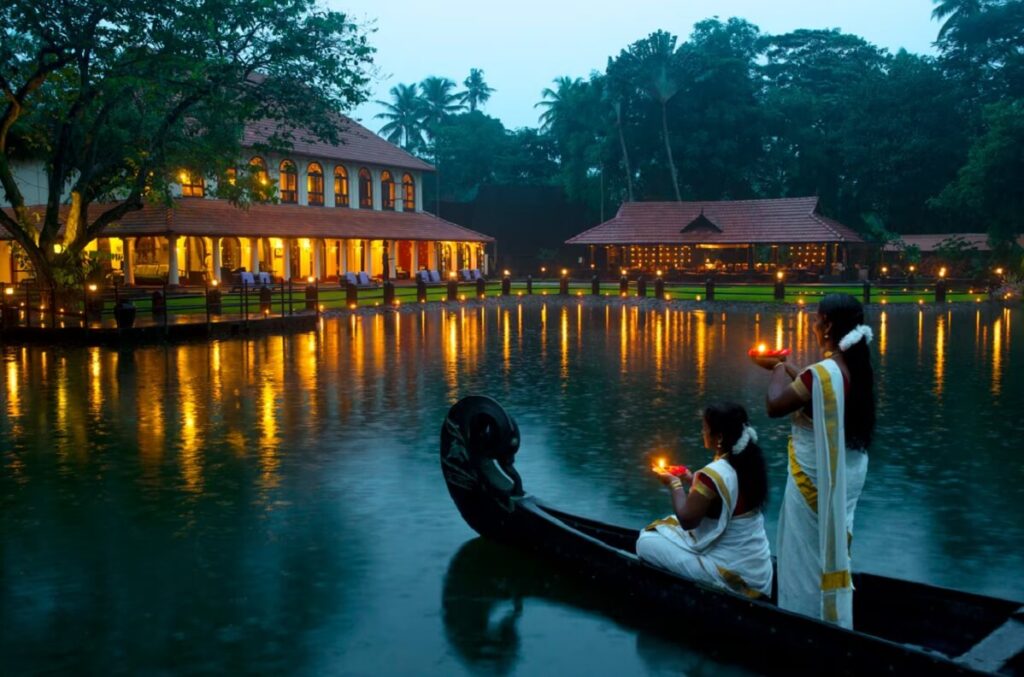
After the backwaters, travelers often visit Kumarakom or Marari Beach for relaxation.
These destinations offer peaceful resorts where visitors can enjoy:
- Ayurveda spa treatments
- Beach walks
- Bird watching
- Traditional Kerala cuisine
Day 14 – Return to Kochi
Return to Kochi for your final night in Kerala.
Spend the day exploring local art galleries, cafés, and markets. Kochi is known for its vibrant art scene and relaxed coastal atmosphere.
Day 15 – Departure
Transfer to Kochi International Airport for your return journey.
Your Golden Triangle with Kerala trip concludes with unforgettable memories of India’s history, culture, and natural beauty.
Travel Tips for Planning the Trip:
To make your journey smooth and enjoyable, consider the following tips.
(i) Book Flights Early
Domestic flights within India are affordable but can fill up quickly during peak season.
(ii) Carry Comfortable Clothing
India’s climate varies, so pack light clothing for warm weather and a light jacket for hill stations.
(iii) Use Reliable Transportation
Hiring a private car with a driver is the most convenient option for Golden Triangle travel.
(iv) Stay Hydrated
Drink bottled water and avoid tap water.
(v) Respect Local Culture
Dress modestly when visiting temples and religious sites.
Final Thoughts
A Golden Triangle with Kerala trip is one of the most rewarding ways to explore India. In just two weeks, travelers experience the architectural grandeur of the Taj Mahal, the royal heritage of Jaipur, the vibrant streets of Delhi, and the tranquil landscapes of Kerala’s backwaters and tea plantations.
This journey combines history, culture, nature, and relaxation, making it perfect for first-time visitors as well as seasoned travelers.
With careful planning, a well-structured itinerary, and the right travel season, a 12 to 15 day Golden Triangle with Kerala tour can become an unforgettable adventure filled with rich experiences and lifelong memories.
Explore More Reads: