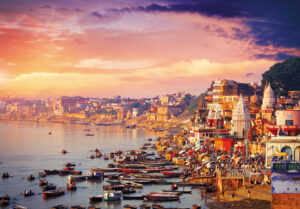
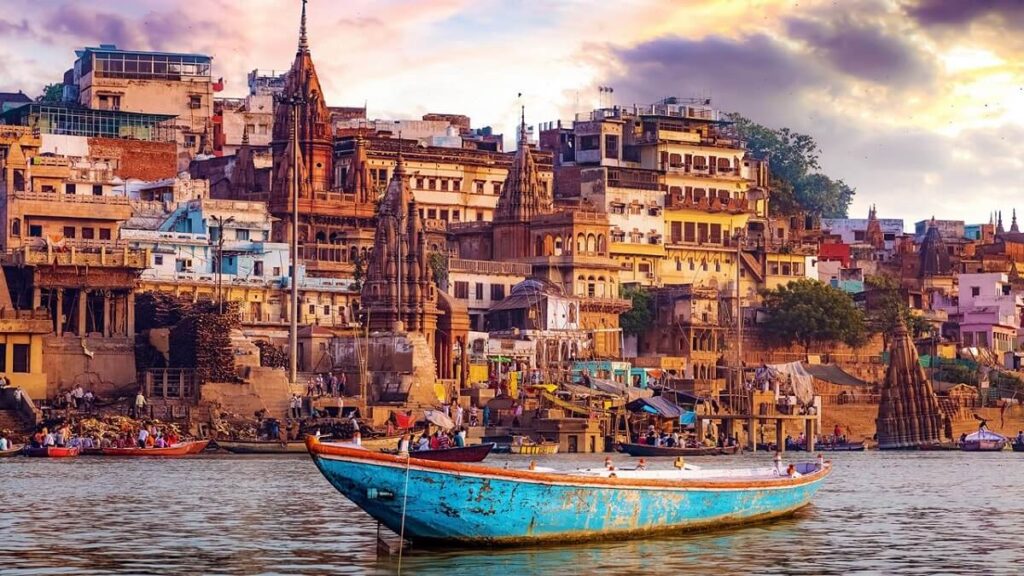
Varanasi, also known as Kashi or Banaras, is the spiritual capital of India and one of the oldest continuously inhabited cities in the world. Among its 80+ riverfront ghats, Manikarnika Ghat holds a unique place. It is the main cremation ground of the city, where fires have burned for centuries without pause. Hindus believe that anyone cremated here achieves moksha, liberation from the endless cycle of birth and rebirth.
For travelers, visiting Manikarnika Ghat is an unforgettable experience. Unlike the colorful ghats where pilgrims bathe, perform yoga, or attend evening aarti, this ghat is solemn, intense, and deeply sacred. It is not a tourist attraction in the usual sense, but a profound cultural and spiritual experience.
This guide explains everything you need to know about visiting Manikarnika Ghat: its spiritual significance, what to expect, timings, rituals, things to do, how to reach, nearby attractions, tips, and itineraries.
Historical and Spiritual Significance:
Mythological Origins
The name Manikarnika translates to “jeweled earring”. According to Hindu mythology, while Lord Shiva and Goddess Parvati were bathing here, Parvati’s jewel fell into the river. Shiva declared the spot sacred, and it became known as Manikarnika.
Another belief says that Lord Vishnu dug a pond here, and while meditating, his earring fell into it. Lord Shiva then blessed the site with eternal spiritual power.
Liberation Through Cremation
In Hindu tradition, the ultimate goal is to escape the cycle of rebirth, known as samsara. Cremation at Manikarnika Ghat is believed to free the soul from this cycle and grant moksha. For this reason, many families bring their deceased loved ones here from across India.
The Eternal Fire
One of the most striking aspects of Manikarnika Ghat is the eternal flame, said to have been burning for thousands of years. The fire is tended by the Dom community, who have performed cremation rituals for generations. Every funeral pyre is lit from this sacred flame, symbolizing continuity and eternal life.
What to Expect When Visiting
Visiting Manikarnika Ghat can be an intense and emotional experience. Unlike other ghats where life and festivity dominate, here you witness death and liberation as an open, continuous process.
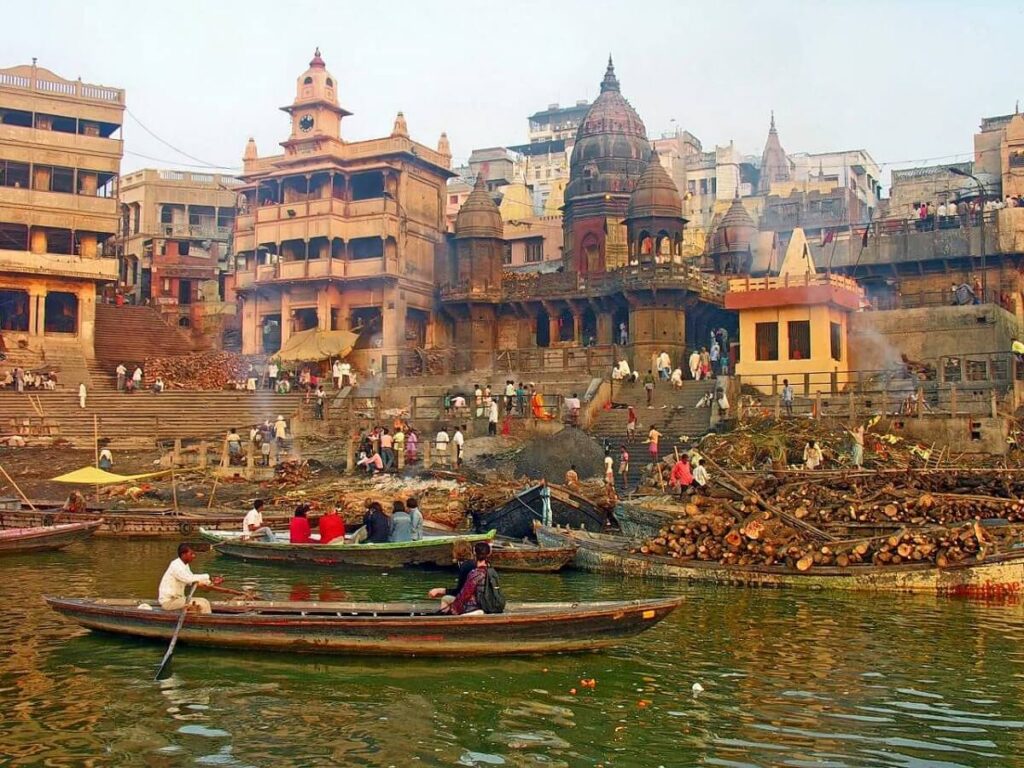
- Narrow approach lanes: To reach the ghat, you walk through crowded lanes filled with wood stacks for cremation, shops selling offerings, tea stalls, and temples.
- Funeral processions: Bodies wrapped in saffron or white cloth and decorated with flowers are carried on bamboo biers, accompanied by the chant “Ram naam satya hai.”
- Cremation rituals: Families gather as priests guide the rites. The body is dipped in the Ganges before being placed on the pyre.
- Continuous activity: Day or night, the ghat is always active. Fires burn on multiple pyres at once.
- Atmosphere: Expect smoke, ash, and a mix of grief, ritual, and devotion. The scene is raw but deeply spiritual.
For first-time visitors, the experience may feel overwhelming. Some stay only a short while, while others find it deeply moving and spend more time observing.
Top Varanasi Tour Packages – Plan Your Spiritual Journey
- 3 Days Varanasi & Sarnath Sightseeing Tour
- 5 Days Varanasi Prayagraj Ayodhya Pilgrimage Trip
- 2 Nights 3 Days Varanasi Temple Darshan Tour
- 8 Days Delhi Agra Jaipur with Varanasi Golden Triangle Tour
Timings – When to Visit
Manikarnika Ghat is open 24 hours a day, every day of the year. Cremations take place continuously, without break.
- Morning (6:00 am – 9:00 am)
The atmosphere is calmer. Smoke is less intense. Good for first-time visitors. - Afternoon (12:00 pm – 4:00 pm)
More cremations occur. The sun is harsh in summer. - Evening (5:00 pm – 8:00 pm)
The busiest period, with multiple pyres burning. The contrast of rituals against sunset can be powerful. - Night (after 9:00 pm)
Rituals continue, though access through dark lanes may be difficult. Go only with a local guide.
Best time: Morning or late afternoon. These times provide the most balanced experience.
Cremation Rituals – Step by Step
Visitors often wonder about the rituals they witness. While you should only observe from a respectful distance, understanding the process adds context:
- Arrival of the body: The body, covered in cloth and flowers, is carried to the ghat by family and friends.
- Ritual dip: The body is dipped in the holy Ganges or sprinkled with sacred water.
- Pyre preparation: Wood is arranged carefully, and ghee is applied to aid burning.
- Sacred flame: The eldest son or a close male relative lights the pyre with fire from the eternal flame.
- Cremation: The body burns for 2–3 hours. Priests chant mantras. Families wait nearby.
- Immersion of ashes: Later, the remains are collected and immersed in the river.
For Hindus, this is not only a funeral but a ritual of liberation.
Things to Do at and Around Manikarnika Ghat:
1. Observe Rituals Respectfully
Stand quietly at the upper steps. Do not disturb families. Do not step on wood piles or enter restricted areas.
2. Boat Ride on the Ganges
Take a sunrise or sunset boat ride. From the water, you see the entire panorama of ghats, including Manikarnika, without intruding.
3. Walk Along the Ghats
Walking from Assi Ghat to Raj Ghat takes you past many riverfronts. Manikarnika sits in the middle of this journey.
4. Rooftop View
Some houses allow visitors to view from a terrace. Ask politely, and pay a small fee if requested. Always ensure it is a respectful arrangement.
5. Explore Nearby Lanes
The old city lanes around the ghat are full of chai stalls, silk shops, and temples. After the intensity of Manikarnika, these lanes bring balance.
Photography Guidelines
- Do not photograph close-up cremations.
- Wide shots from boats are less intrusive.
- No selfies, no flash.
- When in doubt, keep your camera away.
Remember, families are mourning, and photographing without consent is deeply disrespectful.
How to Reach Manikarnika Ghat:
From Varanasi Airport
- Distance: 24 km.
- Travel time: 60–90 minutes.
- Take a prepaid taxi or app cab to Godowlia or Maidagin. From there, walk 15–20 minutes.
From Varanasi Junction Railway Station
- Autos and taxis drop you at Maidagin or Godowlia. From there, walk to the ghat.
By Boat
- Boats can be hired from Dashashwamedh or Assi Ghat.
- This is the most convenient and atmospheric way to see Manikarnika.
Local Movement
- Lanes are narrow; cars do not enter.
- Walking or cycle rickshaws are the main options. Wear good walking shoes.
Nearby Attractions from Manikarnika Ghat:
(i) Dashashwamedh Ghat
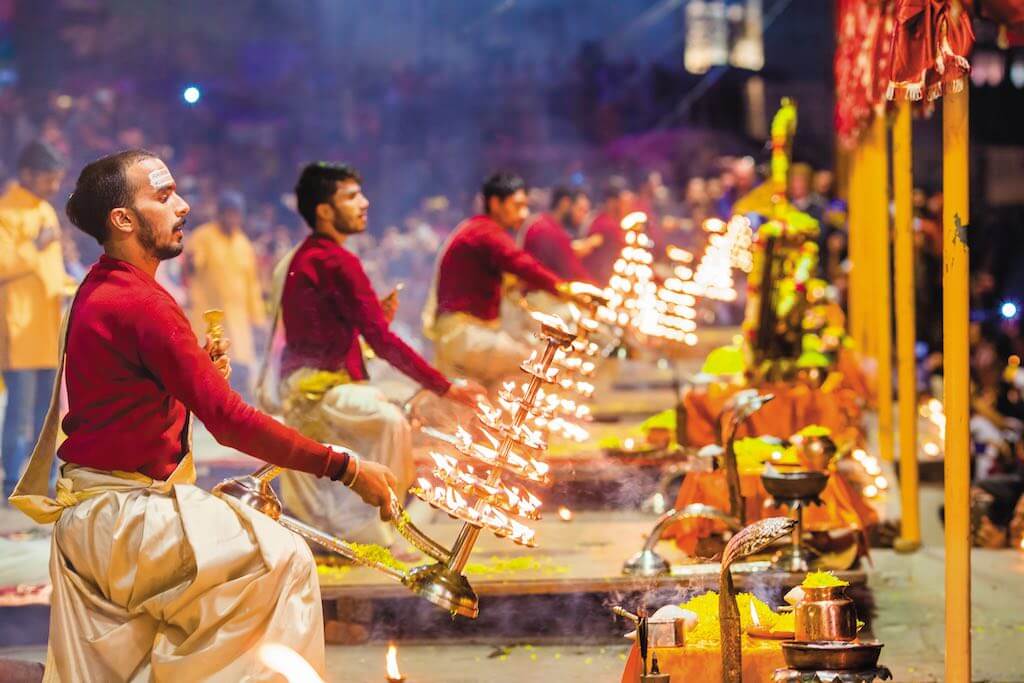
The most popular ghat for evening Ganga Aarti. Arrive early to find a spot or watch from a boat.
(ii) Kashi Vishwanath Temple
One of the 12 Jyotirlingas, dedicated to Lord Shiva. A must-visit for spiritual travelers.
(iii) Scindia Ghat
Known for its partially submerged Shiva temple, leaning into the river.
(iv) Assi Ghat
A lively ghat where yoga, music, and morning aarti create a vibrant atmosphere.
(v) Manmandir Ghat and Jantar Mantar
An 18th-century observatory with historic instruments and panoramic views.
(vi) Sarnath
A short drive from Varanasi, this is where Lord Buddha gave his first sermon.
(vii) Ramnagar Fort
Located across the river, it houses a museum with royal artifacts.
Tips for Visitors
- Dress modestly—cover shoulders and knees.
- Carry drinking water, tissues, and sanitizer.
- Avoid pushy touts offering “exclusive views”.
- Do not haggle with families or priests.
- Keep valuables safe.
- Respect the spiritual atmosphere—speak softly, move carefully.
Suggested Itinerary
Half-Day Plan
- Sunrise boat ride.
- Walk through the lanes to Manikarnika Ghat.
- Observe from a distance.
- Visit Kashi Vishwanath Temple.
- End with breakfast in the old city.
Full-Day Plan
- Sunrise boat ride.
- Morning at Manikarnika Ghat.
- Explore nearby lanes and shops.
- Lunch at a local restaurant.
- Afternoon visit to Scindia and Manmandir Ghats.
- Evening Ganga Aarti at Dashashwamedh Ghat.
Frequently Asked Questions
Is it safe for solo travelers?
Yes, in the daytime. Stick to main lanes and avoid dark alleys at night.
Are children allowed?
There is no restriction, but cremations may be disturbing for children.
Can I take part in rituals?
No, rituals are performed only by families and priests. Visitors are observers.
How long should I stay?
Most visitors spend 30–60 minutes.
When do cremations happen?
All day and all night, without pause.
Trending Now:
- Durga Temple, Varanasi – Timings, History & Travel Guide
- Bharat Mata Mandir Varanasi – History, Architecture & Visitor Guide
- Varanasi to Sarnath Trip – How to Plan Your Perfect Day Tour
- Varanasi Travel Guide – Everything You Need for Your Journey
- Best Tourist Destinations to Visit in Varanasi
- Top 10 Reasons Why You Must Visit Varanasi Once in a Lifetime
- Varanasi Street Food Guide – Famous Local Dishes & Where to Try
- Best Restaurants in Varanasi – From Local Eateries to Fine Dining
- Celebrate Dev Diwali 2025 in Varanasi – Festival Highlights & Tips
- How to Reach Varanasi from Mumbai – Travel Options & Tips
- Best Time to Visit Varanasi – Weather, Festivals & Travel Tips
- Ganga Aarti in Varanasi – Dashashwamedh Ghat Ceremony Guide
- Budget-Friendly 3-Star Hotels in Varanasi Near Popular Ghats
- Shopping in Varanasi – Famous Markets for Sarees & Handicrafts
- Interesting & Lesser-Known Facts About Varanasi
- Famous Museums in Varanasi – A Cultural & Historical Journey
- Kashi Vishwanath Temple Varanasi – Darshan, Rituals & Travel Guide
- Luxury 5-Star Hotels in Varanasi Near the Ghats
- Delhi to Varanasi – Best Travel Routes by Train, Flight & Road
- Famous Ghats of Varanasi – Rituals, History & Significance
- Things to Do in Varanasi – Temples, Ghats, Food & Festivals
- Popular Temples in Varanasi – A Spiritual Travel Guide
Conclusion
Manikarnika Ghat is more than a landmark—it is the spiritual heart of Varanasi, where the cycle of life and death unfolds in the open. For travelers, it offers an experience that is emotional, intense, and thought-provoking.
By approaching with humility, silence, and respect, you can witness one of the most sacred traditions of Hinduism. Visiting Manikarnika Ghat is not about sightseeing, but about understanding the deep philosophy of life and death that defines Varanasi.