
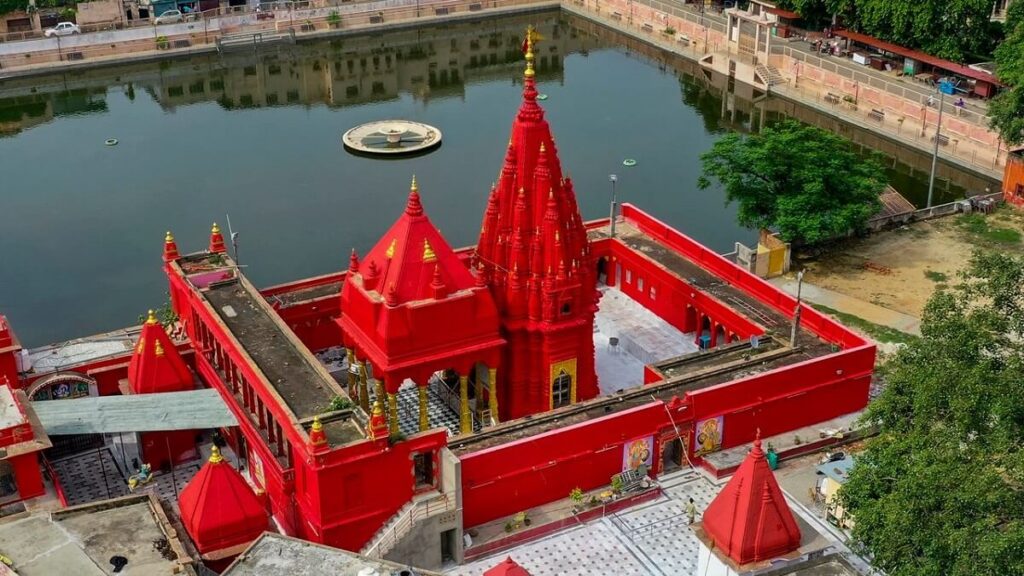
In the spiritual heartland of Varanasi lies one of its most captivating shrines—Durga Temple, often referred to as the ‘Monkey Temple’ by travelers. Unlike the ghats and grand Kashi Vishwanath Temple that dominate tourist attention, the Durga Temple offers a quieter, deeply rooted Shakti worship experience.
Known for its striking red hue and centuries-old reverence, the temple draws both devout pilgrims and curious travelers. This blog explores every facet of this sacred site—from its origins and mythological importance to practical travel tips and nearby highlights.
Historical of Durga Temple
The Durga Temple, also known as Durgakund Mandir, was built in the 18th century by Rani Bhabani of Natore, a prominent Bengali queen and devotee of Goddess Durga. She commissioned this temple not only as an offering to the goddess but also to reinforce the cultural ties between Bengal and Kashi. According to local legends, the idol of the goddess housed in the sanctum is Swayambhu—self-manifested and not crafted by human hands.
Historical records suggest that this temple played an important role during religious gatherings and was a focal point during annual Navratri celebrations. Over time, it became a center for women-centric rituals and a site of cultural bonding among Bengali and local communities in Varanasi. The sacred pond, Durga Kund, once had a functional underground channel connecting it to the holy Ganges, symbolizing purity and divine cleansing.
Architectural Highlights of Durga Temple
Durga Temple exemplifies the North Indian Nagara style of architecture with its multi-tiered shikharas (towers). The red ochre color, symbolic of strength and the blood of demons vanquished by the goddess, immediately sets it apart. The temple’s architecture includes intricately carved pillars, arches, and lattice work that reflect 18th-century craftsmanship.
Within the temple, the sanctum sanctorum houses the fierce form of Goddess Durga. The structure features a square layout with a sanctum and a mandapa (pillared hall). A courtyard surrounds the temple, offering pilgrims space for circumambulation. The monkeys, who roam the compound freely, have become synonymous with the temple, giving it its popular nickname.
Religious Significance of Durga Temple
Durga Temple is dedicated to Goddess Durga, the warrior manifestation of Parvati. She symbolizes power (Shakti), protection, and motherhood. In Varanasi, she is venerated as the divine protector of the city. The temple is especially significant during Navratri when thousands of devotees gather to perform elaborate rituals and offer prayers.
Pilgrims believe that visiting this temple removes obstacles and grants strength and protection. Women devotees in particular visit the temple to seek blessings for family welfare and marital harmony. It is also common for devotees to bathe in Durga Kund, a ritual believed to purify both body and soul.
Visiting Hours & Daily Rituals of Durga Temple
| Season | Morning | Afternoon Break | Evening |
| Summer | 4:00 AM | — | Till 9:00 PM |
| Winter | 5:00 AM | 1:00–3:00 PM | Till 8:00 PM |
Morning darshan runs from 4 AM–1 PM; after a 2‑hour break, evening darshan resumes from 3–9 PM (or 8 PM in winters).
📌 Entry fee: Free for all. Non-Hindus may access courtyard but not inner sanctum.
📵 Photography & Dress Code: Phones/cameras are prohibited. Wear modest clothes; leave footwear before entering.
How to Reach Durga Temple
- By Air: The nearest airport is Lal Bahadur Shastri International Airport (27 km). Taxis and auto-rickshaws are easily available.
- By Train: Varanasi Junction (6 km) and Manduadih Railway Station are the nearest major stations.
- By Road: Well-connected via local buses and auto-rickshaws. Located near Tulsi Manas Temple and Sankat Mochan.
- By Foot: From Assi Ghat, it’s a pleasant 20-minute walk through bustling local streets filled with shops and flower vendors.
Nearby Attractions from Durga Temple
- Durga Kund: Adjacent to the temple, this sacred pond is a focal point for rituals and offers a serene backdrop.
- Tulsi Manas Temple: Just a short walk away, this modern marble temple is built at the site where Tulsidas wrote the Ramcharitmanas.
- Sankat Mochan Hanuman Temple: Popular for devotees seeking relief from difficulties, this temple is about 700 meters away.
- Assi Ghat: A famous ghat for morning yoga and evening aartis, located 1 km from the temple.
- BHU Campus: One of the largest university campuses in Asia, it houses the Bharat Kala Bhavan museum and the Vishwanath Temple.
Interesting Facts of Durga Temple
- The idol of Goddess Durga here is believed to be self-manifested (Swayambhu), making the temple highly sacred.
- Durga Temple is also called the Monkey Temple due to the high population of monkeys in and around the compound.
- The temple is painted in bright red, representing the fierce nature of Goddess Durga and her victory over Mahishasura.
- It’s a major attraction during Navratri, drawing thousands of pilgrims and tourists.
Best Time to Visit Durga Temple
- Winter (October to March): Pleasant climate and the most ideal for sightseeing.
- Navratri (twice a year): This is the peak festival when the temple is beautifully decorated, and rituals are elaborate.
- Monsoon (July to September): The pond overflows with rainwater, enhancing the temple’s spiritual aura.
Insider Tips for Travelers
- Be cautious of monkeys—don’t carry food openly.
- Combine the visit with a morning boat ride from Assi Ghat.
- Carry cash for prasad and flower vendors.
- Local guides offer deeper insights into mythology and architecture—opt for one if you’re keen.
- Arrive early to avoid crowds and enjoy peaceful darshan.
Photo Opportunities
- Capture the temple’s vibrant red facade in the early morning sun.
- Take wide-angle shots of the courtyard and the Kund.
- Candid moments of rituals, flower vendors, and temple monkeys offer great travel photography material.
Conclusion
Durga Temple in Varanasi is not just a religious site; it is a vibrant intersection of culture, mythology, community life, and spirituality. With its deep-rooted legends, eye-catching architecture, and spiritual importance, a visit to this temple completes any journey through Varanasi. Whether you come seeking divine blessings, cultural immersion, or just a pause from the chaos, Durga Temple welcomes all with open arms and a spiritually charged atmosphere.
Explore More:
- Bharat Mata Mandir, Varanasi: Complete Guide
- How to Plan a Trip from Varanasi to Sarnath
- Ultimate Travel Guide to Varanasi
- Varanasi Destinations to See
- Top 10 Reasons to Visit Varanasi
- Varanasi Street Food Places
- Restaurants in Varanasi
- Celebrate Dev Diwali 2025 in Varanasi
- How to Reach Varanasi from Mumbai
- Best Time to Visit Varanasi
- Ganga Aarti Ceremony in Varanasi at Dashashwamedh Ghat
- Budget-Friendly 3-star Hotels in Varanasi
- Varanasi Shopping Markets
- Interesting Facts About Varanasi
- Varanasi Famous Museums
- Kashi Vishwanath Temple in Varanasi
- 5-Star Hotels in Varanasi Near Ghat
- Best Way to Travel from Delhi to Varanasi
- Varanasi Famous Ghats
- Things to Do in Varanasi
- Varanasi Popular Temples
Frequently Asked Questions (FAQs)
1. What is the significance of Durga Temple in Varanasi?
The Durga Temple is one of the most revered shrines in Varanasi, dedicated to Goddess Durga. It holds deep religious significance due to its association with divine feminine power and its self-manifested idol. Devotees believe the temple offers protection, strength, and victory over evil. It is also popularly known as the “Monkey Temple” due to the large number of monkeys in and around the premises.
2. What are the temple timings for darshan at Durga Temple?
The temple typically opens early in the morning around 4:00 AM in summer and 5:00 AM in winter, with darshan continuing till 1:00 PM, followed by a break. The evening darshan resumes from 3:00 PM and continues until 9:00 PM (or 8:00 PM in winters). Devotees are advised to visit early morning or late afternoon for a serene experience.
3. How can I reach Durga Temple from Varanasi Junction railway station?
The Durga Temple is located about 6 km from Varanasi Junction railway station. You can hire an auto-rickshaw, taxi, or e-rickshaw, which usually takes 20–30 minutes depending on traffic. It’s also well-connected to other major landmarks like Banaras Hindu University and Tulsi Manas Temple.
4. What are the main festivals celebrated at Durga Temple?
The most celebrated festivals at Durga Temple are Navratri and Durga Puja, when thousands of devotees gather to worship the goddess. Other important events include Nag Panchami, Tuesdays & Fridays special poojas, and the Durga Kund Music Festival held during the Hindu month of Shravan.
5. Is photography allowed inside Durga Temple?
Photography is strictly prohibited inside the temple sanctum. However, visitors can take photos of the outer structure, Durga Kund pond, and surrounding areas. It’s recommended to respect temple rules and avoid using mobile phones within the premises.
6. What are the best nearby attractions to visit after Durga Temple?
After visiting Durga Temple, you can explore nearby spiritual sites such as:
- Tulsi Manas Temple (walking distance)
- Sankat Mochan Hanuman Temple
- Banaras Hindu University (BHU)
- Kashi Vishwanath Temple
- Dashashwamedh Ghat for the evening Ganga Aarti
You can also take a short trip to Sarnath, located about 12 km away.
