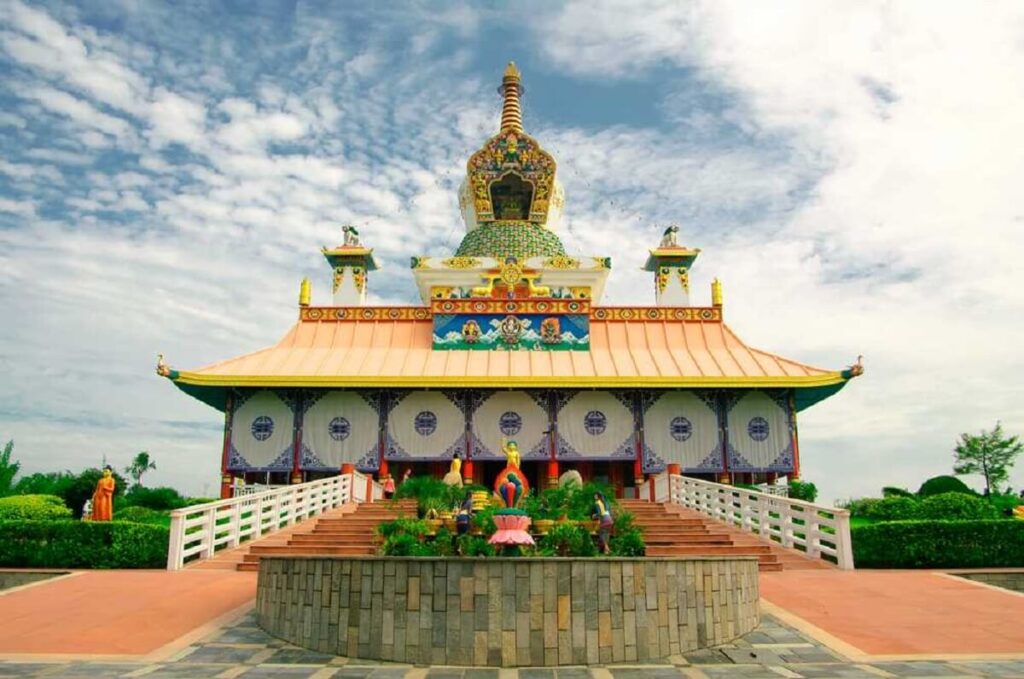
Lumbini has always held a special place in the spiritual map of the world. As the birthplace of Siddhartha Gautama, who later became the Buddha, this quiet region of Nepal draws seekers, pilgrims and curious travelers eager to connect with a space shaped by peace, reflection and timeless heritage. With landscaped monasteries, an extensive monastic zone, international temples and archaeological wonders, Lumbini feels less like a destination and more like an experience.
If you are planning a religious getaway, this guide introduces seven blissful temples that offer tranquility, architectural beauty and a deep sense of connection. Along the way, you’ll find practical tips, travel details, itineraries and insights to help you plan a meaningful journey.
Why Lumbini Is Perfect for a Religious Getaway
Few destinations in the world combine heritage, spirituality and peaceful surroundings the way Lumbini does. The Sacred Garden where the Buddha was born, the monastic zone lined with temples built by nations across Asia and Europe, and the meditative spaces by the canal together create a setting designed for quiet healing.
Unlike many busy religious destinations, Lumbini encourages you to slow down. You walk instead of rush, you sit instead of scramble, and you hear chants carried by breeze rather than the noise of crowds. It is the ideal place for a spiritual escape, whether you come for deep reflection or simply for a calm break from daily life.
How to Reach Lumbini:
Traveling to Lumbini is easy, whether you come from within Nepal or from India.
By Air
The closest airport is Gautam Buddha International Airport (Bhairahawa), just 22 km away. Flights connect from Kathmandu and international routes are expanding every year.
By Road from Nepal
You can arrive by bus from Kathmandu, Pokhara or Chitwan. Roads are straightforward, and shared vans, private taxis and buses are widely available.
By Road from India
The Sonauli–Bhairahawa border crossing is the most convenient. From Gorakhpur you reach the border in a few hours, cross over, and continue by taxi to Lumbini.
Best Time to Visit Lumbini
The most pleasant time is October to March, with cool temperatures and clear skies.
April and May are warm but suitable for temple visits.
Monsoon months (June to September) bring heavy rains and muddy paths, which may affect walking around the monastic zone.
A religious getaway feels most peaceful early in the morning or near sunset, regardless of season.
Practical Tips for Temple Visits
- Wear modest clothing with shoulders and knees covered.
- Remove shoes when entering temple interiors.
- Speak softly and avoid loud conversations in meditation areas.
- Respect photography rules; some sanctums do not allow photos.
- Carry water, sunscreen and a hat.
- Try to walk as much as possible; the monastic zone is designed for slow, quiet movement.
- If possible, take time to sit silently in each temple instead of rushing through.
The 7 Blissful Temples in Lumbini:
Below you’ll find the seven temples that best reflect the peaceful spirit of Lumbini. Each offers a different architectural style, spiritual tradition and emotional experience.
1. Maya Devi Temple
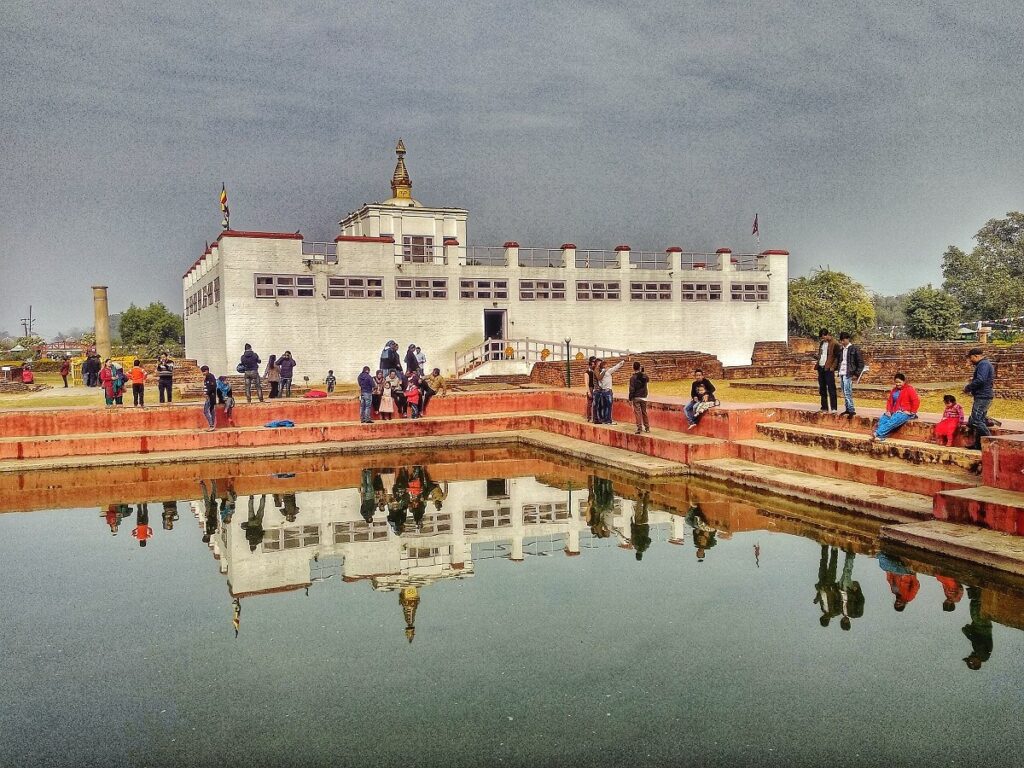
No visit to Lumbini is complete without stepping into the Maya Devi Temple. This is the holiest point in the region. According to ancient tradition, Queen Maya Devi gave birth to the Buddha here over 2,600 years ago.
What Makes It Special
Inside the temple, protected by glass walls and walkways, lies the marker stone believed to indicate the exact birthplace of Siddhartha Gautama. Surrounding this are archaeological foundations dating back to the 6th century BCE, making it one of the oldest Buddhist sites in the world.
Outside, the Sacred Puskarini Pond glistens peacefully. It is believed Queen Maya bathed here before giving birth. The Bodhi tree nearby provides shade for pilgrims who sit for meditation.
Experience
Even if you aren’t Buddhist, the atmosphere inside the temple feels powerful. Pilgrims bow in silence, monks chant softly, and the stillness is almost meditative on its own. Arrive early morning to enjoy the calmest atmosphere.
Top Nepal Tour Packages to Explore
- 7 Days Kathmandu, Pokhara & Dhulikhel Package
- 5 Days Nepal Holiday Package – Short Escape
- 6 Days Nepal Tour Itinerary – Culture & Scenic Views
- 6 Days Kathmandu & Pokhara Trip – Lakes & Temples
- 9 Days Ghorepani Poon Hill Trek – Himalayan Adventure
- 10 Days Nepal Adventure Tour – Nature & Thrill
2. Myanmar Golden Temple
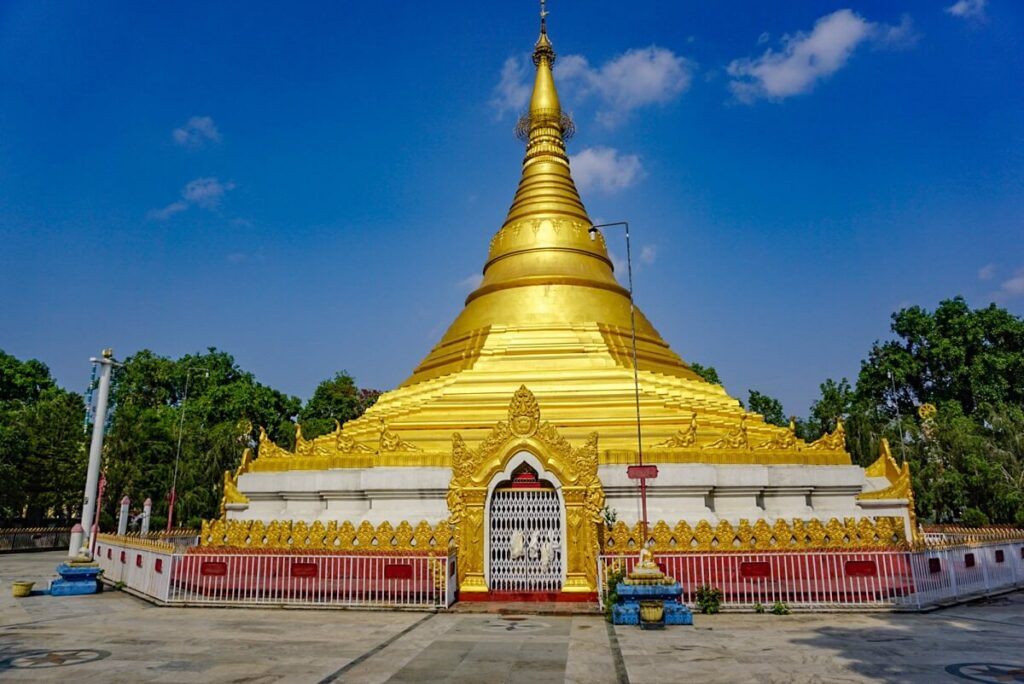
Among the earliest monasteries built in the monastic zone, the Myanmar Golden Temple instantly draws attention with its golden façade and tiered Burmese pagoda roofs.
What Makes It Special
The temple reflects classic Burmese architecture with bright golden tones, intricate carvings and a strong symmetrical style. Inside, prayer halls host large Buddha statues placed gracefully under high ceilings. The environment here is simple but deeply calming.
Experience
The monastery stays quieter than the main sacred garden. Travelers love sitting on the steps near the golden spire or wandering through the shaded courtyard where monks move slowly between prayer sessions.
It’s a beautiful stop for those who enjoy Southeast Asian Buddhist architecture and want space for personal meditation.
3. Royal Thai Buddhist Monastery
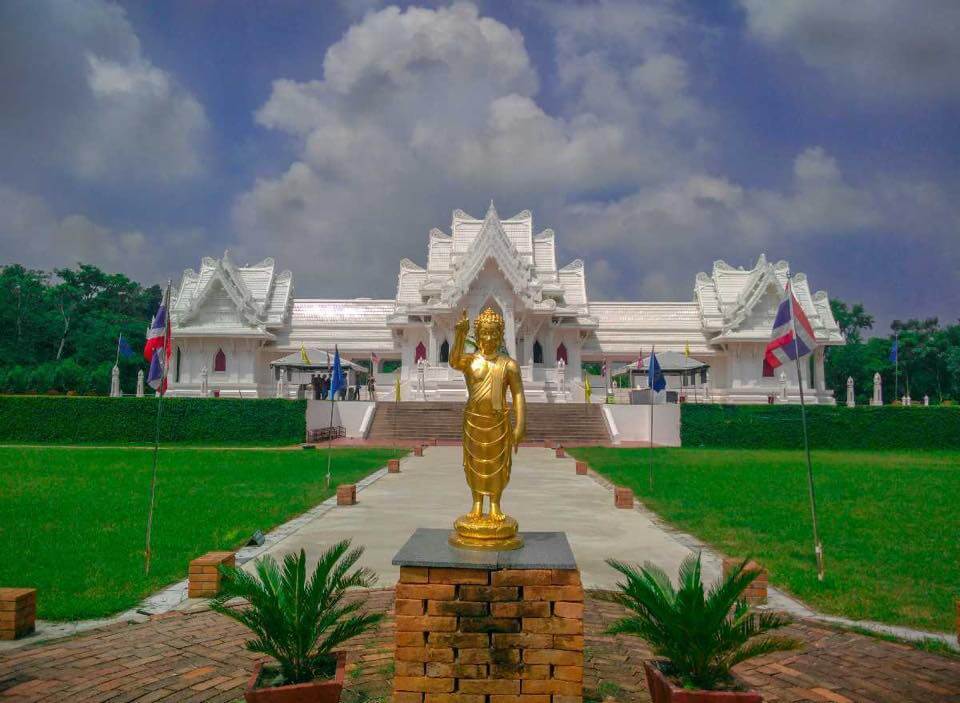
This is among the most visually striking temples in Lumbini. Built by the Thai government, the Royal Thai Monastery looks like an elegant blend of peace, structure and fine craftsmanship.
What Makes It Special
The temple is constructed in pure white marble, which shines during the day and glows beautifully in early morning sunlight. The blue-tiled roof, Naga serpent motifs and delicate Thai woodwork create a serene picture of refined simplicity.
Inside the monastery, the meditation hall is clean, quiet and minimalistic—ideal for conscious breathing practices or short meditation sessions.
Experience
The temple feels especially peaceful around midday when sunlight reflects off the marble. Travelers often sit under the shade of its courtyards simply watching monks walk mindfully through the hallways. It’s a graceful break from the busier sacred garden zone.
4. Zhong Hua Chinese Buddhist Monastery
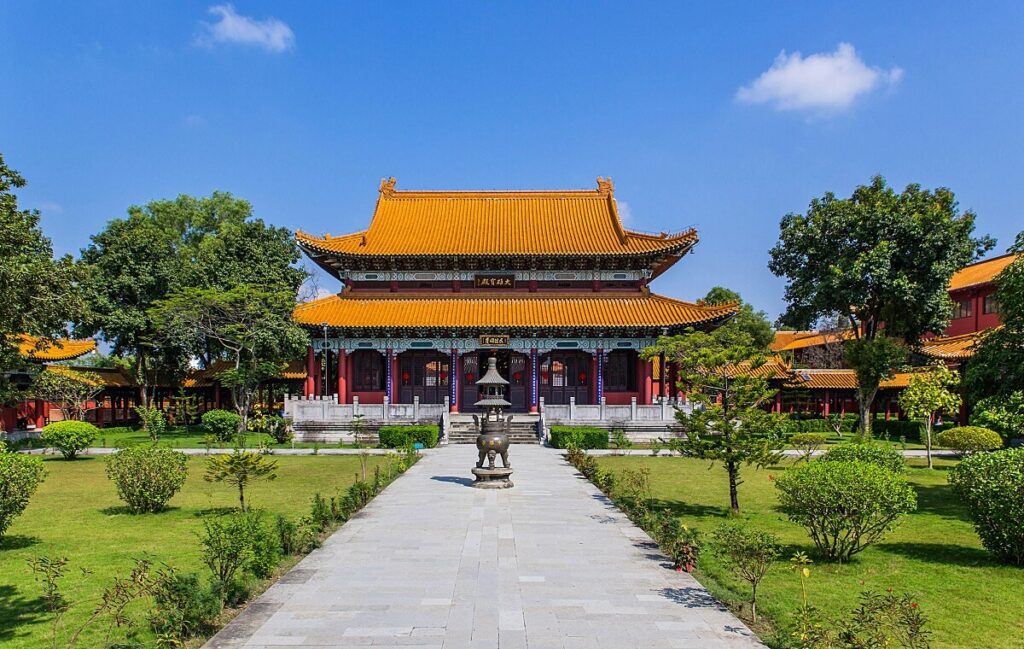
Commonly called the Chinese Monastery, this temple adds a beautiful East Asian dimension to the monastic zone with its classic pagoda architecture.
What Makes It Special
Colorful wooden beams, red pillars, carved dragons and curved pagoda roofs make this monastery delightful to explore. The layout includes a central hall, side courtyards, and prayer spaces where incense fills the air.
The main hall houses a tall golden Buddha statue seated amid detailed Chinese Buddhist artwork.
Experience
Compared to the Thai or Myanmar temples, the Chinese Monastery feels more secluded. Travelers often find the quiet courtyard to be a perfect place to sit, meditate or journal. If you love detailed craftsmanship and cultural fusion, this temple is a must-see.
Lumbini Travel Guides & Recommendations
- Complete Lumbini Travel Guide – Birthplace of the Buddha
- Top 12 Hotels and Best Places to Stay in Lumbini
- 10 Must-Do Activities in Lumbini – Spiritual & Cultural Experiences
- 10 Famous Tourist Attractions to Visit in Lumbini
5. Vietnam Phat Quoc Tu Temple
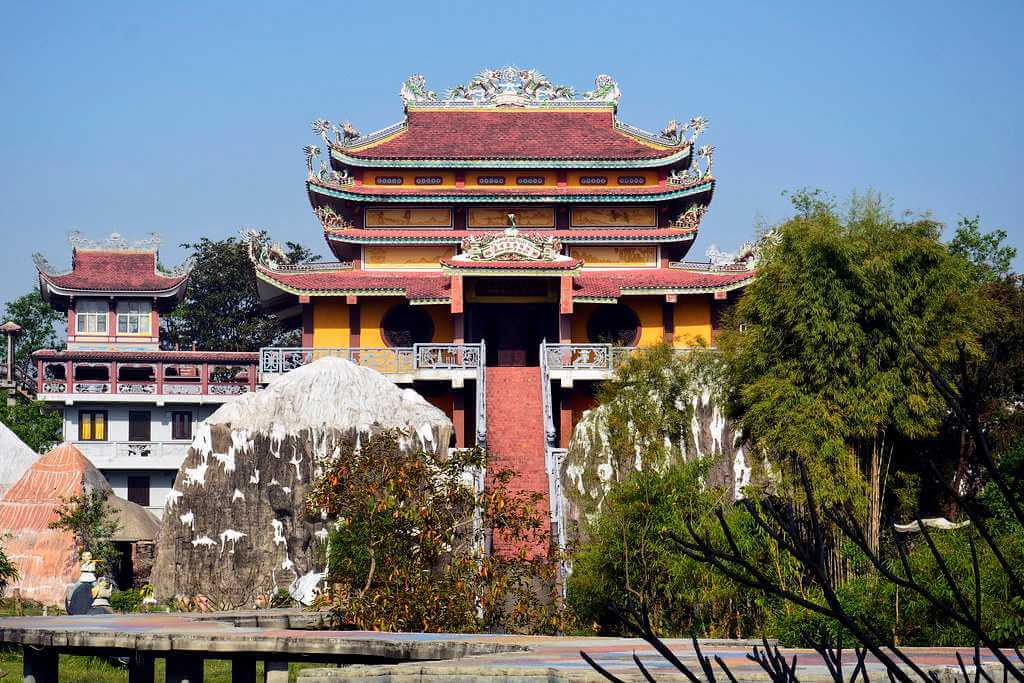
This temple represents Vietnamese Mahayana architecture and is one of the gentle, less-visited gems in Lumbini.
What Makes It Special
The entrance showcases stylized Vietnamese pillars and a design inspired by traditional Vietnamese pagodas. Inside, the Buddha statues are finely crafted with calm facial expressions and symbolic gestures.
Beautiful murals line the walls, narrating aspects of Buddhist philosophy and teachings.
Experience
The temple’s serene garden is its highlight. Many visitors stay here longer than expected because the place feels untouched and peaceful. It’s an excellent stop if you prefer quieter spiritual spaces without large crowds.
6. Dae Sung Shakya Korean Temple
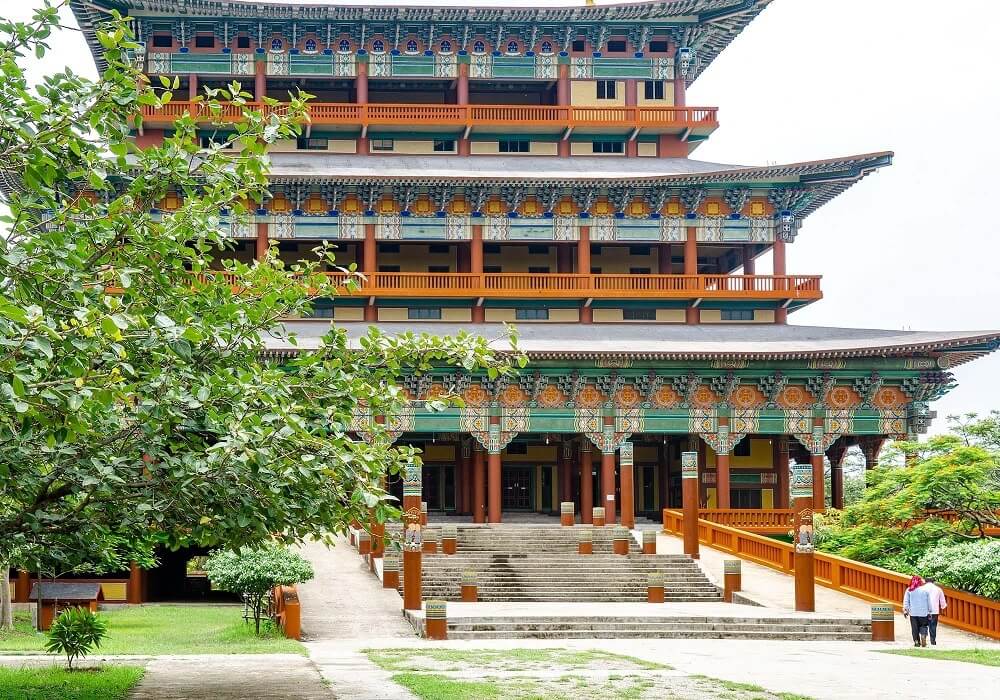
Often called the Korean Temple, this monastery offers a blend of Korean architecture, community living and spiritual discipline.
What Makes It Special
The temple features traditional Korean wood carvings, a tiled roof and colorful roof brackets. The meditation hall is simple but deeply calming. Travelers also appreciate the murals that depict events from Buddhist history.
Some seasons offer pilgrim accommodation, giving visitors a glimpse of monastic life. Staying overnight helps you understand the rhythm of chanting, meditation and communal routines.
Experience
This temple is ideal for travelers who want to spend longer periods in reflective silence. If you’re on a spiritual retreat, you’ll appreciate the monastery’s discipline and peaceful environment.
7. Siddha Baba Temple
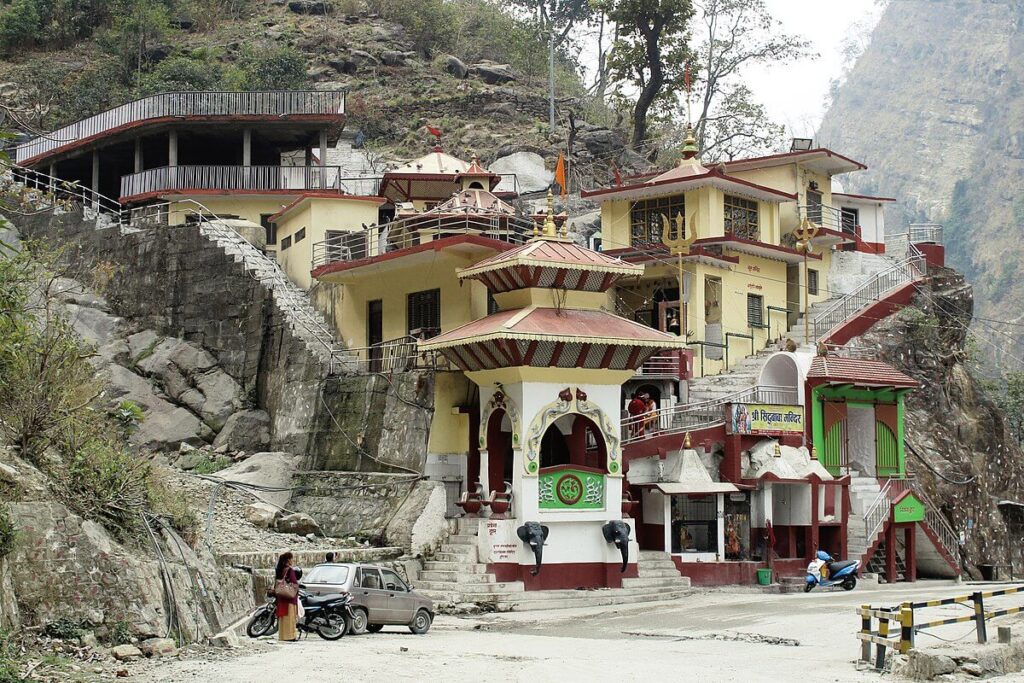
To complete the spiritual journey, Siddha Baba Temple offers a different but related energy. This Hindu temple adds diversity to Lumbini’s sacred landscape.
What Makes It Special
Located near the Tinau River, the temple is dedicated to Lord Shiva. Devotees believe that prayers offered here bring blessings and protection. Its natural surroundings make it a refreshing change from the monastic architecture inside Lumbini.
Experience
Siddha Baba Temple is particularly peaceful during early mornings when prayers echo softly around the riverside. It’s an excellent stop for travelers interested in understanding Lumbini’s wider religious culture beyond Buddhism.
Suggested 2–3 Day Itinerary for Lumbini:
A religious getaway should be slow, calm and unhurried. Here’s a simple, practical itinerary:
Day 1: Arrival & Sacred Garden
- Visit Maya Devi Temple
- Explore the Sacred Pond and Bodhi tree
- Walk around the Sacred Garden
- Spend the evening near the canal at sunset
Day 2: Monastic Zone Highlights
- Start with meditation at the Thai or Korean temple
- Visit Myanmar Golden Temple
- Explore the Chinese and Vietnamese monasteries
- Enjoy the peaceful walkways and landscaped gardens
- End your day at the World Peace Pagoda
Day 3: Optional Exploration
- Visit Siddha Baba Temple
- Explore the Crane Sanctuary or the Lumbini Museum
- Enjoy a slow-paced morning before you depart
Final Thoughts
Lumbini is a rare destination where natural beauty, quiet reflection and rich heritage come together. The seven temples listed above capture the essence of this spiritual land, each offering a different shade of peace. Whether you’re seeking profound introspection or simply a calming journey, Lumbini welcomes you with open arms.
Take your time. Move slowly. Sit often. Allow the stillness of these temples to guide your inner journey.
More Travel Guides You May Like
- Top Water & Amusement Parks in Nepal for Family Fun
- Best Hotels and Resorts in Nepal for Every Budget
- Chitwan National Park Travel Guide – Wildlife & Safari Tips
- Best Places to Visit in Nepal in May 2026
- Explore Nepal’s Colorful Umbrella Streets – Photo Spots Guide
- Top Tourist Places to Visit in Ilam – Tea Gardens & Hills
- Best Places to See in Kirtipur – Culture & Heritage Walks
- Top Places to Visit in Nepal in November 2025
- Famous Hotels in Nagarkot with Stunning Mountain Views
- Top Mountain Peaks to Climb in Nepal – Trekking Guide
- Things to Do in Nagarkot – Sunrise, Hiking & Nature Trails
- Best Things to Do in Nepal – Adventure & Cultural Tours
- Top Snowfall Destinations in Nepal for Winter Lovers
- Most Beautiful Valleys in Nepal to Explore
- Hill Stations Near Kathmandu – Cool Escapes & Views
- Best Places to Visit in Nepal During the Monsoon Season
- Most Romantic Honeymoon Destinations in Nepal
- Nepal in August – Best Places to Travel and Explore
- Top Places to Visit in Nepal in September 2026
Frequently Asked Questions:
1. Is Lumbini only for Buddhists?
No. Travelers of all religions visit Lumbini to enjoy its peace and spiritual setting.
2. Are the temples open all day?
Most are open from early morning until evening. The Maya Devi temple follows specific entry times that may change seasonally.
3. Do I need to hire a guide?
A guide is helpful for history and archaeology but not essential for meditation or personal reflection.
4. How many temples are in Lumbini?
There are over 30 monasteries and temples built by different countries in the monastic zone.
5. Can I stay in a monastery?
Yes, some of them—especially the Korean temple—offer simple accommodation for pilgrims.