
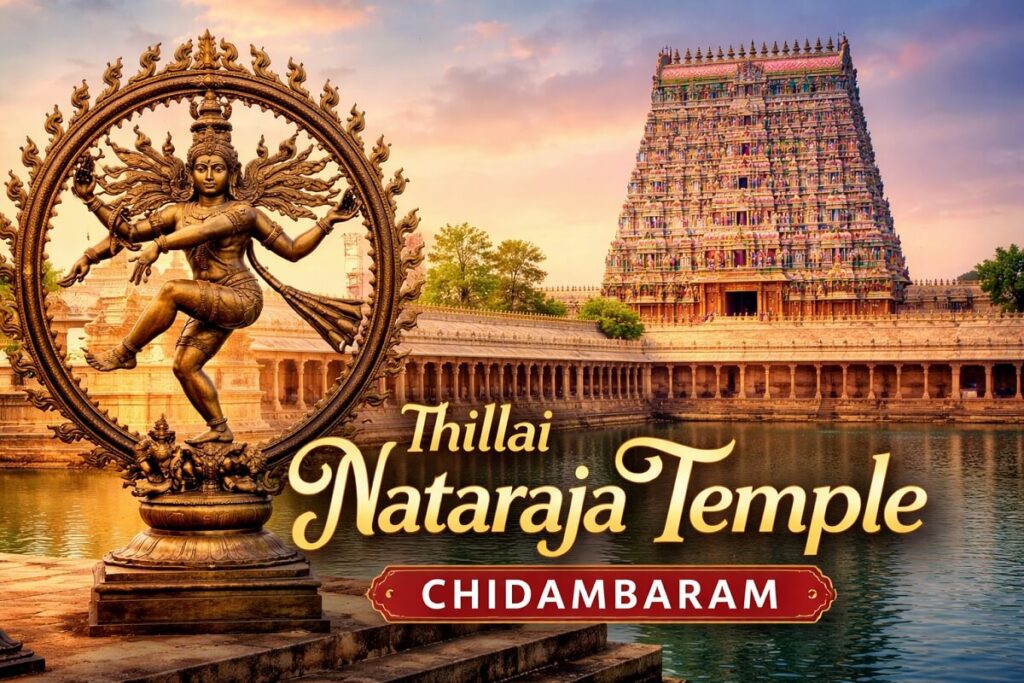
The Thillai Nataraja Temple, located in the sacred town of Chidambaram in Tamil Nadu, is one of India’s most profound spiritual landmarks. This ancient shrine is dedicated to Lord Shiva in his cosmic dancer form, Nataraja, symbolizing the rhythm of the universe itself. More than a temple, it is a living confluence of philosophy, devotion, classical art, science, and architecture.
Unlike most Shiva temples where the deity is worshipped as a lingam, Chidambaram uniquely celebrates Shiva as Nataraja performing the Ananda Tandava, the dance of bliss. For centuries, saints, scholars, dancers, musicians, and pilgrims have walked through its towering gopurams seeking not only blessings, but understanding.
This detailed guide explores the temple’s history, symbolism, architecture, rituals, festivals, travel tips, and everything you need to plan a meaningful visit.
Spiritual Importance of Thillai Nataraja Temple
Thillai Nataraja Temple is one of the most sacred Shiva temples in India because it represents Akasha (space) among the Pancha Bhuta Sthalams, the five elemental Shiva temples. While the other four represent earth, water, fire, and air, Chidambaram symbolizes the formless, infinite space that holds the universe.
The temple is also deeply connected with Shaiva Siddhanta philosophy, which teaches liberation through knowledge, devotion, and disciplined living. Saints like Manikkavachakar and the revered Nayanmars sang hymns praising Shiva at Chidambaram, cementing its place in Tamil spiritual literature.
History of Thillai Nataraja Temple:
Ancient Origins
The temple’s roots stretch back over a thousand years. The area was once a dense forest of Thillai trees, from which Chidambaram derives its ancient name. Early Tamil texts and hymns mention this sacred forest as a site where Shiva revealed his cosmic form to sages.
Chola Dynasty and Golden Age
The temple flourished during the Chola period between the 9th and 13th centuries. The Cholas were ardent devotees of Shiva and major patrons of temple art. They built much of the present structure, including the golden roof over the sanctum, making Chidambaram their spiritual capital.
Later dynasties such as the Pandyas, Vijayanagara rulers, and Nayaks expanded and restored the complex, ensuring its continuity through centuries of political change.
Temple Architecture and Layout:
The Thillai Nataraja Temple is an architectural masterpiece spread over nearly 50 acres, making it one of the largest temple complexes in South India.
Majestic Gopurams
The temple has four massive gopurams facing the four cardinal directions. Each gopuram is covered with intricate sculptures depicting gods, goddesses, celestial beings, and mythological scenes. These gateways symbolize entry from the material world into spiritual consciousness.
The Sacred Sabhas (Halls)
One of the most unique features of the temple is its five sabhas, or halls, each with deep symbolic meaning:
- Chit Sabha – The sanctum where Nataraja resides
- Kanaka Sabha – Hall with the golden roof
- Raja Sabha – Thousand-pillared hall
- Deva Sabha – Hall of celestial beings
- Nritta Sabha – Dedicated to dance
These halls emphasize the temple’s inseparable link with music, movement, and metaphysical ideas.
Chidambaram Rahasyam
Behind a curtain near the sanctum lies the Chidambaram Rahasyam, the “secret of Chidambaram.” Instead of an idol, devotees see empty space adorned with golden bilva leaves. This represents Shiva as pure consciousness, beyond form and matter.
Symbolism of Lord Nataraja
The Nataraja icon is one of the most powerful symbols in Hindu philosophy:
- The raised foot signifies liberation
- The ring of fire represents the universe
- The damaru (drum) symbolizes creation
- The fire in the hand signifies destruction
- The dwarf Apasmara underfoot represents ignorance
Together, they express the eternal cycle of creation, preservation, and dissolution.
Popular Tamil Nadu Tour Packages:
- 10 Days Tamil Nadu Tour Package – Complete Travel Plan
- 6 Days Tamil Nadu Itinerary – Top Places to Visit
- Chennai–Kanchipuram–Mahabalipuram Temple Tour
- 3 Days Chennai and Mahabalipuram Tour Package
- 6 Days Mysore, Ooty & Kodaikanal Hill Station Tour
Temple Timings and Darshan Details
The temple follows a strict daily ritual schedule.
General Timings
- Morning: 6:00 AM to 12:00 PM
- Evening: 4:30 PM to 10:00 PM
The temple remains closed in the afternoon. Timings may vary during festivals and special rituals.
Entry is free, though special darshan and abhishekam services may involve nominal charges.
Major Festivals at Thillai Nataraja Temple:
1. Natyanjali Dance Festival
Held annually around Maha Shivaratri, the Natyanjali Dance Festival transforms the temple into a stage for classical dance. Artists from across India perform Bharatanatyam, Odissi, Kathak, and Kuchipudi as offerings to Lord Nataraja.
2. Maha Shivaratri
One of the most sacred nights for Shiva devotees, Maha Shivaratri at Chidambaram is marked by all-night prayers, chanting, and spiritual gatherings.
3. Arudra Darshan
This festival celebrates the cosmic dance of Shiva and is one of the most significant events in the temple calendar, drawing thousands of devotees.
Things to Do in and Around Chidambaram:
Chidambaram is not a place you rush through. The town invites slow exploration, quiet observation, and time to absorb its layered spiritual atmosphere. While the Thillai Nataraja Temple is the main focus, there are several meaningful experiences in and around the town that enrich a visit.
(1) Explore the Temple Complex
Walking through the Thillai Nataraja Temple is an experience that unfolds gradually. The vast courtyards, multiple mandapams, and towering gopurams reveal centuries of devotion and craftsmanship. Spend time observing the stone carvings that depict gods, dancers, musicians, and scenes from Shaivite mythology. Each section of the temple has a symbolic purpose, and even the layout reflects cosmic principles.
If possible, attend one of the daily rituals or abhishekams. Watching the priests perform age-old ceremonies, accompanied by traditional chants and bells, gives a deeper understanding of how living traditions are preserved here. Hiring a local guide can be worthwhile, especially for first-time visitors, as it helps decode the philosophical meaning behind the Chidambaram Rahasyam, the sabhas, and the Nataraja iconography.
(2) Visit Thillai Kali Temple
A short distance from the main temple lies the Thillai Kali Temple, dedicated to Goddess Kali. According to legend, this temple marks the spot where Kali’s pride was subdued by Shiva’s cosmic dance. Unlike many fierce Kali temples, the atmosphere here feels calm and grounding.
Visiting this temple complements the experience of Thillai Nataraja Temple, as it reflects the balance between dynamic energy and controlled stillness. Locals often recommend visiting both temples on the same day to understand the symbolic harmony between Shiva and Shakti.
(3) Experience at Pichavaram Mangrove Forest
For a change of pace from temple rituals, head to the Pichavaram Mangrove Forest, located about 15 kilometers from Chidambaram. This vast mangrove ecosystem is among the largest in India and offers a serene contrast to the temple town.
Boat rides through narrow water channels surrounded by dense mangrove roots are especially peaceful. The silence, broken only by birds and gentle water movement, makes it an ideal place for relaxation, photography, and nature appreciation. Early mornings and late afternoons are the best times to visit, both for weather comfort and wildlife sightings.
(4) Explore Local Markets and Traditional Cuisine
The streets around the temple are lively with small shops selling ritual items and souvenirs. You’ll find brass lamps, bells, vibhuti (sacred ash), rudraksha beads, and finely crafted Nataraja idols. These items are not just souvenirs but carry deep spiritual significance for devotees.
Food in Chidambaram is largely vegetarian, in keeping with temple traditions. Simple eateries serve authentic South Indian meals like idli, dosa, pongal, and traditional thali lunches. Eating here is less about luxury and more about taste, simplicity, and tradition. Early mornings are ideal for fresh breakfast dishes served hot.
How to Reach Thillai Nataraja Temple:
Chidambaram is well connected and relatively easy to reach from major cities in Tamil Nadu.
By Train
Chidambaram Railway Station lies close to the town center and is connected to cities such as Chennai, Tiruchirappalli, and Madurai. From the station, the temple is just a short auto-rickshaw or taxi ride away. Trains are a convenient and economical option, especially for domestic travelers.
By Road
The town is accessible by well-maintained highways and frequent bus services. Regular state-run and private buses operate from Chennai (around 230 km), Pondicherry (about 75 km), and Tiruchirappalli. Road travel allows flexibility and is ideal for travelers combining Chidambaram with nearby destinations.
By Air
The nearest airport is Pondicherry Airport, though flight connectivity is limited. Most travelers prefer Chennai International Airport, which offers extensive domestic and international connections. From Chennai, Chidambaram can be reached by train or road within five to six hours.
Best Time to Visit Chidambaram
The most comfortable time to visit Chidambaram is between October and March, when temperatures are moderate and humidity is lower. This period is ideal for temple visits, walking tours, and nearby excursions.
Summers, from April to June, can be quite hot and humid, making midday exploration uncomfortable. The monsoon season brings greenery but also occasional heavy rainfall, which may disrupt travel plans.
For travelers interested in culture and performing arts, planning a visit during the Natyanjali Dance Festival or Arudra Darshan offers a rare opportunity to witness the temple at its most vibrant and expressive.
Practical Travel Tips for Visitors
- Dress modestly, preferably in traditional or conservative clothing
- Footwear must be removed before entering temple areas
- Photography is generally restricted inside the sanctum
- Early morning and evening visits are quieter and more atmospheric
- Carry drinking water, especially during warmer months
- Allow sufficient time, as temple visits often take longer than expected
Conclusion
The Thillai Nataraja Temple is not merely a monument or a pilgrimage stop. It is a space where spirituality, philosophy, art, and science intersect in remarkable harmony. Every pillar, ritual, and gesture reflects centuries of thought and devotion.
Whether you arrive as a pilgrim seeking blessings, a dancer inspired by movement, or a traveler curious about India’s deeper cultural layers, Chidambaram offers something profound. A visit here is less about ticking off a destination and more about experiencing the rhythm of life itself through the cosmic dance of Nataraja.
You May Also Like:
- Best Restaurants in Tamil Nadu for Authentic Local Food
- Yercaud Tourist Places: Top Attractions to Visit
- Tamil Nadu in January 2026: Best Places to Visit
- Places to Visit in Tamil Nadu in October 2026
- Tamil Nadu in September 2026: Top Tourist Destinations
- Best Places to Visit in Tamil Nadu in July 2026
- Top 20 Must-Visit Places in Tamil Nadu
- Romantic Honeymoon Destinations in Tamil Nadu
- Tamil Nadu Travel in June 2026: Famous Places to Explore
- Hidden and Offbeat Places in Tamil Nadu to Visit
- Best Places to Visit in Tamil Nadu in May 2026
- Ekambaranathar Temple Kanchipuram: History, Timings & Guide
- Top Places to Visit in Tamil Nadu in March 2026
- Best Tourist Places in Tamil Nadu in February 2026
- Famous Historical Monuments and Sites in Tamil Nadu
- National Parks and Wildlife Sanctuaries in Tamil Nadu
- Tamil Nadu in August 2026: Best Places to Visit
- Kotagiri Hill Station Tamil Nadu: Complete Travel Guide
