
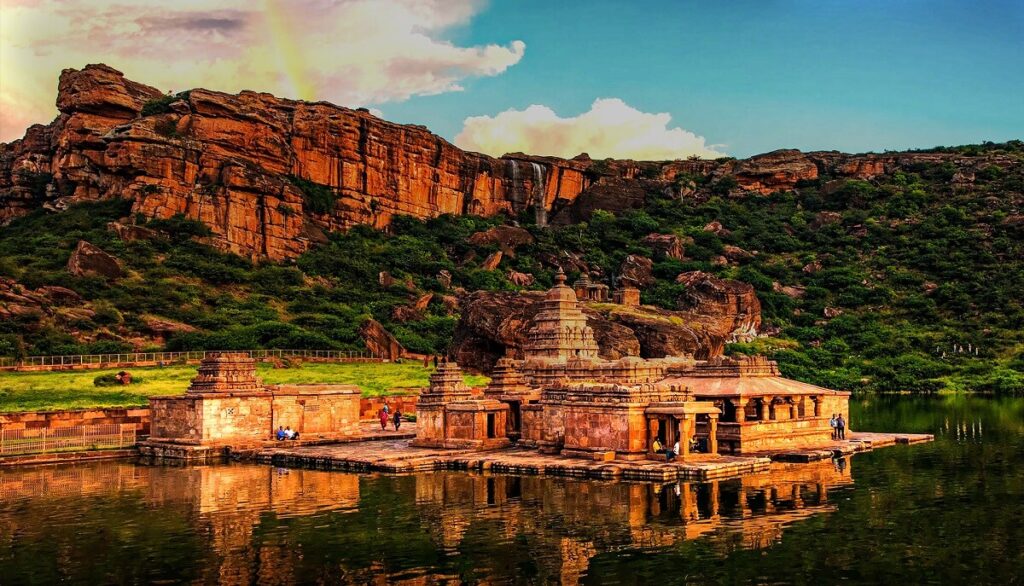
Badami, located in the Bagalkot district of Karnataka, is one of the most important heritage destinations in South India. Once the capital of the Chalukya dynasty between the 6th and 8th centuries CE, the town is celebrated for its remarkable blend of rock-cut cave temples, structural shrines, and striking natural landscapes dominated by red sandstone cliffs and the serene Agastya Lake.
For travelers in 2026, Badami offers more than just archaeological wonders. It is a living heritage town where ancient art, religion, and mythology come alive through the temples that dot its rocky terrain. The Badami Cave Temples, Bhutanatha group, Shivalaya temples, Banashankari shrine, and Mahakuta complex represent some of the most significant milestones in the evolution of Indian temple architecture.
This complete travel guide explores seven must-visit temples in Badami, providing a detailed overview of their history, architecture, highlights, and travel tips to help visitors experience the town in its full grandeur.
Why Visit Badami Temples in 2026?
Badami’s temples are not just historical structures; they are milestones in India’s architectural journey. The Chalukyas were pioneers of early temple design, blending rock-cut traditions with structural experiments that later influenced the great temples of Pattadakal, Aihole, and beyond. In 2026, with increased accessibility, improved infrastructure, and growing interest in cultural tourism, Badami stands out as an essential stop on any South Indian itinerary.
Visiting these temples allows travelers to:
- Step back in time to the era of Chalukya rulers.
- Admire rare iconography, including Hindu, Jain, and Vaishnava depictions.
- Appreciate craftsmanship that connects rock-cut caves with evolving Dravidian and Nagara architecture.
- Enjoy tranquil surroundings like Agastya Lake and hilltop views.
- Experience cultural continuity, as several temples remain active sites of worship.
Best Time to Visit Badami Temples
- October to March: The winter season offers the most pleasant climate, with daytime temperatures ranging from 15–28°C. This is the best time for sightseeing and climbing the hills around Badami.
- April to June: Summers can be harsh, with temperatures rising above 35°C. Outdoor exploration during midday can be uncomfortable.
- July to September: The monsoon season brings moderate to heavy rainfall. The cliffs look green and refreshed, but slippery paths may make temple visits challenging.
For 2026 travelers, scheduling a trip in the winter months is highly recommended.
Entry Fees and Timings
- Badami Cave Temples: Open daily from 9:00 a.m. to 5:30 p.m.
- Entry Fee: Around ₹25 for Indian citizens and ₹300 for foreign nationals (subject to change). Children below 15 years often enter free.
- Other temples (Bhutanatha, Banashankari, Mahakuta, Shivalayas): Mostly free to enter, though donations are appreciated.
How to Reach Badami
- By Air: The nearest airport is Hubli (about 105 km), connected by flights from Bengaluru, Hyderabad, and Mumbai.
- By Train: Badami railway station lies about 5 km from the town center, with trains connecting it to Bengaluru, Hubli, and Bijapur.
- By Road: Well-connected highways link Badami with Hospet, Hampi, Pattadakal, and Aihole. KSRTC buses and taxis are readily available.
Badami Temples Guide – 7 Historic Sites to Explore:
1. Badami Cave Temples
History
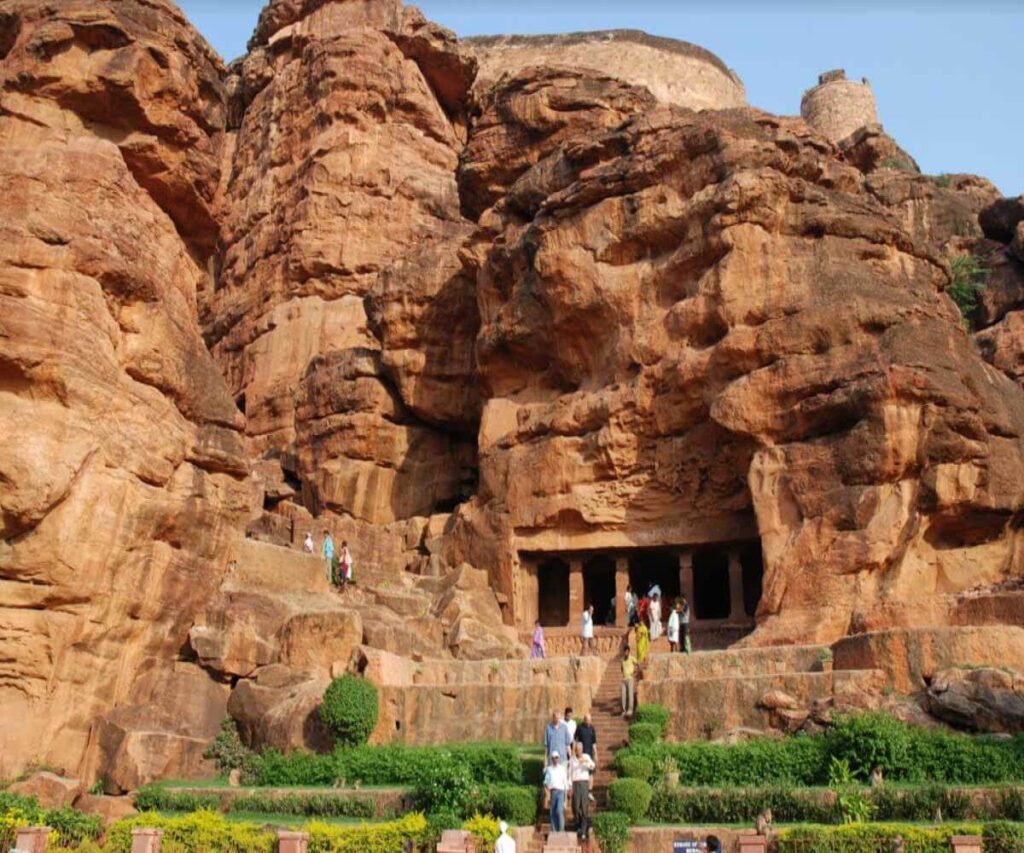
The Badami Cave Temples, carved into a sandstone cliff between the 6th and 8th centuries CE, are the crown jewel of the town. These four caves represent a confluence of Shaivism, Vaishnavism, and Jainism, making them an extraordinary example of religious harmony in the Chalukya period.
Architectural Features
- Cave 1: Dedicated to Lord Shiva. Its highlight is the magnificent sculpture of Shiva as Nataraja with 18 arms, each holding symbolic attributes. Other carvings depict Ardhanarishvara and Harihara.
- Cave 2: Dedicated to Vishnu in his Trivikrama form, showing him covering the universe in three strides. Reliefs also depict Varaha, rescuing Earth from the ocean.
- Cave 3: The largest and most elaborate cave, also dedicated to Vishnu. Features include Anantasayana (Vishnu reclining on the serpent), Narasimha, and detailed ceiling frescoes, some of the earliest known in South India.
- Cave 4: A Jain cave featuring sculptures of Mahavira, Parshvanatha, Bahubali, and detailed carvings of Tirthankaras.
Travel Tips
- Allocate at least two hours to explore all four caves.
- Visit early morning or late afternoon to avoid heat and capture better photographs of carvings.
- Consider hiring a licensed guide for detailed explanations of the iconography.
2. Bhutanatha Group of Temples
History
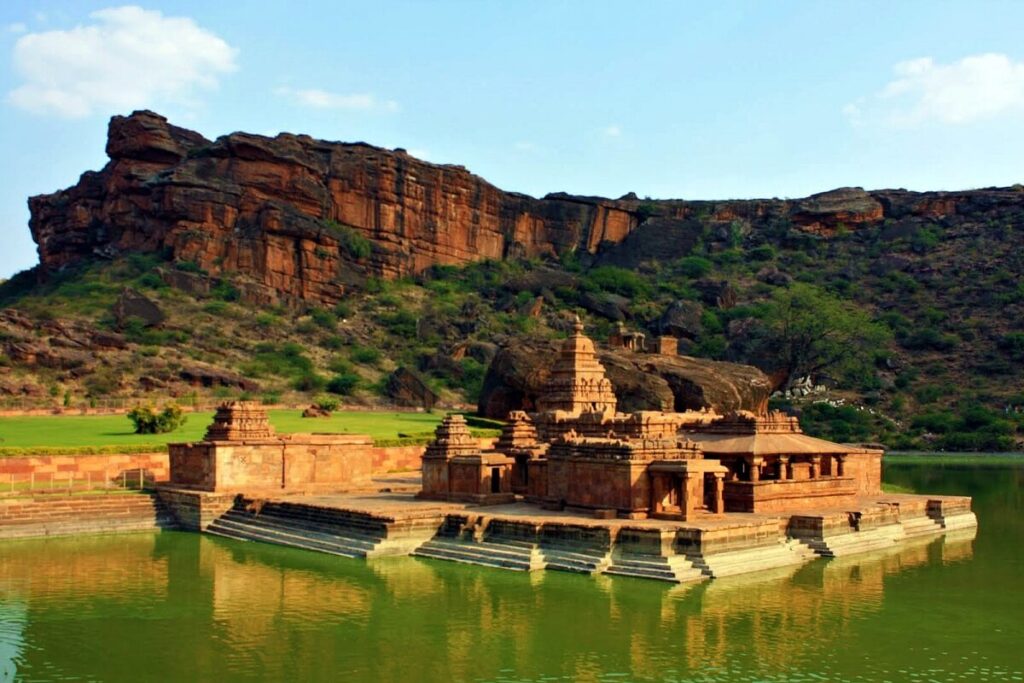
Situated on the eastern bank of Agastya Lake, the Bhutanatha temples date from the 7th to 12th centuries CE. They reflect the Chalukya transition from rock-cut to structural temples and showcase both Dravidian and Nagara architectural influences.
Architectural Features
- The East Bhutanatha Temple (7th–8th century) is built in the Dravidian style with a simple sanctum and pillared hall.
- The North Bhutanatha Temple (11th–12th century) reveals Nagara influences, with ornate tower designs and decorative motifs.
- The setting against the backdrop of sandstone cliffs and calm lake waters creates one of the most picturesque temple views in Karnataka.
Travel Tips
- Ideal time to visit is during sunset, when the temples glow against the lake’s reflection.
- Carry a camera to capture panoramic shots.
- Combine this visit with a lakeside walk around Agastya Lake.
Top Karnataka Travel Packages to Explore:
- Karnataka 7 Days Tour Itinerary
- 3 Days Heritage Temple Tour in Hampi
- 3 Days Cultural Trip to Hassan Temples
- 4 Days Hampi Sightseeing Travel Package
- 8 Days Karnataka and Kerala Combined Itinerary
3. Malegitti Shivalaya
History
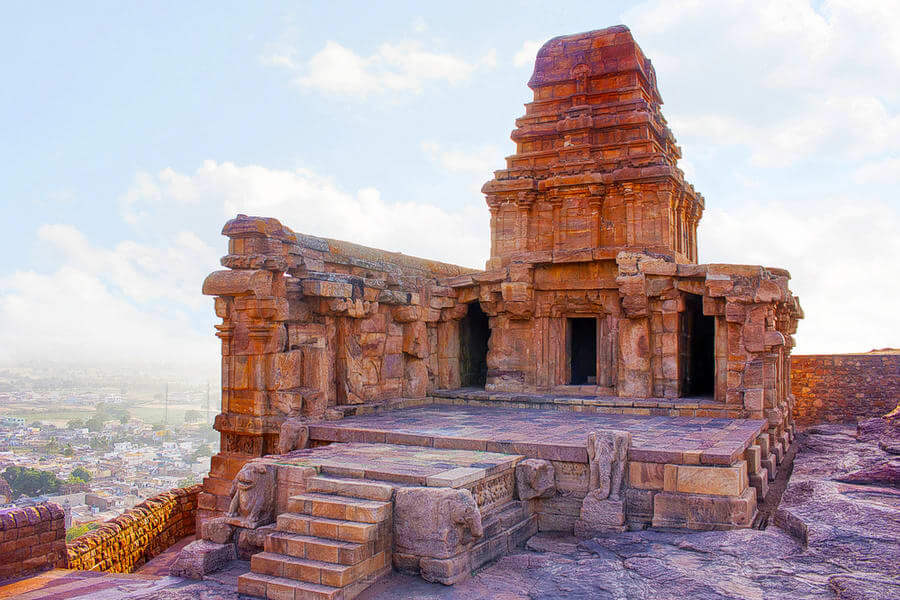
Among the oldest surviving free-standing temples of Badami, Malegitti Shivalaya dates back to the 7th century CE. It was built during the reign of the Chalukya king Mangalesha and is dedicated to Lord Shiva.
Architectural Features
- Constructed on a hilltop, the temple offers commanding views of Badami and its surroundings.
- The sanctum is topped with a simple Dravidian-style tower (vimana).
- Its pillared hall is adorned with carvings of dancers, warriors, and divine motifs, showcasing early experimentation in temple design.
- The temple forms part of the fort complex, with remnants of defensive walls nearby.
Travel Tips
- Requires a short but steep climb, so wear comfortable shoes.
- Best visited in the late afternoon when the sun casts golden hues on the temple and valley below.
- Carry water, as facilities near the hilltop are limited.
4. Lower and Upper Shivalaya Temples
Historical Context
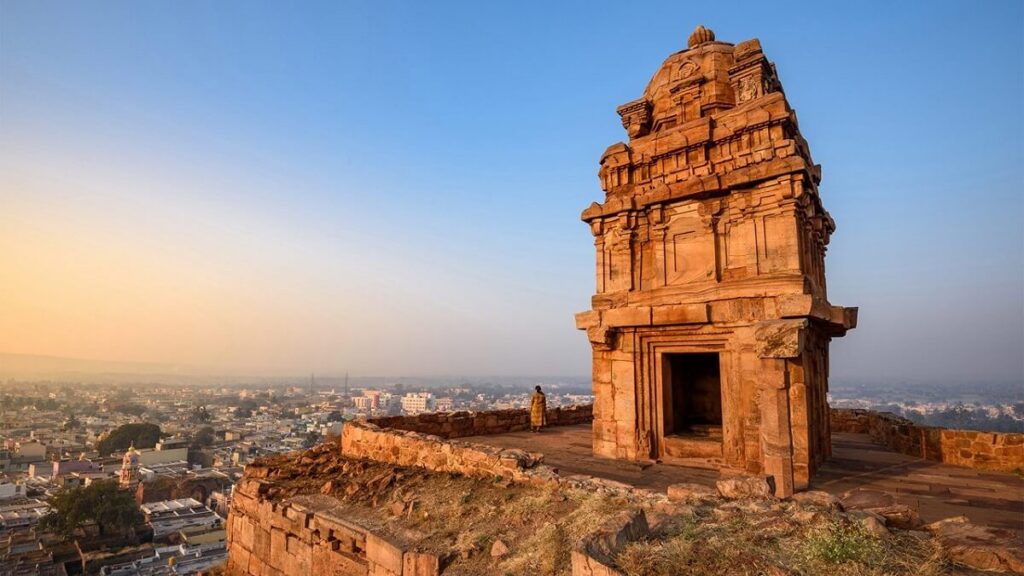
The Shivalaya temples are located on the northern hills overlooking Badami and form part of the fort complex. They represent some of the earliest free-standing structural temples built by the Chalukyas in the 6th–7th centuries CE. While Badami is renowned for its cave temples, the Shivalaya shrines demonstrate the dynasty’s experiments in constructing freestanding monuments that later influenced temple architecture at Pattadakal and Aihole.
Lower Shivalaya
- Believed to be dedicated to Lord Ganesha, this temple is partially ruined today, with only the sanctum and a few walls surviving.
- The architecture is modest, featuring a small shrine topped by a simple tower.
- Despite its damaged state, the Lower Shivalaya provides valuable insights into the architectural transition from rock-cut to structural temples.
Upper Shivalaya
- Situated higher on the northern hill, the Upper Shivalaya is larger and better preserved than its lower counterpart.
- Despite its name, scholars suggest it was originally dedicated to Lord Vishnu rather than Shiva.
- The walls are adorned with exquisite carvings depicting episodes from the Ramayana and Krishna’s childhood, as well as figures of Narasimha and Varaha.
- The temple stands on a commanding perch, providing panoramic views of Agastya Lake, the cave temples, and the town below.
Travel Tips
- Visiting both shrines requires a moderate climb. Allow 45–60 minutes to explore the area at a relaxed pace.
- The northern hill is exposed, so carry water, wear a hat, and avoid mid-day visits in summer.
- The views from the Upper Shivalaya at sunrise or sunset are particularly rewarding, making the climb worthwhile.
5. Banashankari Temple, Cholachagudd
Historical Background
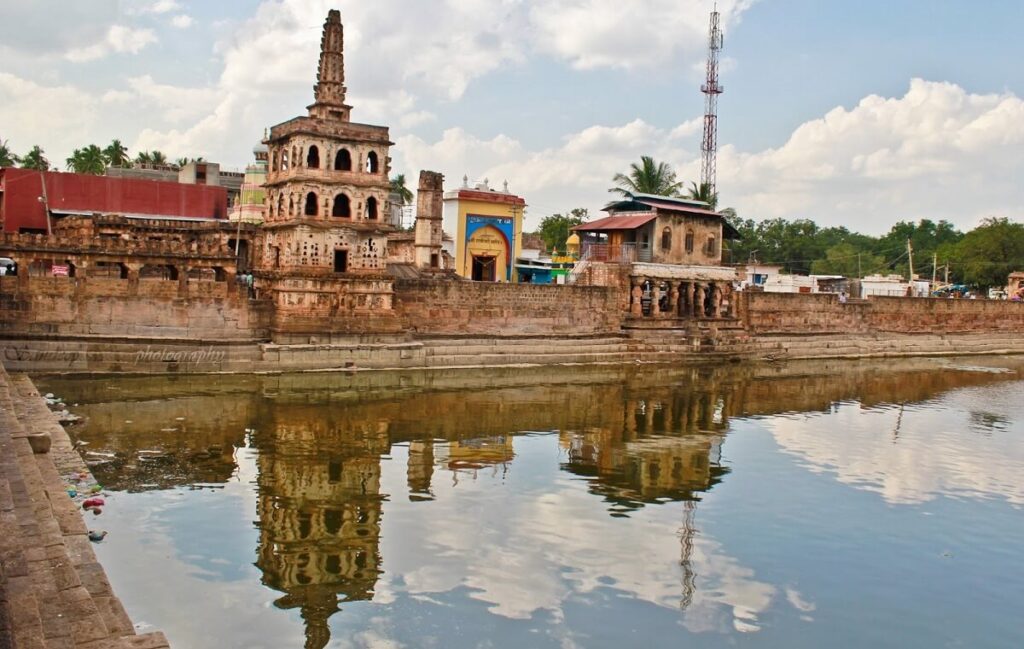
Located about 5 kilometers from Badami town, the Banashankari Amma Temple is a prominent pilgrimage site dedicated to Goddess Shakambhari, a form of Parvati. The temple’s origins date back to the 7th century CE, with later renovations by the Vijayanagara kings in the 16th century. “Banashankari” translates to “the goddess of the forest,” highlighting its sacred association with fertility and protection.
Architectural Features
- The temple is built in the Dravidian style, with a square sanctum housing the main deity, Banashankari Amma, depicted as a fierce goddess seated on a lion.
- The temple tank (Haridra Tirtha) in front of the shrine is an important feature, surrounded by pillared corridors. Devotees often take ritual baths here during festivals.
- The entrance tower (gopura) showcases Vijayanagara-era architecture, with sculpted figures of deities and mythological guardians.
- Inside the mandapa, carvings depict various forms of Shakti and regional motifs.
Religious Importance
- The temple is a hub for local devotion and hosts the famous Banashankari Jatre, held annually in January or February. The festival lasts about two weeks and includes a grand chariot procession, cultural performances, folk music, and temple rituals.
- The temple continues to attract thousands of devotees year-round, who seek the goddess’s blessings for prosperity, fertility, and protection from evil.
Travel Tips
- Plan your visit to coincide with the Banashankari Jatre if you wish to witness Badami’s most vibrant cultural event.
- Modest attire is recommended, as this is an active site of worship.
- Photography inside the sanctum may be restricted, so check local rules.
- Since the temple is outside the main cluster of Badami monuments, it is best visited with a hired auto-rickshaw or taxi.
6. Mahakuta Temple Complex
Historical Background
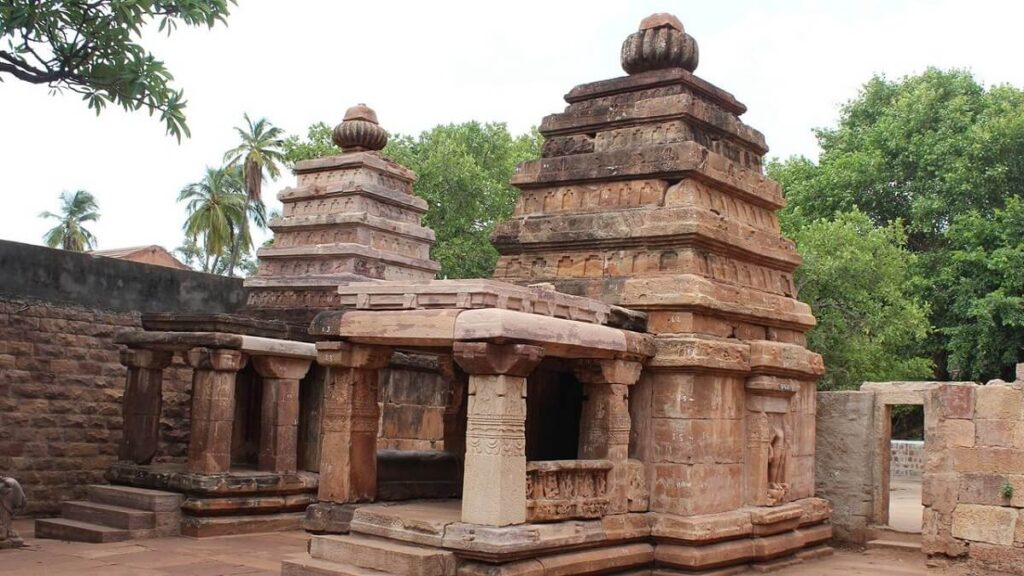
The Mahakuta temples are situated about 14 kilometers from Badami, set in a serene grove that feels far removed from the bustle of the main town. Built during the 6th–7th centuries CE by the Chalukyas, this group of temples is dedicated primarily to Lord Shiva. The Mahakuta complex was both a religious center and a learning hub for Shaiva scholars.
Architectural Features
- The central shrine, the Mahakuteshwara Temple, is built in the Dravidian style and houses a Shiva linga.
- The complex contains several smaller shrines scattered across the site, each dedicated to different forms of Shiva.
- Intricate carvings on the pillars and walls display Chalukyan motifs, dancers, and divine figures.
- A sacred tank known as the Pushkarini lies within the complex. Even today, devotees take ritual baths here during festivals, considering its waters to have purifying powers.
Cultural Importance
- The temple remains an active site of worship, especially during Shivaratri, when large gatherings of devotees celebrate with night-long prayers and rituals.
- The complex highlights the continuity of worship over more than a millennium, something that deeply enriches the cultural fabric of Badami’s temple circuit.
Travel Tips
- Since Mahakuta is outside town, plan to allocate half a day for the visit.
- Carry food and water, as amenities near the site are limited.
- Respect temple customs—remove footwear before entering shrines and avoid photography in sanctum areas.
- The tranquil environment makes this site ideal for those seeking a quieter, more spiritual experience away from tourist crowds.
Practical Travel Guide for 2026 Travelers:
Getting Around Badami
- Most temples in central Badami (caves, Bhutanatha, Shivalayas) can be explored on foot, though they involve climbs and steps.
- For Banashankari and Mahakuta, hire an auto-rickshaw or taxi. Day packages can be negotiated with local drivers.
Accommodation
- Budget and mid-range hotels are available in Badami town.
- For more comfortable stays, consider nearby towns like Hospet or Bagalkot, but staying in Badami allows easier early-morning access to the temples.
Food
- Local restaurants serve vegetarian South Indian meals, with specialties like dosa, idli, and jowar roti.
- Carry snacks and water during temple visits, as options near the sites are limited.
Guides and Entry
- Licensed guides are available near the cave temples. Hiring one can enrich your visit with detailed historical and mythological context.
- Entry fees apply mainly at the cave temples, while most other shrines are free.
Health and Safety
- Carry sunscreen, hats, and sufficient water, especially in summer.
- Wear sturdy footwear suitable for climbing rocky paths.
- Photography is allowed in most places but avoid flash inside shrines and respect restrictions.
Suggested Itinerary for Temple Lovers:
One-Day Itinerary
- Morning: Explore the four Badami Cave Temples.
- Afternoon: Visit the Bhutanatha group of temples, followed by a walk around Agastya Lake.
- Evening: Climb to Malegitti Shivalaya for sunset views.
Two-Day Itinerary
- Day 1: Cave Temples, Bhutanatha group, Malegitti Shivalaya.
- Day 2: Lower and Upper Shivalaya, Banashankari Temple, and Mahakuta temples.
Three-Day Itinerary
- Day 1: Badami Cave Temples and Bhutanatha.
- Day 2: Shivalaya shrines and Banashankari.
- Day 3: Excursion to Mahakuta and add-on visits to Pattadakal and Aihole, both UNESCO heritage sites showcasing Chalukyan architecture.
Why These Temples Matter in 2026
Visiting these seven temples provides travelers with a complete perspective of Badami’s historical and cultural richness. Together, they:
- Demonstrate the transition from rock-cut caves to structural temples.
- Represent Shaiva, Vaishnava, Shakta, and Jain traditions, reflecting the religious diversity of the Chalukya era.
- Highlight the artistic brilliance of early temple builders whose influence extended across South India.
- Offer tranquil landscapes where architecture, spirituality, and nature blend seamlessly.
For heritage travelers in 2026, Badami’s temples are more than monuments; they are living storytellers of India’s ancient past.
Conclusion
Badami is a rare destination where history, spirituality, and natural beauty converge. The Cave Temples, Bhutanatha shrines, Shivalayas, Banashankari Amma Temple, and Mahakuta complex together form a sacred landscape that narrates the rise of Chalukya power and their lasting contributions to Indian art.
Traveling to Badami in 2026 offers an opportunity not just to see temples but to immerse oneself in centuries-old traditions that continue to shape the cultural identity of Karnataka. By pacing the journey across the seven must-visit temples, travelers can enjoy a well-rounded exploration—moving from dramatic rock-cut caves to tranquil lakeside shrines and hilltop sanctuaries.
For those who seek to combine history, architecture, and spiritual exploration, Badami is an unforgettable destination. It is not merely a place to visit but a cultural experience to live, cherish, and carry home as part of one’s personal travel story.
Recommended Reads:
- Top 10 Destinations to See in Karnataka in January 2026
- Places in Karnataka to Visit in February 2026
- 10 Historic Temples of Hospet for Travelers
- Top Tourist Places in Karnataka to Visit in June 2026
- July 2026 Travel Guide – Best Karnataka Destinations
- Karnataka in August 2026 – Where to Go and What to See
- September 2026 Karnataka Tourism – Top Attractions
- October 2026 Karnataka Trip – Best Places to Explore
- Belur Karnataka – Famous Temples to Visit
- Hoysala Temples Karnataka – Heritage Guide for Visitors
- Hampi Karnataka Temples – Top Religious Sites to Explore
- Karnataka Temples – Most Popular Pilgrimage Spots
- Aihole Karnataka – Best Places to Visit & Travel Tips
- Pattadakal Temples – UNESCO Heritage and Visitor Guide
