Thailand is famous for its golden temples, lively beaches, and mountain landscapes. But hidden inside its forests are natural wonders that attract travelers from all over the world—its waterfalls. With their crystal-clear pools, multi-tiered cascades, and dramatic jungle backdrops, Thailand’s waterfalls are ideal for both relaxation and adventure.
This guide highlights the 13 most famous waterfalls in Thailand, covering their features, locations, accessibility, and tips for travelers.
Top 13 Waterfalls in Thailand for Travelers:
1. Erawan Waterfall – Kanchanaburi Province
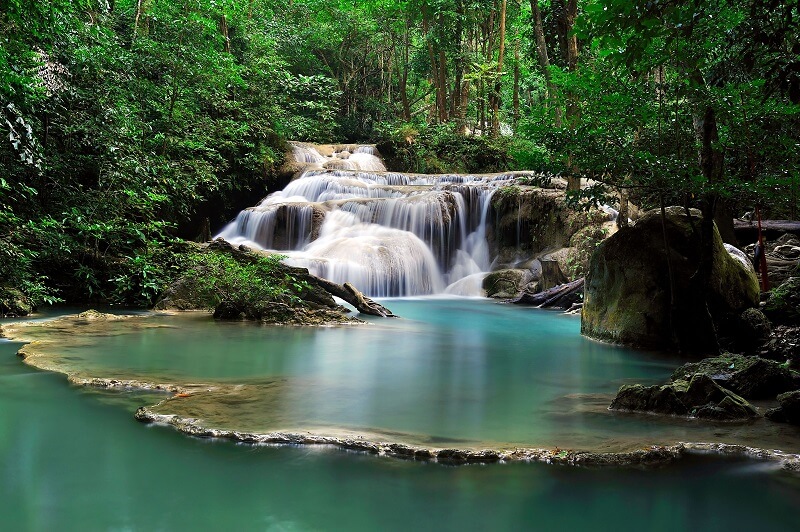
Erawan Waterfall, inside Erawan National Park, is the most iconic waterfall in Thailand. It is divided into seven tiers, each with emerald-colored pools where visitors can swim. The waterfall is named after the three-headed white elephant from Hindu mythology, as the top tier is believed to resemble the elephant’s head.
- Highlights: Natural limestone pools, easy trails, family-friendly atmosphere.
- Access: About 2.5 hours from Bangkok, by bus or car to Kanchanaburi, followed by a short ride to the park.
- Best time to visit: November to January, when the water is clearest.
2. Sai Yok Noi – Kanchanaburi Province
Sai Yok Noi, also known as Khao Phang Waterfall, lies within Sai Yok National Park. Unlike Erawan’s seven levels, this waterfall is a single curtain of water falling over a limestone cliff. The surrounding forest adds to its natural charm.
- Highlights: Famous railway nearby, links to World War II history, boat tours on the River Kwai.
- Access: Reached by train along the Death Railway or by road from Kanchanaburi.
- Travel tip: Combine your visit with the Hellfire Pass Memorial for a historical touch.
3. Thi Lo Su – Tak Province
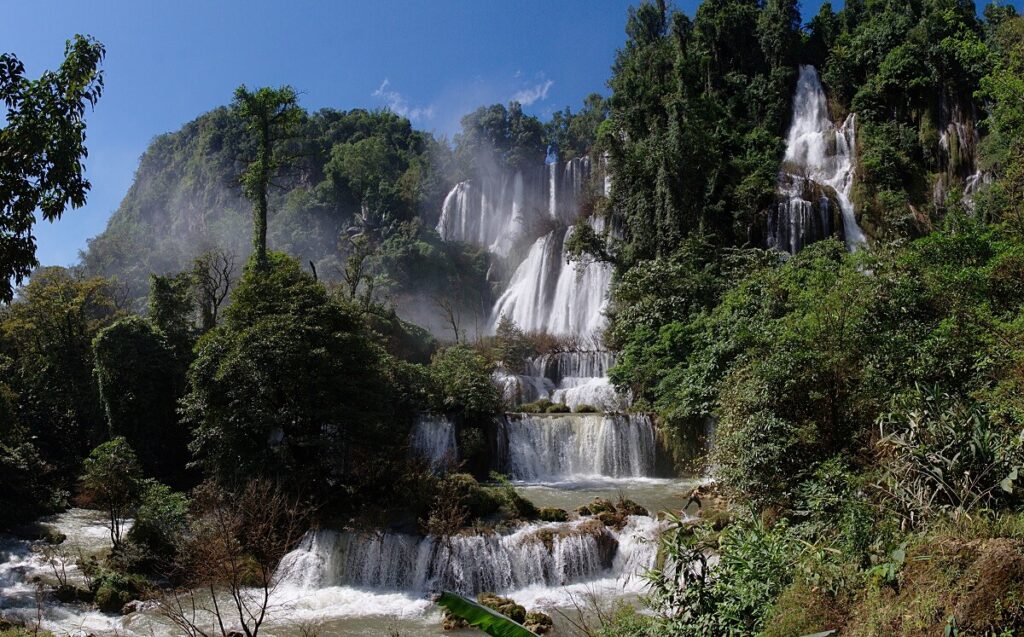
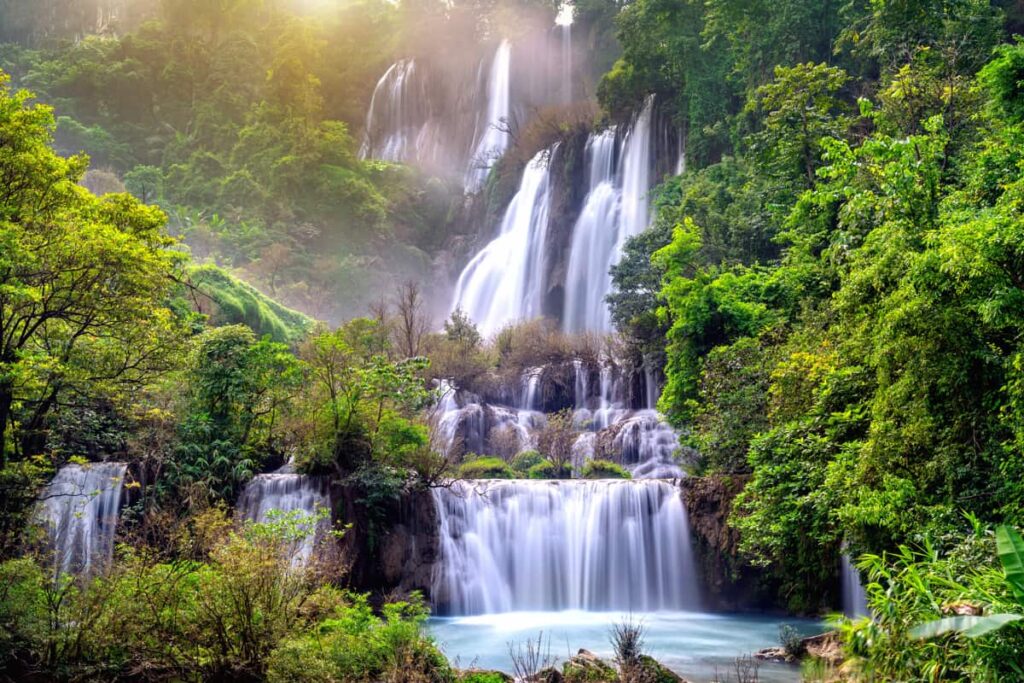
Known as the largest waterfall in Thailand, Thi Lo Su is located deep inside the Umphang Wildlife Sanctuary. It measures around 250 meters high and 450 meters wide, surrounded by thick jungle. The journey to reach it is challenging but unforgettable.
- Highlights: Enormous size, untouched jungle, powerful flow.
- Access: Requires a combination of a long drive and boat trip, usually from Mae Sot. Entry permits are mandatory.
- Best time to visit: Rainy season (June–October) for dramatic water flow.
4. Khun Korn Waterfall – Chiang Rai Province
Khun Korn Waterfall, the highest in Chiang Rai, plunges nearly 70 meters inside Khun Korn Forest Park. The hike to the falls takes about 30–40 minutes through bamboo groves and teak forests.
- Highlights: Impressive drop, scenic jungle hike.
- Access: 30 km from Chiang Rai town, best reached by car or motorbike.
- Travel tip: Wear proper shoes as the trail can be slippery in wet season.
Recommended Thailand Travel Itineraries
- 4 Day Tour of Chiang Mai & Chiang Rai
- Phuket Itinerary – 3 Nights 4 Days Trip
- Bangkok and Pattaya Tour – 4 Days Plan
- Thailand Holiday Package – 6 Days 5 Nights
- 8 Day Thailand Itinerary with Top Destinations
5. Huay Mae Khamin – Kanchanaburi Province
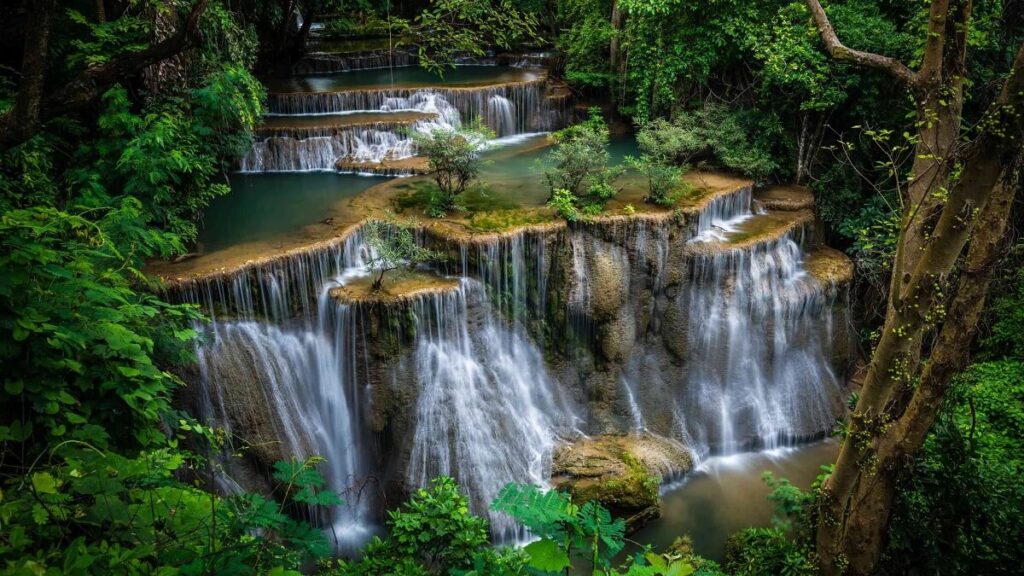
Huay Mae Khamin is considered one of Thailand’s most beautiful waterfalls. It flows across seven tiers, similar to Erawan, but attracts fewer tourists. Each tier has its own pool, creating a peaceful escape.
- Highlights: Serene environment, camping areas, fewer crowds.
- Access: Located inside Khuean Srinagarindra National Park, about 45 km from Kanchanaburi.
- Best time to visit: October to December.
6. Pha Charoen Waterfall – Tak Province
Pha Charoen is a 97-tiered waterfall inside Pha Charoen National Park. Though many tiers are small, the overall view of countless cascading steps is mesmerizing. It is surrounded by tropical forest and cool climate.
- Highlights: Unique multi-tiered steps, natural pools.
- Access: About 40 km from Mae Sot town.
- Travel tip: Ideal for photography and quiet nature walks.
7. Wang Sai Thong – Satun Province
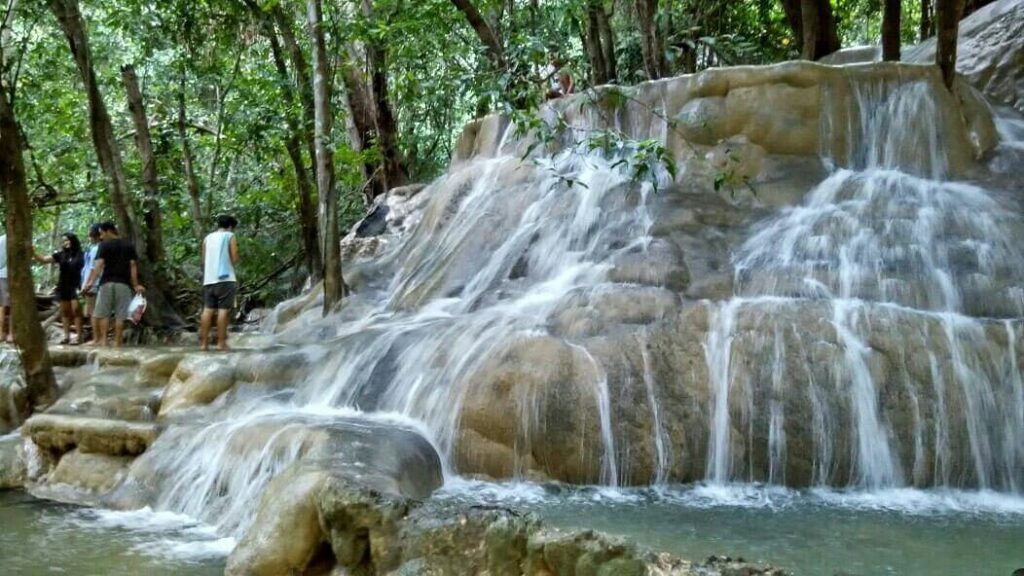
Wang Sai Thong is unique because of its limestone rock formations. The minerals make the rocks less slippery, allowing visitors to walk directly under the flowing water. The small pools are shallow, making it safe for families.
- Highlights: Non-slippery limestone surface, refreshing pools.
- Access: Located in La-ngu District, Satun Province, southern Thailand.
- Best time to visit: Year-round, but dry season (December–April) ensures clearer waters.
8. Krathing Waterfall – Chanthaburi Province
Krathing Waterfall lies in Namtok Krathing National Park. It features 13 tiers, with water flowing across granite cliffs. The surrounding forest is rich in wildlife, including hornbills and macaques.
- Highlights: Many levels, wildlife sightings, nearby fruit orchards.
- Access: 50 km from Chanthaburi town.
- Travel tip: The waterfall looks best after heavy rain.
9. Sam Phan Bok – Ubon Ratchathani Province
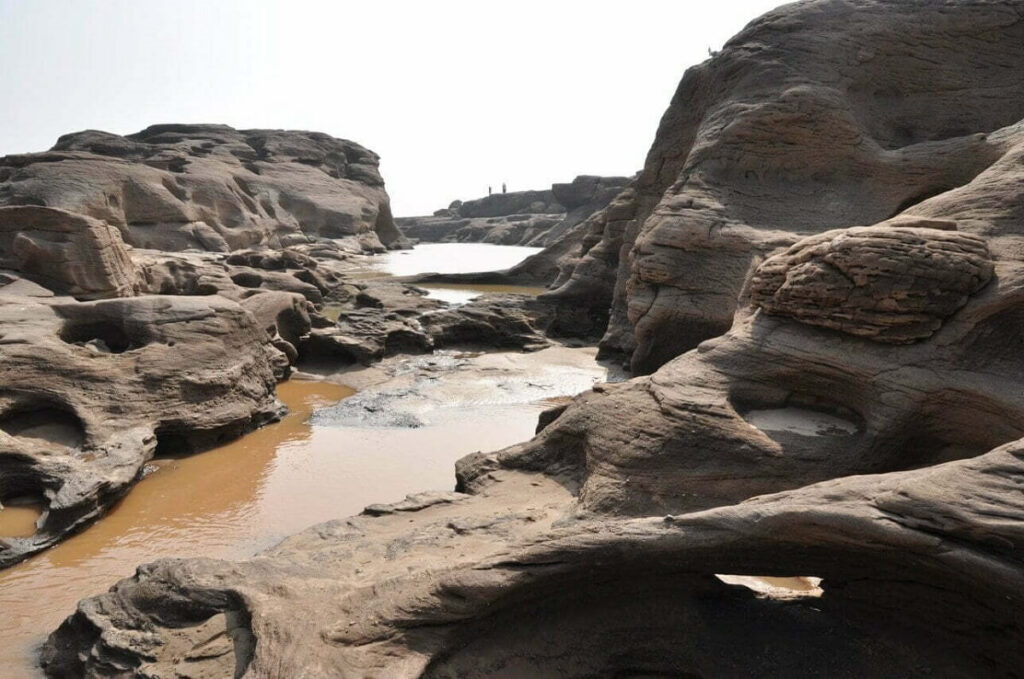
Nicknamed the “Grand Canyon of Thailand”, Sam Phan Bok is not a traditional waterfall but a natural wonder formed by the Mekong River. Thousands of holes and rock pools appear when the river level drops.
- Highlights: Dramatic sandstone formations, sunset photography.
- Access: 120 km from Ubon Ratchathani city.
- Best time to visit: Dry season (December–April).
10. Than Thip Waterfall – Krabi Province
Than Thip, in Khao Phanom Bencha National Park, is a picturesque waterfall dropping 100 meters through the rainforest. The trek to the falls includes caves, streams, and tropical flora.
- Highlights: Tall drop, lush surroundings, adventurous trekking.
- Access: 20 km from Krabi town, accessible by motorbike or tuk-tuk.
- Travel tip: Bring insect repellent and wear light hiking clothes.
11. Mae Klang Waterfall – Chiang Mai Province
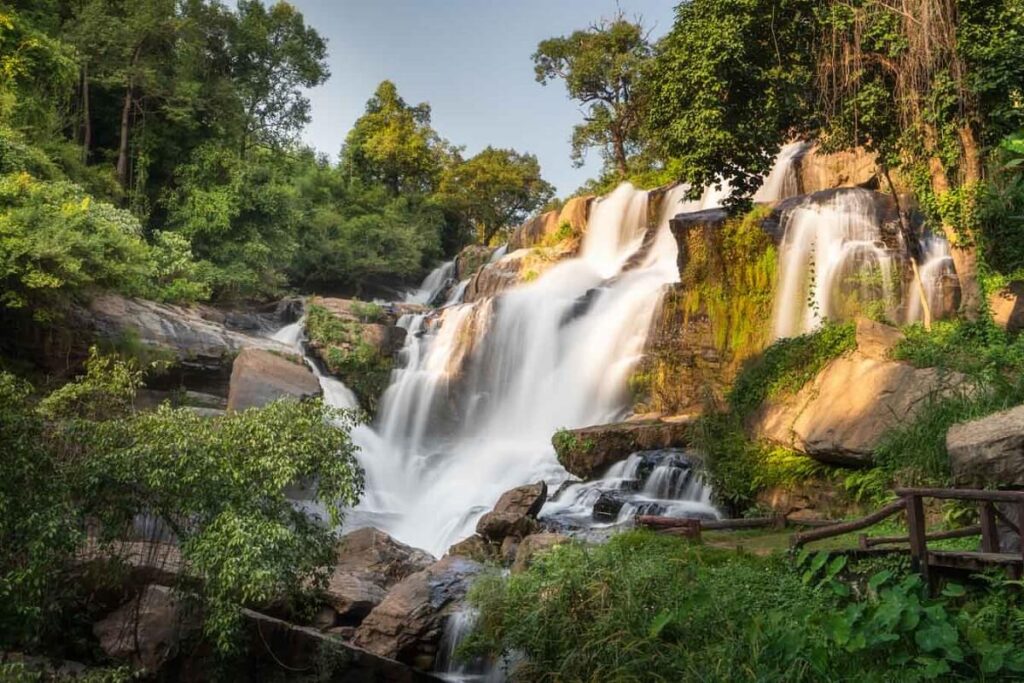
Mae Klang is the first major waterfall inside Doi Inthanon National Park. It is about 100 meters high and easily accessible. Locals often picnic here, especially on weekends.
- Highlights: Accessibility, natural swimming pools, picnic-friendly.
- Access: 58 km from Chiang Mai city, en route to Doi Inthanon.
- Best time to visit: All year, though water levels peak during rainy season.
12. Mae Ya Waterfall – Chiang Mai Province
Mae Ya is another spectacular waterfall inside Doi Inthanon National Park. It plunges around 260 meters in a fan shape, making it one of Thailand’s tallest and most beautiful waterfalls.
- Highlights: Enormous height, dramatic flow, peaceful forest setting.
- Access: 60 km from Chiang Mai city, inside the park.
- Travel tip: Visit in early morning for soft light and fewer crowds.
13. Thi Lor Su Noi – Tak Province
Thi Lor Su Noi is the smaller sister waterfall of the great Thi Lo Su. Located in the same region, it offers easier access but retains the same jungle charm.
- Highlights: Compact size, family-friendly pools, easier trails.
- Access: Near Umphang town, Tak Province.
- Best time to visit: Same as Thi Lo Su, during rainy months.
Travel Tips for Visiting Waterfalls in Thailand:
(i) Season matters:
- Rainy season (May–October) provides dramatic water flow.
- Dry season (November–April) offers safer trails and clearer water.
(ii) Safety first:
- Wear proper shoes.
- Avoid climbing wet rocks.
- Swim only in safe, marked areas.
(iii) What to pack:
- Quick-dry clothing, swimwear, insect repellent, and a reusable water bottle.
(iv) Responsible travel:
- Respect park rules.
- Avoid leaving trash behind.
- Support local vendors when possible.
Suggested Itineraries
Kanchanaburi Waterfall Tour (3 Days)
- Day 1: Erawan Waterfall.
- Day 2: Huay Mae Khamin.
- Day 3: Sai Yok Noi and nearby historical sites.
Chiang Mai Highland Route (2 Days)
- Day 1: Mae Klang and Mae Ya in Doi Inthanon.
- Day 2: Explore Ang Ka Trail and highland villages.
Adventure Trip to Tak Province (4 Days)
- Day 1: Travel to Mae Sot.
- Day 2: Trek to Thi Lo Su.
- Day 3: Visit Thi Lor Su Noi and Pha Charoen.
- Day 4: Return to Mae Sot.
Conclusion
Thailand’s waterfalls are as diverse as its landscapes. From the emerald pools of Erawan to the towering cascades of Thi Lo Su, from Mae Ya’s fan-shaped flow to the rocky formations of Sam Phan Bok, each waterfall provides a unique encounter with nature. Whether you are seeking peaceful relaxation, cultural exploration, or adventurous treks, these waterfalls will enrich your travel experience.
Exploring the 13 most famous waterfalls in Thailand is more than sightseeing—it is connecting with the country’s natural rhythm. Plan wisely, travel responsibly, and let the cascades of Thailand inspire your journey.
Suggested Articles:
- Thailand in May 2026 – Best Tourist Places to Explore
- June 2026 Thailand Trip – Where to Go and What to See
- Best Places to Visit in Thailand During July 2026
- August 2026 Thailand Holiday – Top Travel Spots
- 12 Famous Chiang Mai Temples to Explore
- Top Attractions and Places to Visit in Chiang Mai
- Chiang Rai Sightseeing – Best Tourist Places
- Things You Must Do in Chiang Mai on Your Trip
- 3 Day Chiang Mai Travel Plan – Itinerary Guide
- Best Hotels and Resorts to Stay in Krabi
- Krabi in 3–5 Days – Complete Travel Guide
- Krabi Shopping Guide – Markets, Handicrafts & Street Food
- 5 Best Activities to Try in Krabi