Mandvi, a serene coastal town in the Kutch district of Gujarat, is best known for its golden beaches, shipbuilding yards, and royal heritage. But beyond its scenic charm and maritime traditions lies a spiritual fabric woven through centuries. Temples here are not just places of worship; they are living spaces where history, faith, art, and community come together.
From grand Jain marble complexes to humble shrines devoted to local deities, Mandvi offers travelers a chance to experience spirituality in different forms. This travel guide explores the most famous temples in Mandvi, giving you historical context, architectural details, cultural insights, and practical tips on how to visit them.
Whether you are a devotee, a history buff, or a curious traveler, the temples of Mandvi open a door into Gujarat’s religious traditions and the daily lives of its people.
The Religious Landscape of Mandvi
Mandvi sits at the crossroads of trade, culture, and religion. Its location by the Arabian Sea made it a thriving port during medieval times, attracting merchants, sailors, and communities from different backgrounds. Over centuries, this resulted in a rich mix of Hindu temples, Jain shrines, and Sufi mausoleums.
The variety is striking:
- Hindu temples here honor both pan-Indian gods and local folk deities like Ashapura Mata and Shitla Mata.
- Jain temples, especially the 72 Jinalaya, showcase the devotion and artistry of the Jain community.
- Shrines and dargahs reflect the diversity of faiths in Kutch, reminding us of its cosmopolitan maritime past.
Visiting Mandvi’s temples is not just about religion—it is also about understanding its history, architecture, and cultural identity.
Famous 5 Temples in Mandvi You Must Visit:
1. 72 Jinalaya Jain Temple (Bauter Jinalaya)
History and Significance
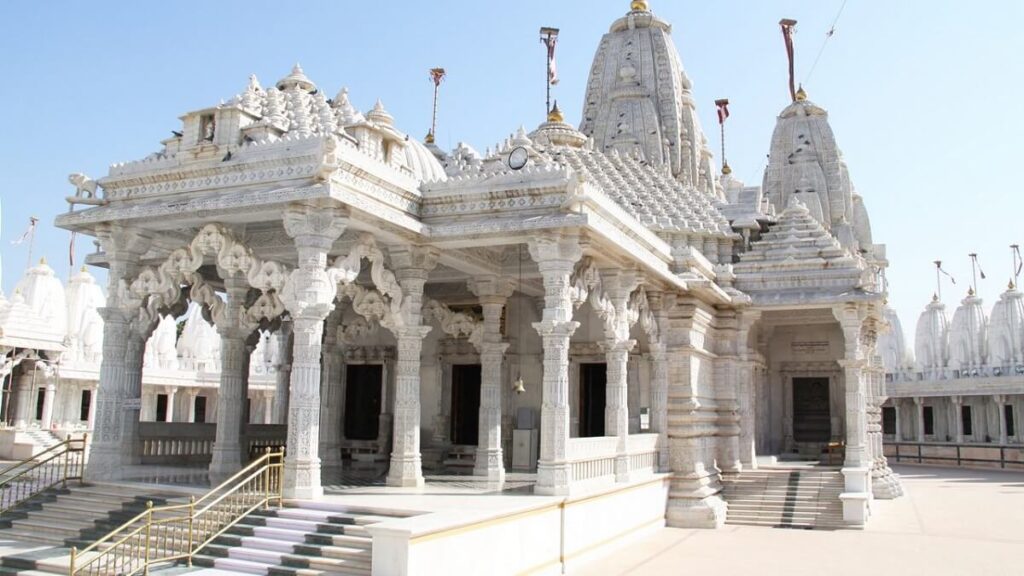
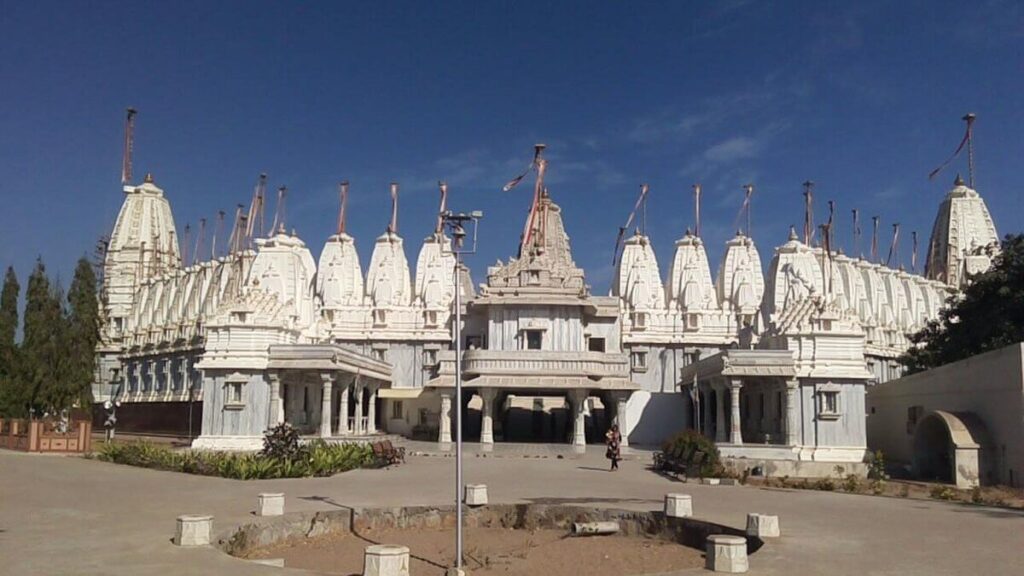
Located about 10 km from Mandvi on the Bhuj–Mandvi road, the 72 Jinalaya Jain Temple—also called Bauter Jinalaya—is one of the most important Jain pilgrimage spots in the region. Built in the late 20th century, this marble temple is dedicated to Lord Mahavir and houses 72 small shrines for each of the Jain Tirthankaras.
For Jains, the temple is both a spiritual retreat and a symbol of religious endurance. It is also a testimony to the Jain tradition of philanthropy and temple building.
Architecture
The temple is a masterpiece of symmetry and order. Made entirely of white marble, the 72 shrines are arranged in a square formation around a central courtyard. Each shrine houses a beautifully sculpted idol of a Tirthankara. The carvings are intricate but restrained, in keeping with Jain aesthetics of purity and simplicity.
When the sunlight strikes the marble in the morning and evening, the whole complex glows in a golden hue—a photographer’s delight.
Visitor Experience
The temple offers a quiet, meditative environment. Even during festivals, the serenity is preserved. Visitors often spend time sitting in the courtyard, watching devotees offer flowers and chanting hymns.
- Best Time to Visit: Morning or late afternoon for best light.
- Tips: Dress modestly. Avoid bringing leather items into the temple. Respect silence in prayer halls.
2. Shree Swaminarayan Mandir, Mandvi
Historical Roots
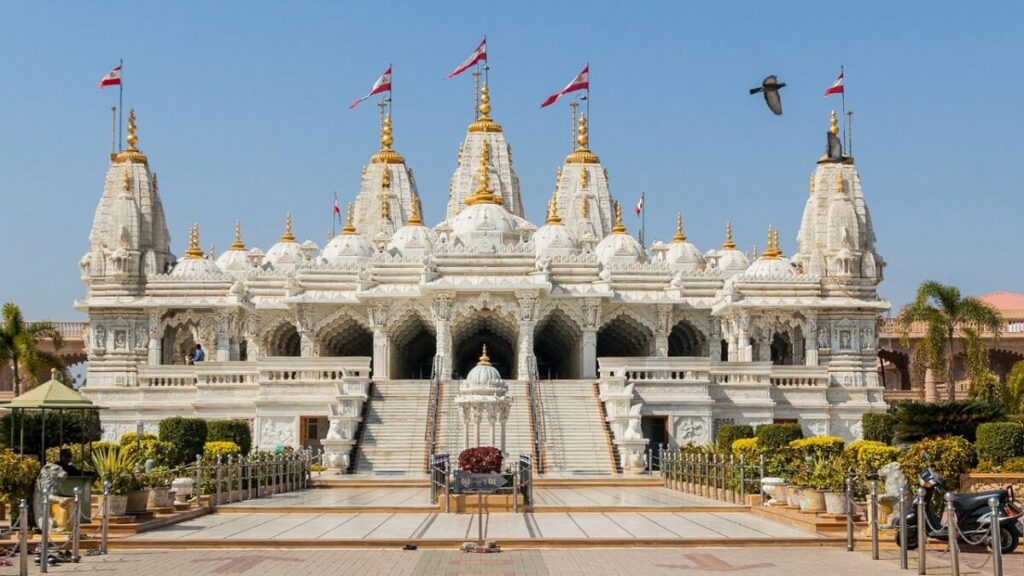
The Swaminarayan movement has deep roots in Gujarat, and Mandvi is no exception. The first Swaminarayan temple in Mandvi was built in the 19th century, and a newer, larger temple has been established to accommodate the growing number of devotees.
It is one of the central spiritual hubs of the town, attracting devotees daily and during festivals such as Janmashtami and Diwali.
Architecture and Features
The temple is constructed in gleaming white marble, with intricately carved domes and spires. The sanctum houses the idols of Swaminarayan Bhagwan, Radha-Krishna, and other deities central to the sect.
A large sabha mandap (assembly hall) is used for spiritual discourses and community gatherings. During evening aarti, the temple comes alive with chanting, music, and devotional energy.
Visitor Experience
This temple provides an insight into the vibrant Swaminarayan tradition—known for its discipline, devotion, and large community events.
- Best Time to Visit: Morning prayers and evening aarti.
- Tips: Photography is allowed only in designated areas. Remove footwear outside. Participate in satsang sessions if you are curious about the faith.
3. Ashapura Mataji Temple
Importance of Ashapura Mata
Ashapura Mata is one of the most revered deities of Kutch. She is considered the kuldevi (family goddess) of many communities. The name “Ashapura” means “the goddess who fulfills hopes.”
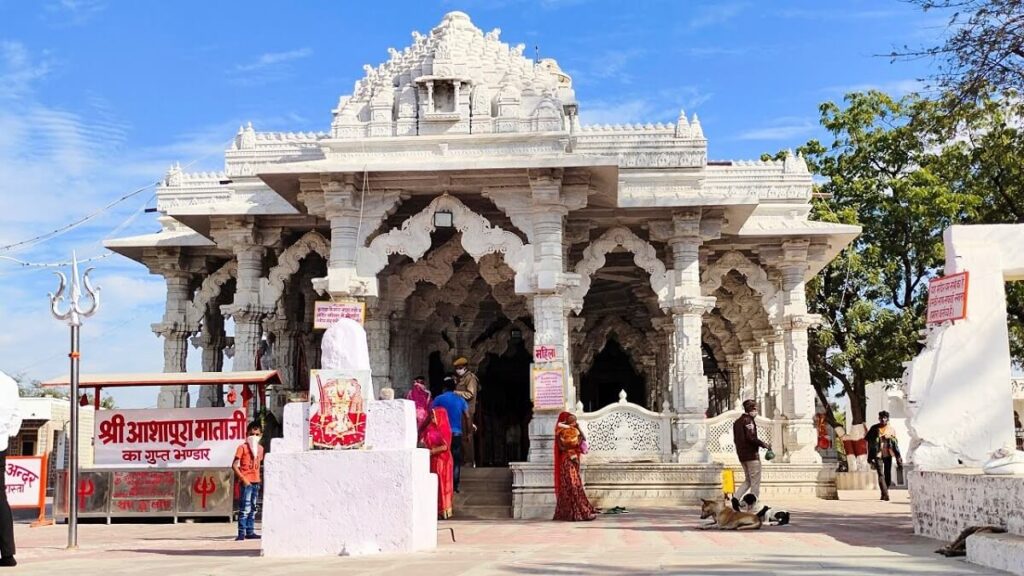
The Ashapura Mataji Temple in Swamiji Sheri, Mandvi, is one of the most visited temples in town. Locals come here to seek blessings for health, prosperity, and protection. During Navratri, the temple is the heart of festive celebrations.
Architecture and Setting
Unlike the grand marble structures of Jain and Swaminarayan temples, the Ashapura Mataji Temple is modest in scale but rich in devotional atmosphere. The sanctum houses the idol of the goddess adorned with red clothes and silver ornaments.
The temple walls are painted in bright hues, and the courtyard often smells of incense and marigold garlands.
Visitor Experience
Visiting during Navratri offers a vibrant cultural experience, with devotional songs, dances, and processions. Even on regular days, the temple buzzes with devotees offering coconuts, flowers, and sweets.
- Best Time to Visit: Early morning or evening. Navratri is most special.
- Tips: Carry offerings if you want to participate. Be prepared for crowds during festivals.
Popular Gujarat Tour Packages & Itineraries:
- Gujarat 4 Days Trip Covering Bhuj, Mandvi & Kutch
- Detailed 10 Days Gujarat Travel Itinerary
- 14 Days Gujarat Package – Culture & Heritage Tour
- 8 Days Gujarat Vacation Package Highlights
- 9 Days Gujarat Sightseeing Tour Plan
4. Kharva na Mama Temple
Community Roots
The Kharva community, traditionally fishermen and seafarers, have a deep connection with Mandvi’s maritime heritage. The Kharva na Mama Temple is dedicated to a local deity considered the protector of seafarers.
For centuries, sailors and fishermen visited this temple before venturing into the sea, seeking blessings for safety and good fortune.
Architecture and Rituals
The temple is small but culturally significant. Its walls are decorated with murals of boats, anchors, and seafaring motifs. Rituals include coconut offerings and special prayers before the start of the fishing season.
Visitor Experience
Visiting this temple gives travelers a glimpse into the fusion of religion and livelihood. You’ll see how faith is tied to daily survival and identity.
- Best Time to Visit: Early morning, when fishermen gather before heading to sea.
- Tips: Respect local traditions. Do not photograph rituals without permission.
5. Shitla Mata Temple
The Goddess of Healing
Located along Layja Road, the Shitla Mata Temple is dedicated to the goddess Shitla, traditionally worshipped for protection against smallpox and diseases. Even today, families visit seeking blessings for health and well-being.
Setting and Features
The temple sits beside a small lake, creating a peaceful atmosphere. Recently, a new walkway has been constructed, making access easier for devotees. The sanctum houses the goddess’s idol, often decorated with vermillion and flowers.
Visitor Experience
It’s not just a religious stop—it’s also a place to enjoy Mandvi’s natural setting. Pilgrims sit by the water, offering prayers and feeding fish.
- Best Time to Visit: Winter months or post-monsoon, when the lake is full.
- Tips: Carry water and light snacks; the area can be quiet with few shops nearby.
Festivals and Temple Celebrations
- Navratri: Ashapura Mataji Temple becomes the hub of garba dances and devotional songs.
- Diwali: Swaminarayan Mandir organizes grand aarti and lighting ceremonies.
- Mahavir Jayanti: Celebrated at 72 Jinalaya with special prayers and processions.
- Local Fishing Rituals: Kharva na Mama Temple hosts prayers at the start of fishing season.
Participating in these festivals lets you experience the temples as vibrant community spaces rather than static monuments.
How to Plan a Temple Tour in Mandvi
Suggested Itinerary
Day 1
- Morning: Swaminarayan Mandir and Ashapura Mataji Temple.
- Afternoon: 72 Jinalaya Jain Temple (drive out from town).
- Evening: Shitla Mata Temple on Layja Road.
Day 2
- Morning: Kharva na Mama Temple and interaction with fishermen.
- Afternoon: Mazar-e-Noorani for cultural diversity.
- Evening: Relax at Mandvi Beach after your temple tour.
Travel Tips
- Getting Around: Auto-rickshaws and hired cars are best for reaching temples outside town.
- Season: October to February is the most comfortable season.
- Accommodation: Stay in Mandvi town for easy access; many guesthouses and resorts are near the beach.
Etiquette for Visitors
- Remove footwear before entering temples.
- Dress modestly—shoulders and knees covered.
- Keep silence in prayer areas.
- Donations are welcome but not compulsory.
- Always ask before photographing idols or rituals.
Conclusion
Mandvi may be famous for its beaches and palaces, but its temples are the true soul of the town. They tell stories of trade, community life, devotion, and resilience. The 72 Jinalaya shows Jain artistry, the Swaminarayan Mandir reflects living tradition, the Ashapura and Shitla Mata temples embody local faith, and the Kharva na Mama temple links religion with seafaring life. Together, they form a spiritual map of Mandvi.
Visiting these temples isn’t just about sightseeing—it’s about feeling the rhythm of a town where the sea meets faith, and where every temple is a chapter in Kutch’s living history.
Suggested Articles:
- Mandvi Gujarat – 10 Tourist Places You Should Explore
- September in Gujarat – Best Weather, Places & Activities
- Bhuj Gujarat Travel Guide – 15 Things You Must Do
- 10 Famous Tourist Spots in Jamnagar Gujarat
- Gujarat October Travel – Top 10 Destinations to Visit
- 10 Best Attractions in Patan Gujarat for Travelers
- Lothal Gujarat – Complete Visitor & History Guide
- Statue of Unity Gujarat – Facts, Entry & How to Visit
- Gir National Park Gujarat – Wildlife Safari Guide
- Gujarat Cultural Heritage – Traditions, Arts & Festivals
- Best Foods of Gujarat Every Traveler Must Taste
- 9 Iconic Jain Temples in Gujarat to Explore
- Hidden Offbeat Tourist Places in Gujarat
- 8 Must-See Attractions in Kevadia Gujarat
- Gujarat Tourism – 10 Reasons to Visit This State