Vietnam might be best known for its Buddhist pagodas, French colonial architecture, and vibrant street life, but hidden across the country are remarkable Hindu temples that date back centuries. These sacred sites are a testament to the influence of the Champa Kingdom, an Indianized civilization that flourished along Vietnam’s central and southern coast from the 2nd to the 17th century. The Cham people, strongly influenced by Hinduism and Indian culture, left behind extraordinary temple complexes dedicated to Shiva, Vishnu, and other deities.
Today, many of these temples stand in ruins, while others remain active places of worship or have been carefully restored. They are not just historical monuments but living cultural treasures that reveal Vietnam’s unique connection with India and the broader Hindu world.
In this complete guide, we’ll explore 10 Hindu temples in Vietnam you must visit—from the famous UNESCO-listed Mỹ Sơn Sanctuary to lesser-known towers scattered in Bình Định, Nha Trang, and Phan Rang.
Why Hindu Temples in Vietnam Are Unique
Before diving into the list, it’s worth understanding why these temples are so special. Unlike India, where Hinduism still thrives, Vietnam’s Hindu temples are remnants of a past civilization. They represent:
- Champa architecture – Distinct red brick towers built without mortar, often adorned with intricate sandstone carvings of deities, dancers, and mythical animals.
- Blend of cultures – A fusion of Hindu iconography with local Cham traditions and Southeast Asian influences.
- Sacred geography – Temples often set amidst jungles, mountains, or coastal plains, giving them a mystical atmosphere.
- UNESCO heritage – Some sites, like Mỹ Sơn, are internationally recognized as cultural treasures.
Exploring them is like stepping into a forgotten chapter of Hindu history outside India.
The 10 Must-Visit Hindu Temples in Vietnam:
1. Mỹ Sơn Sanctuary – Quảng Nam Province
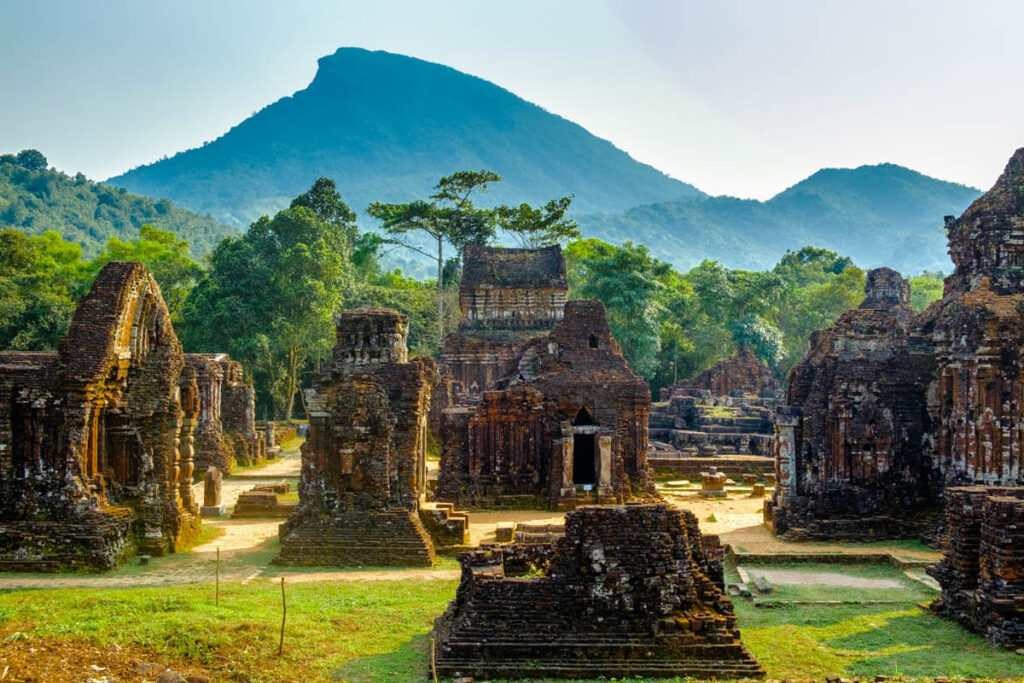
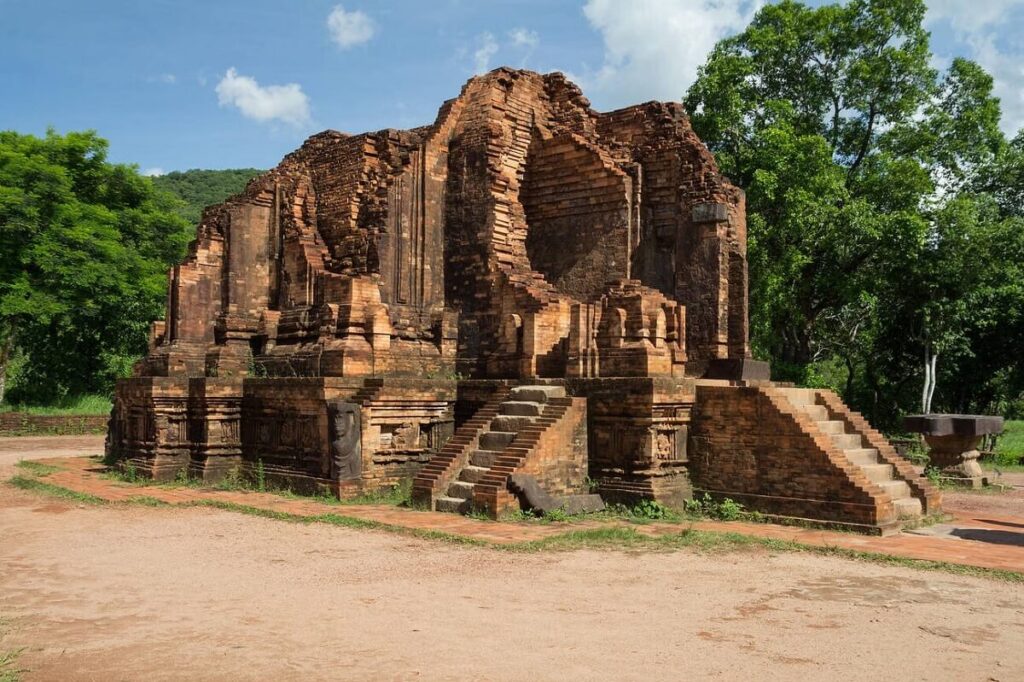
No list of Hindu temples in Vietnam is complete without Mỹ Sơn Sanctuary. This UNESCO World Heritage Site is often called the “Angkor Wat of Vietnam”, though on a smaller scale.
History & Significance
Mỹ Sơn was the spiritual center of the Champa Kingdom between the 4th and 14th centuries. It was dedicated mainly to Lord Shiva, worshiped under the name Bhadreshvara. The kings of Champa considered themselves descendants of Shiva and commissioned grand temples to honor him.
Architecture & Highlights
- Over 70 brick temples once stood here, though many were damaged during wars.
- Surviving towers display intricate carvings of gods, apsaras (celestial dancers), and mythological animals like lions and elephants.
- A lingam-yoni altar, central to Shaivite worship, is still preserved.
- The layout resembles Indian mandalas, symbolizing cosmic order.
Visitor Tips
- Located about 40 km from Hoi An, easily reached by motorbike, car, or guided tour.
- Best time to visit is early morning to avoid the heat and crowds.
- Don’t miss the traditional Cham dance performances included in the ticket.
Why Visit
Mỹ Sơn is the ultimate introduction to Vietnam’s Hindu heritage. Walking among the jungle-covered ruins feels like discovering a lost civilization.
2. Po Nagar Cham Towers – Nha Trang
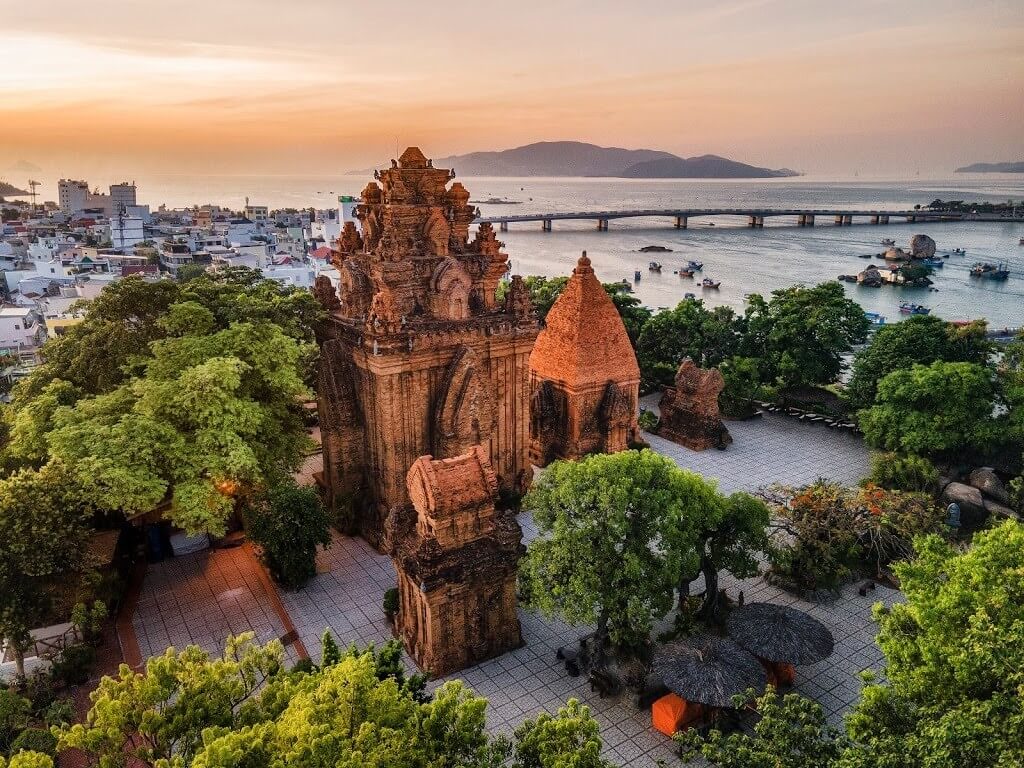
The Po Nagar Towers are among the best-preserved Cham temples and are still an active religious site today.
History & Deity
Built between the 7th and 12th centuries, the complex is dedicated to Yan Po Nagar, the Cham mother goddess often identified with Hindu goddesses like Durga and Bhagavati. Some shrines also honor Shiva and Ganesh.
Architecture
- The main tower rises 23 meters, built of red brick with sandstone sculptures.
- Intricate carvings depict dancing figures, deities, and floral motifs.
- The style blends Cham artistry with Indian influences, visible in the depictions of Shiva.
Cultural Relevance
- Even today, both Cham people and Vietnamese Buddhists come here for worship.
- The site hosts annual festivals celebrating the goddess.
Visitor Experience
- Located right in Nha Trang city, making it accessible.
- Dress modestly since locals actively worship here.
- From the towers, you get panoramic views of the Cai River and the city.
Why Visit
Po Nagar offers a rare opportunity to see a Cham Hindu temple still alive with rituals, incense, and devotion.
3. Po Klong Garai Towers – Phan Rang–Tháp Chàm
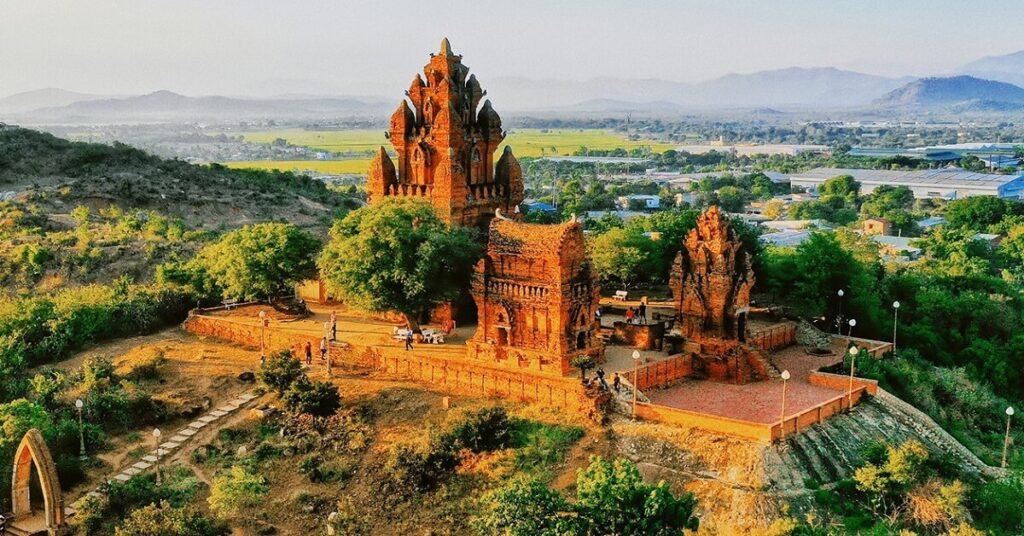
Phan Rang is considered the Cham cultural heartland, and Po Klong Garai Towers are its crown jewel.
History & Deity
Built in the late 13th century, this temple complex honors King Po Klong Garai, a deified Cham ruler who was associated with Shiva. Local legends credit him with protecting the Cham people and bringing prosperity.
Features
- The main tower, about 20 meters tall, has a steep roofline resembling a mountain peak.
- A stone lingam inside emphasizes Shaivite worship.
- Beautiful sandstone sculptures include guardian figures and naga (serpents).
Cultural Importance
- Still a pilgrimage site for Cham Hindus, especially during the Kate Festival (September–October), when rituals and dances are performed.
Visitor Tips
- Situated on a hill just outside Phan Rang, offering sweeping views of the surrounding landscape.
- Combine your visit with a trip to nearby Cham villages and handicraft workshops.
Why Visit
For cultural immersion, this is one of the most authentic Cham Hindu temples in Vietnam, alive with traditions that survived for centuries.
4. Po Rome Towers – Ninh Thuận Province
Another important Cham temple in Phan Rang is Po Rome, dedicated to the last great Cham king.
History
King Po Rome (ruled 1627–1651) is remembered as a powerful leader who strengthened Cham culture. After his death, he was deified, and this temple was constructed in his honor, blending Hindu and local ancestor worship.
Architecture
- Red brick construction with a high central tower.
- Carvings depict Shiva and other Hindu symbols, though some Buddhist influences are also visible.
- The mix of royal veneration and Hindu elements makes it unique.
Why Visit
Po Rome Towers reflect the transition from pure Hindu worship to a syncretic Cham religion that blended Hinduism, ancestor veneration, and local beliefs.
Vietnam Holiday Packages – Plan Your Trip
- Highlights of Vietnam – 7 Day Itinerary
- Short Vietnam Getaway – 5 Days Package
- Classic Vietnam Tour – 5 Nights / 6 Days
- Vietnam Explorer – 8 Days Travel Package
- Hanoi & Halong Bay Escape – 4 Days Tour
5. Tháp Đôi (Twin Towers) – Quy Nhơn, Bình Định Province
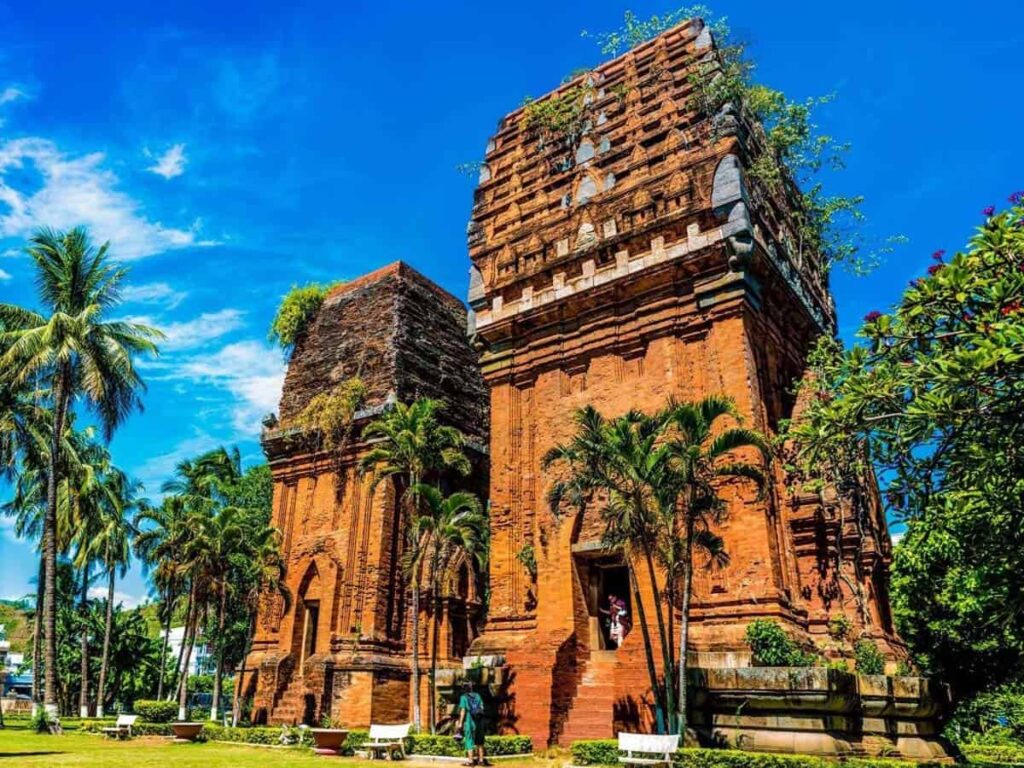
Quy Nhơn is dotted with Cham ruins, and the Twin Towers (Tháp Đôi) stand out for their unusual architecture.
History
Built in the late 12th century, these towers were dedicated to Hindu gods, most likely Shiva and Vishnu.
Architectural Highlights
- Two towers rise side by side, one taller than the other, symbolizing balance.
- Unlike other Cham towers, these feature curved roofs influenced by Khmer (Cambodian) design.
- Intricate carvings of apsaras and mythical creatures decorate the walls.
Why Visit
Tháp Đôi offers a glimpse of cultural exchange between the Cham and their Khmer neighbors. It’s also located in the heart of Quy Nhơn, making it easy to include in your itinerary.
6. Bánh Ít Towers – Bình Định Province
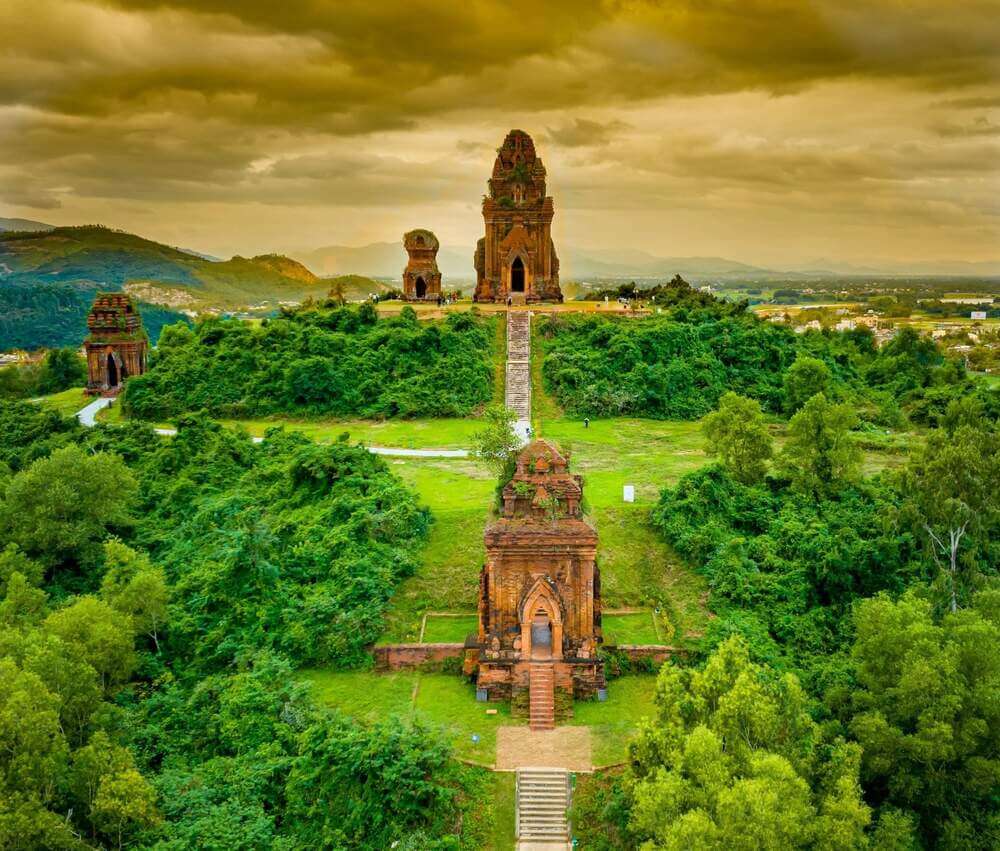
Known as the “Silver Towers,” Bánh Ít is a complex of four Cham towers sitting on a hilltop.
History
Dating back to the 11th century, this site was likely dedicated to Shiva and other Hindu deities.
Architecture
- The largest tower stands about 20 meters high, with distinctive stepped roofs.
- Sculptures of Kala (time god) and apsaras are visible.
- The red brick glows beautifully at sunset.
Visitor Experience
- The hilltop setting gives panoramic views of rice fields and villages below.
- Less crowded than Mỹ Sơn, offering a peaceful atmosphere.
Why Visit
For travelers seeking off-the-beaten-path Cham architecture, Bánh Ít is a hidden gem worth exploring.
7. Tháp Dương Long – Bình Định Province
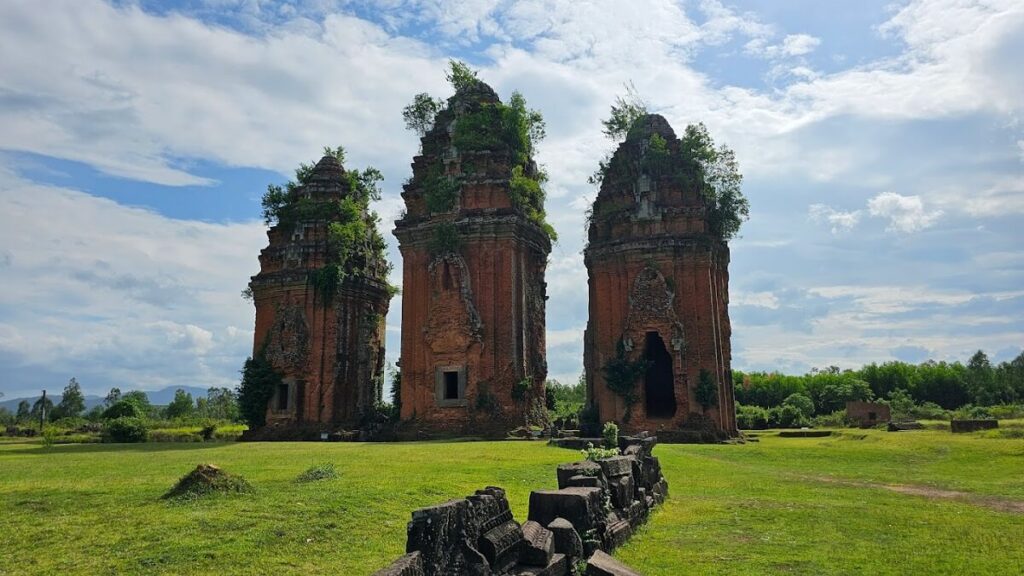
The Dương Long Towers are the tallest Cham towers in Vietnam.
History
Built in the late 12th or early 13th century, these were dedicated to Hindu deities, possibly Shiva or Vishnu.
Features
- Three towers arranged in a row, with the tallest reaching nearly 39 meters.
- Decorated with stone carvings of gods, elephants, and garudas.
- The vertical proportions create a striking silhouette against the sky.
Why Visit
For sheer scale and grandeur, Dương Long rivals even the most famous Cham sites. It’s a photographer’s dream.
8. Tháp Nhạn – Tuy Hòa, Phú Yên Province
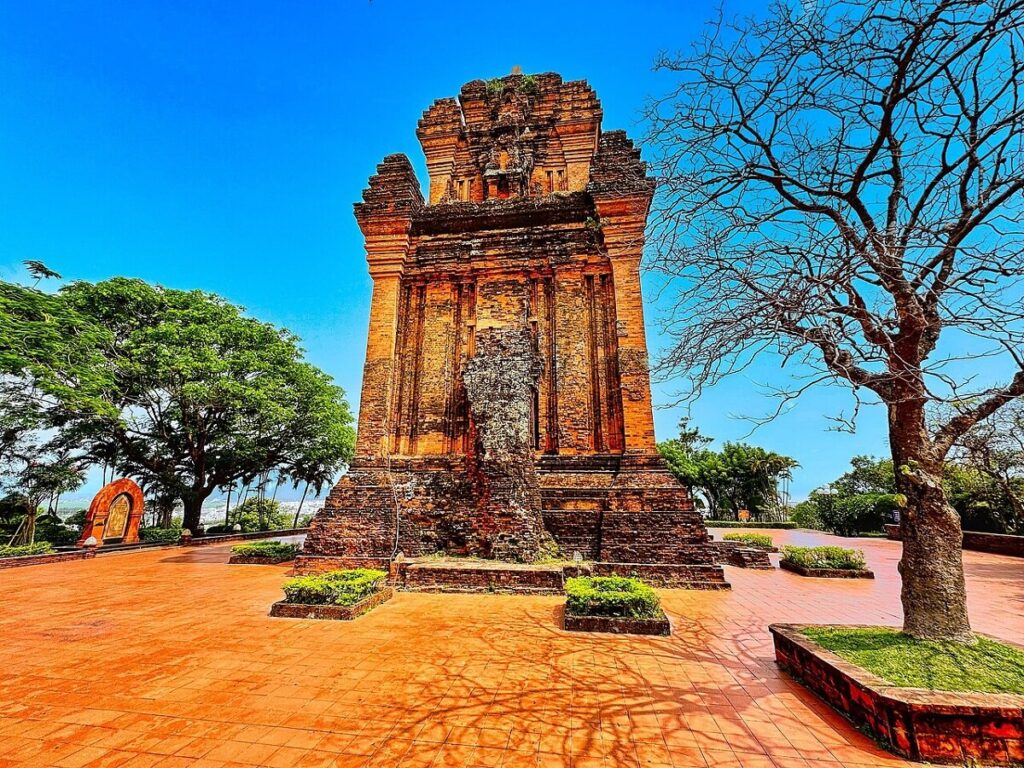
Rising above Tuy Hòa city, Nhạn Tower is a single Cham temple dedicated to Hindu deities.
History & Setting
Built in the 12th century, the tower sits atop a hill near the Đà Rằng River, offering a commanding view of the city and coastline.
Features
- Simple square base with a tapering roofline.
- Carvings suggest a connection to Shiva worship.
- At night, it’s illuminated, giving it a magical presence.
Why Visit
Nhạn Tower is a great stop for travelers passing through Tuy Hòa and wanting to experience Cham heritage in a scenic setting.
9. Tháp Bình Lâm – Tây Sơn, Bình Định
A lesser-known but historically rich Cham tower, Bình Lâm dates to the 11th century.
Features
- One tall tower with distinct red brick construction.
- Though partly ruined, carvings of deities and motifs remain.
- Surrounded by peaceful countryside.
Why Visit
For those seeking authentic, untouched Cham ruins away from tourist circuits, Bình Lâm offers a rewarding experience.
10. Tháp Hòa Lai – Ninh Thuận Province
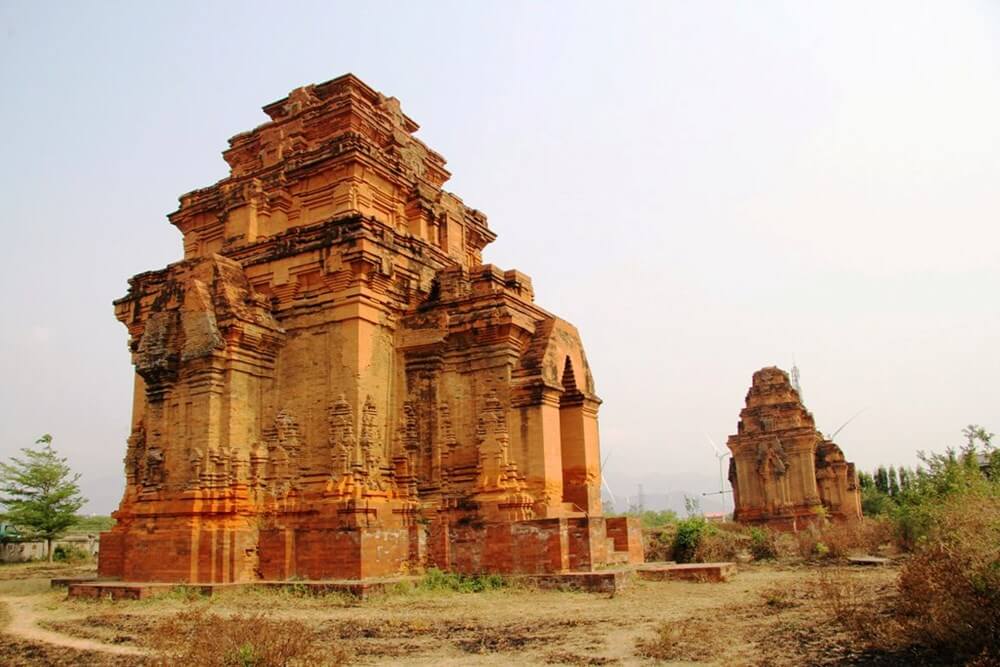
Last but not least, Hòa Lai Towers are among the oldest surviving Cham temples.
History
Dating to the 9th century, these are believed to be dedicated to Shiva.
Architecture
- Originally three towers, though only one stands relatively intact today.
- Known for their classic Cham style with ornate doorways and sandstone lintels.
- Considered one of the finest early Cham architectural works.
Why Visit
Hòa Lai is a must for history enthusiasts who want to see how Cham architecture evolved from its earliest days.
Cultural and Spiritual Context of Hindu Temples in Vietnam:
Visiting Hindu temples in Vietnam isn’t just about exploring ancient ruins. It’s about stepping into a fascinating cultural crossroads where Indian spirituality, Cham traditions, and Southeast Asian art came together.
The Cham People and Hinduism
The Cham were seafaring traders who interacted with India as early as the 2nd century CE. They embraced Hinduism, especially Shaivism (worship of Shiva) and Vaishnavism (worship of Vishnu), though some temples were also dedicated to Devi (the goddess). Over time, the Cham blended Hindu beliefs with local animism and ancestor worship.
Key Religious Features to Look For
- Lingam and Yoni Altars – Symbolizing Shiva and Shakti, common in Cham towers.
- Sandstone Carvings – Depictions of apsaras, garudas, and deities.
- Tower Orientation – Many temples face east, symbolizing the rising sun.
- Syncretism – Later temples often mix Hindu imagery with Buddhist or Cham folk motifs.
By noticing these elements, you’ll gain a deeper appreciation of the artistry and meaning behind the temples.
Festivals and Events at Cham Hindu Temples:
If you time your trip right, you can experience living Cham Hindu culture during festivals.
Kate Festival (Lễ hội Katê)
- When: September–October (according to the Cham calendar).
- Where: Po Klong Garai Towers, Po Rome Towers, and other Cham sites in Ninh Thuận.
- What Happens: Rituals honoring deified kings and Hindu gods, accompanied by music, dancing, and processions. Cham priests perform prayers at lingam-yoni altars, while devotees offer fruits, flowers, and traditional cakes.
- Why Go: This is the most vibrant Cham Hindu festival still celebrated today, giving visitors a glimpse of ancient rituals alive in modern Vietnam.
Po Nagar Festival
- When: Around April, aligned with the lunar calendar.
- Where: Po Nagar Towers, Nha Trang.
- What Happens: Dedicated to the goddess Yan Po Nagar (Durga), the festival attracts thousands of pilgrims. Rituals include offerings, chanting, and traditional Cham dances.
- Why Go: It’s a chance to see Hindu goddess worship in action, blended with Vietnamese folk traditions.
Travel Itinerary: Exploring Hindu Temples in Vietnam
If you want to see the best of these temples, here’s a suggested route:
Central Vietnam – Historical Core
- Start in Da Nang/Hoi An: Visit Mỹ Sơn Sanctuary (Quảng Nam).
- Move south to Quy Nhơn (Bình Định): Explore Tháp Đôi, Bánh Ít, Dương Long, and Bình Lâm.
South-Central Vietnam – Cham Heartland
- Head to Nha Trang (Khánh Hòa): Discover Po Nagar Towers.
- Continue to Phan Rang (Ninh Thuận): See Po Klong Garai, Po Rome, and Hòa Lai.
South Vietnam – Lesser-Known Sites
- Some Cham ruins are scattered around Bình Thuận and beyond, though less preserved.
With about 7–10 days, you can comfortably explore all major Cham Hindu temples.
Tips for Visiting Hindu Temples in Vietnam:
1. Respect Local Customs
- Dress modestly (shoulders and knees covered).
- Remove shoes before entering shrines.
- Ask before taking photos of people performing rituals.
2. Best Time to Visit
- Dry season (November–April) is ideal for exploring temples in comfort.
- Festivals add cultural richness but can be crowded.
3. How to Get Around
- Motorbike rentals for adventurous travelers.
- Buses and trains connect major cities, but private car hire is best for rural temples.
4. Combine with Nearby Attractions
- Mỹ Sơn pairs well with Hoi An and Da Nang.
- Po Nagar fits into a Nha Trang beach holiday.
- Phan Rang combines temples with sand dunes and vineyards.
Local Legends and Myths Surrounding Cham Temples:
Mỹ Sơn’s Sacred Fire
Local lore says Mỹ Sơn’s main temple once held a sacred fire that burned continuously for centuries, symbolizing Shiva’s eternal presence.
Po Nagar – The Mother Goddess
Cham mythology tells that Yan Po Nagar was born from the clouds and sea foam. She taught the Cham people weaving, farming, and morality, making her revered as a mother of civilization.
Po Klong Garai – The King Who Became a God
Legend says King Po Klong Garai defeated invaders by using magical powers bestowed by Shiva. After death, he was worshiped as a deity, showing the deep blending of kingship and divinity.
Such myths add a mystical dimension to the architectural marvels you see.
Comparing Hindu Temples in Vietnam with India
While rooted in the same religion, Cham temples differ from Indian temples in several ways:
- Material – Built mainly of red brick without mortar, unlike stone temples in India.
- Scale – Generally smaller than grand Indian temples but intricately decorated.
- Fusion – More syncretic, blending Hindu, Buddhist, and Cham elements.
- Preservation – Many Vietnamese temples are ruins, while India still has functioning large temples.
For travelers familiar with India, Vietnam’s temples offer a fascinating “echo” of Hinduism in a different cultural context.
Conclusion
Hindu temples in Vietnam are more than just ancient ruins; they are living connections between two great civilizations—India and Champa. From the sprawling ruins of Mỹ Sơn Sanctuary to the still-vibrant Po Nagar Towers and the culturally rich Po Klong Garai, these temples showcase the architectural brilliance, spiritual devotion, and cultural fusion that defined Southeast Asia for centuries.
Whether you are a history enthusiast, a spiritual seeker, or a curious traveler, exploring these temples will deepen your understanding of Vietnam’s diverse cultural heritage. They remind us that Hinduism once thrived far beyond India’s borders, leaving an imprint that continues to shape local traditions.
So on your next trip to Vietnam, take time away from beaches and bustling cities to wander among these timeless towers. Listen to the whispers of the past carried by the wind through red-brick ruins. Witness rituals that connect present-day Cham people to their ancestors. And marvel at how faith, art, and history merge in these sacred spaces.
Exploring Vietnam’s Hindu temples isn’t just sightseeing—it’s a journey into a forgotten chapter of world history that still resonates today.
You May Also Like:
- Travel Guide: Vietnam in September 2026
- Exploring Vietnam’s Golden Bridge – Visitor Guide
- Top Places to Visit in Vietnam – July 2026
- Vietnam Travel Guide – Best Time to Go
- 25 Best Things to Do in Da Nang
- Where to Travel in Vietnam – January 2026
- Adventure Tourism & Thrilling Activities in Vietnam
- Vietnam in April 2026 – Best Destinations to See
- Hanoi’s Most Famous Art Galleries
- Top Street Food Experiences in Vietnam
- Popular Indian Restaurants Across Vietnam
- Vietnam in November 2025 – Must-Visit Places
- Festivals & Celebrations to Enjoy in Vietnam
- Top Places to See in Vietnam – October 2025
- Famous Wildlife Sanctuaries & National Parks in Vietnam
Frequently Asked Questions (FAQs)
Q1. Are Hindu temples in Vietnam still used for worship?
Yes, some temples like Po Nagar, Po Klong Garai, and Po Rome are still active religious sites for Cham people, especially during festivals. Others, like Mỹ Sơn, are mainly historical ruins but hold cultural significance.
Q2. Which is the most famous Hindu temple in Vietnam?
The Mỹ Sơn Sanctuary in Quảng Nam is the most famous, recognized as a UNESCO World Heritage Site.
Q3. Do I need to pay an entry fee to visit these temples?
Yes, most major sites like Mỹ Sơn and Po Nagar have entry tickets (usually modest, around $3–7 USD). Smaller ruins like Bánh Ít may have little or no fee.
Q4. What should I wear when visiting these temples?
Modest clothing is recommended, especially at active worship sites. Cover shoulders and knees out of respect.
Q5. Are guided tours available?
Yes, guided tours are available at Mỹ Sơn, Po Nagar, and Phan Rang sites. Guides help explain the symbolism and history, which greatly enhances the experience.
Q6. Can I attend Cham festivals at these temples?
Yes, visitors are usually welcome, though you should observe respectfully. The Kate Festival in Phan Rang is the best time to experience Cham rituals.
Q7. How old are these temples?
Most Cham Hindu temples in Vietnam date between the 4th and 14th centuries, though some were built later (up to the 17th century).
Q8. Are these temples safe to visit with families?
Yes, they are safe, though children should be supervised around ruins with uneven steps.
Q9. How do Cham Hindu temples compare with Angkor Wat in Cambodia?
Both share Indian influences, but Angkor Wat is grander and primarily dedicated to Vishnu. Cham temples are smaller, more focused on Shiva, and unique in their brickwork.
Q10. Are there Hindu communities in Vietnam today?
The Cham Hindu community still exists, mainly in Ninh Thuận and Bình Thuận provinces, though it is relatively small compared to Buddhist and Christian populations.